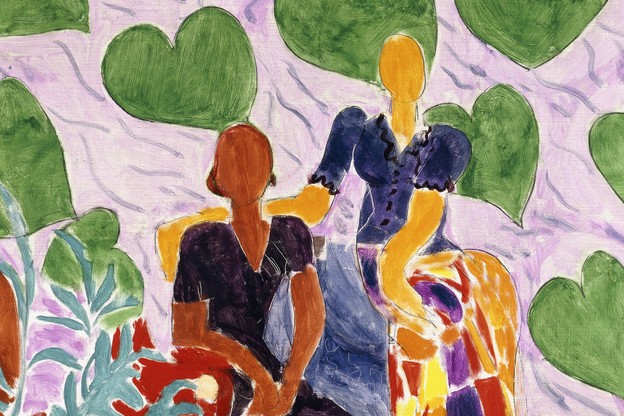
Is Cohabitation the Feminist Future?
Stories about women living together are proliferating—and offering alternative visions to the nuclear family.
Introducing The Atlantic’s expanded books coverage: essays, criticism, fiction, poetry, and recommendations from our writers and editors
Stories about women living together are proliferating—and offering alternative visions to the nuclear family.

A new biography brings the late photographer’s relationship with the artist Paul Thek to vivid life.

We’ve had Henry David Thoreau the environmentalist, the libertarian, the life coach. To understand his influence, think of him first as a dissident.

A minimally speaking autistic man just wrote a best-selling book. Or did he?

Testing has become so advanced that doctors now miss important elements of diagnosis.
Each is animated by the author’s love—for their subject, for language, and for pushing the boundaries of what the genre can do.

These six books demand discussion—with a pal, a date, or a book club.

Each of these titles will widen your perspective, offering you original insight and vision.

These titles are worth picking up, even if you have only a moment to spare.

Our culture editors’ weekly guide to the best in books.
A short story

A short story

A short story

A short story

In his newest book, Michael Cohen seems to be no longer a witness to history, but rather a man fractured by history.

A quiet movement that began in the 1920s didn’t disappear—it just went underground.

The abolitionists have long been portrayed as heroes. A new book views them, and their family, in a different light.

In Percival Everett’s Dr. No, a fiendish revenge plot doubles as a deeply American endeavor.

Published in The Atlantic in 1953

Government scrutiny isn’t how it appears in 1984. To understand privacy, we’ll need to update our analogies.

The Atlantic’s writers have chosen books to help you understand the stakes of the midterms.

In his new book, Adam Hochschild remembers a time when a crusade for democracy abroad released a demonic spirit of intolerance and violence at home.

A poem for Wednesday

Reading alone can’t take away the pain, but prose can be part of one’s internal healing.