
ARTS & ENTERTAINMENT PREVIEW Popular Music and Jazz By Bob Blumenthal and Charles M. Young |
 |
ARTS & ENTERTAINMENT PREVIEW Popular Music and Jazz By Bob Blumenthal and Charles M. Young |
|
 City of Refuge John Fahey
"Chelsey Silver, Please Come Home"
"City of Refuge I"
"On the Death and Disembowelment of the New Age"
Copyright 1997
|
|
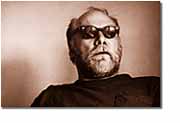 A guitar pioneer takes refuge in the '90s Photo: Marc Trunz |
|
Music Evolution Buckshot LeFonque
"Music Evolution"
"James Brown (Part I & II)"
"Another Day"
"My Way (Doin' It)"
Copyright 1996
|
|
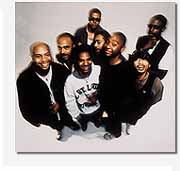 Buckshot LeFonque (top) and Wynton Marsalis Photos: Charlie Pizzarello (top), Marc Trunz 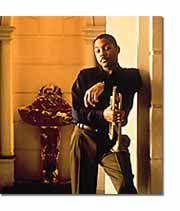
|
Branford has taken a more eclectic and populist approach since leaving Wynton's band, in 1985. He has toured with Sting, played second banana to Jay Leno on The Tonight Show, and created the jazz-hip-hop hybrid Buckshot LeFonque. At the end of 1996 he displayed his continuing command of the soprano and tenor saxes on the uncompromising jazz album The Dark Keys. Now Branford is back with the second Buckshot LeFonque collection, Music Evolution. His strategy is eclectic in the extreme, as rap vocals lead to smooth ballads with strings, and crunching contemporary rhythms coexist with backward glances at James Brown funk and samba. Spoken editorials drive home Branford's contempt for the niche marketing that this album is designed to frustrate. Yet the variety of styles virtually guarantees inconsistency; and at present Branford's ballads (sung by Frank McComb) are less effective than the snap he is able to extract from a drum program. Buckshot LeFonque sounds best when stretching out instrumentally on "James Brown (Part I & II)" (with guest David Sanborn on alto) or addressing such issues as the jazz-rap continuum ("Music Evolution") and the Million Man March ("Black Monday"). Peeking through it all are solos of great economy and clarity by Branford and the trumpeter Russell Gunn.
Wynton's Jazz Oratorio
Wynton Marsalis also wants to address the place of African-Americans in society, but prefers the jazz tradition and the extended compositional statement. Blood on the Fields is his most ambitious long work, written for the Lincoln Center Jazz Orchestra and three vocal soloists. Marsalis has learned to orchestrate during his years as artistic director of Jazz at Lincoln Center, and his writing here mixes techniques borrowed from the earliest jazz with complex rhythms and harmonies. The music is meant to serve the narrative, which is both a history of slavery and a love story; and Wynton has been particularly lucky in his choice of featured vocalists. Cassandra Wilson brings her singular intensity to the role of Leona, whether singing a hymn or lamenting a life of picking cotton, and Jon Hendricks adds dexterity and scat to his dual roles as the slave buyer and the sage Juba. The less familiar Miles Griffith as the slave Jesse is the work's major revelation. A veteran of the Boy's Choir of Harlem and the jazz pianist James Williams's Intensive Care Unit, Griffith has a galvanic delivery that on "You Don't Hear No Drums" and other sessions threatens to overwhelm the massed forces of the band. --B.B.
Discuss this feature in the Arts & Literature conference of Post & Riposte
 |
 |
 |
 |
 |
 |