
Return to the December 1998 A&E Preview Cover
|
Arts & Entertainment Preview - December 1998


B Y N A N C Y D A L V A & J O H N I S T E L

Up, Up, and Away

In December the dance world goes Nuts, on stages large and small, in cities major and minor. Just like the little girl in the familiar story (Clara, as she is usually called, or sometimes Marie), children go out into the winter night and have an adventure in which they watch people dance. Onstage, Clara falls asleep and has a dream, encompassing an entire act of ballet divertissements involving foodstuffs. In their seats in the theater, children try to stay awake, eat sweets at intermission, and watch the same things Clara does. One of the most enchanting versions of The Nutcracker belongs to The Joffrey Ballet of Chicago (The Auditorium Theatre, Chicago, November 27-December 13, Ticketmaster 312-902-1500; Orange County Performing Arts Center, Costa Mesa, December 23, 24, 26, 27, 714-556-2787.)
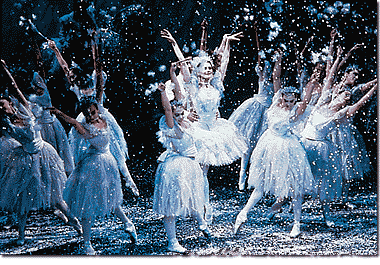
The Sugar Plum Fairies
This particular Nutcracker is a very dear one, with about a hundred local children included at each venue, though not, thank Santa and all his reindeer, as principals. Although oddly cobbled together (Joffrey, dying, was issuing directives from a hospital bed), it has a lovely coherence. Like Balanchine's version, it is deeply felt; embedded in the fairy tale are correspondences to the life of Robert Joffrey and how he felt about the season, the setting, and the stage. Christmas was his favorite holiday, and Victorian New York a favorite place, with a favored set of manners; the stage was his home, and his heart. When, at the ballet's end, Clara leaves the land of enchantment, she departs not with her Prince but with Drosselmeyer, the mysterious magician who has sparked her midnight dreaming. Surprisingly, a wonderful hot-air balloon lands; in they step. Here is Robert Joffrey resolutely Americanizing ballet's Christmas rite as only an immigrant's son would want to (Dorothy! Kansas! MGM!), waving good-bye to us all and saying, I pulled the levers behind the ballet's curtains; I was the wizard; Merry Christmas! Farewell!
--N.D.
Shaw's Talking Cure
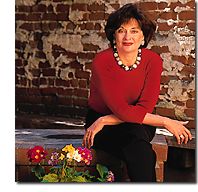 | SRT artistic director
Sharon Ott
|
Although George Bernard Shaw's Pygmalion had its premiere eighty-five years ago, most of the world knows his tale of the flower girl Eliza Doolittle and her pugnacious phonetics professor Henry Higgins as the musical My Fair Lady. But the Seattle Repertory Theatre and the director Sharon Ott will reacquaint audiences with Shaw's original through December 20. Pygmalion offers -- along with its political implications about class divisions, gender roles, and scientific enlightenment, and its humor -- a different perspective on the notion of "redemption," a soporific theme this month owing to the ubiquitous Christmas Carol. Shaw's little morality play holds up remarkably well, partly because of its insistence on not giving in to audiences' romantic yearning to yoke together the two main characters (Shaw wrote a lengthy afterword to justify his ending). Henry literally has the last guffaw ("He roars with laughter as the play ends," according to the stage directions), and so the play suddenly becomes not only about Eliza's transformation but about Higgins's lack of one. It's the epitome of a Shavian grace note, reminding us that often amid the merriment, not all is well.
--J.I.
Execution of Justice?
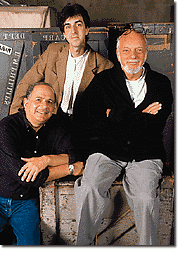 | The creators of Parade
|
In August of 1915 a low-tech lynching mesmerized the state of Georgia. About two dozen angry men pulled Leo Frank, a twenty-nine-year-old Jewish pencil-factory manager, from his prison hospital bed and drove him to a tree in Marietta. They stood him on a table, slipped a noose around his neck, and yanked the table away. For poor whites, "Judge Lynch" provided justice for the murder of a fourteen-year-old factory worker, Mary Phagan: the governor had commuted Frank's death sentence to life imprisonment, owing to shaky evidence. Now this sad chapter of American anti-Semitism has become a Broadway musical. With a book by Alfred Uhry (Driving Miss Daisy, The Last Night of Ballyhoo) and staging by the director Harold Prince, winner of twenty Tony Awards, Parade is in previews at Lincoln Center Theater, in New York, until it opens on December 17. Because of its creators' stature, Parade, produced by the Canadian production company Livent, may be Broadway's most anticipated show since Ragtime, Livent's previous foray. The question is whether the young composer-lyricist Jason Robert Brown can provide a score that soars. So far, he has earned high marks with everything he's touched off-Broadway, whether as a songwriter (Songs for a New World, available on CD from RCA/Victor), an arranger/orchestrator (Dinah Was), or a musical director (When Pigs Fly). Surely any incipient talent that
can enliven the musical stage deserves a parade. --J.I
Nancy Dalva is the author of Dance Ink: Photographs.
John Istel is a senior editor at Stagebill.
Go to ...
 
Copyright © 1998 by The Atlantic Monthly Company. All rights reserved.
|