-
![]()
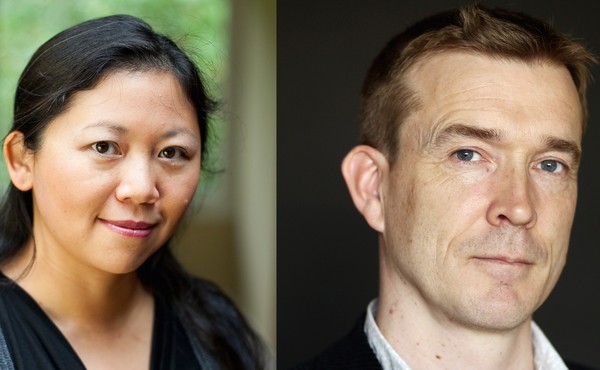
John D. & Catherine T. MacArthur Foundation; Matt … How to Write: A Year in Advice from David Mitchell, Yiyun Li, and More
Highlights from 12 months of interviews with writers about their craft and the authors they love
-
![]()
Doug McLean Don't Write for Awards
National Book Awards finalist Emily St. John Mandel says pomp and circumstance can derail the everyday work of creating complex, flawed characters.
-
-
![]()
Doug McLean Great Writing Is Humble
Peter Stamm, author of All Days Are Night, says his work became deeper once he shed some delusions of grandeur.
-
![]()
Doug McLean The Hidden Labor Behind Food: How to 'Read' a Tomato
The creator of a new documentary outlines how closely farmworkers' lives are connected to what's on grocery-store shelves
-
![]()
Doug McLean Artists Must Be Delusional
American Interior author and rock musician Gruff Rhys learned a lot by following in footsteps of a gullible pioneer.
-
![]()
Doug McLean Write to Transcend Space and Time
Reading Lolita in Tehran author Azar Nafisi says the best books are "republics of imagination" erasing national and historic boundaries.
-
![]()
Doug McLean The First Sentence Is a Handshake
According to science fiction writer William Gibson, a book's opening should be an inviting enigma to the reader—and a motivational benchmark for the writer.
-
-
![]()
Doug McLean The Joy of the Memorized Poem
A panicked moment reciting William Butler Yeats in an MRI convinced the former poet laureate Billy Collins that oration is poetry's last, most enlightened defense.
-
![]()
Doug McLean 'Realism Is a Figure of Speech'
Ernest Hemingway's matter-of-fact style taught author Vikram Chandra to find sublime in the ordinary, and depth in deceptively flat prose.
-
![]()
Doug McLean 'Writing Is an Exercise in Freedom'
Pulitzer Prize-winning novelist Jane Smiley looks to Our Mutual Friend for inspiration on how to harness the spontaneous, liberating energy that comes from writing imagery.
-
![]()
Doug McLean A 50-Year Protest for Good Writing
A crisis of quality in literary criticism led Robert Silvers to found The New York Review of Books—and he believes the crisis continues today, online.
-
![]()
Doug McLean David Mitchell on How to Write: ‘Neglect Everything Else’
The Cloud Atlas author keeps a James Wright poem as a reminder to live in the now.
-
-
![]()
Douglas McLean Jeff Tweedy's Subconscious Songwriting
The Wilco singer says Daniel Johnston epitomizes his mostly instinctual creative process.
-
![]()
Doug McLean Write Like the Handmaid
Novelist Edan Lepucki looks to the subversive metaphors in Margaret Atwood's The Handmaid's Tale for lessons in channeling characters' weird, rebellious spirits.
-
Envision the Novel Like a Museum
Using the guard-turned-vandal in The Heart So White as his guide, author Ben Lerner writes books in which characters interact with art, and occasionally try to set it on fire.
-
![]()
Doug McLean Writers Should Examine Everything, Even the Supermarket
Author Stephan Eirik Clark returns to Don DeLillo's White Noise for lessons in interrogating American culture.
-
![]()
Doug McLean Honest Writing Is Funny Writing
Memoirist Sean Wilsey says he knows he's finished with a story when it makes him laugh.
-
-
The Miracle of Writing
A Midsummer Night's Dream got it right, Richard Bausch says: Authors must find a way to turn nothing into something.
-
![]()
Doug McLean Confronting Reality by Reading Fantasy
Author Lev Grossman says C.S. Lewis taught him that in fiction, stepping into magical realms means encountering earthly concerns in transfigured form.
-
![]()
Brian DeRan Don't Write for the Barbarians
Hot Chip singer Alexis Taylor explains why he tries to forget critics—and his own self-consciousness—when creating.