How I Became Black in America
It’s been 10 years since the publication of Americanah. What’s changed?
America fascinated me as America fascinates every newcomer. Nineteen years old and fleeing the study of medicine at my Nigerian university, I longed to be a writer, to live a life of the mind. From my first days, I watched and read and learned. I was struck by the excess and the newness of America, by its flagrant contradictions, but mostly by how identity as an idea shaped so much of American life.
America is indeed unlike any other country in the world, not in the kind of triumphalist manner of those who speak of “exceptionalism,” but because, while it was created from violence like many other modern nations, it also claimed plurality, an unusual notion for founding a nation. This plurality, this churning mix of those voluntarily and involuntarily American, living on land that did not belong to them, magnified rather than diminished identity. In Nigeria, I had often thought about who I was—writer, dreamer, thinker— but only in America did I consider what I was.

I became Black in America. It was not a choice—my chocolate-colored skin saw to that—but a revelation. I had never before thought of myself as “Black”; I did not need to, because while British colonialism in Nigeria left many cursed legacies in its wake, racial identity was not one of them. Had I been raised in eastern or southern Africa, with their own insidious inheritances of history, perhaps I might have thought of myself in terms of skin color. In Nigeria, I was Igbo and Roman Catholic, and even then, growing up on a genteel university campus, neither had a significant bearing on the way I moved through the world.
To be Black in America was to feel bulldozed by the weight of history and stereotypes, to know that race was always a possible reason, or cause, or explanation for the big and small interactions that make up our fragile lives. To be Black was to realize that it was impossible for people to approach one another with the simple wonder of being human, without the specter of race lying somewhere in the shadows. To be Black was to feel, in different circumstances, frustration, anger, irritation, and wry amusement. It also brought the rare wealth of discovering African American literature, those stories full of such graceful grit. Black American writing instructed and delighted me, and I must have at some unconscious level wanted to contribute to that tradition, but obliquely, as someone standing outside American culture, a Black person without America’s blighted history.
Americanah was not the first novel that I wrote in America—I’d published two earlier novels, Purple Hibiscus and Half of a Yellow Sun—but it was, I think, the first whose seed was sown there. By the time I finally felt ready to write it, something was brewing in me, a literary rebellion of sorts. I wanted an imaginative liberation, to be free of the conventional rules of fiction.
I wanted to write of an American perspective that I had not seen elsewhere, about Blackness and about Black women’s hair, about immigration and about longing. How could I capture a society that seemed strangely oblivious to history, as though with each new story, history began anew? I wanted to write a novel leavened by ideas, and even by exhortation, that might at the same time help us talk about difficult things. A novel with a female character whose raison d’être is not likability—and I hoped my readers might be kind to her, as one hopes for kindness without the condition of perfection.
Of all the complicated emotions that animated the conception of this novel, bewilderment was the most present. Why were the ordinary things of Blackness so niche, so unfamiliar, to the American mainstream? American Blackness was fundamental and foundational to America, after all, but Black life appeared not only set apart but unequally so. In college, I once got my hair braided over spring break and, back in class, a non-Black classmate told me, in pleasant surprise, “Wow, your hair really grew long.” A view promptly echoed by a few others, all in admiration. Mainstream American women’s magazines wrote fluidly of blond and brunette hair, of flat-ironing and keratin treatments. But my classmates knew nothing of braids, one of the most common hairstyles for Black women.
Many years later, when I told a writer friend that I wanted to write a novel about Black women’s hair, I did mean hair as just hair, but also as plot device, as descriptor, and as metaphor.
“Black women’s hair? Nobody will read it,” my friend told me.
That friend—and I have always appreciated the honesty of good friends—had a point. Black women’s hair was as unlikely a subject for a novel as any. But people have written readable novels about baseball, and I think Black hair is just as interesting as baseball, if not more so, because Black hair has the potential for more surprises. (I’m no longer sure if I said this to my friend or if I merely thought it.) Besides, it was what I wanted to write, the spirit of the novel was already calling me, and I was prepared that it might be widely disliked. To engage honestly with Blackness in America is to dispense with comfort anyway. And so as I began to write, my urgency had an edge of defiance, of stubborn determination. I would not merely make my own music; I would string my own harp.
Maybe it’s why I laughed so often while writing Americanah—that sense of liberation that straddles recklessness. Yes, I was laughing at my own jokes, but I hoped my readers might sometimes laugh too. There is an Igbo saying—“A sad thing is also funny”—and I often found dark humor in the many permutations of the Black experience in America. Humor is a literary device, but it is one that, because it is so wonderfully human, can make us better see ourselves.
Shortly after the Black American George Floyd was murdered by a White police officer, a woman told me she had just read Americanah. “You are a prophet; you foresaw this,” she said, as if my novel were preparation for the social and cultural reckoning about Blackness that began as a result of Floyd’s murder. And yet, even though mainstream women’s magazines now include braids in general roundups of style choices, the shift is hardly seismic. The Black experience is not yet so ordinary that it becomes, as the White experience has been for centuries in America, invisible, and therefore the norm. (I capitalize White in my writing, like Black, because to lowercase it perpetuates this idea of whiteness as the invisible norm.)
I did not permit myself to have high expectations for this novel, and so when it was embraced by so many, I experienced a unique gratitude. (Gratitude, when one does not expect to feel it, has an extra undertone of delight.) I still experience this today. I have heard from Nigerian American readers who were inspired to move back to Lagos, and Black women who decided to go natural. A professor who said that Americanah helped his students talk about anti-Blackness in other minority communities and colorism within the Black community. A Black woman who said, quite simply, “I felt naked. You really saw me, a bit too much.” The White man who said, “I had no idea.” And the person who said, “You told the truth!”
Americanah could not be a story about Blackness from an outsider without also being an African-immigration story. It is not the African-immigration story with which the world is familiar, of poverty and war, but one familiar to me, the fleeing not from starvation but from discontent, and the reaching for dreams. One discovers oneself through writing, and I saw in this novel my own enduring romanticism, often carefully obscured in cautious reason. The stories we tell leave the reader with a memory not so much of the stories themselves, but of how we look at the world. And so what in the end is my story about being Black in America but a lush love story? One that lays bare my faith in love, in love undying.
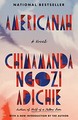
This essay was adapted from the introduction to the forthcoming tenth-anniversary edition of Chimamanda Adichie’s novel Americanah.
When you buy a book using a link on this page, we receive a commission. Thank you for supporting The Atlantic.