The Bad-Vibes Economy
The president is selling the success of “Bidenomics,” but nobody’s buying.
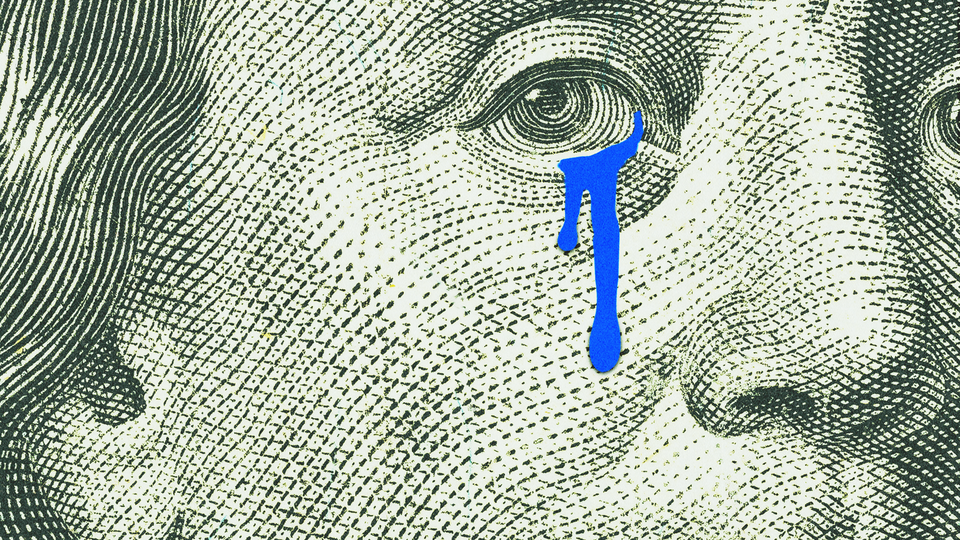
With the 2024 presidential campaign beginning to rev up, Joe Biden has taken to the stump, giving speeches selling “Bidenomics” and touting the country’s economic performance since he’s been president. In normal times, it would be a good moment for him to make that pitch. But these are not normal times.
Unemployment is down to 3.6 percent, and the economy is still adding jobs—a couple of hundred thousand, according to last month’s report. Inflation is cooling, now down to 3 percent. Home prices have held steady, despite high interest rates. And the stock market is up more than 15 percent already this year. But even with all that, Americans feel remarkably gloomy about the state of the economy.
That’s not new. In fact, after a short burst of optimism in early 2021, economic gloom has been the dominant mood for most of Biden’s presidency. Consumer sentiment, as measured by the University of Michigan’s monthly survey, plummeted from April 2021 to June 2022, when it bottomed out at the worst number recorded in the survey’s 45-year history.
Sentiment has improved since then, but it remains at near-historic lows. According to the survey, in May, Americans felt worse about the economy—or at least said so—than they did in April 2009, when unemployment was nearly 9 percent, the housing market had imploded, and the global financial system was teetering.
No single reason can explain this perplexing pessimism. Rather, a constellation of factors has made Americans grim. The most obvious one is inflation, which spiked as high as 8.3 percent in August 2022. Historically, inflation and unemployment were about equally important in shaping people’s perception of the economy. But since the coronavirus pandemic, that relationship has been broken: Inflation has bummed people out, as usual, but the steep drop in the unemployment rate has not cheered them up.
Inflation has mattered not just because people hate high prices, but also because it led to a drop in workers’ real wages. And that drop, the economist Darren Grant argues in a recent paper, is the main reason for our economic pessimism: We feel poorer, and because the fall in the unemployment rate has not translated into higher real wages, Americans have become indifferent to the favorable state of the job market.
Although the decline in real wages since 2021 is a key part of the story, it can’t be the whole explanation. Average real wages, after all, have been roughly flat over the past three years. And real wages have been flat for extended periods before without Americans feeling bleak. In fact, during some of these periods—including the early-to-mid 1990s and the early 2000s—consumer sentiment rose even as wages stayed flat.
Real wages for workers have also risen mildly in recent months as inflation has cooled. Yet, as JPMorgan Chase put it in a recent note to investors, consumers are nevertheless gloomier now than they’ve been in more than 90 percent of all months since the 1970s.
So what else is driving this disaffection? The steep decline in unemployment has failed to boost the national mood in part because of an incorrect assumption that all of the new jobs simply involve people getting back the jobs they lost during the pandemic. And the job boom itself may paradoxically be stressing people out, because it’s fed so many stories about labor shortages and led some businesses that are having trouble hiring to demand more of their workers.
Beyond that, though, is a disconnect between what’s actually happening in the economy and what people are hearing in the news. In May’s Michigan consumer survey, for instance, roughly twice as many respondents said they’d heard stories about unemployment as had heard stories about hiring. One under-discussed reason for this is that the industries that play an essential role in shaping public perception of the economy—finance, tech, and the media—have been going through a much tougher time than the rest of the economy has.
The tech industry has seen a host of layoffs over the past year, including at some of the country’s most high-profile companies—Meta, Alphabet, Microsoft. Media companies have been hit hard by a fall in ad spending and by the continued impact of streaming. And in finance, rising interest rates sparked actual bank runs earlier this year, as well as slowing down dealmaking and putting the bull market in stocks on temporary pause.
All of this has naturally made people in these particular businesses pessimistic about the economy as a whole, even though their problems are really industry specific. Arguably, these professionals play an outsize role as opinion formers and mood creators. Wall Street and academic economists have been forecasting recession for months. Tech bros on Twitter have been beating the recession drums and insisting that the economic data are wrong—things are much worse than the numbers suggest. And the financial media have been generally gloomy, and endlessly surprised at the continued strength of the job market, as exemplified by a New York Times headline from last week that read, “Against the Odds, the U.S. Economy Chugs Along, as Fears Linger.” (And that was not even the first time in a year that the Times used “Fears Linger” to headline a story about the economy.)
The point is that although the reality of stagnant real wages explains much of people’s mood, that reality has been overdetermined by a deeply pessimistic public narrative about the state of the economy, one that has Americans feeling much worse than they have in the past during similar economic times. This might seem to bode ill for Biden’s chances in 2024, but we’re also seeing signs that the gloom could lift. Tech bros are feeling better, thanks to the AI bubble and a huge rally in the Nasdaq exchange. The stock market is generally up. And above all, the inflation rate is coming down.
The Federal Reserve’s continued insistence on stamping out price inflation could conceivably still send the U.S. economy into an actual recession. But the pessimism inflation may be on its way out.