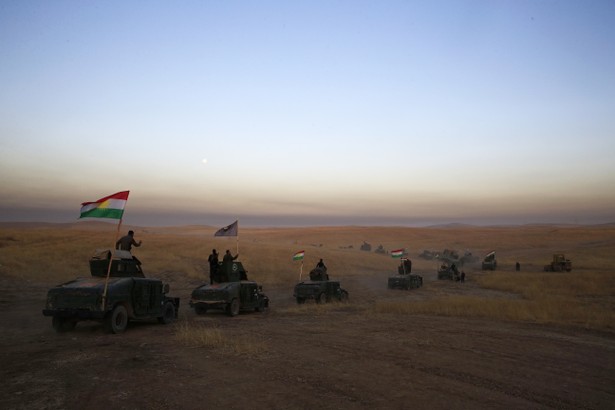
—Iraqi government troops and Kurdish fighters, backed by U.S. airstrikes, have begun the long-awaited assault on Mosul to retake the Islamic State’s last major stronghold in Iraq from the terrorist group. More than 1 million civilians remain in the city, Iraq’s second-largest, and their fate is uncertain amid what is likely to be a month-long military operation. More here
—High-school graduation rates reached 83.2 percent, a new record, according to government data released Monday. The highs were seen across all groups, though there were marked differences: Asian Americans had a 90.2-percent graduation rate, whites 87.6 percent, Hispanics 77.8 percent, African-Americans 74.6 percent, and Native Americans 71.6 percent. More here
—The economic cost of Brexit is becoming more apparent. A new report released Monday by EY Item Club predicted “prolonged weakness” for the UK economy. It’s the latest warning about the impact of Britain’s vote to exit from the European Union. Although the worst economic warnings of a “no” vote have yet to materialize, the British pound has been battered in recent weeks, falling to record lows against the euro and the U.S. dollar. More here
—We’re live-blogging the news stories of the day below. All updates are in Eastern Daylight Time (GMT -4).
The factions involved in Yemen’s war are considering a cease-fire, according to officials on both sides, Reuters reported Monday.
The foreign ministers of Saudi Arabia and Yemen said their governments would agree to a pause in fighting if Houthi rebels, who are backed by Iran, agree to halt violence, too.
Yemeni government forces have been fighting the Houthis since 2014 when the rebels took control of Sanaa, the country’s capital. A Saudi-led military coalition of several Arab nations began bombing Houthi targets in the spring of 2015. The conflict has killed thousands of civilians and destroyed crucial infrastructure, leaving many people without food, fuel, and basic supplies.
United Nations-mediated peace talks have been unsuccessful. The British ambassador to the United Nations said last week the country would soon present a resolution demanding an immediate cease-fire in Yemen. Add to this situation, a U.S. warship came under fire from Houthi-held areas last week. It responded by firing at and destroying three locations.
Steven Woolfe, Who Was Hospitalized Following an Altercation, Quits UKIP
(Alastair Grant / AP)
Steven Woolfe, the UKIP MEP who was hospitalized nearly two weeks ago following an altercation with a fellow member of the UK Independence Party, says he is quitting the party.
“I will be withdrawing my application to become leader of UKIP,” he told the BBC. “I’m actually withdrawing myself from UKIP. I’m resigning with immediate effect.”
Woolfe, who was seeking UKIP’s leadership at the time of the altercation, also said there was “something rotten” within the party. At issue is the incident with Mike Hookem, who denied assaulting Woolfe. Relations between Woolfe and the party’s base were tense following revelations he was contesting the UKIP leadership election—following the surprise resignation of Diane James 18 days after she was elected—while simultaneously talking to the Conservatives about possibly defecting to the ruling party.
On Monday, Woolfe told the BBC that he was hit. Hookem “rushed at me,” he said. “A blow to my face forced me back through the door." Woolfe was hospitalized and there were fears for his life following the incident.
UKIP, a far-right party, has struggled since it achieved one of its main goals: the UK’s vote to leave the EU. First, Nigel Farage, the party leader, quit in July after achieving what he called his “political ambition.” The party then held a fractious leadership vote that resulted in a victory on September 16 for James, who herself quit just days later.
Woolfe’s resignation is likely to throw the party into further turmoil. In his interview with the BBC, he said UKIP was "ungovernable without Nigel Farage leading it and the referendum cause to unite it.” Farage is back temporarily as head of the party while it chooses a new leader. Here’s more from the BBC:
Nominations to replace Ms James close on 31 October, with the new leader announced on 28 November.
One of the contenders, Raheem Kassam, said those responsible for "negatively campaigning" against Mr Woolfe should "hang their heads in shame" and urged him to return to UKIP.
UKIP chairman Paul Oakden said he felt "sadness and disappointment" at Mr Woolfe's resignation.
He said he disagreed with Mr Woolfe's characterisation of the party, and predicted the forthcoming leadership race would showcase the "strength and depth of talent" in the party.
Austria to Tear Down the Home Where Hitler Was Born
Dominic Ebenbichler / Reuters
The three-story house in Braunau where Adolf Hitler was born will be demolished, the Austrian government announced Monday, citing the need to prevent the site from becoming a gathering point for neo-Nazis.
“The Hitler house will be torn down,” Wolfgang Sobotka, the Austrian interior minister, told the German-language newspaper Die Presse Monday. “The foundations can remain but a new building will be erected. It will be used by either a charity or the local authorities.”
The site has undergone many changes since the Hitler family left their rented upstairs rooms in the northern Austrian town in the early 1890s. The house was used by the Nazis during World War II after Martin Bormann, a prominent Nazi official, bought the home from its original owners in 1938. The Nazis later tried to blow up the building, though American troops ultimately prevented it. It was later repurchased by its former owners and rented to the German government to prevent misuse of the property. Since 1952, the house served as a library, a school, a bank, and a home for the disabled.
Though it has remained empty since 2011, plans introduced in 2012 to demolish the home prompted disagreement among the city’s 17,000 residents over what the fate of the site should be. While some argue the house should be destroyed to prevent it from drawing neo-Nazi sympathizers, others said the building should be preserved as a historic part of the city. As the BBC reported:
Over the past three years, various proposals have been put forward about how to use the house. These include turning it into flats, a centre for adult education, a museum or a centre of responsibility, for confronting the Nazi past. One Russian MP even offered to buy the house and blow it up.
In July, the Austrian government approved legislation that would enable the government to seize the house from its owner—a bill the interior ministry told Agence France-Presse would be debated in parliament this week and, if approved, could enter into force by the end of the year. If the parliament approves the legislation this week, Hitler’s house may finally be demolished.
WikiLeaks said Monday that Ecuador cut off Julian Assange’s internet access, raising questions about his future at the country’s embassy in London.
Earlier Monday morning WikiLeaks tweeted that a “a state party” cut Assange’s internet connection, but did not expound on what country may have done it. Neither accusations have been confirmed. Although if true, it could signal a change in Assange’s arrangements at the Ecuadorean Embassy, where he has lived for four years.
Julian Assange's internet link has been intentionally severed by a state party. We have activated the appropriate contingency plans.
Here’s the background to the case from our previous reporting on Assange, the founder of WikiLeaks:
Assange was arrested in 2010 under a European Arrest Warrant issued by Sweden over claims of sexual assault—claims he denies. But in 2012, while on bail, he sought asylum in the Ecuadorian Embassy in London so he could avoid extradition. Last year, Swedish authorities dropped two cases of sexual assault against him, though the allegation of rape still stands—and it’s in connection with that case the Swedish prosecutor wants to question him. Assange says he fears that if he’s sent to Sweden he’d be extradited to the U.S., whose secret diplomatic cables were published by Wikileaks. The U.S. says there’s no sealed indictment against Assange.
From inside the embassy, Assange has been able to speak with media and appear via video connection at conferences around the world. WikiLeaks recently has published thousands of emails linked to Hillary Clinton, the Democratic presidential nominee.
Hoping to confirm the reports of a severed internet connection, the Associated Press reported:
Calls, texts and emails left with WikiLeaks weren't immediately returned Monday. A woman who picked up the phone at the embassy said: "I cannot disclose any information." An email to Ecuador's ambassador wasn't immediately answered. London's Metropolitan Police declined comment.
The development comes a day after WikiLeaks published its ninth round of email leaks linked to John Podesta, Clinton’s campaign chairman. Clinton’s office has said the leaks are the result of state-sponsored Russian hackers trying to interfere with the U.S. election.
U.S. Repatriates Guantanamo Detainee to Mauritania
Charles Dharapak / AP
The United States repatriated a Guantanamo Bay detainee to Mauritania, the Pentagon announced Monday, bringing the total number of those remaining in the detention facility to 60.
Mohamedou Ould Slahi was released after it was determined in July by a Period Review Board representing the Department of Defense, Homeland Security, Justice, and the Department of State that he did not pose significant threat to the United States. Slahi, who had been imprisoned in Guantanamo since 2002, wrote a memoir titled Guantánamo Diary in 2005 detailing his time in isolated detention. The 466-page hand-written manuscript was declassified by the U.S. government in 2012, though it contained several redactions; it became an international bestseller in 2015. The book remains the first and only memoir to have been written by an imprisoned Guantanamo detainee.
Slahi surrendered to Mauritanian authorities for questioning in 2001 after previously traveling to Afghanistan. He was then transferred to a Jordanian prison for eight months, followed by Afghanistan, and later to Guantanamo in August 2002. His repatriation follows the release of 15 other Guantanamo prisoners in August. They were sent to the United Arab Emirates in the largest transfer of detainees under President Obama. Like Slahi, most of those prisoners had been in Guantanamo for more than a decade.
The prison, first constructed in 2002 to house dangerous terrorism suspects, has held approximately 780 prisoners. Though Obama previously campaigned to shut down the camp, it remains unclear if that will happen before the end of his term.
Russia Announces An 8-Hour 'Humanitarian Pause' in Aleppo
Abdalrhman Ismail / Reuters
Russian and Syrian regime forces will halt operations in Aleppo Thursday to allow for an eight-hour humanitarian pause in the besieged city, Moscow announced Monday, according to Russian media.
“We are prepared to cease fire and ensure the unhampered access of medical personnel to the city and ensure the evacuation of the injured and sick as soon as we get a request from humanitarian organizations,” Sergei Rudskoy, a Russian military officer, said.
In addition to giving humanitarian relief to the estimated 250,000 Syrians remaining in the rebel-held eastern part of the city, Rudskoy said the pause will also allow rebel fighters to leave the eastern part of Aleppo, one of the rebels’ last major strongholds in the country.
Both Moscow and Damascus have faced heightened scrutiny for their intensified bombing campaign in eastern Aleppo, the latest attempt by the Syrian government to retake the city that has been divided between government and rebel forces since 2012. The offensive has resulted in civilian casualties and has led to the destruction of the city’s few remaining hospitals—actions many in the international community, including the United States and France, have condemned as war crimes.
The pause will go into effect between 8 a.m. and 4 p.m. local time.
Thousands of police officers in London will begin wearing body cameras in the coming months, the Metropolitan Police department announced Monday.
The rollout of the technology—small devices that are clipped to an officer’s uniform—began Monday. By mid-2017, more than 22,000 officers will be equipped with the cameras, which many believe provide a layer of accountability in police interaction with citizens.
“Body-worn video will support our officers in the many challenging situations they have to deal with, at the same time as building the public's confidence.hat we do every day will be seen by the public,” said Bernard Hogan-Howe, the commissioner of London police. “What we do every day will be seen by the public—that has to be good.”
Officers will receive the cameras in 32 London boroughs.
In the United States, police departments are increasingly testing and using body cameras. The technology entered the national debate in mid-2014, during protests of the fatal police killing of Michael Brown, an unarmed black 18-year-old in Missouri. Research has shown their use can lead to a decrease in complaints against officers. Supporters of body cameras say their presence can force both officers and civilians to change their behavior, and the footage they capture can serve as important evidence in potential prosecutions of killings by officers. Last year, two officers were charged with second-degree murder in the shooting of a six-year-old boy in Louisiana in a decision that authorities said was heavily influenced by the “extremely disturbing” footage captured by a body camera in the incident.
Srebrenica Gets Its First Serbian Mayor in Nearly Two Decades
Dado Ruvic / Reuters
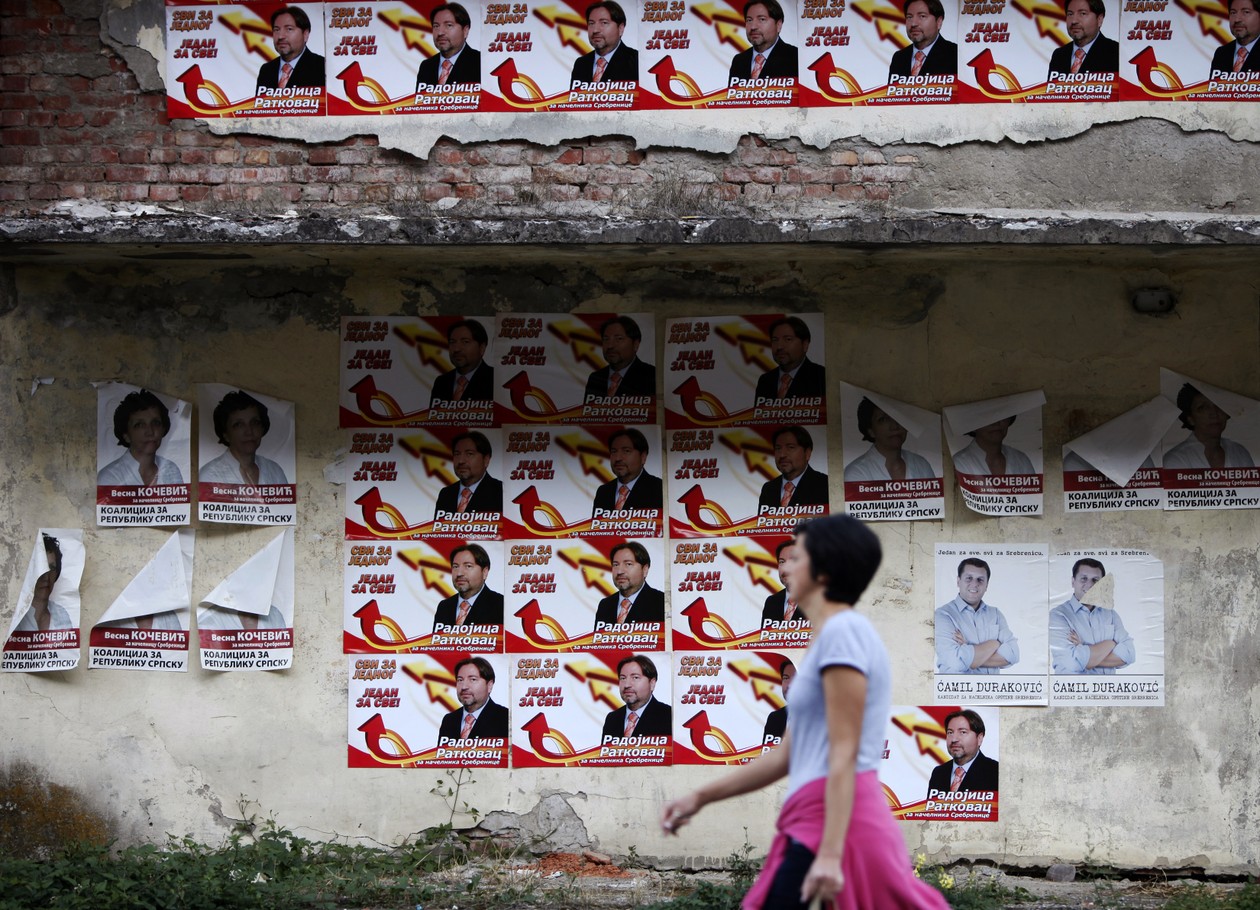
Srebrenica has elected a Bosnian Serb as its mayor, the Bosnian Central Election Commission announced Monday—the first time that has happened since the infamous massacre in which the Bosnian Serb army targeted the city’s Muslim population in the 1990s.
Mladen Grujicic, whose father was killed in 1992 at the beginning of the conflict, won 54.4 percent of the vote in the October 2 mayoral contest, beating out Camil Durakovic, the incumbent, a Bosnian Muslim who was elected in 2012. Though Durakovic did not formally address the results of the election, he previously commented on “irregularities,” alleging that 2,000 absentee ballots submitted by voters abroad were not counted. He also accused Grujicic of maintaining his lead because Serbian nationalist parties sent voters across the border from Serbia to vote for him. It’s unclear if either allegation has merit.
Skandalozno: CIK odbija uvažiti 2.000 listića koji bi mogli promijeniti rezultat izbora u Srebrenici https://t.co/N1hcUwxhuu
“Scandalous: CEC refuses to accept 2,000 ballots that could change the outcome of the elections in Srebrenica,” he tweeted Saturday.
The historic election result threatens to open old wounds in the city commonly associated with the July 1995 massacre, in which more than 8,000 of Srebrenica’s Muslim men and boys were killed by the Bosnian Serb army during the four-year Bosnian War. It is considered one of the worst massacres to take place in Europe since World War II and was classified by the International Criminal Tribunal for the former Yugoslavia as a genocide.
Grujicic hasn’t always described the massacre that way.
“The Serb people are portrayed in the media as committing genocide, but it isn't so,” Grujicic, who serves as president of a Bosnian-Serb organization which seeks to help Serbian victims of Srebrenica, told the BBC in 2010. He added: “No Serbs contest that a crime happened in Srebrenica, but they're insulted when the numbers are manipulated.”
But Grujicic reaffirmed his commitment to commemorating the massacre and bringing the city’s communities together.
“I want us to turn the page in Srebrenica, to have a new life, to look ahead, to develop Srebrenica in all areas, to ensure that people stay here, regardless of their faith or ethnicity,” he toldAl Jazeera.
UK Bank Freezes Accounts of RT, Russia's State-Run News Organization
Yuri Kochetkov / AP
The Royal Bank of Scotland Group has frozen all accounts held by RT, the state-run Russian broadcaster, the organization’s editor in chief said Monday.
RT published a copy of the letter it received, sent from a Royal Bank subsidiary, National Westminster Bank. The letter said all of RT’s accounts would be closed within in a month, and RT would need to find other banking arrangements. The bank offered no explanation for its action, but it did say the decision was not open for discussion.
Margarita Simonyan, the editor of RT, the former Russia Today, said in a tweet: “Our accounts in Britain have been blocked. All of them. ‘Decision not to be discussed’. Hail to freedom of speech!”
Нам закрыли счета в Британии. Все счета. 'Решение пересмотру не подлежит'. Да здравствует свобода слова!
The letter says RT has until December 12 to find other banking arrangements, otherwise its accounts will be cleared and the remaining balances returned in the form of a check.
Ofcom, the UK’s broadcasting regulatory agency, has previously sanctioned RT for “materially misleading” reports, the BBC reported. The Kremlin-run news organization had reported that BBC staged a chemical-weapons attack for a report in Syria, something the BBC denied. RT eventually lost that case in court. But there’s no indication this decision had anything to do with RT’s reporting style, or any specific stories.
Report Warns of 'Prolonged Weakness' After Brexit Vote
(Frank Augstein / AP)
A report by the EY Item Club, a UK think tank, has predicted economic uncertainty as Britain feels the impact of the vote last June 23 to leave the European Union.
“It may look like the economy is taking the referendum in its stride, but we think that impression is deceptive,” the report released Monday said. “Sterling’s shaky performance so far this month provides a timely reminder that troubles lie ahead.”
Here’s more:
At the moment, growth in the economy is being driven entirely by the consumer, supported by rising employment and real wages, as well as ultra-low interest rates. However, sterling’s devaluation will push inflation up to 2.6% temporarily next year. With average earnings still surprisingly subdued, this will slow the consumer. In the meantime, many firms have put investment and recruitment on hold while they assess the likely impact of the Article 50 negotiations on their business and consider their long-term options.
The report’s authors said the 1.9 percent GDP growth expected this year is likely to be the best performance for some time. In the medium term, they said, GDP growth will slow to 0.8 percent in 2017, 1.4 percent in 2018, 1.6 percent in 2019, and 1.8 percent in 2020.
The nature of how the UK will separate from the EU is a subject of speculation. The main sticking point is whether the UK will enjoy access to the European single market—a benefit for which EU leaders insist the UK must permit the free movement of all of the bloc’s citizens. But immigration was one of the main reasons Britons voted to leave the EU, and the idea of open borders is unpalatable for many UK politicians and citizens. Last week, remarks by Theresa May, the prime minister, raised the specter of a so-called “hard Brexit,” one in which the UK would leave the EU in 2019 with no access to the single market. That possibility pushed the British pound to record lows against the U.S. dollar and the euro. But on Monday, the Financial Timesreported that May’s government was considering the possibility of paying billions of pounds into the EU budget in exchange for access to the single market. The government hasn’t publicly commented on the report.
U.S. high-school graduation rates for the 2014 to 2015 school year rose to a new record-high of more than 83 percent, according to the White House.
This is the highest graduation rate recorded since the Obama administration implemented a uniform reporting method in 2010. This year, rates rose among students who are black, white, Latino, Native American, disabled, and low income. The numbers represent another year of gains for each group, but still show great disparity in graduation rates for most students of color compared with white students.
For example, about 88 percent of white students earn a high school diploma on time. But 78 percent of Latino kids do; just 74 percent of black students do; and Native American students graduate at a rate of 71.6 percent. The graduation rate for Asians is the highest among all groups: 90.2 percent. There’s also speculation that these numbers don’t actually reflect gains in student education, and may be the result of federal pressure on schools to shore up their numbers.
Here’s more on that thought from The Washington Post:
According to the National Assessment of Educational Progress, known as the “Nation’s Report Card,” high school students have not shown academic progress in recent years: In 2015, high school seniors posted lower scores in reading than they did in 1992, and their math scores were unchanged across the past decade.
On Monday, President Obama is scheduled to talk about the new numbers and his administration’s educational legacy at an event at Benjamin Banneker Academic High School in Washington, D.C. The District showed the highest single-year gain—7 percent—in the country. However, at 68.5 percent, it also had the lowest graduation rate. New Mexico had the second-worst. The highest was Iowa.
Iraqi forces, Kurdish fighters, and their allies, backed by U.S. airstrikes, have begun the battle to retake Mosul, Iraq’s second-largest city, from ISIS.
“The hour of victory has come,” Prime Minister Haider al-Abadi told the nation in a televised address Monday.
He added: “God willing we will meet in Mosul to celebrate the liberation and your salvation from ISIS so we can live together once again, all religions united and together we shall defeat Daesh to rebuild this dear city of Mosul.”
In response, ISIS has lit oil- and tire fires to obscure the sight of pilots carrying out airstrikes on the city, Patrick Osgood, the Kurdistan Bureau Chief of Iraq Oil Report, said in an interview. He said ISIS “has largely abandoned the left bank of the city,” which was traditionally more diverse, and is “concentrating its defenses in the right bank” of Mosul.
ISIS, which is known across the region by its Arabic-language acronym Daesh, has controlled Mosul since 2014. And therein lies a problem for Iraqi forces and their Western allies: How to retake the city while inflicting minimal casualties on the approximately 1.5 million civilians still in the city.
The operation is expected to take several weeks. Here’s the BBC on who’s doing the fighting:
About 30,000 pro-government troops are involved in the operation. The main assault is being led by Iraqi army troops based south of Mosul.
About 4,000 Kurdish peshmerga militia have begun clearing villages in the east.
Sunni tribal fighters and Shia-led paramilitary forces are also due to take part. Planes from the US-led coalition against IS are providing air support.
US Special Operations personnel are advising forces on the ground. Elite Iraqi counterterrorism forces are expected to join in the coming days.
An estimated 4,000-8,000 Islamic State fighters are defending the city.
Mosul, which is the capital of Nineveh province, was historically one of the Iraq’s most diverse cities, comprising Sunni, Shia, Kurds, Turkomen and others. Some of these groups fled Mosul when ISIS—a Sunni group—took the city two years ago, but many Sunnis remained, fearful of their own position in the new Shia-dominated Iraq. As there are no Western reporters inside Mosul, it’s unclear what the remaining civilian population there thinks of the Iraqi military operation, but there reportedly is some opposition within Mosul against ISIS’s draconian policies.
Thomas Weiss, the chief of mission in Iraq for the International Organization for Migration, said humanitarian groups have had no access to ISIS-occupied Mosul for the past two-and-a-half years.That, he said in an interview, has led to a situation “where we, as humanitarian organizations, only have a very sketchy picture of what's going on in ISIS-controlled territories, or the number of people affected, on their specific needs, etc. That, of course, makes planning, in terms of humanitarian response extremely difficult.”
We will explore the humanitarian aspect of the operation in a post later today.
The shooting at the correspondents’ dinner made clear who gets saved first.
This article was featured in the One Story to Read Today newsletter. Sign up for it here.
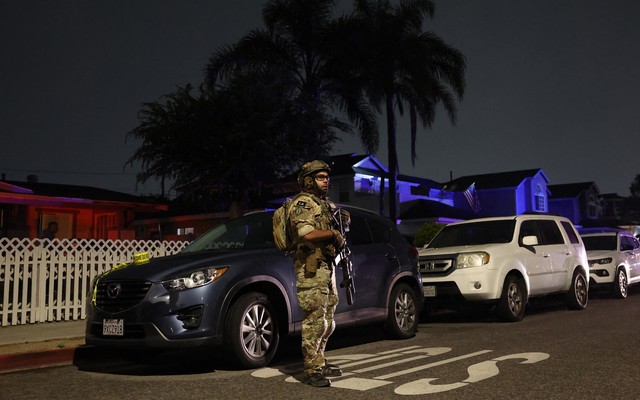
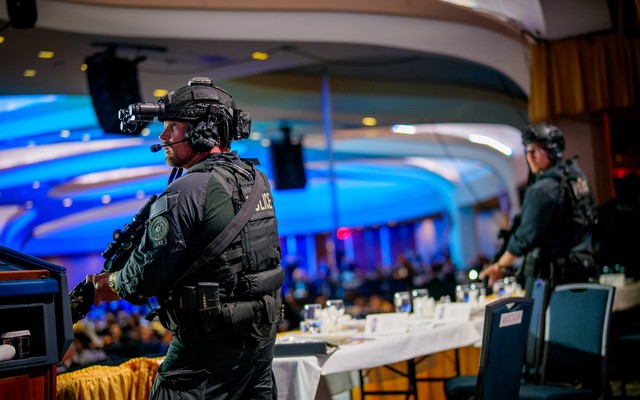
On one level, the system worked. The perimeter held. A would-be assassin was tackled in the hallway outside the White House Correspondents’ Association’s annual dinner. The one bullet that found a human target—a U.S. Secret Service agent—was halted, in part, by the officer’s phone and bulletproof vest, according to a law-enforcement summary report that we reviewed. A counterassault team promptly swarmed the stage with assault rifles and night-vision equipment in case the lights were cut. The government’s top leaders—president, vice president, Cabinet officials, speaker of the House—were ushered to secure locations in a matter of minutes. No one died in the attack.
For the richest men on Earth, everything is free and nothing matters.
At the end of Paul Thomas Anderson’s 2007 movie, There Will Be Blood, Daniel Day-Lewis’s oil-baron character, old now and richer than Croesus, beats Paul Dano’s preacher to death with a bowling pin. Dano’s Eli Sunday, a nemesis of Day-Lewis’s Daniel Plainview during his seminal, wealth-building years, has come to sell Plainview the oil-rich land that he once coveted. But Plainview doesn’t need the land anymore, because—as he explains in one of the most famous monologues in modern cinema—he has sucked out all the oil hidden beneath it from an adjoining property, like a milkshake.
Desperate for money, Eli begs for a loan. Instead, Plainview chases him around a bowling alley and murders him with great enthusiasm. Once it’s over, a butler comes to see what all the noise was about. “I’m finished,” Plainview yells.
Instead of a crackdown on his enemies, Trump wants his ballroom.
When an assassin murdered Charlie Kirk in September 2025, the MAGA movement seized the moment to demand a campaign of repression. Vice President Vance called for an ambitious program to “go after the NGO network that foments, facilitates, and engages in violence.” He named the Ford Foundation, Open Society Foundations, and The Nation magazine as examples of candidates for the retaliation he had in mind. The people who faced consequences after the killing almost universally did so for things they had written or said, not for acts of violence. In November, Reuters counted some 600 cases of people who were fired, suspended, or otherwise disciplined for their speech about Kirk’s life and death.
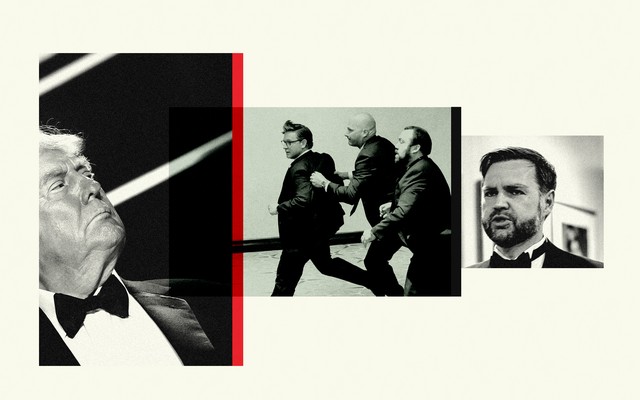
Now another gunman has attacked political targets. At the White House Correspondents’ Association dinner, a man discharged a firearm in the vicinity of hundreds of people from the worlds of politics, media, and business—among them, the president and vice president of the United States. Although much about the event remains unclear, the available evidence suggests that the gunman was motivated by an anti-Trump agenda. Yet this time, MAGA’s immediate response to political violence has been much less aggressive. At his press conference after yesterday’s attempted shooting, President Trump cited the attack as proof of the need for his wished-for White House ballroom. Social-media accounts that take their cues from the White House promptly echoed the message.
A manifesto-like email allegedly sent by the dinner shooter suggests a murderous obsession with Trump’s politics.
The line “I experience rage thinking about everything this administration has done” could probably have been written in an email to friends by any number of the attendees at last night’s White House Correspondents’ Association dinner. But the line was apparently written by a man who showed up with a shotgun and pistol and was ready to kill “most everyone” there to get to Donald Trump and assassinate him and his Cabinet. In a manifesto-like email that he reportedly sent to family minutes before allegedly shooting, Cole Tomas Allen wrote that the assembled journalists and machers “chose to attend a speech by a pedophile, rapist, and traitor, and are thus complicit.” Allen never came near the president or the gala floor. A Secret Service agent was shot in the vest before Allen was tackled and arrested.
This weekend’s failed attack highlighted a risk that often goes unspoken.
In the chaotic swirl of events after President John F. Kennedy’s assassination, doctors feared that Vice President Lyndon B. Johnson had suffered a heart attack upon arrival at Parkland Memorial Hospital in Dallas. The signs were ominous: Johnson’s face was ashen, and he was clutching his chest. “There was the real possibility that the No. 3 in the line of succession would become president,” the historian Michael Beschloss told me. Johnson was reportedly examined and a heart attack ruled out—but not before then–House Speaker John McCormack was told that he might be the next president. The declaration prompted a severe bout of vertigo in the 71-year-old.
Few moments in history have so starkly exposed the vulnerabilities of the presidential line of succession—or the lack of clarity about how it is protected. Last night provided another illustration of them. If events at the White House Correspondents’ Association Dinner had gone differently, a gunman who breached security at the Washington Hilton could have reached a ballroom containing an unusually dense cluster of American power. The president and the vice president were seated a few feet apart. Congressional leadership and many Cabinet secretaries were also on hand. In other words, much of the presidential line of succession was in the same spot—and subject to the same vulnerabilities.
Tragedy was averted at a Washington hotel, but such moments will happen again.
Except for what appears—thank God—to be only a minor injury to a Secret Service officer who was shot near a security checkpoint, no one was hurt at the White House Correspondents’ Association dinner last night. News reports are reassembling the mosaic of the attacker’s movements; he apparently took a train and transported some weapons with him, checked into the hotel, and then made his run at the event.
These are the basic contours of all that we know, and it will take time for more credible information to emerge. In the meantime, the vacuum of facts has been filled by a certain amount of hysteria and the usual conspiracy theories, as well as understandable demands to make changes so that such a thing can never happen again.
Priests and theologians want to shape the future of AI. Big Tech is listening.
In 1633, Galileo Galilei stood in the convent of the Santa Maria sopra Minerva church in Rome, where a tribunal of Catholic authorities forced him to “abjure, curse, and detest” his belief that the sun—not Earth—was the center of the universe.
Almost four centuries later, in 2016, the Vatican invited a group of the world’s most prominent technologists to the same church to discuss AI ethics. That was the start of the Minerva Dialogues, annual closed-door conferences in Rome that have become the centerpiece of a decade-long exchange between Silicon Valley and the Catholic Church.
The Valley and the Vatican seem like strange bedfellows: The oldest institution in the world meets secular upstarts bent on creating godlike technology. When the venture capitalist Reid Hoffman first attended the dialogues, he told me he was struck by the portraits lining the walls that depicted Catholic inquisitors like those who persecuted Galileo. “It feels a little bit weird to be walking in voluntarily past these,” he remembers thinking.
James Talarico is trying to sell a novel brand of Christian politics in a deep-red state.
Updatedat 11:25 a.m. ET on April 24, 2026
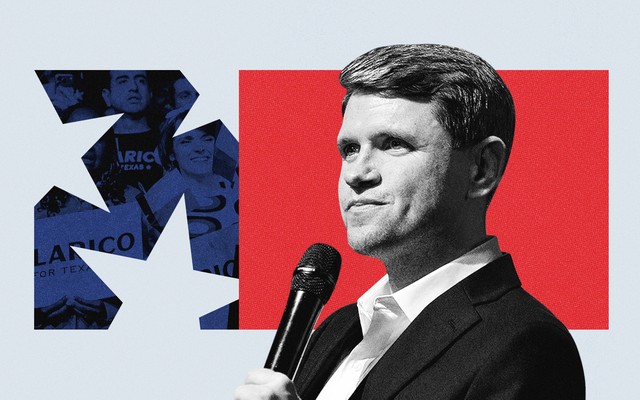
While some might pray for hope or peace in such dark times, others are praying for the death of Texas Democrat James Talarico, who is running for the U.S. Senate. During a recent episode of the right-wing Protestant podcast Reformation Red Pill, host Joshua Haymes told the pastor Brooks Potteiger that he prays that “God kills” Talarico, given that the politician seems to be possessed by demons. Potteiger agreed, offering that Talarico should be “crucified with Christ.” Both Haymes and Potteiger later insisted that their remarks were not sincere expressions of violent intent, but rather metaphorical calls for Talarico, a Presbyterian seminarian, to find salvation in their brand of Christianity. Talarico shrewdly responded by offering forgiveness: “You may pray for my death, Pastor, but I still love you. I love you more than you could ever hate me.”
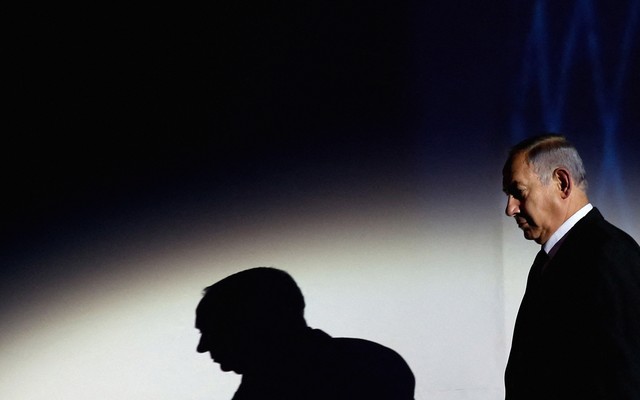
The Israeli prime minister’s focus is, as always, on himself and his near-term political needs. The plight of American Jews is simply not his concern.
The relationship between the United States and Israel is in crisis. Six in 10 Americans have a negative view of Israel, and a majority of those under 50 in both major parties view Israel as well as its prime minister, Benjamin Netanyahu, negatively. After the brutal Gaza war, a large percentage of liberal-leaning Generation Z considers Israel a pariah state. Democratic candidates are scrambling to distance themselves from Israel and its controversial leader; earlier this month, 40 of the 47 Democratic senators voted against a military aid package for the country. And hostility toward Israel is spilling over into hostility toward Jews. Liberal influencers, activists, podcasters, and even politicians are invoking age-old anti-Semitic tropes with frightening regularity.
A New York Times podcast hosted Hasan Piker and a New Yorker staff writer for a discussion of lawbreaking, which they both endorsed as resistance to tyranny.
The late political scientist James C. Scott endorsed what he called “anarchist calisthenics”—the regular practice of small acts of lawbreaking and disobedience. Jaywalk at an empty intersection. Have a beer in the park. Smuggle a pudding cup past the TSA agents. The point, Scott said, was to keep the civic muscles strong. Without constant reinforcement, these muscles will atrophy, and when real tyranny arrives, the flabby citizen will be powerless to resist. Scott particularly enjoyed telling Germans to get their reps in, because their grandparents had not.
On Wednesday a New York Times podcast hosted the Twitch streamer Hasan Piker and the New Yorker staff writer Jia Tolentino for a discussion of lawbreaking, which they both endorsed not as a habit of mind but as resistance to actual tyranny, today. They agreed that shoplifting from grocery stores such as Whole Foods is laudable, because (as Tolentino says, without evidence) “every major grocery chain” steals from workers and customers. Streaming services—they specifically name Spotify, which carries the Times podcast—are bad for creators and, they say, worthy of being ripped off. Piker said he would steal cars, “if I could get away with it.” Channeling Abbie Hoffman, Tolentino encourages people to steal from her own employer, The New Yorker, but does not explain which high crimes David Remnick has committed to earn this comeuppance.