—Leonard Cohen, the singer known for his deep voice and poetic lyrics, died Thursday. He was 82.
—Indians lined up at banks to trade in their 500-rupee and 1,000-rupee notes, the two largest denominations, after the government, in an unexpected move, scrapped them Tuesday.
—We’re live-blogging the news stories of the day below. All updates are in Eastern Standard Time (GMT -5).
Leonard Cohen, the singer known for his deep voice and poetic lyrics, died Thursday. He was 82.
It is unclear how the songwriter died. Announcing his death, Sony Music Canada said in a statement:
We have lost one of music's most revered and prolific visionaries.
Cohen, born in Quebec in 1934 and inducted into the Rock and Roll Hall of Fame in 2008, was remembered by Rolling Stone as “the songwriter’s songwriter,” adding:
Cohen was the dark eminence among a small pantheon of extremely influential singer-songwriters to emerge in the Sixties and early Seventies. Only Bob Dylan exerted a more profound influence upon his generation, and perhaps only Paul Simon and fellow Canadian Joni Mitchell equaled him as a song poet.
There will a memorial service in Los Angeles. The date will be announced later.
This Newly Discovered Dinosaur Fossil Was Almost Blown Up by Dynamite
An artistic reconstruction of Tongtianlong limosus’s possible final moments stuck in mud. (Zhao Chuang / nature.com)
Construction workers in China using dynamite to clear a rocky area almost blew up a well-preserved dinosaur fossil before realizing their discovery, according to a paper published in Scientific Reports on Thursday.
The fossil constitutes a newly discovered dinosaur species. Scientists speculate that the creature died while stuck in mud, which explains its awkward body position; the dinosaur’s limbs are splayed and its head and neck are raised. They estimate that it lived about 66 to 72 million years ago during the final era before dinosaurs became extinct.
Because of those qualities, scientists named the dinosaur species “Tongtianlong limosus,” a mix of Chinese and Latin that means “muddy dragon on the road to heaven.”
The skeleton of the Tongtianlong limosus (nature.com)
Tongtianlong limosus is part of a branch of dinosaurs called Oviraptorosaurs, or bird-like feathered theropods with toothless skulls found in the Ganzhou area of China. The Tongtianlong limosus is different from other Oviraptorosaurs because of its “unique dome-like skull roof” and “highly convex premaxilla,” referring to the cranial bone near the upper jaw, the scientists write.
The fossil was discovered during construction of a new high school. Workers nearly destroyed it, and parts of the fossil are missing due to dynamite. A drill hole where TNT was placed can be seen near the pelvic girdle of the fossil.
"It was found at a construction site by workmen when they were dynamiting, so they nearly blasted this thing off the hillside," University of Edinburgh paleontologist Stephen Brusatte, a co-author on the paper, told the BBC.
'Pharma Bro' Is Trolling Everyone But at Least They Get Wu-Tang Clan Out of It
Lucas Jackson / Reuters
Say what you will about Martin Shkreli, but the controversial pharmaceutical CEO kept his word.
Two weeks ago, the executive better known as “Pharma Bro” promised to release music from the $2 million Wu-Tang Clan album he bought at a secret auction last year—but only if Donald Trump won the election. Early Wednesday morning, he followed through on his promise and live-streamed the the album’s introduction in a video early Wednesday morning.
“I’ll be releasing this music over a long period of time, but let me play at least a little bit of it now,” he said. (The music begins at 7:00 in the video below.)
Shkreli became well-known last September after his drug company Turing Pharmaceuticals bought the drug Daraprim, which is typically used to treat infections in HIV patients. Shkreli raised the price of the drug from $13.50 per pill to $750, a dramatic example of price-gouging that drew widespread criticism. He was arrested in December on securities fraud charges and was released on $5 million bail.
During the controversy over the price hike, Shkreli bought the only known copy of the Wu-Tang Clan’s latest album “Once Upon A Time In Shaolin” at auction for $2 million. As part of that purchase, Shkreli was legally barred from releasing the music commercially for 88 years.
"I actually have a contract with the Wu-Tang Clan where I'm not allowed to do this,” he said in the video on Wednesday. “Obviously, I own the music and I bought it and paid a lot of money for it. In many ways, the contract shouldn't matter that much. But I am a man of my word; I had to play a little bit of it … but I've got to keep my word to them, too."
The Polish Army Is Teaching Women Self-Defense for Free
Rick Wilking / Reuters
Women in Poland will soon be eligible to enroll in free self-defense training, the country’s national defense ministry announced Thursday.
The training, offered in 30 cities, includes eight free courses led by Polish army instructors aimed at teaching women techniques to defend themselves “in various situations that threaten their life or health,” including hand-to-hand combat and self-defense. The course will be offered to Polish women over the age of 18 who are considered in good health. The program is expected to run beginning November 19 until June 3.
Antoni Macierewicz, the country’s defense minister, told the BBC the program seeks to equip women with “basic fighting techniques and improve overall physical fitness.”
Police departments in the United States and Canada have offered similar free classes to women.
A day after several states voted to relax their marijuana laws, the union that represents NFL players has announced it will research the use of the drug in pain management.
The NFL Players Association has created a committee to study the use of marijuana as a pain-management strategy for football players, as well as consider whether the league should change its rules on legal substances, The Washington Postreported Wednesday. The union didn’t provide information about the research process.
On Tuesday, residents in California, Massachusetts, and Nevada voted to legalize recreational marijuana, following similar measures in Colorado, Washington, Oregon, Alaska, and the District of Columbia in previous elections. Voters in Maine, Florida, Arkansas, and North Dakota approved ballots measures to legalize marijuana for medical use. Research has shown marijuana use is helpful in managing pain.
The drug policy negotiated between the NFL and the players’ union prohibits the use of marijuana for any reason. Players are tested throughout the season and can be fined or suspended for violating the drug policy.
NFL spokesman Brian McCarthy said on Wednesday the league would continue to listen to the advice of its medical experts, who haven’t recommended changing the league’s policy.
The increased interest in marijuana’s pain-management effects comes amid increased scrutiny on opioid painkillers like Vicodin. The use of team-administered opioids for pain management is relatively common in NFL locker rooms. In recent years, a number of football players, including former offensive lineman Eugene Monroe, have expressed support for medical marijuana to treat pain as a replacement for opioid painkillers.
According to a recent survey in ESPN magazine, 59 percent of NFL players said they worry about the long-term effects of painkillers, and 61 percent said they believed fewer players would use painkillers if marijuana were allowed.
Eastern Aleppo Faces Mass Starvation as Food Rations Run Out
Abdalrhman Ismail / Reuters
The last available food rations are being distributed by aid workers in rebel-held eastern Aleppo, the United Nations said Thursday, warning the 275,000 people remaining could face mass starvation without a resupply.
“I don’t think anyone wants a quarter of a million people to be starving in east Aleppo,” Jan Egeland, the UN’s humanitarian adviser for Syria, told journalists Thursday in Geneva.
The last time a humanitarian-relief delivery was permitted to eastern neighborhoods of the city was in July, Egeland said, noting that food prices had skyrocketed. Since then, the UN presented a proposal to all sides that would involve food- and medical-aid distribution, as well as medical evacuations and access to the city by medical personnel—a deal Egeland said he was optimistic the Syrian government and rebel forces would accept.
Access to the besieged city by humanitarian agencies has been limited since the Syrian government, backed by Russian forces, resumed its offensive to retake rebel-held parts of the city, which has been divided since 2011. Though Moscow and Damascus have declared unilateral “humanitarian pauses” to allow civilians and rebels remaining in the city to evacuate, few have left.
The U.S. Military Releases New Estimates of Civilian Deaths in Air Strikes
Reuters
U.S air strikes in Syria and Iraq killed 64 civilians between November 2015 and September 2016 during operations against the Islamic State, the U.S. military said in a statement Wednesday, a figure much lower than the one humanitarian groups have reported.
"In each of the cases released today, the assessment determined that although all feasible precautions were taken and strikes complied with laws of armed conflict, civilian casualties unfortunately did occur,” said Colonel John Thomas, a spokesman for U.S. Central Command.
The U.S. conducted 24 air strikes in the timeframe reported. The report brings the total number of civilians the Pentagon has acknowledged have died since the U.S.-led coalition started bombing ISIS in 2014 to 119. The numbers of people killed in a single strike ranged from one to 10. The most recent, publicly reported strike occurred September 10, near Raqqa, Syria, which killed five people.
Human-rights group Amnesty International said last month that in the battle against ISIS at least 300 people have died over the past two years in just 11 strikes.
The U.S. has conducted 12,354 air strikes against ISIS targets in Iraq and Syria as of this month, according to Reuters.
Television’s comedy late-night hosts largely delivered serious monologues with sprinkles of humor a day after the election of Donald Trump to the presidency.
“I guess ruining Brooklyn was just a dry run,” she said in her post-election segment. “The Caucasian nation showed up in droves to vote for Trump, so I don’t want to hear a goddamned word about black voter turnout. How many times do we expect black people to build our country for us?”
On TBS’s Conan, admitted history buff Conan O’Brien initially took a serious tone and praised the American system of democracy.
“Everybody should feel grateful that we get to vote, and if we don’t get our way, we have the chance to try again,” O’Brien said. “It is a beautiful thing.”
He then went for laughs with a “silly and completely pointless” diversion, “The Really Tall Dachshund.”
On The Tonight Show, Jimmy Fallon stuck to his routine of one-liners, riffing on Trump’s victory.
“Republicans hope he’ll keep his promise to build a wall, and Democrats hope he’ll keep his promise not to accept the election results,” he said, according toThe New York Times.
On Late Night with Seth Meyers, who famously lampooned Trump during the 2011 White House Correspondents Dinner, Myers re-upped his plan to give Trump a 13-episode TV show about a fake president if he would drop out of the race. Meyers pushed that offer up to 22 episodes on Wednesday night, and said he would even give it a prime slot right after The Voice.
“After last night’s results, I just want to say to Donald Trump: Our offer still stands,” Meyers said. “You didn’t think you were going to win this thing either, and I’m guessing that right now you are spinning out.”
Coast to coast, in more than a dozen major cities, protesters against the presidential election of Donald Trump shut down highways, burned effigies, burned cars, and also held calm candlelight vigils. The rallies all shared a common theme: that Trump’s comments during his campaign do not represent the U.S.
The rallies were held in Portland, Oregon; Dallas, Chicago, Atlanta, New York, Washington, D.C., and many others. Police arrested dozens of people. At the Oakland, California, protest, where about 7,000 people joined, two officers were injured and two patrol cars set afire. In Los Angeles, protesters chanted outside City Hall, where they lit a giant effigy of Trump’s head on fire. In both Oakland and Los Angeles, protesters shut down freeways until the early morning. Police in riot gear were called in to disperse the crowds.
Democratic nominee Hillary Clinton and President Obama asked their supporters on Wednesday to give Trump a chance, and to peacefully allow a transition of power. Everyone, Clinton said, is “rooting for his success.”
As much of the protesters expressed anger, though, they also were fearful. Some in New York, outside Trump Tower, where Trump lives, told The New York Timesthey feared their family members might be deported. Another protester told theLos Angeles Times he feared the anti-LGBT sentiments of some Trump supporters. In Washington, D.C., protesters at a candlelight vigil and some held a glowing banner that read: “Love Trumps Hate.”
Indians Line Up at Banks After Surprise Currency Announcement
(Rupak De Chowduri / Reuters)
Indians lined up in banks across the country to trade their no-long-valid 500-rupee and 1,000-rupee notes, which were scrapped Tuesday by a government fiat.
Prime Minister Narendra Modi’s decision to scrap the two largest denominations is an attempt by the government to battle corruption, tax evasion, counterfeiting, and “black money,” the term used locally to describe a parallel economy that some estimates say accounts for as much as 20 percent of India’s $2 trillion gross domestic product. Cash use is ubiquitous in India, accounting for more than 90 percent of all transactions. Indians rely on rupee notes to buy everything from packets of salt, to street food, to multimillion-dollar apartments, and to finance elections. And no rupee notes are more heavily relied upon than the two scrapped—500 rupees (about $7.50) and 1,000 rupees ($15.05). Together they accounts for an estimated 85 percent of all cash transactions in India.
Indians have until December 30 to swap the old notes for new 2,000-rupee (about $30) and 500-rupee notes that have security features.
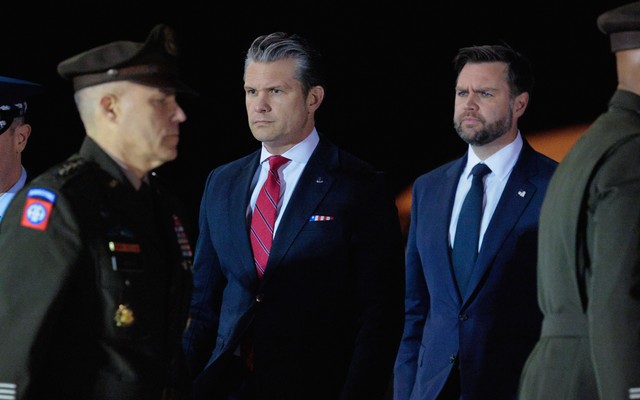
Vice President Vance is worried that the U.S. is running low on weapons.
In closed-door meetings, J. D. Vance has repeatedly questioned the Defense Department’s depiction of the war in Iran and whether the Pentagon has understated what appears to be the drastic depletion of U.S. missile stockpiles.
Two senior administration officials told us that the vice president has queried the accuracy of the information the Pentagon has provided about the war. He has also expressed his concerns about the availability of certain missile systems in discussions with President Trump, several people familiar with the situation told us. The consequences of a dramatic drawdown in munitions reserves are potentially dire: U.S. forces would need to draw from these same stockpiles to defend Taiwan against China, South Korea against North Korea, and Europe against Russia.
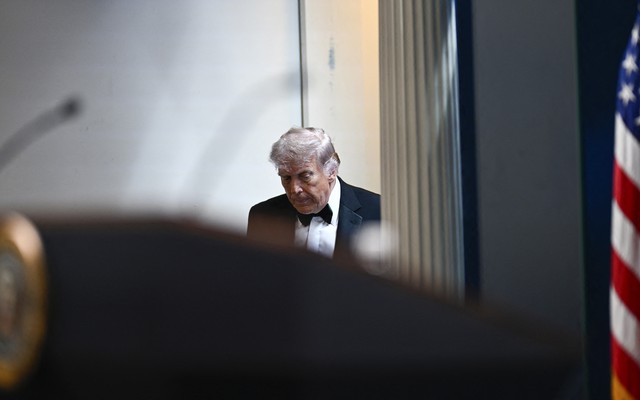
For a brief moment this weekend, the president appeared introspective.
This article was featured in the One Story to Read Today newsletter. Sign up for it here.
For a guy who had just been rushed out of a ballroom at the sound of gunfire, he seemed remarkably calm. For a president who regularly attacks the press, he seemed unusually gracious. For a fleeting period on Saturday night, Donald Trump appeared introspective, or at least as introspective as he’s capable of being in public.
“It’s always shocking when something like this happens,” he told reporters in the White House briefing room, standing in his tux and appearing to speak without notes. He briefly seemed to consider how familiar he was with threats to his life, and how the shock doesn’t fade: “Happened to me a little bit. And that never changes.”
For the richest men on Earth, everything is free and nothing matters.
At the end of Paul Thomas Anderson’s 2007 movie, There Will Be Blood, Daniel Day-Lewis’s oil-baron character, old now and richer than Croesus, beats Paul Dano’s preacher to death with a bowling pin. Dano’s Eli Sunday, a nemesis of Day-Lewis’s Daniel Plainview during his seminal, wealth-building years, has come to sell Plainview the oil-rich land that he once coveted. But Plainview doesn’t need the land anymore, because—as he explains in one of the most famous monologues in modern cinema—he has sucked out all the oil hidden beneath it from an adjoining property, like a milkshake.
Desperate for money, Eli begs for a loan. Instead, Plainview chases him around a bowling alley and murders him with great enthusiasm. Once it’s over, a butler comes to see what all the noise was about. “I’m finished,” Plainview yells.
The legal right spent decades empowering the presidency. Now it must reckon with the system it helped create.
Julius Caesar styled himself as a servant of the republic, claiming to speak for the people even as he disregarded laws and norms to govern by caprice. The Roman republic did not survive him.
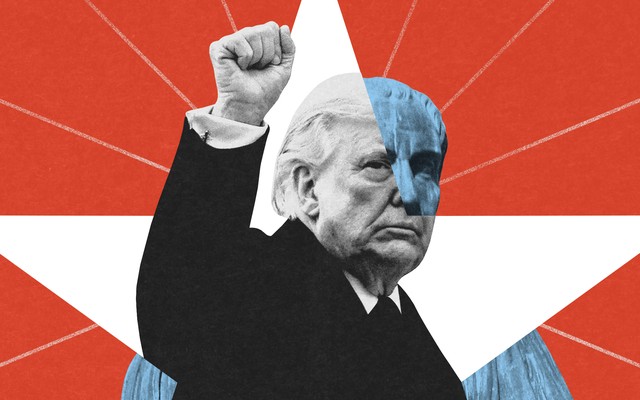
The second Trump administration has revealed American Caesarism in nearly full bloom. Despite ambitions to fundamentally change the course of the country, this administration has no real legislative agenda. Instead, the president governs by executive orders, emergency decrees, and extortionate transactions, using his power to reward his friends and punish his enemies. He’s launched foreign military adventures and full-blown wars seemingly based on personal whim, and has made the military a political prop and a tool for domestic law enforcement. With Congress sidelined and the courts reluctant to check Donald Trump’s excesses, America has been left with what some legal scholars have described as an “executive unbound”—and with a president who threatens to supplant the republic in all but name.
To understand the significance of someone running a marathon in less than two hours, you also need to understand that, until recently, the notion of this actually happening was truly, utterly absurd. Sure, a physiologist named Michael Joyner had floated the idea that such a feat might be humanly possible in a journal paper way back in 1991. But his peers laughed off the idea, and not much changed over the succeeding decades. In Runner’s World in 2014, I predicted that it would happen in 2075. Frankly, even that forecast seemed overly optimistic to me, but I figured I’d be dead by then, so no one would be able to call me on it.
Well, I was wrong. Yesterday morning, the two-hour marathon barrier finally went down. A relatively unheralded 31-year-old Kenyan named Sabastian Sawe won the London Marathon with a time of 1:59:30. That is, for reference, 26.2 miles run at an average of 4:34 a mile—or, put another way, a pace that most recreational runners would struggle to sustain for more than a few seconds, if they could hit it at all. Perhaps even more arresting was the fact that the man who took second place, Ethiopia’s Yomif Kejelcha, also ran under two hours, finishing just 11 seconds behind Sawe.
The shooting at the Correspondents’ Dinner made clear who gets saved first.
This article was featured in the One Story to Read Today newsletter. Sign up for it here.
On one level, the system worked. The perimeter held. A would-be assassin was tackled in the hallway outside the White House Correspondents’ Association’s annual dinner. The one bullet that found a human target—a U.S. Secret Service agent—was halted, in part, by the officer’s phone and bulletproof vest, according to a law-enforcement summary report that we reviewed. A counterassault team promptly swarmed the stage with assault rifles and night-vision equipment in case the lights were cut. The government’s top leaders—president, vice president, Cabinet officials, speaker of the House—were ushered to secure locations in a matter of minutes. No one died in the attack.
The administration could exert much greater control over the industry—but just how far would it go?
AI companies are beginning to entertain the possibility that they could cease to exist. This notion was, until recently, more theoretical: A couple of years ago, an ex-OpenAI employee named Leopold Aschenbrenner wrote a lengthy memo speculating that the U.S. government might soon take control of the industry. By 2026 or 2027, Aschenbrenner wrote, an “obvious question” will be circling through the Pentagon and Congress: Do we need a government-led program for artificial general intelligence—an AGI Manhattan Project? He predicted that Washington would decide to go all in on such an effort.
Aschenbrenner may have been prescient. Earlier this year, at the height of the Pentagon’s ugly contract dispute with Anthropic, Secretary of Defense Pete Hegseth warned that he could invoke the Defense Production Act (DPA), a Cold War–era law that he reportedly suggested would allow him to force the AI company to hand over its technology on whatever terms the Pentagon desired. The act is one of numerous levers the Trump administration can pull to direct, or even commandeer, AI companies. And the companies have been giving the administration plenty of reason to consider doing so.
The pontiff has proved unwilling to subordinate his faith to politics, or to adjust his commitment to the Gospel in exchange for access to power.
American presidents and popes have clashed before, but the battle of words and wills between Donald Trump and Pope Leo XIV is unprecedented.
The distinctiveness of their clash is not due mainly to the fact that Robert Francis Prevost is the first American-born pope, though that is significant. After all, Leo can’t be dismissed as a foreigner who is speaking about a country and culture he doesn’t understand. When he is critical of America, on matters ranging from war to mass deportation to those who “manipulate religions and the very name of God,” it comes from a place of love and devotion.
Nor does it have to do solely with the nature of the disagreements, most specifically the war waged by Trump against Iran. Past popes have criticized past presidents for going to war.
What makes the Trump-Leo collision most unusual is the manner of the disagreement, not on the part of the pope—whose criticisms have been direct but restrained—but on the part of the president.
Instead of a crackdown on his enemies, Trump wants his ballroom.
When an assassin murdered Charlie Kirk in September 2025, the MAGA movement seized the moment to demand a campaign of repression. Vice President Vance called for an ambitious program to “go after the NGO network that foments, facilitates, and engages in violence.” He named the Ford Foundation, Open Society Foundations, and The Nation magazine as examples of candidates for the retaliation he had in mind. The people who faced consequences after the killing almost universally did so for things they had written or said, not for acts of violence. In November, Reuters counted some 600 cases of people who were fired, suspended, or otherwise disciplined for their speech about Kirk’s life and death.
Now another gunman has attacked political targets. At the White House Correspondents’ Association Dinner, a man discharged a firearm in the vicinity of hundreds of people from the worlds of politics, media, and business—among them, the president and vice president of the United States. Although much about the event remains unclear, the available evidence suggests that the gunman was motivated by an anti-Trump agenda. Yet this time, MAGA’s immediate response to political violence has been much less aggressive. At his press conference after yesterday’s attempted shooting, President Trump cited the attack as proof of the need for his wished-for White House ballroom. Social-media accounts that take their cues from the White House promptly echoed the message.
The people we were died at the exact moment our child did.
This article was featured in the One Story to Read Today newsletter. Sign up for it here.
My husband, David, hates Valentine’s Day. He once called it “New Year’s Eve with nuclear weapons.” I pretend not to care. Still, when the day passes entirely unremarked on, a woman can’t help but feel overlooked.
On Valentine’s Day 2024, David found a way out. He booked a speech on February 14 that required traveling from our home in Washington, D.C., to Toronto. I couldn’t object—he was getting paid. Anyway, I had my own plans: an “anti–Valentine’s Day” dinner hosted by one of the foreign embassies.
As I got ready, I called our oldest daughter, Miranda. She answered from her Brooklyn bathroom, getting ready for her own party. She propped her phone up beside her sink and laughed when I told her about her father’s strategic Valentine’s Day escape.