President Trump fires acting attorney general for defying order, man charged in attack on a mosque in Quebec, and more from the United States and around the world.
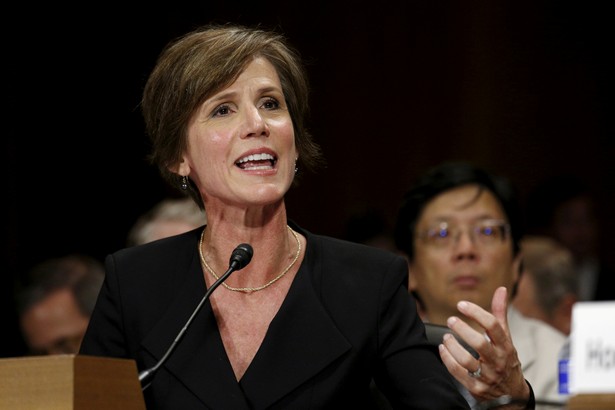
President Trump fired Acting Attorney General Sally Yates.
Kevin Lamarque / Reuters
—President Trump fired Acting Attorney General Sally Yates on Monday night, hours after she instructed the Justice Department not to argue in defense of Trump’s immigration and refugee executive order. More here
—Alexandre Bissonnette, the suspect behind the deadly shooting at a Quebec mosque, was charged for perpetrating the attack that killed six people and injured 19 others. More here
—We’re tracking the news stories of the day below. All updates are in Eastern Standard Time (GMT -5).
Transgender boys will now be able to participate in the Boy Scouts of America, the organization announced Monday, accepting children based on their gender identities. Until now, the Boy Scouts only based its enrollment on the gender listed on birth certificates. But, the organization said in a statement, “that approach is no longer sufficient as communities and state laws are interpreting gender identity differently, and these laws vary widely from state to state.” Some Boy Scouts have previously been asked to leave the program after leaders found out the children were transgender. The new policy goes into effect immediately. The Boy Scouts have adopted more LGBTQ-friendly policies in recent years, amid pressure. In 2013, the organization said it would allow openly gay children to participate, and in 2015 allowed in gay troop leaders and employees. LGBTQ rights activists celebrated Monday’s announcement.
Trump Fires Acting Attorney General for Not Defending Immigration Order
Kevin Lamarque / Reuters
Updated at 9:45 p.m.
President Trump fired Acting Attorney General Sally Yates on Monday night, hours after she instructed the Justice Department not to argue in defense of Trump’s immigration and refugee executive order.
“The acting attorney general, Sally Yates, has betrayed the Department of Justice by refusing to enforce a legal order designed to protect the citizens of the United States,” the White House said in an unusual statement announcing the dismissal. “Ms. Yates is an Obama administration appointee who is weak on borders and very weak on illegal immigration.”
The White House said Dana Boente, the U.S. Attorney for the Eastern District of Virginia, would serve as acting attorney general in Yates’s stead until the Senate confirms Alabama Senator Jeff Sessions as attorney general.
Events unfolded rapidly after Yates sent a letter to Justice Department lawyers instructing them not to defend Trump’s controversial executive order in court, a surprising rebuke of the new president’s controversial efforts to block immigrants and refugees from seven largely Muslim countries from entering the United States. Yates had been confirmed by the Senate to the position of deputy attorney general in January 2015.
“At present I am not convinced that the defense of the executive order is consistent with [my] responsibilities nor am I convinced that the executive order is lawful,” she wrote. “Consequently, for as long as I am the acting attorney general, the Department of Justice will not present arguments in defense of the executive order, unless and until I become convinced that it is appropriate.”
Her move came after a chaotic weekend at dozens of U.S. airports in which armies of volunteer lawyers and demonstrators attempted to aid those detained and deported by Trump’s executive order. Federal judges in five states blocked immigration officials from enforcing parts of the order over the past three days.
Yates’s directive also adds new energy to the Senate confirmation battle over Sessions, an immigration hardliner nominated by Trump to helm the Justice Department. The Senate Judiciary Committee is scheduled to vote on Sessions’s nomination on Tuesday.
“My responsibility is to ensure that the position of the Department of Justice is not only legally defensible, but is informed by our best view of what the law is after consideration of all the facts,” she wrote. “In addition, I am responsible for ensuring that the positions we take in court remain consistent with this institution’s solemn obligation to always seek justice and stand for what is right.”
SWAT team officers walk near the Centre Culturel Islamique de Québec on January 30, 2017. (Mathieu Belanger / Reuters)
Alexandre Bissonnette, the suspect behind the deadly shooting at a Quebec mosque, was charged Monday for perpetrating the attack that killed six people and injured 19 others, the Toronto Star reports. The 27-year-old university student faces six counts of first degree murder and five counts of attempted murder. Approximately 39 people were attending Sunday prayers at the Cultural Centre of Quebec’s Grand Mosque when a gunman entered the building and opened fire on the worshippers. Justin Trudeau, the Canadian Prime Minister, condemned the shooting as “a terrorist attack on Muslims in a centre of worship and refuge.”
Fort Lauderdale Airport Shooting Suspect Pleads Not Guilty
Estoban Santiago is transported to the federal courthouse in Fort Lauderdale, Florida, on January 9, 2017. (Amy Beth Bennett / Reuters)
Estoban Santiago plead not guilty Monday to criminal charges accusing him of perpetrating a shooting that left five people dead and six others injured at the Fort Lauderdale-Hollywood International Airport. The 26-year-old Iraq war veteran, who traveled to Florida on a one-way ticket from Alaska, faces 22 criminal charges for allegedly loading a handgun in an airport bathroom and opening fire on people in baggage claim. If convicted, he could face life in prison or the death penalty. Santiago’s family said he was receiving psychological treatment prior to the attack, and authorities are determining whether his mental health played a role. Santiago had previously told investigators he was inspired by the Islamic State after chatting with extremists online, though it is unclear if this is true.
Less Than Two Weeks After Leaving, Obama Speaks Out
Credit POOL / Reuters
Less than two weeks since his successor Donald Trump was sworn in as president, former President Barack Obama made a public statement in support of the protests that erupted in response to Trump’s executive order barring travelers from certain majority-Muslim countries.
“President Obama is heartened by the level of engagement taking place in communities around the country,” reads the statement from Obama spokesperson Kevin Lewis. “Citizens exercising their Constitutional right to assemble, organize, and have their voices heard by their elected officials is exactly what we expect to see when American values are at stake.” Notably, in his last press conference, Obama implied he might re-enter the political arena if he believed that the nation had reached a moment “where I think our core values may be at stake.”
Obama’s decision to weigh in so soon after leaving office suggests a high level of concern over recent events––most presidents try to avoid weighing in on politics in the immediate aftermath of their administrations. But the decision was likely affected by the Trump administration’s decision to falsely characterize the ban as similar to policies pursued while Obama was in office––the Obama administration never barred all refugees, green card holders, or visa applications in the same manner.
“With regard to comparison to President Obama’s foreign police decisions,” Miller’s statement reads, “the President fundamentally disagrees with the notion of discriminating against individuals because of their faith or religion.”
Washington State Sues Donald Trump Over the Travel Ban
Elaine Thompson / AP
The attorney general for Washington state said Monday the state will sue President Trump over the executive order signed last week that bans migration to the U.S. from seven majority-Muslim countries. Washington is now the first state to file suit against the order. Washington’s attorney general was one of 15 others who signed a statement opposing Trump’s travel ban. On Monday, at a news conference announcing the suit, Governor Jay Inslee said of the order: “Its impact, its cruelty, its clear purpose is an unconstitutional religious test.” The suit will be backed by Washington-based companies like Expedia and Amazon.com, according toThe Seattle Times, and company representatives will provide testimonies about the economic harms Trump’s ban will bring. The order has set off waves of protests across the country, and over the weekend a huge crowd demonstrated outside the Seattle-Tacoma International Airport, where two men were detained by U.S. Customs and Border Protection—and later released.
Iraqi lawmakers attend a session in Baghdad, Iraq, on September 8, 2014. (Thaier Al-Sudani / Reuters)
Iraqi lawmakers approved a measure Monday barring Americans from entering the country, the Associated Press reports. The measure, which is non-binding, comes in response to President Trump’s executive order Friday banning citizens from Iraq and six other Muslim-majority countries from entering the United States. It is unclear when the ban will go into effect, or if it will affect American military personnel or non-government workers already in the country. Iraq’s foreign ministry released a statement Monday condemning the U.S. ban, which it characterized as a “wrong” move by “an ally and a strategic partner.” Indeed, the bans signal a strain in relations between Washington and Baghdad, whose joint efforts have focused on targeting the Islamic State in Mosul, Iraq’s second-largest city. Iran, which is also on the U.S. list, responded to the U.S. ban Saturday with a retaliatory measure of its own, announcing it too would bar U.S. citizens from entering the country “until the offensive U.S. limitations against Iranian nationals are lifted.”
France Charges Brussels Bombing Suspect in Paris Attacks
A Belgian police officer secures the zone outside a courthouse while Brussels attacks suspects Mohamed Abrini and Osama Krayem appear before a judge in Brussels, Belgium, on April 14, 2016. (Yves Herman / Reuters)
French authorities have the charged the Brussels bombing suspect with involvement in the November 2015 Paris attacks. Belgian authorities handed over Mohamed Abrini, the “man in the hat,” to France for one day in connection with the Paris attack, French media quoted prosecutors as saying. Both attacks were claimed by ISIS, and Belgian authorities said they were planned and carried out by the same cell. The Brussels airport bombing on March 22, 2016, killed 32 people; the Paris attacks killed 130.
Canadian Prime Minister Justin Trudeau is calling the shooting deaths of six people at a mosque in Quebec City an act of terrorism. Two men have been arrested in connection with the shooting at the Islamic Cultural Center of Quebec; eight people were wounded in Sunday’s attack during evening prayers. Quebec’s Premier Philippe Couillard called the incident “murderous act directed at a specific community.” An unnamed witness told Radio-Canada that the shooting was carried out by two masked gunmen. Martin Coiteux, Quebec’s public-security minister, said places of worship across the province were given extra security following the attack. Last June, someone left a pig’s head at the doorstep of the Islamic Center during the Muslim holy month of Ramadan; Muslims regard the pig as an unclean animal. The motivation of the gunmen is not yet clear.
Here's What's Happening Today With Trump's Immigration Order
President Trump’s executive order led to massive protests, legal challenges, and an apparent reversal over the weekend. The order suspends the U.S. refugee intake for 120 days, bans all Syrian refugees until further notice, and bars people from seven countries—Iran, Iraq, Libya, Somalia, Sudan, Syria, or Yemen—for 90 days. Following large protests over the weekend at several U.S. airports and outside the White House, as well as legal challenges on the behalf of individuals detained at U.S. ports of entry, the Trump administration appeared to reverse course on a section of the ban the also applied to U.S. permanent residents. Other parts of the ban remain in effect. Protests are expected on Monday, though perhaps on a smaller scale as it’s the start of the workweek. Criticism of the order has spread across the Atlantic: In the U.K., a petition to stop Trump’s state visit has gained more than 1 million signatures; 100,000 signatures were needed for the petition to be considered for parliamentary debate.
The shooting at the correspondents’ dinner made clear who gets saved first.
This article was featured in the One Story to Read Today newsletter. Sign up for it here.
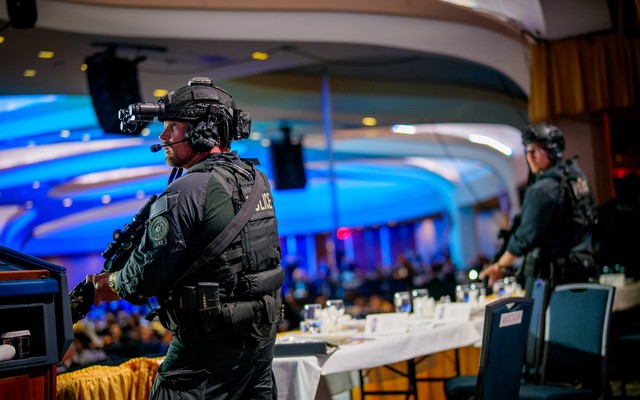
On one level, the system worked. The perimeter held. A would-be assassin was tackled in the hallway outside the White House Correspondents’ Association’s annual dinner. The one bullet that found a human target—a U.S. Secret Service agent—was halted, in part, by the officer’s phone and bulletproof vest, according to a law-enforcement summary report that we reviewed. A counterassault team promptly swarmed the stage with assault rifles and night-vision equipment in case the lights were cut. The government’s top leaders—president, vice president, Cabinet officials, speaker of the House—were ushered to secure locations in a matter of minutes. No one died in the attack.
For the richest men on Earth, everything is free and nothing matters.
At the end of Paul Thomas Anderson’s 2007 movie, There Will Be Blood, Daniel Day-Lewis’s oil-baron character, old now and richer than Croesus, beats Paul Dano’s preacher to death with a bowling pin. Dano’s Eli Sunday, a nemesis of Day-Lewis’s Daniel Plainview during his seminal, wealth-building years, has come to sell Plainview the oil-rich land that he once coveted. But Plainview doesn’t need the land anymore, because—as he explains in one of the most famous monologues in modern cinema—he has sucked out all the oil hidden beneath it from an adjoining property, like a milkshake.
Desperate for money, Eli begs for a loan. Instead, Plainview chases him around a bowling alley and murders him with great enthusiasm. Once it’s over, a butler comes to see what all the noise was about. “I’m finished,” Plainview yells.
Instead of a crackdown on his enemies, Trump wants his ballroom.
When an assassin murdered Charlie Kirk in September 2025, the MAGA movement seized the moment to demand a campaign of repression. Vice President Vance called for an ambitious program to “go after the NGO network that foments, facilitates, and engages in violence.” He named the Ford Foundation, Open Society Foundations, and The Nation magazine as examples of candidates for the retaliation he had in mind. The people who faced consequences after the killing almost universally did so for things they had written or said, not for acts of violence. In November, Reuters counted some 600 cases of people who were fired, suspended, or otherwise disciplined for their speech about Kirk’s life and death.
Now another gunman has attacked political targets. At the White House Correspondents’ Association dinner, a man discharged a firearm in the vicinity of hundreds of people from the worlds of politics, media, and business—among them, the president and vice president of the United States. Although much about the event remains unclear, the available evidence suggests that the gunman was motivated by an anti-Trump agenda. Yet this time, MAGA’s immediate response to political violence has been much less aggressive. At his press conference after yesterday’s attempted shooting, President Trump cited the attack as proof of the need for his wished-for White House ballroom. Social-media accounts that take their cues from the White House promptly echoed the message.
A manifesto-like email allegedly sent by the dinner shooter suggests a murderous obsession with Trump’s politics.
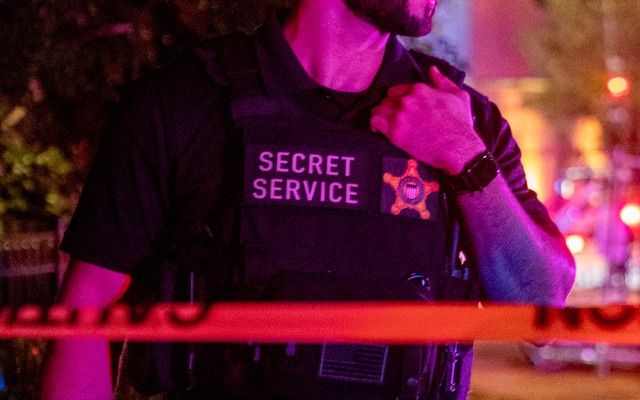
The line “I experience rage thinking about everything this administration has done” could probably have been written in an email to friends by any number of the attendees at last night’s White House Correspondents’ Association dinner. But the line was apparently written by a man who showed up with a shotgun and pistol and was ready to kill “most everyone” there to get to Donald Trump and assassinate him and his Cabinet. In a manifesto-like email that he reportedly sent to family minutes before allegedly shooting, Cole Tomas Allen wrote that the assembled journalists and machers “chose to attend a speech by a pedophile, rapist, and traitor, and are thus complicit.” Allen never came near the president or the gala floor. A Secret Service agent was shot in the vest before Allen was tackled and arrested.
This weekend’s failed attack highlighted a risk that often goes unspoken.
In the chaotic swirl of events after President John F. Kennedy’s assassination, doctors feared that Vice President Lyndon B. Johnson had suffered a heart attack upon arrival at Parkland Memorial Hospital in Dallas. The signs were ominous: Johnson’s face was ashen, and he was clutching his chest. “There was the real possibility that the No. 3 in the line of succession would become president,” the historian Michael Beschloss told me. Johnson was reportedly examined and a heart attack ruled out—but not before then–House Speaker John McCormack was told that he might be the next president. The declaration prompted a severe bout of vertigo in the 71-year-old.
Few moments in history have so starkly exposed the vulnerabilities of the presidential line of succession—or the lack of clarity about how it is protected. Last night provided another illustration of them. If events at the White House Correspondents’ Association Dinner had gone differently, a gunman who breached security at the Washington Hilton could have reached a ballroom containing an unusually dense cluster of American power. The president and the vice president were seated a few feet apart. Congressional leadership and many Cabinet secretaries were also on hand. In other words, much of the presidential line of succession was in the same spot—and subject to the same vulnerabilities.
Tragedy was averted at a Washington hotel, but such moments will happen again.
Except for what appears—thank God—to be only a minor injury to a Secret Service officer who was shot near a security checkpoint, no one was hurt at the White House Correspondents’ Association dinner last night. News reports are reassembling the mosaic of the attacker’s movements; he apparently took a train and transported some weapons with him, checked into the hotel, and then made his run at the event.
These are the basic contours of all that we know, and it will take time for more credible information to emerge. In the meantime, the vacuum of facts has been filled by a certain amount of hysteria and the usual conspiracy theories, as well as understandable demands to make changes so that such a thing can never happen again.
Priests and theologians want to shape the future of AI. Big Tech is listening.
In 1633, Galileo Galilei stood in the convent of the Santa Maria sopra Minerva church in Rome, where a tribunal of Catholic authorities forced him to “abjure, curse, and detest” his belief that the sun—not Earth—was the center of the universe.
Almost four centuries later, in 2016, the Vatican invited a group of the world’s most prominent technologists to the same church to discuss AI ethics. That was the start of the Minerva Dialogues, annual closed-door conferences in Rome that have become the centerpiece of a decade-long exchange between Silicon Valley and the Catholic Church.
The Valley and the Vatican seem like strange bedfellows: The oldest institution in the world meets secular upstarts bent on creating godlike technology. When the venture capitalist Reid Hoffman first attended the dialogues, he told me he was struck by the portraits lining the walls that depicted Catholic inquisitors like those who persecuted Galileo. “It feels a little bit weird to be walking in voluntarily past these,” he remembers thinking.
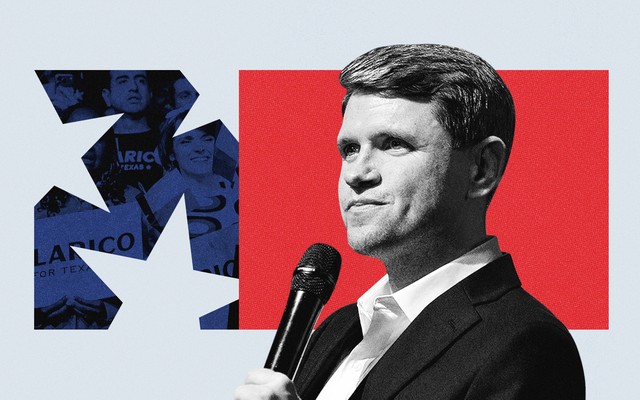
James Talarico is trying to sell a novel brand of Christian politics in a deep-red state.
Updatedat 11:25 a.m. ET on April 24, 2026
While some might pray for hope or peace in such dark times, others are praying for the death of Texas Democrat James Talarico, who is running for the U.S. Senate. During a recent episode of the right-wing Protestant podcast Reformation Red Pill, host Joshua Haymes told the pastor Brooks Potteiger that he prays that “God kills” Talarico, given that the politician seems to be possessed by demons. Potteiger agreed, offering that Talarico should be “crucified with Christ.” Both Haymes and Potteiger later insisted that their remarks were not sincere expressions of violent intent, but rather metaphorical calls for Talarico, a Presbyterian seminarian, to find salvation in their brand of Christianity. Talarico shrewdly responded by offering forgiveness: “You may pray for my death, Pastor, but I still love you. I love you more than you could ever hate me.”
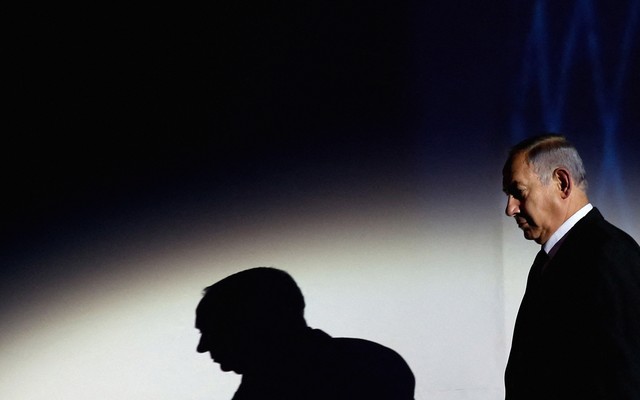
The Israeli prime minister’s focus is, as always, on himself and his near-term political needs. The plight of American Jews is simply not his concern.
The relationship between the United States and Israel is in crisis. Six in 10 Americans have a negative view of Israel, and a majority of those under 50 in both major parties view Israel as well as its prime minister, Benjamin Netanyahu, negatively. After the brutal Gaza war, a large percentage of liberal-leaning Generation Z considers Israel a pariah state. Democratic candidates are scrambling to distance themselves from Israel and its controversial leader; earlier this month, 40 of the 47 Democratic senators voted against a military aid package for the country. And hostility toward Israel is spilling over into hostility toward Jews. Liberal influencers, activists, podcasters, and even politicians are invoking age-old anti-Semitic tropes with frightening regularity.
A New York Times podcast hosted Hasan Piker and a New Yorker staff writer for a discussion of lawbreaking, which they both endorsed as resistance to tyranny.
The late political scientist James C. Scott endorsed what he called “anarchist calisthenics”—the regular practice of small acts of lawbreaking and disobedience. Jaywalk at an empty intersection. Have a beer in the park. Smuggle a pudding cup past the TSA agents. The point, Scott said, was to keep the civic muscles strong. Without constant reinforcement, these muscles will atrophy, and when real tyranny arrives, the flabby citizen will be powerless to resist. Scott particularly enjoyed telling Germans to get their reps in, because their grandparents had not.
On Wednesday a New York Times podcast hosted the Twitch streamer Hasan Piker and the New Yorker staff writer Jia Tolentino for a discussion of lawbreaking, which they both endorsed not as a habit of mind but as resistance to actual tyranny, today. They agreed that shoplifting from grocery stores such as Whole Foods is laudable, because (as Tolentino says, without evidence) “every major grocery chain” steals from workers and customers. Streaming services—they specifically name Spotify, which carries the Times podcast—are bad for creators and, they say, worthy of being ripped off. Piker said he would steal cars, “if I could get away with it.” Channeling Abbie Hoffman, Tolentino encourages people to steal from her own employer, The New Yorker, but does not explain which high crimes David Remnick has committed to earn this comeuppance.