Mike Flynn reportedly offers to be interviewed in exchange for immunity, a deal in North Carolina over the “bathroom bill,” and more from the United States and around the world.
Mike Flynn Reportedly Offers to be Interviewed in Exchange for Immunity
(Mike Segar / Reuters)
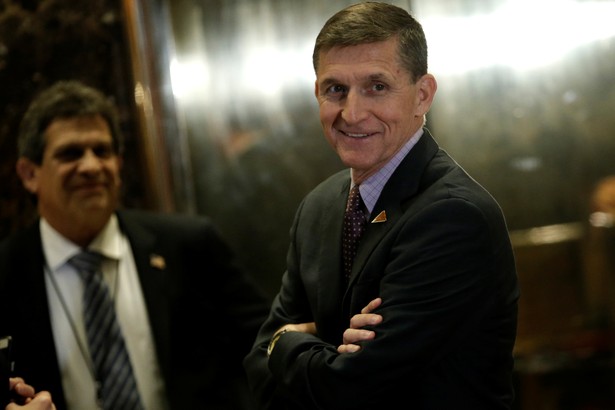
Mike Flynn, President Trump’s former national-security adviser, has told the FBI and congressional investigators he is willing to be interviewed in exchange for immunity from prosecution, the Wall Street Journal reports. The Journal, which cited anonymous officials with knowledge of the matter, said Flynn has so far found no takers for his offer. More from the Journal:
It wasn’t clear if Flynn had offered to talk about specific aspects of his time working for Trump, but the fact that he was seeking immunity suggested Flynn feels he may be in legal jeopardy following his brief stint as the national security adviser, one official said.
Flynn resigned as national-security adviser last month following reports he misled Vice President Mike Pence and other Trump administration officials about the nature of his talks in December with Sergei Kislyak, the Russian ambassador to Washington. His resignation, just 23 days after Trump named him to the post, made him the shortest-serving national-security adviser in history. The FBI and intelligence committees in both the House and Senate are investigating Russian interference in the U.S. presidential election, as well as links between Trump’s top aides and Russian officials. Paul Manafort, Trump’s former campaign chairman, and Jared Kushner, the president’s son-in-law, have both volunteered to be interviewed by the House Intelligence Committee. The Journal’s report comes amid revelations Flynn was paid for speeches made to Russian companies before he joined Trump’s campaign; add to this the spectacular claim, also reported by the Journal, that he’d suggested an extrajudicial extradition to Turkey of Fethullah Gulen, the cleric whom the Turkish leadership regards an enemy; Flynn served as a lobbyist for a client representing Turkey’s interests.
Israel Approves New West Bank Settlement for First Time in Over 20 Years
The Israeli settlement of Efrat in the occupied West Bank on February 7, 2017. (Ammar Awad / Reuters)
Updated at 11:48 a.m. ET
Israel’s security cabinet unanimously approved Thursday a new settlement in the occupied West Bank, marking the first time the country has established a West Bank settlement in more than two decades. It is unclear when construction of the settlement, which will be located near the existing settlement of Shiloh in the northern West Bank, will begin. Haaretz, the Israeli newspaper, reports that the decision stems from a promise Israeli Prime Minister Benjamin Netanyahu made following the eviction last month of settlers from the West Bank outpost of Amona, which the Israeli Supreme Court deemed illegal because it was built on private Palestinian land. The Israeli move will almost certainly draw criticism from Palestinians, who claim the West Bank, Gaza, and East Jerusalem as part of their future state. Though President Trump asked Netanyahu to “hold back on settlements for a little bit” during the Israeli premier’s visit last month, the White House did not condemn the move, noting in a statement that Netanyahu “made a commitment to the Amona settlers prior to President Trump laying out his expectations” and that “going forward ... the Israeli government has made clear that Israel's intent is to adopt a policy regarding settlement activity that takes President Trump's concerns into consideration.”
Ex-South Korean President Park Arrested Over Corruption Scandal
South Korea's ousted leader Park Geun Hye leaves her private house in Seoul, South Korea on March 30, 2017. (Lim Heon Jeong / Reuters)
South Korea’s recently ousted president Park Geun Hye was arrested Thursday over a corruption scandal that resulted in her impeachment. Park, whose ouster last month caused her to lose her immunity from prosecution, is accused of bribery, abuse of authority, coercion, and leaking government secrets—charges the former leader denies. Park is the third South Korean leader to be arrested over criminal allegations, following former Presidents Chun Doo Hwan and Roh Tae Woo in 1995 (though both were later pardoned). State prosecutors now have up to 20 days to formally indict Park. In the meantime, South Korea considers the candidates running to be Park’s successor in an election scheduled for May 9.
U.S. State Department Employee Charged for Concealing Ties With Chinese Officials
Joshua Roberts / Reuters
A U.S. State Department employee has been charged with obstruction of justice and lying to the FBI over her alleged contacts with Chinese foreign intelligence agents, federal prosecutors announced Wednesday. Candace Marie Claiborne, a 60-year-old who began working at the State Department in 1999, is accused of failing to report her contacts with two Chinese agents “who provided her with thousands of dollars of gifts and benefits,” Mary B. McCord, the acting assistant attorney general for national security, said in a statement, adding Claiborne “used her position and her access to sensitive diplomatic data for personal profit.” These gifts, according to the affidavit, included an Apple iPhone and laptop computer, international travel and vacations, tuition at a Chinese fashion school, a fully furnished apartment, and cash wired to Clairborne’s bank account. Prosecutors say Claiborne confided to an unnamed co-conspirator she knew the agents were spies, and that she noted in her journal that she could “generate 20k in 1 year” by working with them. Claiborne pleaded not guilty to the charges Wednesday and, if convicted, faces up to a 20-year sentence for obstruction and a five-year sentence for making false statements to the FBI.
Malaysia Returns Kim Jong Nam's Body to North Korea
Kim Jong Nam arriving at an airport in Beijing on February 11, 2007. (Kyodo / Reuters)
Malaysian Prime Minister Najib Razak announced Thursday the return of the remains of Kim Jong Nam, the half-brother of North Korean leader Kim Jong Un, to North Korea in exchange for nine Malaysian nationals being held in Pyongyang. “I am pleased to announce that the nine Malaysians who had been barred from leaving North Korea have now been allowed to return to Malaysia,” Razak said in a statement. “We will now allow North Koreans to leave Malaysia.” Tensions between the two countries began over the death last month of Kim Jong Nam at Malaysia’s Kuala Lumpur International Airport—an assassination Malaysia accused North Korea of orchestrating, though the North has denied this claim. The dispute led to North Korea barring all Malaysians from leaving the country, and Malaysia soon followed in kind with its own travel ban on North Korean nationals. Though the return of Kim Jong Nam’s body to Pyongyang and the lifting of the travel bans could signal an end in diplomatic tensions between the two countries, Razak reaffirmed that Malaysia’s investigation into Kim Jong Un’s death would continue, adding: “I have instructed for all possible measures to be taken to bring those responsible for this murder to justice.”
Chinese President to Meet With Trump at Mar-a-Lago Next Week
Mar-a-lago, where President Trump and Chinese President Xi Jinping will meet next week (Joe Skipper / Reuters)
The Chinese Foreign Ministry has confirmed that President Xi Jinping will meet with President Trump at Mar-a-Lago, Trump’s estate in Florida, next week—the first meeting between the two leaders since Trump’s election. Trump had complained about China’s trade policies during the campaign trail, and since becoming president he’s added to his litany of grievances against Beijing, citing its military policy in the South China Sea and what he sees as its lack of cooperation on North Korea. The April 6-7 meeting at Mar-a-Lago follows a visit to Beijing this month by Rex Tillerson, the U.S. secretary of state. Although this will be the first meeting between Trump and Xi, the two leaders spoke by telephone shortly after Trump’s inauguration as president. Trump had angered China by accepting a phone call from Taiwan’s leader shortly after he was elected president last November. But in his conversation with Xi in February, Trump reiterated U.S. support for the one-China policy, which states the U.S. recognizes the Chinese government in Beijing and has no formal diplomatic relations with Taiwan.
Hawaii Federal Judge Extends Order Blocking Trump's Travel Order
(Hugh Gentry / Reuters)
A U.S. federal judge in Hawaii extended his nationwide order blocking President Trump’s revised immigration order that temporarily bans the entry of visitors from six Muslim or predominantly Muslim countries and suspends the U.S. refugee program—the latest setback to the White House’s attempt to define who enters the United States. The government’s lawyers argued that Trump’s order fell within the president's power to protect national security, but urged U.S. District Court Judge Derrick Watson to restrict his order only to the ban on travelers—not the restriction on refugees. Watson wasn’t persuaded. He wrote:
National security is unquestionably of vital importance to the public interest. The same is true with respect to affording appropriate deference to the president’s constitutional and statutory responsibilities to set immigration policy and provide for the national defense. Upon careful consideration of the totality of the circumstances, however, the court reaffirms its prior finding that the balance of equities and public interest weigh in favor of maintaining the status quo.
The order comes two weeks after Watson temporarily blocked the order from going into effect, saying Trump’s executive order “violates the Establishment Clause of the First Amendment.” In his order Wednesday, Watson repeated that idea, noting “the entirety of the Executive Order runs afoul of the Establishment Clause, where openly available data support a commonsense conclusion that a religious objective permeated the government's action.’” Trump’s revised executive order was an attempt to find a way around successful legal challenges to the previous version of the order. Here’s what I wrote about it two weeks ago:
The president’s first immigration order was blocked by a federal court in San Francisco. That executive order temporarily blocked the entry of the citizens of seven Muslim or predominantly Muslim countries. But the White House revised the order, dropping Iraq from the list of countries whose citizens were temporarily blocked. The first order also suspended the entry of refugees for 120 days and Syrian refugees indefinitely. The new order no longer blocks Syrian refugees indefinitely.
The case in Hawaii was brought by the state and Ismail Elshikh, the imam of the Muslim Association of Hawaii, whose mother-in-law’s application for an immigrant visa was being processed. Elshikh argued that the new order would ban his mother-in-law from entering the country.
Syrian Refugees Top 5 Million for the First Time, UN Says
Syrian refugees at Al Zaatari camp near Mafraq, Jordan (Ammar Awad / Reuters)
The international community must do more to help those fleeing the civil war in Syria, as their numbers exceed 5 million for the first time, Filippo Grandi, the United Nations High Commissioner for Refugees, said today. His remarks come a year after a meeting on Syria in which the world’s powers pledged to resettle 500,000 refugees; so far, half those places have been made available, the UN said. The Syrian civil war is in its sixth year with President Bashar al-Assad firmly in control of the country. A cease-fire brokered by Russia and Turkey is mostly holding, as Syrian forces and their allies—Russia, Iran, and Hezbollah—as well as those supporting rebel groups—Turkey, the U.S., and other allied countries—turn their attention to ISIS and al-Qaeda-affiliated groups in Syria. The humanitarian crisis created by the civil war caused a political crisis across Europe, where many of the refugees fled, but it also strained the resources of Syria’s neighbors—Turkey, Jordan, Lebanon, and others—where the overwhelming majority of Syrian refugees live.
North Carolina's Lawmakers and Governor Reach a Deal to Repeal H.B. 2
(Jonathan Drake / Reuters)
Updated at 1:43 p.m.
Lawmakers in North Carolina have approved a measure to replace the “bathroom bill” and sent it to Governor Roy Cooper for his signature. Cooper is expected to sign the measure despite opposition from LGBTQ groups that say the replacement retains a key part of the original measure.
Original post at 7:10 a.m.
Lawmakers in North Carolina and the state’s governor have reached a deal to repeal H.B. 2, the state’s controversial “bathroom bill.” Among other things, H.B. 2 dictated that transgender people use the bathroom corresponding to the gender on their birth certificates. The agreement, which has already been criticized by LGBTQ groups, repeals the measure, but keeps a key part of it. Under the deal, the regulation of bathrooms is left to the state; cities and local governments can't pass their own anti-discrimination laws until December 2020, CNN reports. Lawmakers in the GOP-controlled legislature will vote on the measure today. Roy Cooper, the state’s Democratic governor, in a statement late Wednesday said “it’s not a perfect deal, but … it begins to repair our reputation.” Criticism of the bill resulted in businesses, sporting events, and other groups leaving North Carolina, as David Graham wrote in December.
The shooting at the correspondents’ dinner made clear who gets saved first.
This article was featured in the One Story to Read Today newsletter. Sign up for it here.
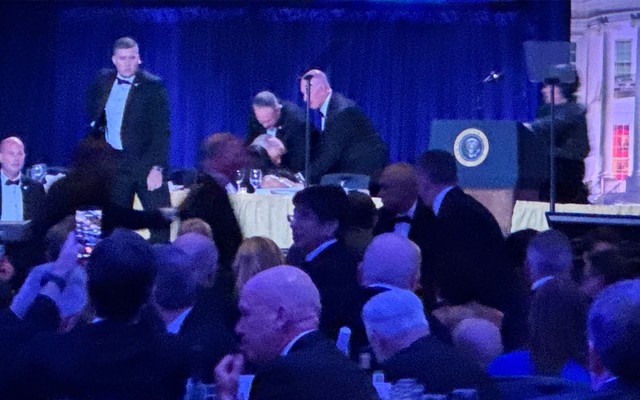
On one level, the system worked. The perimeter held. A would-be assassin was tackled in the hallway outside the White House Correspondents’ Association’s annual dinner. The one bullet that found a human target—a U.S. Secret Service agent—was halted, in part, by the officer’s phone and bulletproof vest, according to a law-enforcement summary report that we reviewed. A counterassault team promptly swarmed the stage with assault rifles and night-vision equipment in case the lights were cut. The government’s top leaders—president, vice president, Cabinet officials, speaker of the House—were ushered to secure locations in a matter of minutes. No one died in the attack.
Instead of a crackdown on his enemies, Trump wants his ballroom.
When an assassin murdered Charlie Kirk in September 2025, the MAGA movement seized the moment to demand a campaign of repression. Vice President Vance called for an ambitious program to “go after the NGO network that foments, facilitates, and engages in violence.” He named the Ford Foundation, Open Society Foundations, and The Nation magazine as examples of candidates for the retaliation he had in mind. The people who faced consequences after the killing almost universally did so for things they had written or said, not for acts of violence. In November, Reuters counted some 600 cases of people who were fired, suspended, or otherwise disciplined for their speech about Kirk’s life and death.
Now another gunman has attacked political targets. At the White House Correspondents’ Association dinner, a man discharged a firearm in the vicinity of hundreds of people from the worlds of politics, media, and business—among them, the president and vice president of the United States. Although much about the event remains unclear, the available evidence suggests that the gunman was motivated by an anti-Trump agenda. Yet this time, MAGA’s immediate response to political violence has been much less aggressive. At his press conference after yesterday’s attempted shooting, President Trump cited the attack as proof of the need for his wished-for White House ballroom. Social-media accounts that take their cues from the White House promptly echoed the message.
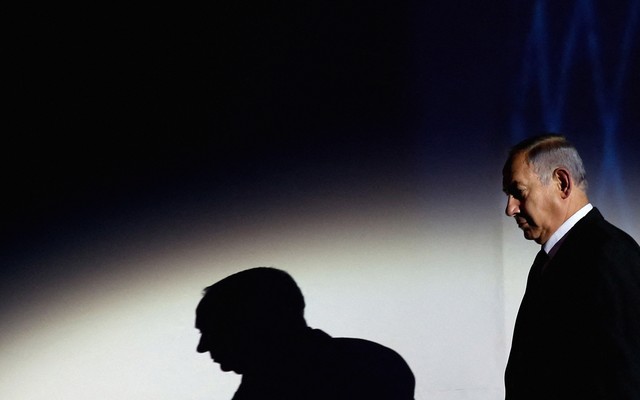
The Israeli prime minister’s focus is, as always, on himself and his near-term political needs. The plight of American Jews is simply not his concern.
The relationship between the United States and Israel is in crisis. Six in 10 Americans have a negative view of Israel, and a majority of those under 50 in both major parties view Israel as well as its prime minister, Benjamin Netanyahu, negatively. After the brutal Gaza war, a large percentage of liberal-leaning Generation Z considers Israel a pariah state. Democratic candidates are scrambling to distance themselves from Israel and its controversial leader; earlier this month, 40 of the 47 Democratic senators voted against a military aid package for the country. And hostility toward Israel is spilling over into hostility toward Jews. Liberal influencers, activists, podcasters, and even politicians are invoking age-old anti-Semitic tropes with frightening regularity.
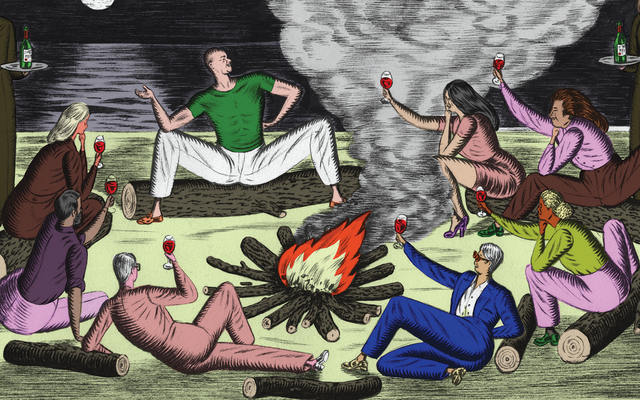
For the richest men on Earth, everything is free and nothing matters.
At the end of Paul Thomas Anderson’s 2007 movie, There Will Be Blood, Daniel Day-Lewis’s oil-baron character, old now and richer than Croesus, beats Paul Dano’s preacher to death with a bowling pin. Dano’s Eli Sunday, a nemesis of Day-Lewis’s Daniel Plainview during his seminal, wealth-building years, has come to sell Plainview the oil-rich land that he once coveted. But Plainview doesn’t need the land anymore, because—as he explains in one of the most famous monologues in modern cinema—he has sucked out all the oil hidden beneath it from an adjoining property, like a milkshake.
Desperate for money, Eli begs for a loan. Instead, Plainview chases him around a bowling alley and murders him with great enthusiasm. Once it’s over, a butler comes to see what all the noise was about. “I’m finished,” Plainview yells.
A New York Times podcast hosted Hasan Piker and a New Yorker staff writer for a discussion of lawbreaking, which they both endorsed as resistance to tyranny.
The late political scientist James C. Scott endorsed what he called “anarchist calisthenics”—the regular practice of small acts of lawbreaking and disobedience. Jaywalk at an empty intersection. Have a beer in the park. Smuggle a pudding cup past the TSA agents. The point, Scott said, was to keep the civic muscles strong. Without constant reinforcement, these muscles will atrophy, and when real tyranny arrives, the flabby citizen will be powerless to resist. Scott particularly enjoyed telling Germans to get their reps in, because their grandparents had not.
On Wednesday a New York Times podcast hosted the Twitch streamer Hasan Piker and the New Yorker staff writer Jia Tolentino for a discussion of lawbreaking, which they both endorsed not as a habit of mind but as resistance to actual tyranny, today. They agreed that shoplifting from grocery stores such as Whole Foods is laudable, because (as Tolentino says, without evidence) “every major grocery chain” steals from workers and customers. Streaming services—they specifically name Spotify, which carries the Times podcast—are bad for creators and, they say, worthy of being ripped off. Piker said he would steal cars, “if I could get away with it.” Channeling Abbie Hoffman, Tolentino encourages people to steal from her own employer, The New Yorker, but does not explain which high crimes David Remnick has committed to earn this comeuppance.
The president is safe after chaos at the Washington Hilton, and a suspect is reportedly in custody.
Updated at 1:29 a.m. ET on Sunday, April 26, 2026
We were under the table before we knew what was happening. One moment, a military band was parading out of the Washington Hilton’s cavernous ballroom; hundreds of government officials, diplomats, and journalists, including more than a dozen of us from The Atlantic, dressed in our best or borrowed black tie, had turned to our spring-pea-and-burrata salads.
The next moment, armed agents—maybe Secret Service, maybe police, maybe hotel guards; it was hard to tell from where we were huddled under a tablecloth—were pushing their way through mounds of people, climbing over chairs, rushing to the stage, where President Trump and First Lady Melania Trump had shortly before been seated.
Requiring schools to endorse biblical laws is both unconstitutional and counterproductive.
When you were in elementary school, did your mind occasionally rise above the smell of pencil shavings and the sound of squeaking desk chairs to contemplate whether you ought to commit murder? Did you ponder what it would mean to covet your neighbor’s wife? Ordinarily those aren’t questions addressed in grade-school classrooms, but according to legislators in Alabama, Louisiana, Texas, and Arkansas, they ought to be.
In those districts, state Republicans are rallying behind laws that would mandate posting the Ten Commandments in public-school classrooms and common areas, such as cafeterias and libraries. This fad began in 2024, when Louisiana Governor Jeff Landry signed such a bill, reviving a debate long silenced by the Supreme Court’s 1980 decision in Stone v. Graham to strike down a similar Kentucky law.Other states followed suit: Arkansas and Texas last year, and Alabama just this month. Although these laws pose a threat to the First Amendment rights of students and teachers, the trend is spreading, so far unchecked by courts. Opponents of Texas’s law suffered a defeat last week when an appellate court decided in the state’s favor. The ACLU and other organizations representing the plaintiffs—a multifaith group of Texas families—are expected to appeal this decision to the Supreme Court.
James Talarico is trying to sell a novel brand of Christian politics in a deep-red state.
Updatedat 11:25 a.m. ET on April 24, 2026
While some might pray for hope or peace in such dark times, others are praying for the death of Texas Democrat James Talarico, who is running for the U.S. Senate. During a recent episode of the right-wing Protestant podcast Reformation Red Pill, host Joshua Haymes told the pastor Brooks Potteiger that he prays that “God kills” Talarico, given that the politician seems to be possessed by demons. Potteiger agreed, offering that Talarico should be “crucified with Christ.” Both Haymes and Potteiger later insisted that their remarks were not sincere expressions of violent intent, but rather metaphorical calls for Talarico, a Presbyterian seminarian, to find salvation in their brand of Christianity. Talarico shrewdly responded by offering forgiveness: “You may pray for my death, Pastor, but I still love you. I love you more than you could ever hate me.”
Silicon Valley venture capitalists are wining and dining 18-year-olds.
This article was featured in the One Story to Read Today newsletter. Sign up for it here.Updated at 8:22 a.m. ET on April 25, 2026.
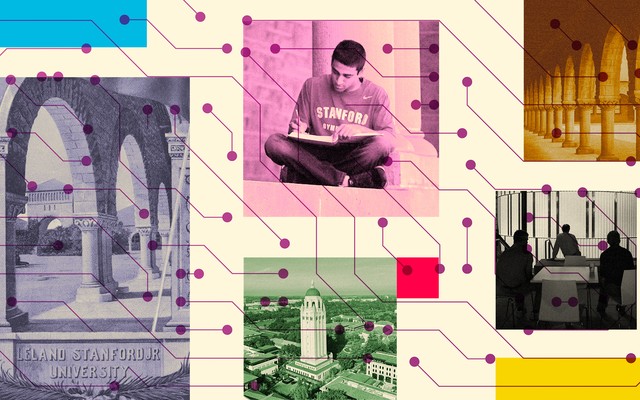
When I was a freshman at Stanford University, I learned to shotgun a beer from a guy in a frat. Soon after, he dropped out and started an AI company. Six months later, it was valued at more than $1 billion.
For most students, Stanford is a normal competitive school, where people go to class and coffee shops and fall in love and freak out over finals. But a select few attend something else: a Stanford inside Stanford, where venture capitalists pursue 18- and 19-year-olds, handing out mentorships and money and invites to yacht parties in an attempt to convert promise into profit.
Priests and theologians want to shape the future of AI. Big Tech is listening.
In 1633, Galileo Galilei stood in the convent of the Santa Maria sopra Minerva church in Rome, where a tribunal of Catholic authorities forced him to “abjure, curse, and detest” his belief that the sun—not Earth—was the center of the universe.
Almost four centuries later, in 2016, the Vatican invited a group of the world’s most prominent technologists to the same church to discuss AI ethics. That was the start of the Minerva Dialogues, annual closed-door conferences in Rome that have become the centerpiece of a decade-long exchange between Silicon Valley and the Catholic Church.
The Valley and the Vatican seem like strange bedfellows: The oldest institution in the world meets secular upstarts bent on creating godlike technology. When the venture capitalist Reid Hoffman first attended the dialogues, he told me he was struck by the portraits lining the walls that depicted Catholic inquisitors like those who persecuted Galileo. “It feels a little bit weird to be walking in voluntarily past these,” he remembers thinking.