—Alabama Governor Robert Bentley resigned amid allegations he abused power and state resources to conceal an affair. More here
—Two adults and one child are dead in an apparent murder-suicide inside a classroom in San Bernardino, California. More here
—Neil Gorsuch was sworn in as the 113th U.S. Supreme Court justice, returning the court to its full complement of nine judges, as well as to its conservative tilt. More here
—We’re tracking the news stories of the day below. All updates are in Eastern Daylight Time (GMT -4).
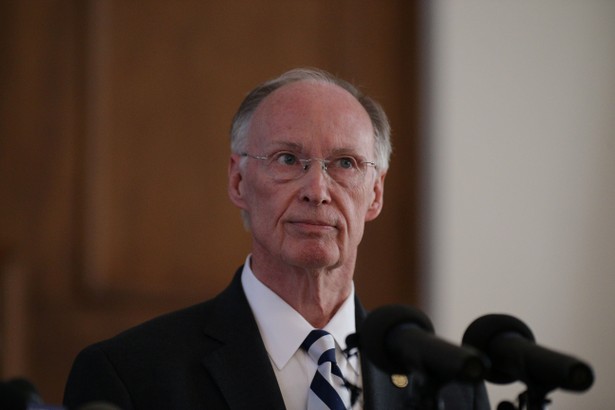
Alabama Governor Robert Bentley resigned Monday amid allegations he abused power and state resources to conceal an affair. As The New York Times’s Alan Blinder reports, the second-term Republican governor plead guilty Monday to two misdemeanor charges, including failing to file a major contribution report and converting campaign contributions to personal use—charges for which he was sentenced to 30 days in jail, though the sentence was suspended. Instead, he faces 12 months of probation, 100 hours of community service, and a $7,000 fine. Bentley, whose impeachment hearing began Monday, was confronted last week with allegations of “improper communications” with Rebekah Caldwell Mason, his senior political adviser with whom he is accused of having an affair, as well as abuse of power and violating state ethics and campaign finance laws. Though Bentley asked Alabama residents for forgiveness Friday, he said he had no plans to resign, adding that: “I have done nothing illegal. If the people want to know if I misused state resources, the answer is simply no. I have not.” Alabama Lieutenant Governor Kay Ivey is expected to be sworn in to replace Bentley, but as my colleague David Graham notes, the transition may not be that seamless.
Even with the handwriting so clearly on the wall, Bentley might not choose to leave office gently. His office denied any negotiation on an exit, and Alabama Media Group’s John Archibald wrote, with understated wryness, “It is possible that Bentley, who has changed his mind often during his term, could change his mind.”
Three Dead in Apparent Murder-Suicide at San Bernardino County Elementary School
Grant Hindsley / AP
Updated at 7:15 p.m. ET
Two adults and one child are dead in an apparent murder-suicide inside a classroom at North Park Elementary School, San Bernardino County Police Chief Jared Burguan said today. “We believe the suspect is down and there's no further threat,” Burguan said on Twitter. Lieutenant Mike Madden, a spokesman for the San Bernardino Police Department, said at a news conference that the shooter was Cedric Anderson and his victim was Karen Elaine Smith, a special education teacher. Later Monday, authorities said an 8-year-old boy, Jonathan Martinez, was killed in the gunfire. Madden said the shooter had a handgun and had visited the classroom. He said the injured students were in critical condition, adding they were not targeted; nor were they related to the adults who were killed, he said. Students at North Park Elementary were taken to Cajon High School for safety, Burguan said earlier. The San Bernardino City Unified School District said on Twitter that North Park, Cajon Elementary School, and Hillside Elementary School are on lockdown.
This is a developing story and we’ll update it as we learn more.
Tesla (Briefly) Becomes the Most Valuable U.S. Carmaker
Stephen Lam / Reuters
Tesla became the most valuable carmaker in the U.S. on Monday after its shares rose to about $313 to make it worth $51 billion, enough to edge out General Motors. It didn’t last long, however, and after the crescendo shares dipped slightly, putting General Motors back on top. But it was a clear message that investors are confident Tesla, headed by CEO Elon Musk, will lead the electric-car industry in the future. Last week Tesla passed Ford in value, despite selling a small fraction of what Ford does. In the first three months of the year, Tesla has sold about 25,000 of its Model S and Model X cars, while Ford sold more than 600,000 vehicles; GM sells 690,000. Skeptics say Tesla is overvalued, but Musk has also been venturing into non-car markets, acquiring a solar panel installation company, and debuting a new home solar-panel design. Tesla has been in a crunch to pick up car production, especially after last year, when it debuted the Model 3. At $35,000 the sedan is the company’s cheapest car, and is meant for middle-income buyers. Musk has said he hopes to produce half a million vehicles by 2018.
Neil Gorsuch Is Sworn In as the Newest Supreme Court Justice
Evan Vucci / Reuters
Neil Gorsuch was sworn in on Monday as the 113th U.S. Supreme Court justice, returning the court to its full complement of nine judges, as well as to its conservative tilt. Gorsuch, President Trump’s nominee to fill the vacancy created last year by the death of Justice Antonin Scalia, was confirmed last week by the Senate in a contentious vote that saw Republicans exercise the so-called “nuclear option” so a simple majority of senators could approve him. His appointment brings an end to a yearlong battle that saw Senate Republicans refuse to consider Judge Merrick Garland, President Obama’s nominee for the same seat. The new justice will have an immediate impact, as this week the court will decide which cases to take up in the coming year. At the confirmation ceremony at the White House Rose Garden, the oath was administered by Justice Anthony Kennedy, for whom Gorsuch once clerked. Trump congratulated Gorsuch, and said the justice would rule “not on his personal preferences but based on a fair and objective reading of the law.” The confirmation fulfills Trump’s campaign promise to put a conservative on the bench, and on Monday the president reminded people of that: “I got it done in the first 100 days,” Trump said. “You think that’s easy?”
Video Shows Police Drag Man Off an Overbooked United Airlines Flight
Louis Nastro / Reuters
Updated at 3:38 p.m. ET
A man was forcibly removed from a United Airlines aircraft by police Sunday because the flight was overbooked, according to eyewitnesses. Video of the incident, which took place Sunday on United Flight 3411 at Chicago’s O’Hare International Airport, shows a an unidentified male passenger screaming as three police officers forcibly removed him from his window seat. The man’s screams stopped after one of the officers pulled him to the ground and dragged him down the aisle. One passenger can be heard in the background saying, “Oh my God, look at what you did to him.” The Chicago Police Department said in a statement that the 69-year-old man struck his head on an armrest and was later treated at the Lutheran General Hospital for non-life threatening injuries. Tyler Bridges, a passenger on the plane, told the Washington Post the airline asked four passengers to voluntarily give their seats to stand-by United employees who needed to be in Louisville, Kentucky, where the flight was headed. Bridges said the airline began selecting passengers when no one volunteered and that when the man was asked to leave, he refused, noting he was a doctor and had patients to see the next day. Bridges said the man also accused the airline of choosing him because he is Chinese. Charlie Hobart, a United Airlines spokesman, said in a statement that law enforcement was asked to get involved after no one volunteered to leave the aircraft, adding “we apologize for the overbook situation.” In a separate statement, United Airlines CEO Oscar Munoz said the airline would work with law enforcement to review the incident and apologized “for having to re-accommodate these customers.” The Chicago Department of Aviation said the officer who dragged the man off the flight has been placed on leave.
Wells Fargo Takes Back $75 Million From Top Execs in Sales Scandal
CX Matiash / AP
Wells Fargo said Monday it would take back $75 million from two top executives accused of downplaying and ignoring aggressive policies that prompted thousands of employees to create fake accounts to meet sales goals. The announcement came as the company released a scathing 110-page report that found the bank’s management pressured employees to push unwanted or unneeded products on customers. This led to a wide practice of fraud, and thousands of employees created up to 2 million fake accounts and lines of credit without customer knowledge. Much of the blame for the scandal has been leveled on former CEO John Stumpf, and former head of community banking, Carrie Tolstedt. The report found that when presented with the problem, Stumpf refused to hear the criticism or change practices, and Tolstedt actively worked to downplay the issue. Wells Fargo has already paid $185 million in fines. It also settled a class-action lawsuit for $110 million. Both Stumpf and Tolstedt will have their compensation taken, as well as stock options.
Marine Le Pen Denies France's Role in the Holocaust
Lionel Bonaventure / Reuters
Marine Le Pen, the National Front (FN) presidential candidate, sparked outrage Sunday when she denied France’s responsibility for the wartime deportation of thousands of French Jews to the Nazi concentration camps. “I don’t think France is responsible for the Vel d’Hiv,” the far-right leader said Sunday in reference to France’s round up of more than 13,000 Jews at the Vélodrome d'Hiver indoor cycling track in 1942, adding: “I think that generally speaking if there are people responsible, it's those who were in power at the time. It's not France.” Both President François Hollande and former President Jacques Chirac have apologized for France’s role in the incident, though Le Pen argued the Vichy regime that ruled France during World War II was an “illegal” authority, noting Charles de Gaulle, the leader of the Free French Forces, lived in exile in London at the time. Such comments are not unusual for the FN. Jean-Marie Le Pen, Marine Le Pen’s father and the FN’s founder, has repeatedly dismissed the Holocaust as a minor “detail” of history and defended Vichy government collaborators—rhetoric that prompted the younger Le Pen to expel her father from the FN in 2015 as part of her effort to rebrand the historically fringe party. Le Pen’s comments come less than two weeks ahead of the French presidential election’s first round of voting that polls project her to win.
Egypt's State of Emergency Takes Effect After ISIS Attacks on Coptic Churches
(Mohamed Abd El Ghany / Reuters)
Egypt’s three-month state of emergency went into effect Monday, a day after ISIS claimed responsibility for attacks on two Coptic churches that killed more than 40 people. Egyptian President Abdel-Fattah el-Sisi declared a state of emergency Sunday following the attacks. The Egyptian Cabinet, which must approve the move, did so today. “The state of emergency allows both the armed forces and the police to execute those procedures necessary to combat the threats of terrorism and its financing, maintain security around the country and protect public and private property, as well as preserving the lives of citizens,” the Cabinet said in a statement. Yesterday’s attacks in the northern city of Tanta and in Alexandria targeted worshippers who had gathered for Palm Sunday.
U.S. Steps Up Pressure on Russia Over Its Support of Syria
U.S. Secretary of State Rex Tillerson attends a ceremony at the Sant'Anna di Stazzema memorial, dedicated to the victims of the massacre committed by Nazis in 1944. (Max Rossi / Reuters)
U.S. Secretary of State Rex Tillerson is meeting today with his colleagues from the Group of Seven (G-7) industrialized nations, ahead of a meeting this week with his Russian counterpart. The G-7 is hoping to pressure Russian President Vladimir Putin to end his military and diplomatic support for the regime of Syrian President Bashar al-Assad. Tillerson’s visit to Moscow comes days after the U.S. struck a Syrian airbase following what the U.S. says is Assad’s use of chemical weapons last week in Idlib province. The U.S. strike marked an apparent turning point in the U.S. view toward Assad: Just days ahead of the chemical-weapons attack, U.S. officials, including Tillerson and Nikki Haley, the U.S. envoy to the UN, said Assad’s removal from power was not a U.S. priority. After the strike, however, U.S. officials said they wanted Assad gone—but through a political process. Tillerson, speaking on CBS’s Face the Nation, said: “I think the issue of how Bashar al-Assad’s leadership is sustained, or how he departs, is something that we’ll be working with allies and others in the coalition. But I think with each of those actions, he really undermines his own legitimacy.” Haley, appearing on NBC’s Meet the Press, said: “In no way do we see peace in that area with Russia covering up for Assad. And in no way do we see peace in that area with Assad at the head of the Syrian government.” The U.S. has emphasized though that fighting ISIS remains its priority in Syria.
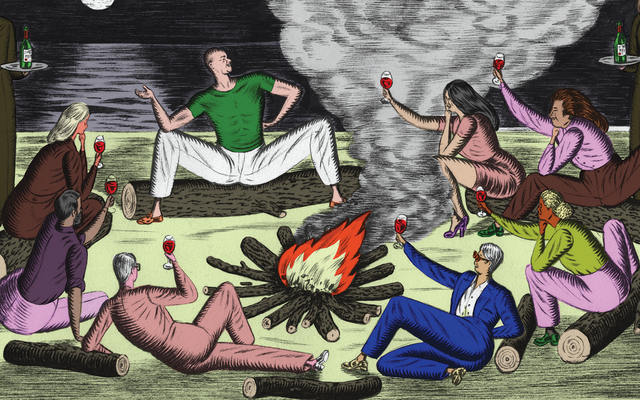
For the richest men on Earth, everything is free and nothing matters.
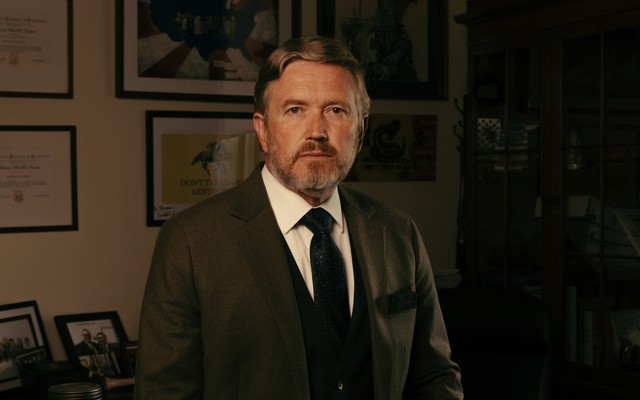
At the end of Paul Thomas Anderson’s 2007 movie, There Will Be Blood, Daniel Day-Lewis’s oil-baron character, old now and richer than Croesus, beats Paul Dano’s preacher to death with a bowling pin. Dano’s Eli Sunday, a nemesis of Day-Lewis’s Daniel Plainview during his seminal, wealth-building years, has come to sell Plainview the oil-rich land that he once coveted. But Plainview doesn’t need the land anymore, because—as he explains in one of the most famous monologues in modern cinema—he has sucked out all the oil hidden beneath it from an adjoining property, like a milkshake.
Desperate for money, Eli begs for a loan. Instead, Plainview chases him around a bowling alley and murders him with great enthusiasm. Once it’s over, a butler comes to see what all the noise was about. “I’m finished,” Plainview yells.
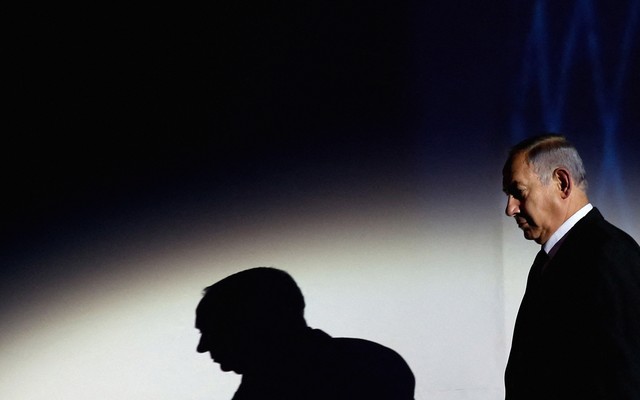
The Israeli prime minister’s focus is, as always, on himself and his near-term political needs. The plight of American Jews is simply not his concern.
The relationship between the United States and Israel is in crisis. Six in 10 Americans have a negative view of Israel, and a majority of those under 50 in both major parties view Israel as well as its prime minister, Benjamin Netanyahu, negatively. After the brutal Gaza war, a large percentage of liberal-leaning Generation Z considers Israel a pariah state. Democratic candidates are scrambling to distance themselves from Israel and its controversial leader; earlier this month, 40 of the 47 Democratic senators voted against a military aid package for the country. And hostility toward Israel is spilling over into hostility toward Jews. Liberal influencers, activists, podcasters, and even politicians are invoking age-old anti-Semitic tropes with frightening regularity.
A New York Times podcast hosted Hasan Piker and a New Yorker staff writer for a discussion of lawbreaking, which they both endorsed as resistance to tyranny.
The late political scientist James C. Scott endorsed what he called “anarchist calisthenics”—the regular practice of small acts of lawbreaking and disobedience. Jaywalk at an empty intersection. Have a beer in the park. Smuggle a pudding cup past the TSA agents. The point, Scott said, was to keep the civic muscles strong. Without constant reinforcement, these muscles will atrophy, and when real tyranny arrives, the flabby citizen will be powerless to resist. Scott particularly enjoyed telling Germans to get their reps in, because their grandparents had not.
On Wednesday a New York Times podcast hosted the Twitch streamer Hasan Piker and the New Yorker staff writer Jia Tolentino for a discussion of lawbreaking, which they both endorsed not as a habit of mind but as resistance to actual tyranny, today. They agreed that shoplifting from grocery stores such as Whole Foods is laudable, because (as Tolentino says, without evidence) “every major grocery chain” steals from workers and customers. Streaming services—they specifically name Spotify, which carries the Times podcast—are bad for creators and, they say, worthy of being ripped off. Piker said he would steal cars, “if I could get away with it.” Channeling Abbie Hoffman, Tolentino encourages people to steal from her own employer, The New Yorker, but does not explain which high crimes David Remnick has committed to earn this comeuppance.
The president is safe after chaos at the Washington Hilton, and a suspect is reportedly in custody.
Updated at 1:29 a.m. ET on Sunday, April 26, 2026
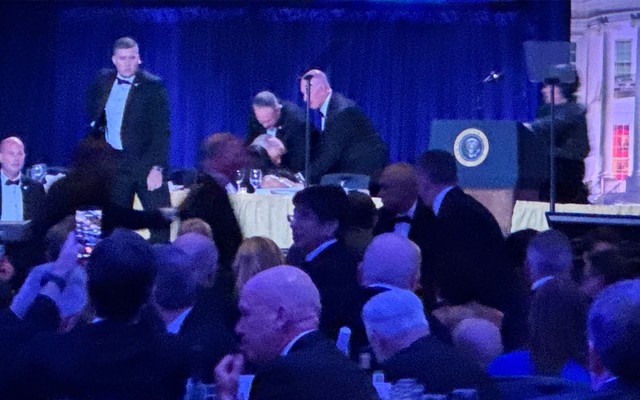
We were under the table before we knew what was happening. One moment, a military band was parading out of the Washington Hilton’s cavernous ballroom; hundreds of government officials, diplomats, and journalists, including more than a dozen of us from The Atlantic, dressed in our best or borrowed black tie, had turned to our spring-pea-and-burrata salads.
The next moment, armed agents—maybe Secret Service, maybe police, maybe hotel guards; it was hard to tell from where we were huddled under a tablecloth—were pushing their way through mounds of people, climbing over chairs, rushing to the stage, where President Trump and First Lady Melania Trump had shortly before been seated.
Priests and theologians want to shape the future of AI. Big Tech is listening.
In 1633, Galileo Galilei stood in the convent of the Santa Maria sopra Minerva church in Rome, where a tribunal of Catholic authorities forced him to “abjure, curse, and detest” his belief that the sun—not Earth—was the center of the universe.
Almost four centuries later, in 2016, the Vatican invited a group of the world’s most prominent technologists to the same church to discuss AI ethics. That was the start of the Minerva Dialogues, annual closed-door conferences in Rome that have become the centerpiece of a decade-long exchange between Silicon Valley and the Catholic Church.
The Valley and the Vatican seem like strange bedfellows: The oldest institution in the world meets secular upstarts bent on creating godlike technology. When the venture capitalist Reid Hoffman first attended the dialogues, he told me he was struck by the portraits lining the walls that depicted Catholic inquisitors like those who persecuted Galileo. “It feels a little bit weird to be walking in voluntarily past these,” he remembers thinking.
Requiring schools to endorse biblical laws is both unconstitutional and counterproductive.
When you were in elementary school, did your mind occasionally rise above the smell of pencil shavings and the sound of squeaking desk chairs to contemplate whether you ought to commit murder? Did you ponder what it would mean to covet your neighbor’s wife? Ordinarily those aren’t questions addressed in grade-school classrooms, but according to legislators in Alabama, Louisiana, Texas, and Arkansas, they ought to be.
In those districts, state Republicans are rallying behind laws that would mandate posting the Ten Commandments in public-school classrooms and common areas, such as cafeterias and libraries. This fad began in 2024, when Louisiana Governor Jeff Landry signed such a bill, reviving a debate long silenced by the Supreme Court’s 1980 decision in Stone v. Graham to strike down a similar Kentucky law.Other states followed suit: Arkansas and Texas last year, and Alabama just this month. Although these laws pose a threat to the First Amendment rights of students and teachers, the trend is spreading, so far unchecked by courts. Opponents of Texas’s law suffered a defeat last week when an appellate court decided in the state’s favor. The ACLU and other organizations representing the plaintiffs—a multifaith group of Texas families—are expected to appeal this decision to the Supreme Court.
James Talarico is trying to sell a novel brand of Christian politics in a deep-red state.
Updatedat 11:25 a.m. ET on April 24, 2026
While some might pray for hope or peace in such dark times, others are praying for the death of Texas Democrat James Talarico, who is running for the U.S. Senate. During a recent episode of the right-wing Protestant podcast Reformation Red Pill, host Joshua Haymes told the pastor Brooks Potteiger that he prays that “God kills” Talarico, given that the politician seems to be possessed by demons. Potteiger agreed, offering that Talarico should be “crucified with Christ.” Both Haymes and Potteiger later insisted that their remarks were not sincere expressions of violent intent, but rather metaphorical calls for Talarico, a Presbyterian seminarian, to find salvation in their brand of Christianity. Talarico shrewdly responded by offering forgiveness: “You may pray for my death, Pastor, but I still love you. I love you more than you could ever hate me.”
Thomas Massie is one of the few Republicans who is unafraid of President Trump.
Representative Thomas Massie, the renegade Kentucky Republican who fiercely guards his political independence, doesn’t love being on President Trump’s bad side. He would prefer not to have the president’s allies spend millions to defeat him in a primary. In fact, if Massie had his way, he’d be working for Trump right now.
In his telling, in the weeks after the 2024 presidential election, the two men talked about Massie, a farmer who champions raw milk, becoming Trump’s agriculture secretary. Massie had formally endorsed Trump late in the campaign, offering to help him win over libertarians who might be tempted to stay home or vote third party in key battlegrounds. Trump had been appreciative, and the two had chatted by phone to hash out the timing of the endorsement announcement. “Just tweet it. I’ll retweet you,” Trump had told him.
Silicon Valley venture capitalists are wining and dining 18-year-olds.
This article was featured in the One Story to Read Today newsletter. Sign up for it here.Updated at 8:22 a.m. ET on April 25, 2026.
When I was a freshman at Stanford University, I learned to shotgun a beer from a guy in a frat. Soon after, he dropped out and started an AI company. Six months later, it was valued at more than $1 billion.
For most students, Stanford is a normal competitive school, where people go to class and coffee shops and fall in love and freak out over finals. But a select few attend something else: a Stanford inside Stanford, where venture capitalists pursue 18- and 19-year-olds, handing out mentorships and money and invites to yacht parties in an attempt to convert promise into profit.
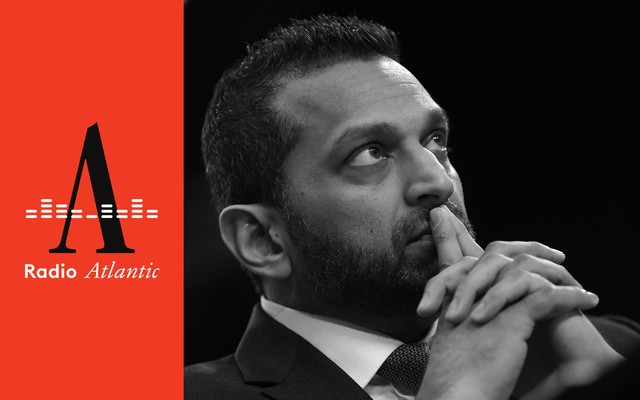
In a recent story, the Atlantic staff writer Sarah Fitzpatrick writes about how FBI Director Kash Patel’s colleagues are alarmed by what they describe as erratic behavior and excessive drinking. Sources told Fitzpatrick that, on multiple occasions, members of his security detail had trouble waking Patel because he was seemingly intoxicated. Last year, Fitzpatrick reports, a request was made for “breaching equipment,” normally used by SWAT teams to break into buildings, because Patel had been unreachable behind locked doors.
Patel called the story a “lie” and earlier this week sued The Atlantic for defamation. When asked about it at a press conference Tuesday, he said, “I can say unequivocally that I never listen to the fake-news mafia. And when they get louder, it just means I’m doing my job.”