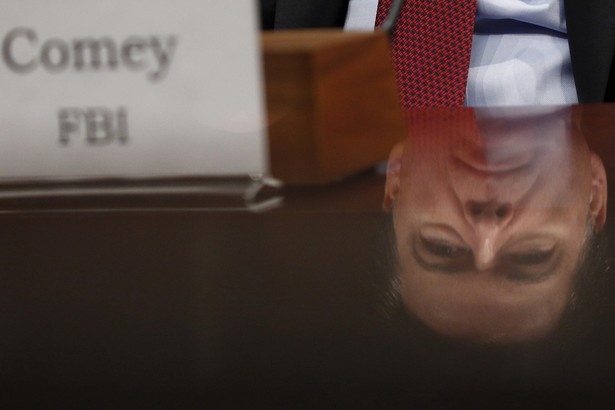
Comey testifies at a world wide threat hearing on Capitol Hill in Washington.
Kevin Lamarque / Reuters
On Tuesday, President Donald Trump fired James Comey, director of the FBI. Although Comey had been widely criticized for his handling of investigations related to the 2016 election, his dismissal was a shock to many observers, because he was overseeing an investigation into Russian interference in the election and whether any members of the Trump administration were involved. We're liveblogging the aftermath of the dismissal below; here are some highlights from our ongoing coverage:
The Senate Intelligence Committee Subpoenas Michael Flynn
Senate Intelligence Committee Chairman Richard Burr and Mike Warner, the committee’s vice chair, address reporters at a press conference on March 29. (Aaron P. Bernstein / Reuters)
The Senate Intelligence Committee formally issued a subpoena Wednesday to Michael Flynn, President Trump’s former national-security adviser, for “documents relevant to the Committee’s investigation into Russian interference with the 2016 election.” In a press release announcing the subpoena, Richard Burr, the committee’s Republican chairman, and Mark Warner, its Democratic ranking member, said they had originally requested the documents in an April 28 letter but Flynn declined to offer them voluntarily.
The subpoena is among the most advanced steps yet in either congressional investigation into Russian electoral interference. While the committee indicated it was the natural outcome of Flynn’s refusal to cooperate, it also sends a signal that the committee’s work will go forward despite FBI Director James Comey’s controversial ouster on Tuesday. NBC News reported that it’s the first of its kind from the Senate Intelligence Committee since the 9/11 attacks investigation and the first subpoena for documents from the committee since the Church Committee in the 1970s, which investigated U.S. intelligence-community abuses.
Was Comey Fired After Asking for More Resources in the Russian Meddling Investigation?
Gary Cameron / Reuters
The Department of Justice is denying reports that former FBI Director James Comey was fired just days after he asked for more resources to investigate alleged connections between the Trump administration and Russian election meddling.
The New York Timesfirst reported the news Wednesday morning, saying Comey met with Deputy Attorney General Rod Rosenstein last week, according to three anonymous sources. Rosenstein is the top official in charge of the investigation, because Attorney General Jeff Sessions recused himself after it was learned he failed to disclose meetings with the Russian ambassador. Rosenstein also wrote the memo recommending Comey’s dismissal.
Whether or not Comey asked for more resources and then found himself without a job a few days later is important because it bolsters the narrative that the Trump administration is seeking to undermine the investigation into Russia’s alleged election meddling. In a terse response to The Atlantic, when asked if the reports were true, DOJ spokesman Ian Prior said, “totally false.”
The Times reported that Comey briefed members of Congress after his meeting with Rosenstein, and told them he was frustrated by the lack of personnel and money provided to his agency for the investigation. He said he hoped to speed up the investigation, but in order to do so he needed more resources.
At a press briefing Wednesday afternoon, White House Deputy Press Secretary Sarah Huckabee Sanders said Comey’s dismissal had nothing to do with the investigation into Russia. She said Rosenstein and Sessions both told Trump they had concerns about Comey, and that Trump asked them to “put those concerns in writing.” Not long after, Trump fired Comey.
In Full Hockey Gear, Putin Responds to Comey's Firing
Reuters
While President Donald Trump met with Russian Foreign Minister Sergei Lavrov Wednesday morning at the White House, President Vladimir Putin was back in Russia preparing for a hockey game. As he was about to take the ice, CBS News stopped Putin at the rink’s entryway. Putin greeted reporter Elizabeth Palmer with a smirk. Dressed in hockey pads and a jersey, through a translator, Putin played off Comey’s dismissal as a purely domestic issue. Here’s a transcription of the quick conversation, and below it the video.
“Sir,” Palmer said, “how will the firing of James Comey affect U.S.-Russia relations?
“There will be no effect,” Putin replied. “Your question looks very funny for me. Don't be angry with me. We have nothing to do with that. President Trump is acting in accordance with his competence, in accordance with his law and constitution. What about us? Why we?”
“You see,” Putin told Palmer, “I am going to play hockey with the hockey fans. And I invite you to do the same.”
According to Russian media, Putin only learned to ice skate six years ago. He finished the game with seven points.
The Republicans Who Find Trump's Timing Suspicious
Jonathan Ernst / Reuters
Democrats say James Comey’s firing comes conveniently as the investigation into Russia’s alleged interference in the presidential election ramps up. And while there are plenty of conservatives who’ve rushed to support Trump’s decision, as my colleague Russell Berman notes, some Republicans have also called the timing suspicious. Arizona Senator John McCain, who has long been a critic of Trump, said he was “disappointed” in the decision. McCain acknowledged that the “president does have that constitutional authority. But I can’t help but think that this is not a good thing for America.”
Tennessee Senator Bob Corker said it was important the investigation be free of political interference, and that Comey’s “removal at this particular time will raise questions.” Nebraska Senator Ben Sasse, who is also chairman of the Judiciary Committee’s Oversight Subcommittee, said the “timing of this firing is very troubling.” And North Carolina Senate Intelligence Chairman Richard Burr also said he was “troubled by the timing and reasoning” of Comey’s dismissal.
Dir. Comey has been more forthcoming w/ information than any FBI Director I can recall in my tenure on the congressional intel committees.
Other Congressional Republicans who are skeptical of Trump’s decision include Michigan Representative Justin Amash, who called part of Trump’s dismissal letter to Comey “bizarre,” because the president thanked the FBI director for assuring him on three occasions that he was not being investigated. Arizona Senator Jeff Flake tweeted Tuesday night that he’d “spent the last several hours trying to find an acceptable rationale for the timing of Comey's firing. I just can't do it.”
In a recent story, the Atlantic staff writer Sarah Fitzpatrick writes about how FBI Director Kash Patel’s colleagues are alarmed by what they describe as erratic behavior and excessive drinking. Sources told Fitzpatrick that, on multiple occasions, members of his security detail had trouble waking Patel because he was seemingly intoxicated. Last year, Fitzpatrick reports, a request was made for “breaching equipment,” normally used by SWAT teams to break into buildings, because Patel had been unreachable behind locked doors.
Patel called the story a “lie” and earlier this week sued The Atlantic for defamation. When asked about it at a press conference Tuesday, he said, “I can say unequivocally that I never listen to the fake-news mafia. And when they get louder, it just means I’m doing my job.”
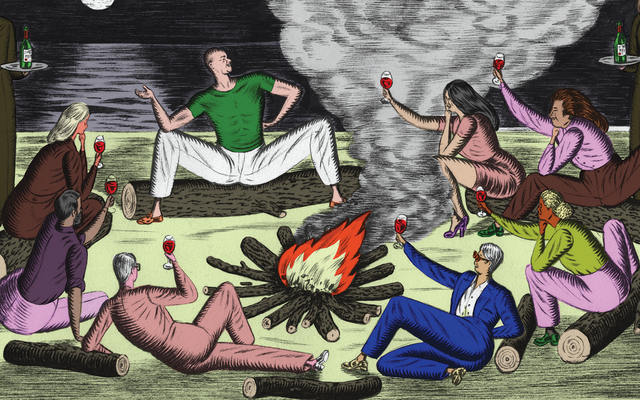
For the richest men on Earth, everything is free and nothing matters.
At the end of Paul Thomas Anderson’s 2007 movie, There Will Be Blood, Daniel Day-Lewis’s oil-baron character, old now and richer than Croesus, beats Paul Dano’s preacher to death with a bowling pin. Dano’s Eli Sunday, a nemesis of Day-Lewis’s Daniel Plainview during his seminal, wealth-building years, has come to sell Plainview the oil-rich land that he once coveted. But Plainview doesn’t need the land anymore, because—as he explains in one of the most famous monologues in modern cinema—he has sucked out all the oil hidden beneath it from an adjoining property, like a milkshake.
Desperate for money, Eli begs for a loan. Instead, Plainview chases him around a bowling alley and murders him with great enthusiasm. Once it’s over, a butler comes to see what all the noise was about. “I’m finished,” Plainview yells.
Media figures who have turned against Trump only in recent weeks have forfeited the right to be taken seriously in the future.
This is an edition of The Atlantic Daily, a newsletter that guides you through the biggest stories of the day, helps you discover new ideas, and recommends the best in culture. Sign up for it here.
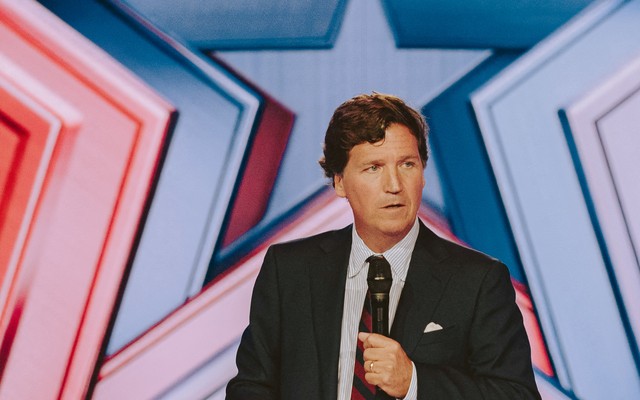
Pity poor Tucker Carlson. Watching Donald Trump’s war in Iran—which Carlson has branded “the single biggest mistake” by a U.S. president in his lifetime—he is ruing his strong support for Trump in the 2024 election.
“It’s a moment to wrestle with our own consciences,” Carlson, long the most prominent media personality in the MAGA movement, said this week on his podcast. “We’ll be tormented by it for a long time. I will be. And I want to say I’m sorry for misleading people.”
Or, even better, don’t pity Carlson. He is one of several media figures who are having second thoughts about Trump—and in some cases, receiving praise for it. But these pundits deserve no amnesty. Their second thoughts are wise, but to have erred so badly, when so many other commentators and journalists saw the truth, disqualifies them from being taken seriously on politics again.
Silicon Valley venture capitalists are wining and dining 18-year-olds.
When I was a freshman at Stanford University, I learned to shotgun a beer from a guy in a frat. Soon after, he dropped out and started an AI company. Six months later, it was valued at more than $1 billion.
For most students, Stanford is a normal competitive school, where people go to class and coffee shops and fall in love and freak out over finals. But a select few attend something else: a Stanford inside Stanford, where venture capitalists pursue 18- and 19-year-olds, handing out mentorships and money and invites to yacht parties in an attempt to convert promise into profit.
Steve Blank teaches a legendary start-up class at the school, “Lean Launchpad.” Although students have always dreamed big, Blank told me that Stanford has changed in recent years, placing more and more emphasis on the young founders who may kick back some of their future billions to the university. Today, he said, “Stanford is an incubator with dorms.”
I remember screaming, though I don’t know what words I screamed. And I remember resisting, though there was little I could do in heels against two military-trained men intent on shoving me into the back seat of their vehicle.
Video surveillance captured the moment I was taken. In it, you can see two burly men walk past, watching nonchalantly as I struggle. Inside the vehicle, the men zip-tied my wrists and ankles, and blindfolded me. I kept asking them: Why?
I had been working in Iraq as a journalist for more than a decade. I had documented Iraq’s fight against the Islamic State from the front lines as a freelancer—at my own expense and at great risk. I had covered social, political, economic, and environmental issues, and had been welcomed into the homes of many Iraqi families whose stories I tried to tell with sensitivity and fairness. Why, I asked these men in Arabic, had they taken me? Why were they hurting me? What purpose did this serve?
On Monday morning, CNN reported that the United States and Iran had been on the verge of striking a deal to end the war when Donald Trump made a series of comments to reporters and on social media that undermined the talks. “The Iranians didn’t appreciate POTUS negotiating through social media and making it appear as if they had signed off on issues they hadn’t yet agreed to, and ones that aren’t popular with their people back home,” complained one source, who apparently pleaded with his boss to stop.
This was Trump’s signal to begin binge-posting about the Iran negotiations. The Iranians may not have appreciated Trump’s stream-of-consciousness messaging, and apparently their American counterparts did not either. But one very important person did.
In some left-wing corners of the commentariat, moral rectitude is out. Flagrant disregard of the social contract is in.
In 1785, Immanuel Kant introduced his famous “categorical imperative.” Put simply: Act the way you want others to behave. This dictate, a version of the Golden Rule, has been a bedrock of moral philosophy for centuries. But for the New Yorker staff writer Jia Tolentino, Kant’s “categorical-imperative-type thing” no longer applies. Moral rectitude, in some left-wing corners of the commentariat, is out; flagrant disregard of the social contract is in.
Yesterday, TheNew York Times posted a video of a conversation featuring Tolentino, the pro-communist streamer Hasan Piker, and the Times opinion editor Nadja Spiegelman, under the headline: “The Rich Don’t Play by the Rules. So Why Should I?” It began with Tolentino, a highly successful author, admitting to shoplifting lemons from Whole Foods. “I think that stealing from a big box store—I’ll just state my platform—it’s neither very significant as a moral wrong, nor is it significant in any way as protest or direct action.”
A new biopic offers a warped and childish take on Michael Jackson’s life.
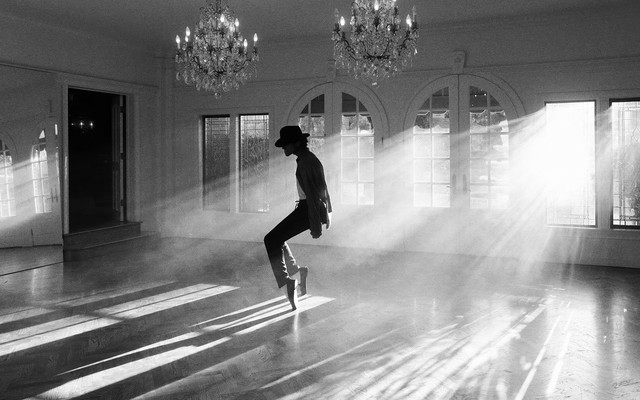
Bubbles doesn’t look right. The new Michael Jackson biopic, Michael, renders the singer’s pet chimp in CGI, and the result is even creepier than the famous Jeff Koons sculpture it evokes. His eyes bulge like Gollum’s, and he moves like a deepfake. The “performance” contributes to the already overwhelming strangeness of this movie about one of music’s most vexing questions: Who was Michael Jackson, really?
Any film attempting to answer that was going to face some challenges. When the 2019 HBO documentaryLeaving Neverland aired allegations by two men who say the late singer abused them as kids—charges his representatives contested—the world was made to ask whether it should or even could “cancel” an artist so embedded in our collective memory and prom playlists. The Jackson estate got to work on a cultural counteroffensive, bolstering attempts to celebrate Michael’s songbook while downplaying his admitted habit of sharing beds with boys (for example, by backing a bouncy Broadway musical set before any accusations were made public). The problem with that tactic, Michael shows, is that his life’s story is, glaringly, about the corruption of childhood.
I spent a month with a group of people who aspire to a state of offline bliss.
In March, I put my iPhone into a yellow cardboard box with MO stamped on top—the M looked like a riff on the Motorola logo; the O looked like a flower. Over the next several weeks, I left my phone there for roughly 23.5 hours out of every day.
I did so as a participant in “Month Offline,” which started last year in Washington, D.C., as a kind of Dry January challenge, but for smartphones. Now it is a fledgling business with a footprint in New York City. Members of each monthlong “cohort” pay $75 for the experience, during which they swap their iPhones for a lower-tech device and participate in weekly meetups. I joined the cohort that began on March 2 and received an email just before the first meeting: “Excited 2 see u soon,” it said.
A New York Times podcast hosted Hasan Piker and a New Yorker staff writer for a discussion of lawbreaking, which they both endorsed as resistance to tyranny.
The late political scientist James C. Scott endorsed what he called “anarchist calisthenics”—the regular practice of small acts of lawbreaking and disobedience. Jaywalk at an empty intersection. Have a beer in the park. Smuggle a pudding cup past the TSA agents. The point, Scott said, was to keep the civic muscles strong. Without constant reinforcement, these muscles will atrophy, and when real tyranny arrives, the flabby citizen will be powerless to resist. Scott particularly enjoyed telling Germans to get their reps in, because their grandparents had not.
Tuesday a New York Times podcast hosted the Twitch streamer Hasan Piker and the New Yorker staff writer Jia Tolentino for a discussion of lawbreaking, which they both endorsed not as a habit of mind but as resistance to actual tyranny, today. They agreed that shoplifting from grocery stores such as Whole Foods is laudable, because (as Tolentino says, without evidence) “every major grocery chain” steals from workers and customers. Streaming services—they specifically name Spotify, which carries the Times podcast—are bad for creators and, they say, worthy of being ripped off. Piker said he would steal cars, “if I could get away with it.” Channeling Abbie Hoffman, Tolentino encourages people to steal from her own employer, The New Yorker, but does not explain which high crimes David Remnick has committed to earn this comeuppance.