The Contributors' Column--February Atlantic
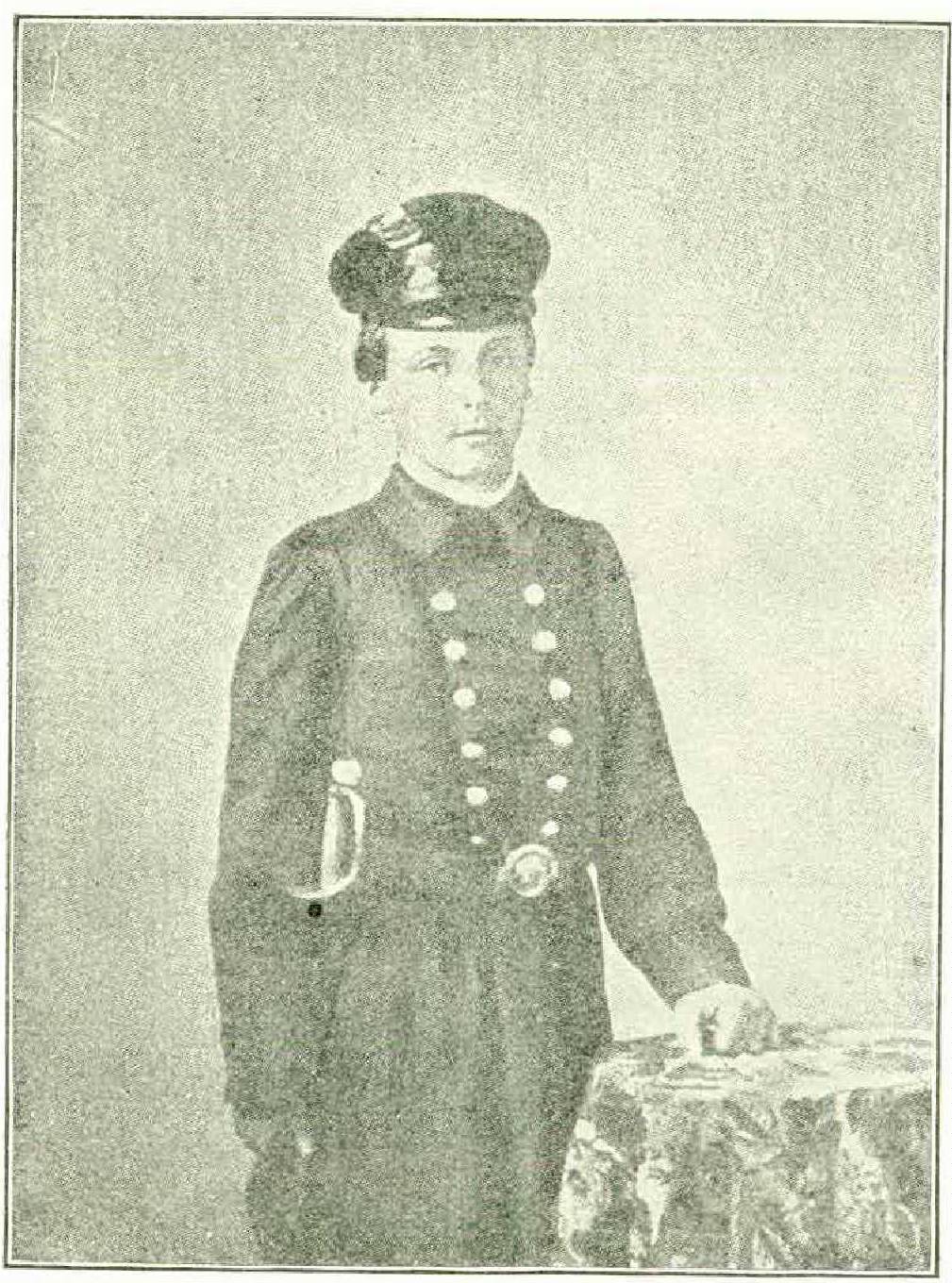
Any one who knows his New York will realize the import of Ralph Philip Boas’s incisive paper, ' The Problem of American Judaism.’ Mr. Boas, who is associate professor of English at Whitman College, Washington, is spending a year’s leave of absence at Harvard University.
To the surprise of the editors, James Morris Morgan turns out to be the uncle of Warrington Dawson, who is well known to the Atlantic audience. Headers in academic circles will also be interested to learn of his close relationship to the late Professor Morris Hicky Morgan of Harvard, the distinguished Latin scholar, of whom Colonel Morgan writes:
’When I would shake Morris off the foundation rock of his professional dignity I could always get lots of fun out of him, as beneath his apparently serious demeanor he had a keen sense of humor, inherited from his grandfather, who on one occasion Saved the life of a friend by his wit. The friend was supposed to be dying of yellow fever — and, in that illness, if the patient can be made to perspire he will recover. Uncle Morris was sitting up with his friend to see the last of him, and to while away the time wrote the poor fellow’s epitaph. He was so pleased with it that he could not restrain himself from reading it to the victim, who immediately went into convulsions of laughter, burst into a profuse perspiration, and got well — at least, so say the family legends.’
Colonel Morgan’s own rich heritage of humor, as all readers of his narrative will agree, remains intact after heavy draughts made on it throughout a long and adventurous life.
Mrs. Gerould’s stories are eagerly awaited by all who appreciate the highest standards of American fiction. K. K. Kawakami, a Japanese domiciled in San Francisco, is an international journalist whose office it is to interpret Japan to America and America to Japan. His close connection with the Japan Mail and the Japan Times, the official organs of the Mikado’s government, lends especial weight to his utterances on Anglo-Japanese relations, in which many ears will catch overtones of sobering import.
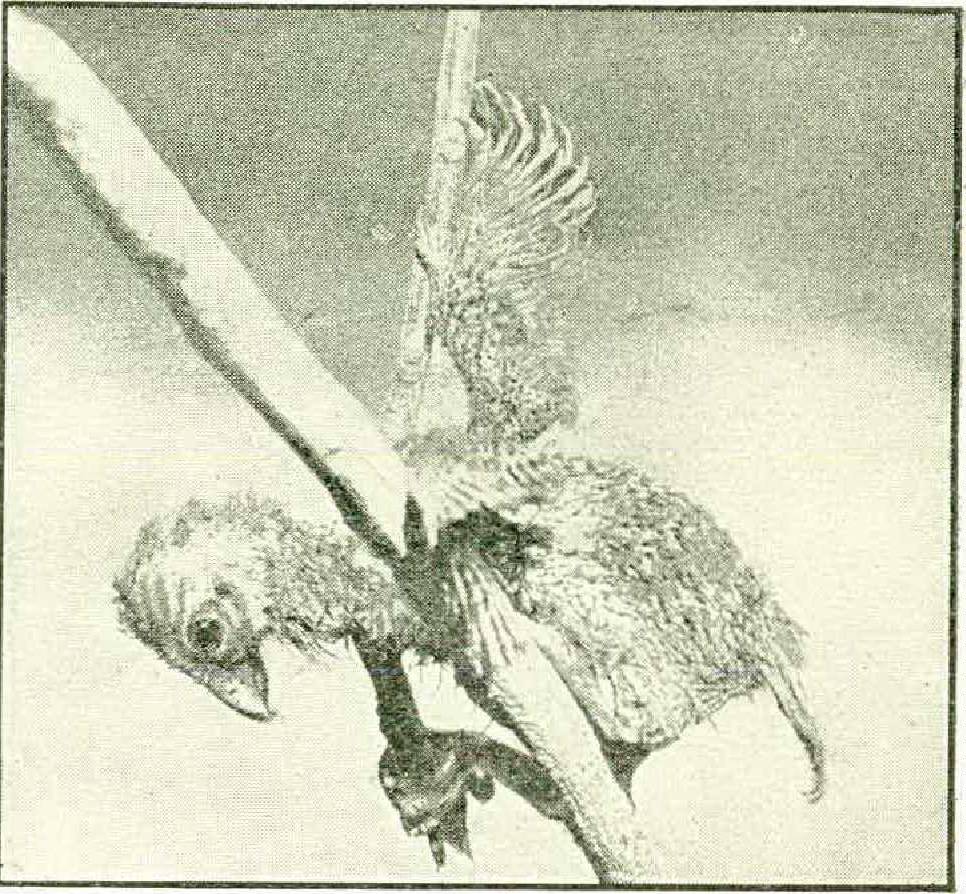
’The flight of the hoatzin,’ writes William Beebe in the New York Zoological Society Bulletin,’resembles that of an over-fed hen. The hoatzin’s voice is no more melodious than the cry of a peacock, but less sonorous than an alligator’s roar. The bird’s grace is batrachian rather than avian, while the odor of its body resembles that of no bird untouched by dissolution. Still, zoologically considered, the hoatzin is probably the most remarkable and interesting bird living on the earth to-day.’
A striking vignette, this, of the feathered anachronism in pursuit of which Mr. Beebe leads us, wet and panting but always keen, through the dripping riverlands of Guiana. The amazing facts he has collected about the hoatzin’s home life are among the first fruits of his work at the Tropical Research Station at Kalacoon, on the Mazaruni River, where the New York Zoological Society has embarked on a venture new in the annals of science.
Amid the tumultuous unrest of the New York scene the serene loveliness of Saint Thomas’s Church utters the Credo of Ralph Adams Cram, foremost American exponent of Gothic architecture. Mr. Cram’s paper in the current Atlantic expresses his passionate belief that on the red fields of France the lilies of a new Resurrection are already sprouting through the fattened soil. Dr. Eugene Lyman Fisk is a director of the Life Extension Institute of New York and a lifelong student of the alcoholic question. Atlantic readers are greatly indebted to the commercial enterprise which sent Alice Tisdale and her husband on their gypsy-journey into the untracked wastes of the Manchurian hinterland. Fannie Stearns Gifford has long had an assured place among the contributors to this magazine.
Governor Herrick is famous for the work he did while Ambassador to France at a crisis of French (and of American) history. Perhaps the larger public is unfamiliar with his long-continued struggle for a sound Rural Credits bill. Our readers will remember his former article on this subject printed in the Atlantic for February, 1913 (‘ The Farmer and Finance’). Mr. and Mrs. Follett, the former an instructor in Brown University, the latter a lecturer, have several times previously employed their leisure hours to the profit of Atlantic readers. Francis W. Hirst, who once gave the British Economist its eminent position among the financial papers of the English-speaking world, is peculiarly well fitted to treat the post-bellum trade problems which loom portentously large as peace rumors grow more and more insistent.
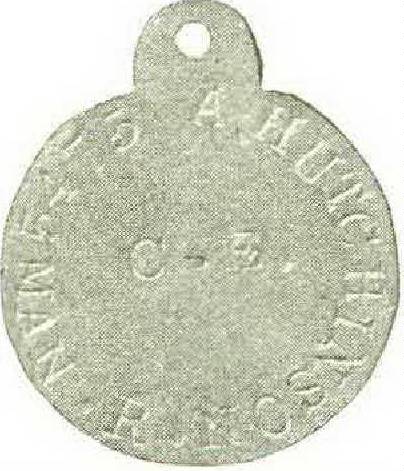
Private Hutchinson’s narrative might well stagger the credulity of many readers, but it is corroborated in every detail by the report of the Government Committee on the Treatment of British Prisoners of War, presented in April, 1916, to both Houses of Parliament, by command of the King. This report is made up from the testimony of Major Priestley, Captain Vidal, and Captain Lauder, of the Royal Army Medical Corps, the only survivors of six Englishmen sent by the German authorities to take up at Wittenberg Camp the place of duty abandoned by their own medical staff when the presence of typhus manifested itself among the prisoners.
Many of the details of this report, in which the horrors of Andersonville and Libby Prison live again, cannot be printed here, but the following extracts give a general impression, at least, of conditions obtaining at the Camp. The typhus epidemic, it should be remembered, broke out in January, 1915. On the 10th of February thirteen British doctors detained in violation of the Geneva Convention at Halle were informed that six of their number were required at the Camp of Wittenberg. No reason was given for this order, and it was from the guard on the train that they first heard of the existence of typhus there.
‘On arrival at Wittenberg,’ reads the report, ‘they were marched to the camp. They were received in apathetic silence. The rooms were unlighted; the men were marching aimlessly up and down; some were lying on the floor, probably sickening for typhus. When they got into the open air again Major Fry broke down. The horror of it all was more than he could bear. . . . Captain Lauder found that while in the bungalows there was usually one mattress for every three men, in the improvised hospital there were no mattresses at all. This, of course, was known throughout the camp, and in consequence there were many typhus patients scattered over the compound who were determined not to come into the hospital if they could help it. In one compound alone Captain Lauder discovered fifty hidden cases of typhus. Further, when a patient was brought from his compound to the hospital, either the mattress on which he had lain was brought with him or it was left behind in the bungalow. If it was brought with him his former companions were left without anything to sleep on; if it was left behind, his still uninfected companions were left to sleep on the infected mattress, and it was almost inevitable that they should catch the disease. Again, in the absence of stretchers, all the typhus eases had to be carried down to the hospital on the tables on which the men ate their food, and there was no possibility of washing these tables because, as above stated, there was practically no soap in the camp. Moreover, the German authorities at first refused to allow the whole of Compound No. 8 to be used for typhus patients. They required that these should be mixed with the other sufferers, a regulation for which it seems impossible to suggest any justification. . . .
‘During the first month the food ration was a petit pain and half a cup of milk each day. The only soup to be got was from the camp kitchen, but that came up in a wooden tub without a cover, and it arrived at the hospital—so one of the prisoners says — full of dust and dirt. It was a hopeless diet for patients in a fever. In truth the ration was not a ration at all, it was a pretense. . . .
‘The patients were alive with vermin; in the half-light Major Priestley attempted to brush what he took to be an accumulation of dust from the folds of a patient’s clothes, and he discovered it to be a moving mass of lice. . . . The officers are satisfied that the post-typhus gangrene, which was so common, was largely due to the fact that for so many patients there were neither socks nor anything else to keep their feet warm. As regards the washing of patients in hospitals, this was out of the question.’
And so the horrible tale goes. The report specifically states that savage dogs were employed to terrorize the prisoners; and a significant comment also comes from the American Ambassador to Germany, who visited the camp personally and said: ' The impression gained after careful examination of the camp and long conversations with the prisoners was even more unfavorable than I had been led to expect.’
Sydney Brooks is an accomplished journalist, at home on both sides of the water and versed alike in the intricacies of American politics and the complexities of Downing Street. Kuno Francke is a professor at Harvard, who through many years of service has not ceased to offer young Americans all that is best in Germanic civilization. Lieutenant R.N., of the French army, was twenty-one years old when he wrote his diary intended for no eyes but his own. At this moment he is lying seriously ill in his adored France. The present admirable translation of Lieutenant R. N.’s diary will, we hope, eventually be published in book form.
In Mr. Jacks’s January paper, ‘ The Insane Root,’ a fearful emphasis was given to his argument by the repeated statement that the war had brought death or wounds to 41,000,000 men in Europe. This appalling figure is not a haphazard conjecture. The recent Prussian lists admit a loss in killed alone approximating 1,000,000. British authorities hold this figure far too low, but even if we take it as a basis, and in a separate column multiply the figure by 5.5, the usual decimal proportion of wounded, we have a total of 6,500,000. Add the casualties of Austria, Turkey, and Bulgaria, and the losses in killed and wounded of the Russians. British, French, Belgians, Roumanians, Servians, Italians, Portuguese, Japanese, and Montenegrins; and then to the tremendous total, add the Colonials and sailors, and the uncounted thousands of murdered Armenians, and you have a figure that is beyond our imagining. The specific total mentioned by Mr. Jacks was passed upon by Mr. Hilaire Belloc, of ‘ Land and Water,’ and other competent authorities.
In New York, where all the men and women of the world live, lives also Tim Tanner, who, we are assured by an alert contemporary, the editor of The Evening Journal’s baseball column, defines a ‘ low-brow ’ as a man who looks for a box score in the Atlantic Monthly. Nor is Tim alone in his flattering opinion of our intellectual attainments. ‘ Our idea of literary insight is ability to understand what the author of a poem in the Atlantic Monthly is driving at,’ remarks the editor of The Ohio State Journal. To whom, The Newark Advocate — ‘ That would n’t be literary insight, Bob, it would be second-sight.’ To the informal collection we may add the pertinent remark of The Albany Argus: ' A writer in the Atlantic Monthly says, “ The time may come when to lose a friend by death would be hardly more than to have him cross the ocean.” That looks like a prediction of increased submarine activity.’
James Norman Hall, after nine months as a transatlantic Tommy, received his honorable discharge from the British Army, and returned to tell his experiences to readers of this magazine in the unforgettable series, ‘ Kitchener’s Mob.’ Many people who have shuddered over his ruthless descriptions of trench fighting will yet understand the impulse which has led Mr. Hall to plunge into the mêlée again; the Atlantic has lately received a letter from him saying that he has volunteered for the American aviation squadron attached to the French army.
I am enjoying the work immensely,’he writes, ‘and thus far have made satisfactory progress, I believe. This is the bad time of the year for flying, of course, and we have many days when it is impossible to work at all. I have already passed from the “penguin” machine, socalled because it simply rolls over the ground, the three-cylinder, and am now working on the six-cylinder Blériot, making short flights. Had one smash-up — due to a defective brace on the landing-chassis — without receiving so much as a scratch. Yesterday, eleven machines were wrecked, but new ones are immediately forthcoming, and the work goes merrily on. One reason for the high mortality rate in machines is, that all the élèves-pilotes make their flights alone. There are no double-command machines. Furthermore, the monoplane is much trickier, not nearly so stable as the biplane. The idea is, I think, that men who can master the Blériot will make good pilots in almost any type of machine. This is said to be the best school of its kind in Europe, as well as the most difficult through which to secure a pilot’s license. Many men are dismissed or sent to the double-command schools. The authorities are relentless — and rightly, I think. I am not yet far enough along to be able to know whether or not I shall make a good pilot. I’m safe thus far, and am trying very hard. It’s the best sport ever.’
The Atlantic has had the privilege of forwarding, from a number of generous readers, the sum of £24 1s. 3d., to Mrs. Maud C. Clapp, on behalf of the field hospital originally endowed by Mrs. Borden Turner, which has now been successfully operating in connection with the Eighth French Army. This is the hospital which Mrs. Clapp described in a group of graphic and well-remembered sketches. The gift has just called forth from the secretary of the hospital a letter of warmest thanks, saying that the money has been instantly invested in cardigans. We quote an interesting further paragraph from the letter:
‘I wonder if you have heard of Mrs. Turner’s new work in the Somme region? The military authorities asked her to take the responsibility for the nursing staff, and much of the equipment of a very large hospital six miles behind Pèronne, with a beginning of 4,000 beds. Shortly after the huts were erected, Mrs. Turner wrote: “Eight operating rooms are functioning night and day. One hundred and twenty-five operations of the most serious character took place yesterday. The wounded never stop streaming in.” Mrs. Turner has herself given £3,000, and estimates that another £3,000 will be needed to provide the hospital with the necessary comforts. The French are responsible for the essentials. The first hospital at Beveren is still doing its splendid work.’
Our readers will recall the appeal made some time since by the Atlantic for money to be forwarded to M. Mirman, Prefet of the Département de Meurthe-et-Moselle. A sum of about Fr. 22,000 which the Atlantic has been able to forward was spent immediately by M. Mirman in the purchase of plows, to enable the peasants in the vicinity of Nancy to take up again the work of life. M. Mirman has received a scientific education as a charity worker, but for many years has occupied the important executive position of the French government which he now holds. From information received through several distinct and wholly reliable channels, the Atlantic is led to believe that no money for French sufferers is more efficaciously spent than that which can be distributed without committee action, under M. Mirman’s personal and immediate direction. Our readers will remember that his address is Nancy, France — or moneys will be gladly forwarded by the Atlantic.
Subscribe for the Atlantic on the Attached Coupon
A.M. 2-17 THE ATLANTIC MONTHLY CO. Date. 3 Park St., Boston. Gentlemen: Enclosed find $4.00 for my subscription to the Atlantic Monthly for one year, beginning Name. Street. City State.