Some Orchestral Conditions
THE orchestra for which Haydn and Mozart composed their later works is historically the first in which the element of orchestral color can be found as a factor of any considerable weight. Bits of purposeful coloring, fairly numerous and sometimes important, may be noted and enjoyed in earlier music: for example, that of Bach and Handel. But polyphony preponderates entirely over color as the source of musical interest, and it seems fair to say that intentional orchestral euphony, showing consistent regard for the characteristics and limitations of the different instruments and groups of instruments, — in other words, a standard orchestra, — does not appear until the latter half of the eighteenth century. This orchestra of Haydn and Mozart may be said to show the purity and the slender immaturity of adolescence. It is thin, delicate, delicious, yet incomplete. The orchestra of Beethoven is by comparison mature, well-nourished without being too convex in the middle, sonorous without being blatant, strong, sane, and, for his purposes, complete. In Wagner, perhaps, rather than in Berlioz, in Germany rather than in France, the rich diet of fat horns, the sonority of toneful string players, the omission or neglect, of the soprano and alto trombones in favor of the more succulent tenor instrument, have so nourished the full-grown orchestra of Beethoven, that, while it gives voluptuous pleasure, a suspicion of obesity is suggested rather than of evenly distributed development and strength; at least, there is a suggestion of velvet rather than of silk as a corresponding texture.
Among the French the horns have a thinner, sourer tone. String players are more crystalline; oboes and bassoons are more agile and less sonorous. Alto trombones are commonly used, with the result of a certain transparency, even gracility, in general effect, which is quite as characteristic as the softly rounded massive richness of German orchestral ensemble. At best, the French orchestra is very silky.
Discriminating foreigners, like Americans, may choose according as their taste makes them prefer the fat or the lean. In the Boston Symphony Orchestra the horns are German, the woodwind French in character if not always by birth.
The present-day orchestra of Richard Strauss is greater and more complete than Wagner’s, but shows in some of its finical habits evidence of a freakish old age following a maturity spent in luxurious rather than strenuous activity. Strings divided many times, and in their highest regions, have become the rule rather than the exception. Yet there is no doubt that all stringed instruments, particularly the violins, still sound their best when played in the first posit ion. The double bass at the upper limit of its compass sounds no longer like a bass but like something else. The viola, in a similar register, is apt to sound like a bad violin gone askew. Large groups of wind instruments are as likely to add muddiness and monotony as richness and variety. Two harps call for less discretion, less skill in their use than one. Constant striving by composers for unexpected color may eventually breed indifference in the listener. Possibly these developments arise from operatic rather than purely orchestral necessities, but we have in Strauss, who marks the confluence of two great streams of color, respectively from Wagner and Berlioz, the normal point of view from which to look out toward the future.
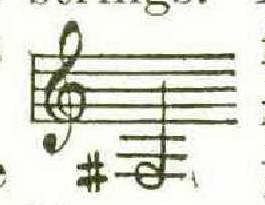
Neither time nor art can go backward, but each may be depended upon to lop off unnecessary excrescences, technical, numerical, or musical. Just what these will prove to be in the orchestral music of to-day, only time and the development of art can show, although we may guess at some of them. Perhaps there will be greater numbers of stringed instruments, and possibly greater agility among their players; although the history of piano music would seem to indicate that this must be at the expense of more desirable qualities. In the matter of compass we seem to have reached the limits of effectiveness until the violin shall have longer strings. It is true that Strauss writes for the violin, but he does not disclose how it is to be played.
Wind instruments are still improving in compass and agility as well as in evenness of tone. Their numbers are increasing, but their types remain about the same. Composers want the picturesqueness of the gurgling heckelphone and the beauty of the almost inaudible double-bass clarinet, but it may be questioned whether these will be common features in future orchestras. The need of such instruments as the oboe da caccia, and of such subtle variations in tone-color as are known to have existed formerly, is not yet clear.
With increasing refinement original characteristics grow fainter. The greeny delight which flows from our finest modern oboe is no more like the stolid, scarifying squawk of the early Victorian instrument than strong brandy is like maraschino. But the former is a man’s drink, and it is not an unmixed blessing that the fuzzy, grunting “loud bassoon” of our forefathers has been supplanted by a pale, acrobatic, highbred orchestral specialist who may be implicitly relied upon not to offend the most delicate of listeners’ ears. To me he often seems more aristocratic than companionable, rather dry than juicy, and this in spite of the indisputably greater beauty and delicacy of his tone compared with that of former days. Still the most fascinating of wind instruments and the most full of character, the bassoon has won agility, control, and all other technical advantages, but at the expense of something in the old tone very honest and sympathetic, if a little awkward and helpless. We may regret these old square-toed things, but we cannot recall them any more than we can return to the weighty, pregnant speech of Martin Luther.
Brass instruments can hardly develop more tone or greater agility without essaying things which now seem unsuited to their natural limitations. Possibly there are no such limitations. A cradle-song for trombones sounds preposterous, but it is true that three expensive trombones can play more softly than three horns. There is as yet, I believe, no dynamometer for musical sounds outside the heads of the musicians, so that, proof of this statement for the lay mind must be indirect. It may illuminate the point to remember that three lines drawn with a hard pencil can be finer and fainter than those drawn with a soft one.
The field of percussion instruments offers a pleasing invitation to speculators. Shall our children have more of them? Shall they have louder ones, or queerer ones? Will there always be a céleste ? If so, will they want to hear it once a week? Once a month would seem often enough for a modest taste. Shall they have wind and rain machines, pistols and cannon? Such things tend toward caricature rather than real character, and are used at present in response to pictorial needs. They correspond to spices and condiments. Too many of them are bad for musical well-being. Perhaps they indicate the fundamental artistic weakness which lies in the extra-musical basis of so much of our music. A return to absolute music would bring a thorough corrective for all such fantastic divergences from music itself.
And then the conductors! Are there still to be such in the future? Shall they be visible or hidden? This latter point seems unimportant: both ways work well, except that in hot weather the second has obvious advantages. The hidden orchestra is undoubtedly at a disadvantage. Direct impact of the tone upon the listeners’ ears is always more vital and satisfying than anythingwhich comes round a corner. It is not likely that executive responsibility for the musical activity of any important orchestra can be divided, or that conductors can be either multiplied or abolished. A captain is needful, and his approval is one of the strongest incentives to good work for the individual members of any orchestra. He is a living conduit, flexible and intelligent, through which the many-colored strands of musical texture flow as through a weaver’s frame from players to hearers. If he were a living metronome and no more, he could be safely discarded. A great conductor, no longer living, used to speak with scorn of those who could not conduct without ‘beating time.’ A glance to restrain the over-zealous or to stimulate the slightly lethargic, the lifting or lowering of an eyebrow to correct faulty intonation, were among the most used of his subtler devices. They were unseen by the audience, but he attached far more importance to such refinements than to the gentle, quiet motions of his arms.
It is perhaps conceivable that the conductor’s work can all be done in private before performance. This has already been exemplified in classic works by Hans von Bülow, who sat quietly at the piano and played concertos while his orchestra did its share of the work faultlessly. But in modern music it is hardly possible in the near future, although I believe that with enough familiarity any single orchestra of high excellence could learn to play any single work or a fairly large number of works exactly as the conductor desired, yet in his bodily absence. But there is a mutual action and reaction between a leader and his men, each stimulating the other.
It may be still an open question whether or not the public appearance of conductors will always be indispensable; but granting them to be necessary for a long time in the future, what shall they be like? Together with some of our keenest musical enjoyments we can recall many differing qualities: a somewhat languorous efficiency; laborious, baleful earnestness; strenuous, beaming moisture; cool, solemn, semaphoric infallibility; brilliant, dazzling virtuosity; studious, careful moderation. But why prolong the list? Truly there are and must be all kinds; but the memory of one who spent his whole musical life in America, a very human, kindly, peppery sort of uncle to his men, suggests a normal hope. More richly endowed by nature than even by art, he had an insight for human as well as musical tangles, which made him and kept him a true leader. And he had the most astonishing ears. His sense of absolute pitch was nearly as reliable as a siren — I mean the instrument used in physical laboratories, not one of the ladies on the island. That is a power with which future conductors can hardly dispense.
A well-known, and in many ways admirable, critic and writer on music once confessed to me that singing or playing a little out of tune did not distress him. He said he hardly noticed it. I admit receiving a very distinct shock, and hope the confession was good for his soul. To me it had always seemed, and seems still, a sine qua non that music should be exactly in tune. This is a belief to which singers do not always cling. Playing or singing just a little out of tune for any considerable time is most difficult if it be done on purpose. Many, however, achieve it unconsciously without effort. I recall a very famous and highly paid man singer who said, when reproved for singing flat, ‘The audience wants to hear my beautiful voice. They do not care whether it is flat or not’; and his position was apparently upheld by the box-office.
Still, I doubt if any great departure from my preference will ever become common. On the contrary, musical mankind will surely improve in this respect; and this thought suggests a refinement in orchestral playing which is capable of higher development than it has yet reached. I have heard a great violinist play a single note divinely out of tune. It was a double-sharped note in the Saint-Saens B-minor Concerto which he played mathematically too sharp, much too sharp. Whether instinctive or calculated, it was purposeful and most legitimately effective, for it intensified the upward striving nature of the passage with an indescribable poignancy. Likewise, I have heard notes with downward tendency played or sung too flat and colored dark for the same purpose. Bear in mind that I am speaking of single notes.
Of course we can split hairs and ask, what is in tune? Humanly speaking and with t he fear of the physicists before us, it is quite impossible that any man-played, non-mechanical instruments, or any voice, should be exactly in tune any longer than the hands of the watch are together. Since music cannot be bottled and taken to the laboratory for tests, the decision on this point must always come from musicians. Singers may sing a dozen notes in a second or a violinist play fifty. How shall they all be tested with scientific accuracy? Is it possible for a scientist to chase a singer up and down the scale with a siren? Even suppose there were a dozen or fifty scientists, each with a siren, one never could find out which note was awry, if there were one, because there would not be time; but any well-trained musician can hear and identify any note out of tune in any passage however rapid. Pilate, the tired lawyer, asked, ‘What is truth?’ thereby exemplifying a very common judicial attitude. But it must be a very blase musician who is willing to leave to science the decision as to what is in tune. It is a question of art.
Another element in future musicmaking on a large scale relates to the auditorium or concert-room. The visions of Berlioz concerning the orchestra of the future are a little quantitative, perhaps, although he does not neglect to insist upon high quality. An orchestra of four hundred with a picked chorus of two hundred will occupy space enough for fifteen hundred listeners. Probably the audience must always be provided for, and in a room large enough to accommodate such forces with an appropriate audience single instruments must fail of their proper effect. The grace and elasticity of a single flute, oboe, clarinet, or other such instrument, disappear at once when several of them give out an expressive musical phrase in unison. So there is a size-limit imposed by the capacity of our human ears. Of course scene-painting in a theatrical way is as legitimate as miniature-painting; but the difference is like that between the fish-net and the bit of lace. Normal, frequent artistic enjoyment for large audiences must always lie between the two. Except occasionally, such an orchestra as Berlioz describes must be a dull affair, since it seems to imply conditions in which the element of personality in solo-players must be partly if not. wholly ineffective for reasons of space or distance.
Another element in future orchestras is the unionizing of the members. A somewhat similar influence is exerted in Europe by the pension system. It must be acknowledged that these byproducts of social progress are wholly inimical to art. The writer recalls a comparatively young German musician who, upon being called to account for quite perceptible slackness, replied, ‘I work hard enough — they can pension me if they are dissatisfied.’ The New York custom of sending one man for rehearsal and a different one for performance is disappearing, but it was quite interesting as a symptom while it was common. Democracy in art is not far from anarchy; and what will result when the whole world is unionized, is absorbing if not delightful matter for speculation.
Great new halls now being built for music are always provided with great new organs, for the organ is a frequent factor in orchestral music. There are devoted and excellent musicians who play the organ with fine taste and skill and who are jealous of the artistic importance of their instrument. Its future can safely be left to them, but just at present there are unsettling influences at work. Electric organs permit organists to do things which they ought never to want to do. They stimulate or invite cleverness and an appearance of brilliancy rather than more solid qualities. Who will care to spend the time purifying organ-music to the pellucid clarity demanded by Bach’s polyphonic masterpieces, when with ten fingerfuls of treacly chords he can cause thrills up and down the spines of soft-hearted listeners?
There never can be any substitute for clarity. Men will always love the limpid language of Whittier or Maeterlinck; and the further fashion removes us from it, the more desirable does it seem. Richard Strauss’s particular fondness is for Mozart.
Whatever future alterations may be, they will move the orchestra constantly forward and upward. New difficulties will be met and overcome; each adding new richness or new delicacy to the palette of the tone-painter. Present-day composers often rely on atmosphere for interest rather than on tonal or musical substantialities. The attendant vagueness so dear to us moderns makes their new beauties seem elusive, though not less real, and requires more sensitive reactions from individual performers. But the demands of classical composers remain constant though not rigid, and are more readily met by more sensitive players, so that the orchestra always increases and widens its range of expressiveness. The time must come when Beethoven will seem to musicians as distant as Bach, perhaps more distant. Changes are inevitable, and each change will be made after it has been conceived in the mind of some composer and has found a fitting response in the minds of listeners. The desire for change, for revolution even, is a constant factor of inestimable value in determining the nature and amount of our human development. This appetite in Beethoven, in Berlioz and Wagner carried the orchestra rapidly over enormous vacant spaces. God forbid that there ever should be any limit to such progress!
The orchestra speaks in a living, growing language. It is by far the most eloquent of the tongues by which composers can express themselves and there seems no reason to doubt that it always will be.