The Atlantic Monthly
‘In the highest civilization the book is still the highest delight.’— Emerson.
A High Priest of Culture in a Generation of Jazz
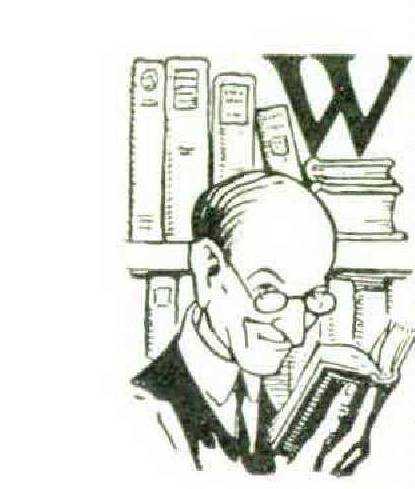
WHY does the bookstore present the last living example of that individualism for which Thoreau contended so valiantly: for that natural unimpeded development of personality which, it is evident from the literature of earlier ages, was the normal condition before the harnessing of power crowded so many of us into cities with the resultant loss of individual flavor?
All but the bookstore man. Protected by a barrier of books from the ripples in the great tide of time, he remains himself, a character. He always was a character. He is one. It was no accident that Samuel Johnson’s father kept a bookshop in Litchfield. Samuel came by his qualities honestly.
In an age of movies, golf, ephemeral magazines, Sunday newspapers and commercialized universities, he sits serenely among his tomes: a high priest of culture in a generation of jazz. ‘ Books,’ said Whipple. ‘ are lighthouses erected in the great sea of time,’ and he tends the lamp. ’The true University of these days,’ said Carlyle, ’is a, collection of books,’ and he is its dean. ‘The writings of the wise,’ said Lander, ’are the only riches our posterity can not squander,’ and he is their conservator. In a money-mad age he is content with a living. He is himself. His life ’is a life not an apology.’
From no motive other than that of loyalty to the traditions of his ancient guild he carries upon his shelves hundreds of volumes which he can never hope to sell at a profit. By the time their eventual purchaser appears they will have ‘eaten their heads off’ in overhead expense. But they are there because he takes professional pride in his stock, because he interprets his function as something far higher than that of a mere merchandiser of paper bound between boards.
’Books are the voices of the distant and the dead.’ said Charnning, ‘and make us heirs of the spiritual life of past ages.’ And the bookstore man relays these messages.
The nation’s bookstores are probably the greatest single force we possess for lifting the intellectual level of our people. And they exert an incalculable influence upon our ethical standards. Were all our universities, with their vast paraphernalia of learning to close their floors tomorrow less damage would be done to our intellectual life than were our bookstores to put up their shutters. But though millions of dollars are diverted to the endowment of colleges, who has ever given a dollar to a bookstore?
The bookstores ask for no donations but they do expect patronage. Let us patronize them. Let us not be open to the indictment of Georg Brandes in his essay ‘On Reading.’ He says, ‘There are people who are content as to books with the provision afforded them by circulating libraries — a sorry method at the best. It is a sure sign of failing culture and poor taste when at every watering place in a great country expensively dressed women are invariably seen each with a greasy novel from a circulating library in her hand. These ladies who would be ashamed to borrow a dress, or wear second hand clothes, do not hesitate to economize in book buying.’
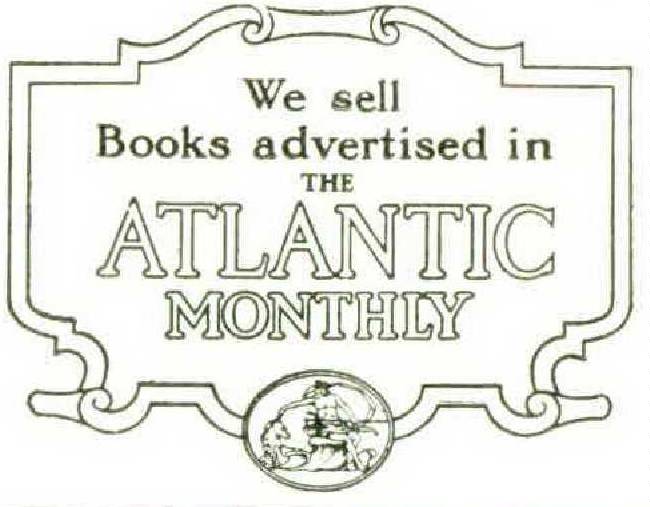
The books advertised in the Atlantic Monthly are worth reading and re-reading. That means that they are worth owning. Whenever you see the reproduced device displayed you will find them on sale. Make the acquaintance of your local bookseller. You will find him a man of manifold contacts, a staunch defender of the republic of letters from the usurpation of the dynasty of the dollar.
THERE IS A BOOKSELLER IN YOUR TOWN