Captives on a Junk
I
March 29, 1933. — At approximately 11.45 A.M., the Captain, the Chief Engineer, and the Chief Officer were sitting in the saloon discussing some matters concerning the ship. The Third Engineer came in to consult the Chief Engineer, and then joined in our conversation. It was some minutes later that we heard what we took to be firecrackers being set off on the foredeck. However, we were soon disillusioned, for at that moment the quartermaster rushed in, shouting, ‘Pirates!’ A hasty glance through the forward port confirmed this, as the pirates were already on the deck. We rushed out of the saloon for our weapons and collided with the Second Engineer, who brought the same news. He had been in his cabin studying and had seen the two junks alongside. I noticed the Captain climb up to the top deck as I rushed to my cabin, but could not enter, as the pirates were coming up the ladder and firing.
Back I went to the Second Engineer’s room to get one of his weapons. He was getting his gun and ammunition, when the Third Engineer joined us, but it was too late to attempt to resist, as the bandits clustered into the room, firing. Fortunately, no one was shot. A few seconds previous to this I had stepped out of the Second’s room and noticed the Second Officer looking out of the port. He had been writing up his log abstract, and had been pinned in his room by the broadside firing from the junks. Shots were fired at us, one passing through the Second Officer’s coat sleeve and shirt, but fortunately missing him. We had no alternative but to surrender, and the four of us were taken into the junks and shut down below.
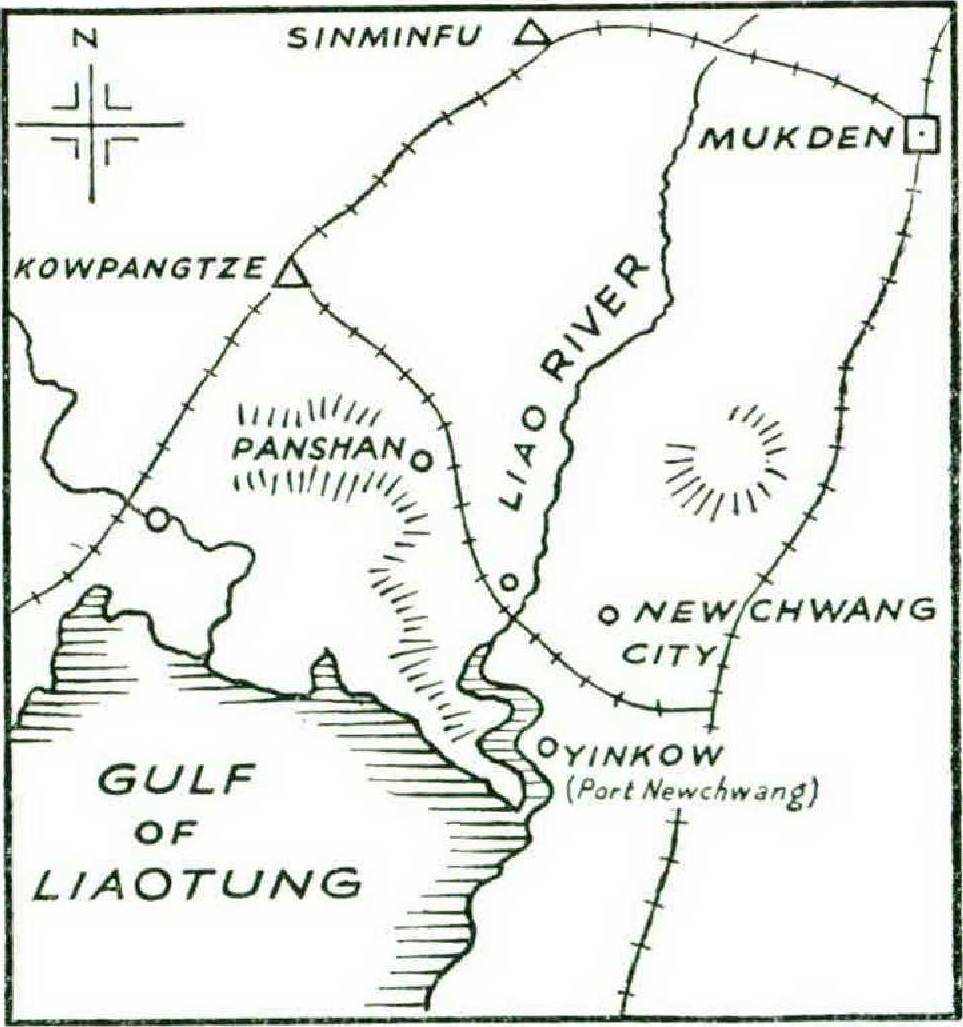
March 30. — This morning finds the two junks up a creek. The surrounding country is mud. Our meals consist of rice and hot water. At 1 P.M. an aeroplane passes directly over us, flying low. We feel sure that it must have seen us. We are threatened and plagued by the bandits, but we feel sure that we shall be out in a few days. At 7 P.M. the Third Engineer is taken ashore to act as messenger, and the rest of us are pushed down below to sleep. About midnight the Third Engineer returns, owing to rumored Japanese activity. He has a bulky Chinese letter and three dollars which were given him for his railway fare.
April 1. — We spend the day much the same as yesterday, and discuss plans for an escape. The No. 1 bandit says that the Third Engineer will be sent to Yinkow in two days’ time. Knowing no Chinese makes it very difficult to understand anything that is told us, and we don’t know whether the demands are for $5000 or $50,000. We fully understand by the bandits’ actions, though, what will happen to us if the money is not paid.
April 2. — Just before dawn we make an attempt to escape. We put our heads over the hatchway and notice no one is about. We climb over the stern of the junk and quietly drop into the mud, which is knee-deep; sometimes it is thigh-deep. After about two hours, seeming to walk in all directions, we realize that a rising tide may cover the whole district and despair of ever reaching firm land. Ice is in abundance, and one can imagine that we are practically numb from the thighs down. With difficulty we retrace our steps and are thankful to see the junk masts again. We expect the bandits to fire at us, but we creep quietly back on to the junk and find the bandits still asleep. A short time later, however, they fling back our hatchway and see the muddy condition we are in. Again we are threatened and cursed.
April 3. — We are kept down below all day on account of our attempted escape. To-day we get pings (flour and water made into patties) and hot water. At midnight we are rudely awakened, and the Third Engineer is rushed ashore with a message.
April 4. — A word on our accommodation. It is roughly four feet high, five feet wide, and nine feet broad, and leaks like a sieve. Our beds consist of three dogskins, two small sacks, and a Chinese blanket to cover us. It gets intensely cold at night. We hope the Third Engineer has reached Yinkow.
April 7.— Nothing much to report. Our food is the same, and we are kept down below most of the day. It is to-day that we have managed to get a pencil from our Chinese bed-mate, and with empty cigarette packets start our diary.
April 8. — An aeroplane passes over this afternoon. In the evening the junks go back to a village, and at 8 P.M. a messenger returns from Yinkow with two parcels for us, a letter from the Consul, and one from Taikoo. The junks then leave and sail for the most part of the night.
April 10. —The day passes quietly in the same place. We are told now that if the money does not come we shall be poisoned, not shot.
April 11. — The junks are still in the same place. We had a bit of fish this morning which was very appetizing. We notice several fires in the district. About noon we are hastily pushed down below as two strangers appear. They are evidently farmers. We hear them talking over our heads, then they get a good beating. We learn that these men started the fires. Our cabin on the Nanchang must have been ransacked, for we have seen one of our rifles and two revolvers. Also the bandits are wearing five of Johnson’s suits, in addition to other coats and hats.
About 7 P.M. two junks are observed lower down the creek. We are shut down below as three or four men off them approach our junk. We hear them talking over our heads, and several minutes later there is a sharp fight, several bursts of firing, and men running hurriedly about. Our hatchway is flung back, and a menacing strange face appears, pointing a gun at us, and at the same time threatening one of our bandits, who is crouched on the deck. We realize that we have been captured by another gang.
All this time we have pulled around us what blankets we can, to protect us, but now it is over, and two strange bandits jump down our hatchway and squash us up to make room for themselves. We are almost lying on top of each other, and it is terrible. They see the remains of the parcel we have received, and take our biscuits, sausage, and cigarettes. We spend the night in fitful sleep, frequently waking to hear the wash of the oars, and realize that we arc being taken elsewhere.
April 12. — The two bandits in our hatch are evidently the No. 1 bandits. They spend the morning fiddling about with the Mausers and guns they have captured. One of them accidentally goes off, just missing Hargrave’s ear by a fraction of an inch and burying itself in the blanket at his feet. It is nerveracking. Later, more bandits appear, and we are made to write a short note demanding $2,000,000 and gold rings. However, this message is not sent and is evidently torn up. We are not allowed on deck, except when necessary, and then we observe five junks and many new faces. We reckon there must be at least seventy bandits now.
April 13. — We are kept down below all day, but are continually pestered by bandits who come to see us and plague the foreigners.
April 14. — Nothing to report, except that we have been threatened with mutilation, and also we have had two or three Mausers stuck at our heads (to please us, we presume).
April 15. — The bandits say a message has been taken to Yinkow.
April 20. — At about 9 A.M. we are made to write a letter demanding $2,000,000 and 80 gold rings. One of the junks takes the message. We spend a couple of hours delousing ourselves, and have quite a good catch. We are pestered all day by the bandits, who love to maul us about and threaten us.
April 21. — We receive a letter from the British Consul this morning dated April 15. We are made to answer it and demand $2,000,000, 200 pairs of socks, 200 pairs of shoes, and 200 gold rings. We have no sooner written this than they raise the ransom to $4,000,000; evidently a million dollars is neither here nor there, although Father (the fifty-six-year-old bandit who is one of our bed-mates) says it ought to be kept at $2,000,000, and, in fact, he gets quite nasty about it.
April 26. — Four weeks to-day since we were captured, and by all appearances we are no nearer our release. The bandits have taken a fancy to our lice powder and are using it extravagantly. We are feeding well off the contents of our last parcel. A violent dust storm blows for most of the day and, our hatchway being kept shut, we are practically in darkness. No further message arrives, and we are fed up.
April 28. — A terrible day. Our quarters are leaking very badly and our things are wet through. There is an exceedingly heavy hailstorm, the stones being about the size of shilling pieces. Still no message. We think the bandits are stupid and do not know how to begin negotiations.
II
May 10. — Six weeks to-day since we were captured. How many more are to pass, we wonder. Things seem to be moving slowly. As far as we can ascertain from the bandits, no offer has been made yet. Some weeks ago we became convinced that when we succeeded in getting three games of patience out in succession something important would happen within the three following days. To-day Johnson has got three consecutive games out, so we are wondering what will happen. During the night four shots are fired and a junk returns from the village. The bandits say an American lias been captured by bandits at Yinkow and a ransom of $9,000,000 is being demanded for his release. We don’t believe it.
May 12. — About 7 P.M. we are handed a letter (the patience game is working out). It has come from Mukden and has evidently been written by a Chinese in the Consulate there, and is signed ‘Yours friend.’ The No. 1 bandit says they have received a Chinese letter and have been offered $200,000. We hear it with reserve.
May 15. — To-day the gang brought half of a pig aboard and we had two good feeds of pork. (Good to us, but they are actually the scraps they have not eaten.) Also fishing nets are stretched across the river and we get a bit of fish.
May 16. — We are surprised this morning by a parcel being thrust down our hatchway. It is from Taikoo and very welcome, although we are disappointed, as there is no accompanying letter. At about 10 A.M. an aeroplane is observed to be approaching. We are rushed ashore and into the reeds. The plane has obviously seen us, as it comes directly over us, making a swoop to a height of less than a hundred feet. The gang opens up quite a heavy fire on it, but apparently without result, for it rises again and disappears.
May 17. — Seven weeks’ captivity to-day. The junks shift a few miles down the river.
May 18. — We are given to understand that a letter is coming to-morrow, and that we shall be released in about a week’s time.
May 21. —At about 2 P.M. a junk arrives, and it has a Chinese prisoner on board. All the bandits say they are holding him for ransom, except one, who has evidently not heard this yarn. He tells us that it is a Japanese spy and that they are going to shoot him, and we think this is right. An hour or so later we are taken ashore to witness a bit of their brutality. They have the prisoner stripped to the waist and roped up. They then proceed to beat him unmercifully with a three-inch rope on which is a large knot. Blood streams from him and he falls unconscious. They revive him with water. We leave the scene and are told later that he has been shot and his body thrown into the river. We are also threatened.
May 24. — Eight weeks to-day since we were captured, and we are very depressed. We have had nothing to cat these last few days but pings and hot water.
June 2. — A Chinese message arrived this morning, brought by two men on horseback. It is evidently bad news, for Johnson is made lo write an answer and we are told that wc shall be beaten and shot if it is not satisfactory. We are all a little nervous.
June 14. — Eleven weeks’ captivity to-day. An aeroplane flew near by this morning, and we were taken into the reeds. The lice and mosquitoes are terrible and we are covered wdth bites.
June 21. —Twelve weeks to-day in captivity. The fact of there being ten junks on one side of us and eight on the other and all being bandit junks has rather unsettled us, but the bandits say that there will be no fight, as they are railway bandits. All the same, our bandits are digging trenches along the bank. We are now up a creek which is dry at low water. At night the mosquitoes are terrible, and are raising large lumps on Blue.
June 25. — It rains all day. One of the most miserable days we have yet spent. Nothing to do and damn little to eat, and being boxed up in semidarkness does not improve our tempers. We even nag at each other, but we are really hoping to be out of this mess in two or three weeks.
June 26. — Johnson’s birthday today. How lovely!
June 28. — Thirteen wreeks in captivity to-day. We have another feed of pork.
June 29. — Nothing to report. Thanks to the diary for knowing the day and date.
July 5. — In the middle of our meagre breakfast we are hurriedly taken ashore and into the reeds. Aeroplanes appear and commence bombing some distance inland from the left bank. There must be six or seven of them. About noon they disappear and we are taken back to the junks. Our junks move upstream a short distance and we are again taken ashore — this time on the left bank. Aeroplanes again appear and do some bombing. In the reeds we encounter another gang of bandits. They have small junks and are also hiding from the planes. About 2 P.M. the aeroplanes disappear and we again go back to the junks. We are told everything is all right now and we shall have no more trouble to-day. At about 3 P.M., just as wc are having our afternoon meal, there is a sudden rushing about and disorder. Heavy firing breaks out on the right bank and is directed at the junks. We crouch down in our compartment, huddled up with every blanket and rag around us. The bullets are hitting the junk with great rapidity, and the bandits on deck respond to the fire. It is a real battle. Someone shouts down to us to come on deck. We hesitate, but are threatened, and so crawl up and lie down flat. Bullets are whizzing with great frequency around us and we are told to jump into the water. The three of us jump in and are followed by three bandits. We swim to the opposite bank and scramble in amongst the reeds.
It is now that Hargrave and Blue succeed in getting away. Johnson is immediately dragged by the three bandits farther into the reeds. The bandits discover that the other two arc missing. They tell Johnson that one man is no good, and he has a revolver thrust at him.
After about half an hour Blue is caught and brought along. More and more bandits leave the junk and join us. About 7 P.M. Hargrave is recaptured and brought along. By this time nearly the whole gang has collected. Hargrave’s feet are badly cut, for we have been without shoes and socks, and the short stumps of last year’s crop of reeds pierce our feet. The bandits continue to answer the fire from the bank and we are marched along the dike. By the time the moon is up, and after walking for three or four miles, we come to our junks, which are beached. These are refloated and we are hustled into them, and we move down the river. The sound of firing gets fainter. During the walk we have been attached to ropes to safeguard against another escape. We finally spend the night on the junks.
July 7. — This morning about 6 A.M. we are taken ashore into the reeds. All our belongings follow, including the junk’s water butt, cooking utensils, and sacks of millet, and a bag of flour for our pings. It is very trying, for we have no shelter from the sun. The bandits dare not bend the reeds over to form a sort of hut, on account of its being’ seen from the aeroplanes. We stay the day and night here.
July 8. — We shift again this morning, a mile or so farther inland, and spend the day among the reeds. We feel pretty well done up. It is impossible to sleep at night, for the place is swarming with crabs, which leave their holes at dusk, and as we lie down they walk over us and give us nasty nips. During the day there are thousands of huge flies which they call sharmuns.
These also annoy us, as they have a sort of thorn which pierces the skin.
July 9. — To-day we are allowed to make a sort of tent out of the reeds. It is much cooler. The bandits certainly have the wind up, and they are turning quite nasty to us. We arc roped up all the time now and they tell us that they are surrounded by soldiers. Also the food is running very low and there seems to be no means of obtaining any more, as the junks have been taken away. We are drinking cold water, and it is putrid, but they dare not light a fire during the day because the smoke would be seen. Hargrave’s feet are festered badly, and the only disinfectant we have is a tube of Pepsodent tooth paste, which we use on them. We all feel that another week or two of this will finish us off, although we arc very hopeful that an attack will soon be made on us; in fact, we are relying upon it. Crabs, lice, mosquitoes, and sharmuns, and we are not even allowed to delouse ourselves. We know there is a small gunboat at the bottom of the creek, and we try to persuade the No. 1 bandit to open up negotiations with it, but they will not listen to reason.
July 10. — We are still hidden in the same spot among the reeds. The bandits have their spies out in all directions. We hope the soldiers will come soon, as we have practically nothing to eat, and are sadly lacking in energy, for we have no sleep.
July 11. — We are still in the same place. Everyone seems in despair and we think the bandits are going to risk a dash to get through the soldiers. At 10 A.M. we have to prepare for a walk. They handle us roughly and Blue is beaten. We all proceed in single file back to the creek, where three sampans await us. They had been camouflaged with reeds, which the bandits now take off. We are pulled downstream for a couple of miles, where we are landed on the opposite bank. We then walk among the reeds until daylight.
July 12.—Thoroughly exhausted and sore, we sleep soundly under the boiling sun, and wake up feeling worse than ever. It cannot go on like this much longer, and we keep our spirits up with the thought that we shall soon be attacked, for we are still surrounded. In the evening we have to walk again and at about 7 P.M. we arrive at a farm. A messenger awaits us. There is a letter for us saying that we are to be attacked in about a week’s time, but as the letter lacks a date we are wondering when it was sent, especially as we have already been attacked and driven off the junks.
The bandits ask us what the letter contains, and on the spur of the moment Johnson says his father is dead. He has to act the part, but we are already so miserable that it is no great effort. We are made to reply to the letter, and then we proceed with our walk. We arrive at a creek, where a small junk awaits us. We sail up the creek, but the water is too shallow and we have to get out and walk knee-deep in water and mud for some distance. Lights are flashed as signals for us, and we carry on, walking knee-deep in mud.
We carry on thus for approximately an hour, when it is discovered that we are going in the wrong direction. We retrace our steps, stumbling in the darkness over shrubs and short stumps of reeds. Eventually we reach firm land. There are no reeds, for it is simply waste land and quite bare. After another half hour we arrive at a pond by the side of which there is a large tree. We bathe our feet and put on our socks and shoes. We walk on for another hour, and arrive at a ruined farm, where we are told to sleep. We drop down exhausted.
III
July 14. — We spend a quiet day on the farm. We get sufficient to eat and feel decidedly better. About 7 P.M. one of the spies rushes in with the news that soldiers are approaching. We hastily prepare to walk. It is a pitchblack night and we all gather together about a mile from the village. A horse from the farm is also commandeered. We walk in single file. Hargrave and Blue are both given rides on the horse on account of their weak state, but when not riding are placed in the middle of the gang, which numbers a hundred. We are roped up, the rope being around our neck and arms, and a bandit is ticked off to drive each one of us. At midnight we cross the railway track, having by the stars walked northeast. We carry on northeast until daylight, and estimate that we have covered about twenty-five miles. We put up at a village. Our legs ache, and we feel just about ready to collapse. It must be recorded that in the earlier part of the walk, before crossing the railway track, we passed a village, where several shots were fired at us. The bandits were alarmed and doubled in their tracks for half an hour before proceeding.
July 15. — We wake up to the usual meal of pings and hot water. It is certain that we cannot carry on like this with only these confounded things to eat. We complain bitterly of our treatment and explain that unless we get better food we shall die, and in that case they will not get any money. This had effect, for they brought us along an egg each. Imagine, an egg! The day is spent at a Chinese farm. At sunset we set out again and continue to walk northeast. We are keeping track of our directions and approximate distance from the railway, so that if a chance occurs we shall escape. About midnight, while passing a village, several shots are fired, and we make a wide circuit of the place. We also see flashing lights at some places. Maybe they are Manchukuo soldiers on the lookout for us.
July 18. — At midnight we are walking along a dike bounding a creek. The frogs make a terrible noise. It must also be remarked that whenever we are near a village the dogs wake up and kick up a terrific din. This wakes the farmers, who in turn clang pieces of bamboo together and shout themselves hoarse. But it is remarkable how little noise we make. Long ago we had to replace our leather shoes with cloth ones on account of the noise. No one is allowed to speak, and on one or two occasions Blue and Hargrave have both stumbled, and their ropes have been pulled so tight that they could not retain their tempers. However, they regretted it later.
July 24. — The day is spent on a farm. The Chinese idea of leading the fires under the bed is no damned use. The beds get so hot during the day when they are cooking that it is almost unbearable. This is a terrible farm. There are millions of flies and bugs, and to add to our discomfort the bandits will seldom take off our ropes so that we can delouse ourselves, and we are raw with scratching. Thank goodness we leave at dusk. We walk north about thirty li, reaching the village at which we are to spend the night.
July 25. — The day is spent at the village, and at dark we walk southeast for two hours. It appears to us that we are keeping in the same district, for we are walking in circles. Every night we carefully note our direction by the stars. In fact, we are very often gazing at the stars when we should be looking at the ground, and this is why we stumble so much and then get reprimanded. We pass a village which Johnson says he recognizes, and we sleep at the next one farther on.
July 26.— We spend a day at the village. Our ropes are taken off so that we may delouse ourselves. We are only allowed a few minutes for the job. We are sitting on the bed, and when the bandit comes to put Blue’s rope on him again Blue gets on to his knees to facilitate the process. There is a great stir and Blue is told to get up. It appears that this is the pose when one is being executed. We shall be sure to keep off our knees in future. It might also be remarked here that we have never been allowed to whistle. We were checked in this by a gun being pointed at us.
July 27. — At about 10 A.M. we are rushed out of the farm and into the kaoliang fields. At first we think soldiers have come to attack, but they tell us that men have arrived with a message. We walk around for six li and go into a farm at which we have previously stopped. They tell us that the men are discussing the ransom. This bucks us up.
July 28. — We learn that the men are still here, and that there is a parcel for us. However, nothing happens until the afternoon, when we are walked to another farm to meet the men. There are three of them, only one of whom has a slight knowledge of English. He tells us that they have come from Panshan, and that we must write a letter to Yinkow. He interprets for us, and we have to write demanding $600,000 and the early release of the bandit’s relatives, whom the Panshan authorities have in jail. We get the parcel, but come to the conclusion that the men must not have been sent out by the authorities at all. We walk a short distance to another farm.
August 2. — Two intermediaries arrive to-day, although we do not see them. We receive a parcel with a letter which says the men are from the Japanese Police Force. We walk in the evening north for about twelve li and stay at a farm we have been to before.
August 8. — At 1 P.M. we set out on a long walk. A message is due to arrive, so we are apparently going to meet it. After walking east-northeast for approximately twenty li in the boiling sun, we arrive at a creek. There are no sampans. Our ropes are taken off and we are made to swim across. It is very refreshing. In fact, Hargrave is cursed for dawdling so long. We carry on, walking northeast, and arrive at one of the previous stopping places. In the last few days we have been in the same district and to-day completed the triangle. In the evening we are told that there is no message for us and the gang are in a bad mood. They say they don’t want the paltry sum that has been offered, and that the authorities are afraid to send a man, as they would shoot him. They are expecting an intermediary to arrive.
August 10.—There are some shots fired this morning. At 2 P.M., as we assemble out in the village to walk, we notice that they have a Manchukuo soldier roped up and blindfolded. We set out, the soldier with us. After walking for twenty li, we arrive at a village — a very clean and modern one. We get a couple of eggs each to-day. The gang is still talking about the money, and we hear figures which to us arc the most reasonable that we have heard yet and we are very much bucked up about it.
August 13. — At sunset we walk about six li and put up for the night. The crops now stand some fifteen feet high and the ma crop is being harvested. One of the bandits tells us that we shall have to be out or shot very shortly, as they cannot carry on after the kaoliang crop has been cut.
August 14. — We learn that this morning intermediaries arrived to discuss the money. There is no parcel for us, but the bandits appear pleased, and that is the main thing. They are now saying that we shall be out in a week.
August 15. — This morning a Chinese letter is brought for us to sign. The bandits say it will only take two days for a reply. They still say we shall be out in a week.
August 18. — Spend day at same village. About 4 P.M. we learn that a messenger has arrived, and shortly afterwards receive a parcel and a letter. More shots are fired during the day, and at 7 P.M. we hurriedly leave the village on account of the soldiers. After walking south for three li, we overtake several old women carrying packs. A few minutes later we arrive at another village and rest awhile. During this spell another gang of bandits arrive, driving six Chinese, who are securely roped together. We conclude that the women we passed are their relatives, and are following in their wake. We also note that this other gang have hand grenades ready to throw. We leave, and, after following the river bank for some miles, receive a broadside of shots from houses hidden among the trees. None of us are hit. After walking through lots of water we are housed in a filthy hut. The bandits tell us that we shall be out in three days. At least, some say that; others say three weeks.
August 19. — We spend the day at a village. It rains most of the day. It is a terrible place for heat, as the fires seem to burn all day and the bed is almost red hot. At night there are thousands of mosquitoes, and during the day swarms of flies. (Pig troughs just outside the window.) The smell from the pig swill is so bad that even the bandits cannot stick it, and have placed whole bunches of joss sticks to counteract the smell. We hope we walk to-night.
August 21.—Spent day in the village. Rained all day. The bandits say we shall be released in three days, or live if it rains. Our spirits have risen so much that the three of us are discussing how we will spend the first night in Shanghai and where we will dine.
August 22. — About 2 P.M. we set out and walk west. The roads are exceptionally muddy, sometimes kneedeep in water. At about 5 P.M. we arrive at the village where we are told the ransom is to be paid. The bandits say the village is only ten miles from Panshan, and the men should arrive to-morrow.
August 23. — Still at the farm awaiting release. Nothing comes and the day seems endless. We sleep here.
August 24. — Still at the farm awaiting release. In the afternoon a messenger arrives and we learn that the ransom is coming to-morrow or the next day. The day seems like a week. Blue has a bad throat and is unable to eat.
August 25. — Still at the same village. The expected messenger does not arrive.
August 29.—We learn that negotiations have been completed. They tell us there is not enough money in Yinkow, and that it has to be obtained from Fengtien. At 3 P.M. we walk northwest for ten li to another village. We notice they have two Chinese tied up and blindfolded, and our procession would look queer to any foreigner.
August 30. — We spend a long and tedious day on the farm. In the evening it is rumored that the men are arriving, but they do not turn up.
August 31. — We hear this morning that the No. 1 bandit has arrived from Panshan, and also a messenger from Yinkow. We have to write a letter to the Consul saying that if the money does not arrive in two or three days we shall be severely beaten, and they will take us a very long walk of two thousand li. We receive no message and cannot imagine what is causing the delay. The bandits are getting very impatient. About 2 P.M. we move twenty li south to another village. Later we learn that the messenger brought news that the No. 1 Manchukuo man had died and the money would not be here for another day. We are pleased to hear this, as the past few days of waiting have seemed endless.
September 1. — They kill another pig to-day. We are certainly getting a lot of pork, and we think they are signing chits for the pigs on the strength of the money they are to get.
IV
September 4. — We are feeling very much excited, as the bandits tell us the money is coming. We talk all day about the wonderful things we are going to buy to eat when we get out. The bandits tell us several times to stop talking and go to sleep, but we just carry on until one of them comes over with a stick, and — well, that is different, and we do try to sleep. It seems incredible, and Johnson is still rather pessimistic.
September 5. — The morning is dragging very slowly as we wait for the money to come. We talk again of what we are going to do when we get out, and are again told to go to sleep, so we have to quiet down. Johnson is so excited that he has donned a pair of the farmer’s wife’s trousers and has the bandits all laughing. The afternoon drags and by 5 P.M. we are losing our excitement, as nothing comes. The bandits have no need to tell us to be quiet. Shortly afterwards we are told that the money came, but it was in one-hundred-dollar notes, and the bandits wanted it in ten-dollar notes. But we are told that it is certain for to-morrow. Lots of the bandits come over and ask us, should we see them in Yinkow, not to give them away. We readily promise. (What liars!)
September 6. — We are up at 4 A.M. We cannot sleep. The bandits pester us all morning. At about 3 P.M. they tell us that a hundred soldiers have arrived with the money, but we are doomed to disappointment. They come all right with the money, but evidently the bandits are not satisfied about the release of their relatives from Panshan, and so the soldiers go away. However, the missing relatives are going to be brought to-morrow, and we are told that we are sure to be out then.
September 7. — About 11 A.M. we are visited by two Manchukuo men. One of them speaks very good English. He tells us that we shall most probably be released either to-night or early in the morning. He has come to make sure that we are the right men before the money is handed over. He has to go back to Panshan and then bring the money out again. Just before leaving he hands us a tin of cigarettes. He is hardly out of the room before all the bandits rush at Blue, who is holding the tin. Blue has one in his mouth, and one of the bandits snatches it away. Blue grabs his wrist. Unfortunately, the man has a gun in his hand and it falls to the floor. The bandit misconstrues the action, and thinks Blue is trying to get the gun, and so he is given a beating. I must mention that one evening last month Hargrave was given a good beating and kicked. Only the other day he complained he was still sore when he pressed his stomach. About 1 P.M. we are told to prepare for a walk and set out walking in the direction of Panshan, and stop at a crossroads. We are told the money is coming to this place, but after an hour, with nothing coming, we walk on again.
We think they are very frightened of an attack, as they all have their guns drawn. They observe a farm in the distance and men are on the roof. We approach (he place and the No. 1 bandit goes in. We are taken to the gate and notice Manchukuo soldiers, but someone shouts to our leader, and we are hastily withdrawn in kaoliang some hundred yards away. Again we are taken to the farm and again we are hastily withdrawn. This happens four times, but eventually we go in through the gate and into a farmhouse. One of the bandits speaks very roughly to one of the soldiers, and we are afraid that any small incident may lead to a fight. We are in the room only a few minutes before a Manchukuo officer comes in and unties us. We are led into a neighboring house, where there are five Japanese and Manchukuo officials. We immediately thank them, and learn that they have only brought fifteen soldiers apart from themselves. The money is handed over at 3 P.M. After waiting for about an hour and a half, during which time the bandits are in another room dividing the money, we are told we can go, but the bandits stop us and say that they must pay their outlying scouts first. This takes another hour. Then the bandits demand the soldiers’ ponies. This is refused, and after some talk we are told that we can go.
We proceed out into the courtyard, where the soldiers mount their horses and we get into the farmer’s cart. We are just about to leave when the bandits say there is another gang waiting for us on our road back. They tell us to wait while they go and tell this gang to let us pass. We all troop back into the farmhouse, and it is half an hour later that we are allowed to leave. By this time it is dark, which no doubt is what the bandits really wanted. Our captain asks for an escort, and two bandits ride back with us within a mile of Panshan. It is a rough journey, but one of the pleasantest we have ever had. We arrive at Panshan at 9.30 P.M. and are told that we shall be stopping the night there, and go on to Yinkow by the five o’clock train in the morning.
The Japanese and Manchukuo officials make us very welcome, and several toasts are made to the achievement of their plans. We are exceedingly happy in both senses (sake is fairly strong on an empty stomach). We then sit down to a Japanese chow, and afterwards retire. Johnson is very sick.
September 8. — We are up this morning at 4.30 A.M., have a wash, and proceed to the station. All the Japanese and Manchukuo officials accompany us. At about 5.30 A.M. the armored train pulls out of the station. What a delightful journey this is! We seem to have a permanent smile on our faces.
At 7.30 A.M. we arrive at Yinkow, where a battery of photographers await us. Still with a permanent smile, we wait impatiently until they have finished, and then we walk to the police launch and plough over to the other side of the river. More cameras to shoot us and still the same old smile, and then we set out to the police station. We are met halfway by a car which conveys us to our destination.
At the police station Johnson has a word with the Taikoo agent, Mr. Grant, over the telephone, and ten minutes later both Mr. Clarke and he arrive. We are then officially handed over, several speeches are made, congratulations are expressed, and then more photographs. At half-past ten Mr. Grant finally manages to get us away to his house, where a most wonderful breakfast awaits us. After a great repast we have a final delouse and a real good bath.
In conclusion, we all feel that we shall never be able to repay the debt we owe to all who have worked so hard and untiringly for our release. More especially to Mr. Clarke, the British Consul, and Mr. Grant, Butterfield and Swire’s agent at Yinkow.