Pink Higgins, the Good Bad Man
I
IN our early days at the Spur Ranch in the southern Panhandle of Texas,1 the work of acquainting myself with the many details of ranch operation called for extended absences from headquarters. During these periods — and they were frequent — there was no congenial companionship for my wife, and her days were inevitably long and lonely. There were so few people in the region that the land had become a paradise for quail, and, in casting about for something to interest her, I thought she might try her hand on them. She had never fired a shotgun in her life, but I ordered a light 16-gauge Parker gun for her and taught her how to handle it. We had a team behind which she could shoot, and when I could not drive for her I arranged with one of the cowboys to take her. She killed more than four hundred quail that first winter, and the sport afforded her pleasure as long as we lived there. Often when we had distinguished guests a great platter of quail breasts would serve as the pièce de résistance.
Prairie dogs were even more numerous than the quail. I made my rounds on horseback to the accompaniment of their incessant, impudent barking. One who has never seen a prairie-dog town cannot imagine how unbearably monotonous such a serenade becomes when literally millions of the dogs squat on their mounds and punctuate each shrill bark with a jerk of their short tails. I believe I am generally considered a kindly man, but I must confess that these prairie dogs aroused in me a personal hatred such as I have never felt toward any other animate thing.
My emotions, of course, were of no consequence to anyone but myself, and, had the dogs had no other effect, there would be no point in introducing them into this narrative. The fact is, however, that they were a very serious problem, and for substantial reasons. Like all animals when left undisturbed, the species multiplies to the extent of the food supply; so that prairie-dog towns were generously spotted all over the ranch, and often a single colony would denude of grass a whole section of land. To a cattle ranch this was a threat of the first importance.
It became immediately necessary to exterminate the pests. We put in the field a ‘dog outfit’ of thirty men with full camp equipment, and thus inaugurated a campaign which was to extend over three years and was so successful that in the end a prairie dog became almost a curiosity on the Spur Ranch. We used chiefly maize or Kafir corn soaked in a solution of strychnine and cyanide of potassium until each kernel was thoroughly saturated. Syrup was poured over the grain to give it a sugar coating, and it was then dried by the addition of flour, which formed a protective exterior against the elements. A little anise oil was introduced to make the bait more attractive.
With six men to cook, take care of the camp, and mix the poison, the remaining twenty-four distributed the deadly grain. Prairie dogs do not look for food in their holes, so the poison squad placed a teaspoonful of the grain on the outer edge of each mound, where it would lie undisturbed until eaten. Every man was equipped with a tin bucket to hang over his shoulder and a heavy, forged-iron spoon lashed to a long handle, which enabled him to place the poison without stooping. They marched abreast over the ranch, spaced just far enough apart to ensure attention to every hole. In this way much acreage could be covered in a day, but the ranch was so large that it took many months to complete the job.
As nearly as we could estimate, we got from 80 to 90 per cent of the prairie dogs on the first round. Most of them died underground, the homing instinct carrying them to their holes as soon as the first seizure occurred, but great numbers of their carcasses were also scattered over the prairies. These the coyotes devoured. I had hopes that we might be able to destroy these pests, too, through secondary poisoning, but in this I was disappointed. It took so little poison to kill the dogs that even a coyote’s appetite was cloyed before he had eaten enough to accumulate what was for him a killing dose. Then too, no doubt, the coyotes built up a resistance to the poison by feeding on such meat.
II
So successful was this campaign in its primary object that the dog population was vastly reduced. Still, enough of the pests survived to make it certain that the ranch would soon be restocked unless further measures were taken. So we covered the whole territory once more in the same way. Proportionate results were again secured. We learned, however, that any dog which had had a touch of poison and survived had made a ‘ never again ’ resolution; he refused to be tempted by the bait, and became what we called an ‘outlaw dog.‘
The only way, therefore, to make a thorough job of it — and nothing less would do — was to inject carbon dioxide or some similar gas into the burrows. Being heavier than air, it descends to the bottom of the holes, and every living thing therein must die. This plan we put into execution on the third and final round. Why, then, one may ask, did we not adopt so certain a method at first, and spare ourselves all the subsequent trouble? The answer is that gassing is a relatively expensive process; by the time we resorted to it the number of inhabited holes had been reduced to a small percentage of their original number. Otherwise it would not have been practicable. Our crew became infallibly expert in spotting the holes where anybody was at home, and these were the only ones into which the gas was injected.
The total cost of the three rounds was about $45,000 — a large sum, but it came to little more than ten cents an acre, and the benefits of the campaign were worth immeasurably more. Vigilance along the great stretches of our boundary lines could never be relaxed, because many of our neighbors did not follow our example. Their dogs were constantly moving in on us, showing a great fondness for ready-made homes in better range than they had in the old place. In subsequent years some $20,000 more was spent to keep the prairie-dog population under control.
For some time their abandoned holes were a source of danger to us, for weeds and grass grew over them, concealing them from view and making for accidents to horses and riders. If a horse is given his head, with slack bridle reins, he will run through a dog town safely at high speed, but if the rider attempts to guide him with the reins, the chances for serious hurt are great. A horse can coördinate his head and leg action if left to his own devices, but not if a rider tries to do his thinking for him.
I must not fail to mention one wholly unexpected consequence of our campaign against the prairie dog. As I have said, quail were numerous all over the ranch, and coveys of the birds assembled to feed on the poisoned grain. At first we were afraid that the quail would be exterminated, and the possibility was disturbing enough in itself; at this point, however, an event occurred to give our fears a more serious turn. Not far from the town of Spur there was a farmer who killed some quail without thinking that they might have been feeding on the poison. They were cleaned and their entrails thrown to the cats; the birds were then cooked for supper. After the meal, stark terror ran through the family when they found some of the cats in convulsions and others already dead. The cause was only too apparent. So the farmer loaded his entire family in the ‘hack’ and drove madly to Spur, expecting, and possibly feeling in imagination, the early pangs of poison pains. Strange to say, no trace of poison was found in their systems, but it took some time for the family to convince itself of this happy fact.
Soon afterward we learned that the quail themselves were absolutely immune to the poison which proved so deadly to the prairie dogs. I have been given to understand that the crop or craw intercepts the poison and protects the vital organs of the birds; whatever the reason, it is certain that the birds were not harmed by their strange food, nor was their meat in any way affected. The farmer’s cats, of course, had devoured the craws, which were nothing less than concentrated poison sacs.
III
Wolves were another of our problems. The Spur Ranch joined all the neighboring ranches in an agreement to pay a fixed bounty for every lobo that was killed. The ranch on which the kill was made paid fifty dollars, the surrounding ranches from five dollars to twenty-five dollars each, with an additional bounty of from two and one-half to five dollars for each pup. We were always glad enough to pay the money, for a wolf covers a lot of territory in his hunting and he eats every day. Their craftiness is best illustrated by the fact that our range boss, in all his years of riding through every part of that country, had never seen a lobo, although he had seen evidence of their kills only too frequently.
My wife had the rare experience, for a woman, of being in at the death of a bitch lobo and her litter of nine pups. One day at noon one of our boys rode in from the rough Caprock country saying he had sighted a lobo, and from its actions he thought it was a bitch with a den near the spot where he had seen her. He observed her from a distance and because of his remoteness he believed she had not taken alarm. In the early afternoon several of us rode back with him, my wife accompanying us.
Under the cowboy’s guidance we found the wolf’s den, which gave forth a strong animal scent, but upon digging it out it appeared that the bitch was smarter than we were — fearing discovery, she had moved her whole litter. In a little while one of the boys stumbled upon the new den about a mile away on the opposite side of the canyon. It must have been quite an undertaking for the bitch to transport her family so far in the short period that had passed since our man had first seen her, assuming that she was able to take only one pup at a time. Possibly her mate turned in and lent a hand — or a mouth.
It was evidently an old den, and prodding into it brought no sound or other evidence of occupancy. Getting the trend of the tunnel, we dug in from the surface and happened to make an opening just in front of the wolf. Whether she was blinded by the sudden light or whether she acted on the instinct to protect her young, she lay there without moving until a bullet crashed through her skull. We had to drag out her body in order to get at the pups. They were so young that their eyes were not yet open, but when they were picked up by the scruff of the neck their fighting spirit was immediately aroused and they tried to bite and claw viciously. Our windmill man begged for one of them to take home to his children, but the other eight were killed on the spot. Even the survivor was not allowed to live long, for the possibility that it might grow up and escape back to the range was a risk too great to be taken.
I had had earlier experience with wolves on the T-Heart Ranch in Colorado. In that section both wolves and coyotes were numerous, and, although coyotes were never a menace except to newborn calves, the loboes began to pick off the big calves from the milk pen when turned out at night. We tried poison, but with little effect, since the wolves seemed able to detect it and left the bait alone. One night we were aroused by the frantic bawling of a calf not a hundred yards away from where we were sleeping. We knew at once what the trouble was and rushed out, but the wolf clung to its victim until we were nearly upon him, then bounded away. The calf was badly mangled, a great chunk being torn out of one of its hams, and it was slowly bleeding to death.
One of the old hands conceived the idea of injecting strychnine into its blood stream, so that before death the poison could circulate through its entire system. This was done, and when the calf was dead we hooked it to a wagon axle and dragged it a long, circling distance, finally leaving it in a little valley over a ridge. The following morning when we went out to examine the results, not a vestige of meat remained on the bones of the calf, and several wolves and coyotes, and one eagle, lay stretched out dead. For a day or two thereafter the circling of buzzards around the cliffs and the rough back country indicated spots where many more had snarled out their lives. For once the wolves had been outwitted.
Many writers have told thrilling stories about the wariness of wolves and their extensive depredations. The most conclusive evidence on these points that I ever encountered was at the Vermejo Park Ranch in New Mexico, which I visited some years ago. In the main room they had a huge mounted wolf, with its history hanging about its neck. It interested me so much that I copied it: —
This wolf made its appearance on the Upper Vermejo on May 14, 1912, during a big snowstorm. [The ranch was in high mountain country, the ranch house being at an elevation of about 8000 feet.] Nearly a foot of snow fell during the thirteenth and fourteenth.
On the night of May 14 this wolf killed eleven head of yearlings. From that time until he was caught, March 8, 1913, he killed for the Adams Cattle Company fully one hundred head of cattle, and nearly as many more cattle and colts for other companies, besides the harm done by maiming, frightening, and running the cattle. During this time he also killed a large number of deer and wild turkeys.
The damage done by the wolf may be conservatively estimated at $7500.
The Adams Cattle Company paid $200 for the killing of the wolf. Other rewards were offered amounting to as much more. The wolf was caught in a trap by J. A. Black on March 8, 1913, after all the best wolf men in this part of the state had failed to catch him. The reason this wolf was so hard to catch was that he never returned to anything he had killed, and also because he would never travel a trail. As far as I know he was never seen but once, and that was at a distance of a half mile or more.
This was without doubt the hardest wrolf to trap I have ever heard about, and was equal to the lobo wolf to which SetonThompson refers in one of his best stories on wild animals.
HARRY W. ADAMS
Vermejo Park, New Mexico
Subscribed and sworn to before me May 31, 1913 WILLIAM E. INGLIS, Notary Public Colfax County, State of New Mexico
IV
Of all the ranches in the Panhandle of Texas, I think the JA was the most prolific of good stories — and for a special reason. The owners had a number of English friends, and there were some English women who often spent considerable periods there as favored guests. Most of them were really excellent horsewomen and were always eager to ride the range with the cowboys, who did not share the eagerness when it became known that the ladies were in the habit of referring to them as ‘cow-servants.’ Being wholly ignorant of range work, naturally enough, they were inveterate questioners, keeping at it until all hands were worn out. Nevertheless, the men did not want to be disrespectful to the guests of the ranch.
It is the custom on all ranches for the range boss to outline the work of the day from the corral. One morning when one of the English women was present the boss said to a cowpuncher, ‘Bill, go up in Palo Duro canyon and bring down that steer and dogie we saw there yesterday.’
‘ And, pray, what is a dogie? ’ inquired the lady.
‘ Madam, a dogie is a calf whose mother is dead and whose daddy has run off with another cow.’
Anyone who has ever been about the range country knows that a dogie is a calf whose mother died before the calf was mature enough for weaning; consequently it is stunted in the struggle for existence by having to graze prematurely. Often it does not survive, but if it does it remains undeveloped — ‘a little knothead,’ as the cow-boys say. So the description given to the inquisitive lady was not so far wrong.
At another time, as the range boss started off with one of the English women close beside him, they passed through a pasture where a registered herd was kept. About twenty-five lusty young bulls stood there with their white faces all turned toward the two riders. The romantic lady exclaimed, ‘Oh, what pretty little cowlets!’ ‘Excuse me, madam,’ remarked the boss, ‘but them’s bullets.’
And speaking of women on the frontier reminds me of an incident connected with my ranching days in Colorado. A young man had come out there from the East, and, cut off by hundreds of miles from eligible females, had married an Indian girl. This, I may say, was not at all uncommon in the early days when there were practically no white women in that whole region. Years went by, and so-called civilization crept up and gradually got a foothold in the section where this man and his squaw were living. The new settlers brought their prejudices with them and were inclined to look upon marriage with an Indian as a disgrace.
After a while the Indian wife died, whereupon the husband opened up correspondence with a boyhood sweetheart somewhere in the East, and eventually went back for her and brought her out as a bride. The few white women in the neighborhood, chiefly sharp-nosed, flat-breasted old busybodies, went into conference and decided that it was their duty to inform the newcomer of her husband’s previous domestic status. Selecting a spokeswoman, they waited on the bride and, with many expressions of feigned reluctance and mock sympathy, broke the news to her. At the conclusion of this recital, the bride, instead of bursting into tears, looked slowly about the circle of her visitors and said, ‘Well, if this is the material he had to choose from, I don’t blame him.’
V
One of the best stories of the cattle country may be said to have belonged, in a peculiar sense, to the Spur Ranch. It is the story of Pink Higgins, the good bad man with fourteen notches on his gun.
At the time I took charge of the Spur Ranch, wholesale cattle rustling was no longer practised on the scale that had once been common. It had become too dangerous. Everyone knows that the trick of the old-time rustler was to adopt a brand which was a simple mutilation of some other brand. If an honest cowman, for example, was running the (bar-T), the addition of another bar would convert it into the currycomb, Our own brand at the Spur Ranch, could easily be converted into a pitchfork, and we had a neighbor who had this brand. His, however, was a big, responsible, splendid outfit wholly above suspicion, and, besides, his brand was placed on a different part of the animal from ours.

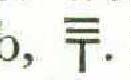
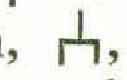
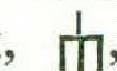
When the counterfeiting of brands, as it was called, became too dangerous, the rustler adopted other methods. The safest of these had to do with the earmarking of calves. A cattle owner always has an earmark as well as his brand, and calves are always earmarked at the time they are branded. The reason for this is that when one is riding the range it is much easier at a distance to see the ears of a calf than to distinguish a brand. Any earmarked calf is assumed to be branded with the brand corresponding to the mark.
The rustler would establish himself in or about the big ranches with a few head of cattle of his own, and of course with an individual brand and earmark. The mark adopted by a cattle thief was always one which involved enough mutilation of a calf’s ear to cut away the legitimate mark entirely. His trick was to ride about the range in search of un branded calves near the weaning age; these he would earmark with the mark of the true owner. He would then separate the calves from their mothers, usually throwing them into another pasture. The calf so separated from its mother and having a temporary earmark intended to deceive the riders, who would promptly rope and brand it if its ear was full, is known as a ‘sleeper.’ After allowing enough time to elapse to make certain that weaning would be complete, the rustler would finish his job by putting his brand on the calf, at the same time cutting away the preliminary earmark to produce his own.
To discourage such practices on the part of cow thieves, the company which owned the Spur Ranch before the Swenson Syndicate bought it had carried on their ledgers what was known as a ‘Protection Account.’ To this account were charged the wages of two gunmen, Pink Higgins and Bill Standifer, whose business it was to ride the range and take care of those men of pretended respectability whose herds were increasing more rapidly than was regular. Higgins and Standifer were hated and feared by all the suspicious characters throughout that country, Higgins especially, for he had an uncanny ability to smoke out offenders and catch them red-handed, or to come so close to it as to cause them to make a quick change of residence.
Pink Higgins was a true child of the old frontier. He had been engaged in one of those family feuds which was in effect a war of extermination, from which he finally emerged as almost the sole survivor. At one time he was under indictment for killing fourteen men, and it was said that he actually killed eighteen, but in that raw period little was done about it, since feud killings did not take on the status of murder. When I came to the Spur Ranch, Higgins had retired from service under the ‘Protection Account’ and had set up for himself on land adjoining ours. I visited him on my first round, and we became fast friends. I found that he was rigidly honest in all his dealings. He was always helpful in giving me a line on the men who were apt to make trouble for us, and he was invariably right. From his own lips I learned his story.
VI
Born in Georgia in 1848, and burdened with the name of John Pinkney Calhoun Higgins, he was brought to Texas by his parents when he was three months old. His father told him that there were thirty-six prairie schooners in the wagon train, and that the chattels of the party included more than one hundred slaves. Most of the group settled in the neighborhood of Austin. Pink’s father remained there until 1857, when he moved to the head of Beehouse Creek, near Lampasas, at a point which has since been known as Higgins Gap. Although then only nine years old, Pink had already acquired a good working knowledge of horse and rifle, and, with marauding Indians ever a menace, he soon took a man’s part in fighting them off. The Indian threat was so constant and serious that after two years the settlers were compelled to withdraw to Bell County, where they ‘forted up’ until the spring of 1862, when they ventured to return. The only education Pink had was that which he got in the rough-and-tumble of breaking horses, herding cows, and fighting Indians.
Among the neighbors was a family by the name of Watson. Pink Higgins grew up, cow-hunted, and fought Indians side by side with the Watson boys. No one could ever have supposed that a savage feud would one day break out between the two families and continue until every Watson of that generation had been exterminated.
‘ Old Man ’ Watson was a fine character and did his best to rear his boys as honest frontiersmen. Many a time he was known to take off his six-shooter belt and thrash them with it for stealing his neighbors’ calves.
In the spring of 1873, much cattle stealing was going on, and the state police quietly followed one of the Watson wagons out of town until it led them to a cache of hides from stolen cattle. When the police came back to town, they found the Watsons primed for a fight. Their gang was concentrated in Dead Man’s Saloon, with their pistols strapped on and with rifles stacked behind the bar. Captain Williams stepped up to arrest one of the Watsons, who shot Williams through the head, killing him instantly. Three other state police were killed in the fight that followed. Eventually the Watsons were captured and brought to trial, but fear played its part among the jurors and they were acquitted.
The Watsons had a meat market in town, with corrals and a slaughter pen some distance out in the country. Their cattle stealing continued, and they grew so bold that they would hold stolen cattle in their corrals before slaughtering them. On one or two occasions Pink Higgins found some of his cattle among them and turned them out. When he reported the matter to the Watsons, they would laugh and say, ‘Some mistake, we guess.‘
After a while the meat market proved too small an outlet for the Watsons, so they began to trail cattle out of the country. They took thirtysix head of Higgins’s cows and started them with a trail herd. Pink was on the alert, and, following along the trail, he caught up with the Watson cowboys and cut his own cattle out of the bunch. He had previously notified the Watsons that if they stole another animal of his he would ‘get them as sure as there was a God in Heaven.’ When Bill Watson learned through a messenger that Pink had recovered his cattle, he sent word that he had some ‘blue pills’ for Higgins and would administer them on sight.
That was enough for Pink. Against the advice of his friends he started to town and rode straight to Dead Man’s Saloon. Winchester in hand, he entered. Bill Watson was in the back of the room. Not a word was uttered by either man as Pink advanced on him. Suddenly Bill went for his gun and instantly Pink fired, putting a bullet through Bill’s chest and letting him have two more before he sank to the floor. Watson fell on the very spot where he had dropped Captain Williams.
From that day for three years Higgins never knew a peaceful moment. There was never a light in his house after dark, and in the daytime he was always armed and on his guard. Some of the neighbors took sides, and a number of men were killed in each faction.
The Watsons had in their pay two Negroes who were working about town and tipping them off to Higgins’s movements. When this fact was made certain, Pink and three of his men sat down to a game of seven-up to decide which pair should get the Negroes. It fell to Pink and his partner, but as it happened Pink took care of them both. In view of the time and the circumstances, one must not be too quick to condemn him: it was either kill or be killed.
By this time the Watsons had many men in their party, and the wonder is that they were not able to get Pink. He managed to elude them by planting in their ranks a spy who posed as a gunman from Mexico. This man left unsigned notes in a certain hollow tree which informed Pink of his enemies’ plans. But the Watsons were not without influence. Some of their friends appealed to the Governor to send troops ‘to stop this man-killing Higgins in his course of mob law.’ The District Captain of Rangers, however, strongly urged the Governor to let Higgins go ahead unmolested, adding that in this way the lawless element would be cleaned up. In fact, the Rangers and state police had always given Pink their moral support because of his honesty and courage.
Nevertheless, either by warrant or by indictment, many counts were accumulated against Higgins, and their effect was to make him an outlaw. So he wrote to Judge Blackburn of the District Court at Llano, an old acquaintance, that he would ‘come in’ if bond would be allowed for him and his friends. The Judge assented. The bond was fixed at $40,000, and was quickly signed by the most substantial cowmen in the country, whose battles Pink was fighting as well as his own.
To make a long story short, things finally went against the Watsons. One by one, the brothers were killed off until only two were left. Finally, complaints of cattle stealing were made against them. The officers secured evidence of their guilt and succeeded in capturing them after an exchange of shots. The Watsons were afraid of being lynched, and begged the Rangers to turn them over to Pink Higgins and his men for safe keeping. One said: ‘We have stole from him and shot at him, but I take my hat off to him when it comes to fighting. He can stand off a regiment.’ Nevertheless, they were locked up in the jail at Meridian. One Sunday night shortly thereafter, the sheriff received word that his mother was dying in a near-by town. It was a ruse to get him away, and it worked. An armed mob then stormed the jail and sent hundreds of bullets through the bodies of the last two Watsons.
In the end, Judge Blackburn dismissed all indictments and warrants against Higgins, so that he was never tried on any of the counts.
VII
Higgins came up to Kent County and afterward landed in the protection job on the Spur Ranch. Bill Standifer, his copartner in that job, also came from the same neighborhood, and rumor had it that, although he had not allied himself directly with the Watsons, he had been sympathetic toward their side — a condition which did not make for perfect amity between the two men. Standifer was evidently itching for a chance to kill Higgins, and as time went on he boldly said so when he was drunk. Apparently he got the mistaken notion that Higgins was afraid of him, for Higgins showed himself only too ready to neglect the opportunity for gun play which Standifer forced upon him.
The fact was that Pink Higgins had settled down. He now had a fine wife and family, and wanted only to be let alone. Although he had had no education in his own youth, he earnestly craved such advantages for his children. And I may say in passing that one of his sons, Cullen Higgins, studied law and for many terms served as a capable and splendid judge in one of the largest judicial districts in Texas, which included our own four counties. The other son, Thomas, also a lawyer, is and has been for many years County Judge of Lampasas County, and so popular is he that he has never had opposition at any election. The girls were also well educated.
Pink did not want to upset this domestic picture; his old troubles were now well in the background and he was not courting new ones. But Standifer became more and more aggressive, and laid plans to trap Higgins, who had heard of his boasts and was therefore on his guard. One day Standifer sent a man to Higgins to tell him that some cow thieves were at work in a certain neighborhood. Higgins knew that the messenger was a close associate of Standifer, so, instead of setting after the thieves as he was expected to do, he went only to a high point near by from which, with field glasses, he was able to spot Standifer lying in wait for him. Higgins returned home.
A day or so later, as he was going out afoot early in the morning to drive his horses from the pasture into the corral, his watchful eyes caught a glimpse of Standifer in some rocks that were within rifle range of the horses. Again Higgins went back home, and stayed there all day. That night he heard coyotes yipping close to the house, but he knew that Standifer could give a pretty good imitation of a coyote and concluded that he was probably waiting for him to open a door. This conviction was reënforced by the behavior of his dogs: instead of giving chase, as they always did when coyotes came too near, they merely barked and remained close to the house. The next day Pink stayed at home again, but, as he said later, he knew he could not ‘ live holed up like a rat any longer.’
Before daybreak, therefore, he saddled his horse Sandy and rode off in the direction from which he knew Standifer would come. Shortly after dawn he saw Standifer approaching. They were riding in the same general direction, so that their courses converged. From this point I shall try to put the story in Higgins’s own words, just as he often told it to me: —
‘ He was on my right, and I was sure he would not get off his horse on my side but would try to use his horse for protection. So I made up my mind to keep my eye on his left foot, and the minute that foot left the stirrup I would get off and go for my gun. When we were less than a hundred yards apart and getting closer every step our horses took, he slipped her out and off I went. My rifle sorter hung in the saddle scabbard, and as I got it out Standifer shot, hitting old Sandy. He jumped against me and made me shoot wild — I always hated to lose the first shot.
‘Standifer was shooting, but he was jumping around like a Comanche and his shots were going wild. He was sideways to me, and so thin I knew I had to shoot mighty accurate to get him. I knew he could n’t do any good with his gun till he stopped jumping. So I dropped on my knee, trying to get a bead on him, and when he slowed down I let him have it. I knew I had got him when the dust flew out of his sleeve above the elbow and he started to buckle. He dropped his gun into the crook of his other arm and tried to trot off. I called to him, saying if he had had enough I would n’t shoot again and would come to him, but he fell face forward, his feet flopped up, and he did n’t speak.
‘I was afraid to go to him, fearing he was playing possum after being shot, so I got on my horse and started home. I got another horse and rode to a telephone and told the sheriff at Clairemont I thought I had killed Standifer. He said if I was n’t sure I had better go back and finish.’
The shooting occurred on Higgins’s place at a spot that became known as the Standifer Thicket. It was in plain hearing of Mrs. Higgins and the girls, who knew that the battle meant death to one or the other of the men. In her suspense, Mrs. Higgins sent one of the girls to the top of the house and asked her what she could see. Presently she replied, ‘I can’t see anything but Daddy, and he is coming this way in a lope.’
I asked Pink if Standifer was buried where he fell. He replied, ‘Damn him, no! Do you think I’d let him stay on my place?’
VIII
With anyone who was interested, Higgins would discuss this shooting just as though it had been a wolf hunt, and with no more feeling, which is understandable enough when one considers that a human wolf was the victim. Most bad men — and I do not put Pink in that class — do not like to talk about their killings or to have others mention them, but Pink had no such qualms. As a general rule, men who kill, no matter how just the provocation, are never the same afterward. A conspicuous illustration of this fact was a neighbor of ours, Burk Burnett, who had had to kill Farley Sears in self-defense. It was a clear case, but Burk was a changed man ever after. He said if he had the scene to reënact he would let Sears kill him rather than live with such a memory. There was nothing of this about Pink Higgins, He had it to do, he did it, and that was all there was to it — no regrets, no cause for any.
I had long wanted my wife to meet Pink and his nice family, so I took her over on one of my trips. Without any difficulty I led him around to talk about his trouble with Standifer. Just then his little crippled girl came to his side, and he took her on his lap and gently stroked her hair while he related the story of the killing. My wife remarked to me afterward upon the inconsistency in his character which this incident revealed. He won her sympathy, however, by his great love for his family and his devotion.
During this visit Pink went on to talk about the old days of the Lampasas feud, and he frankly told my wife of his indictment for killing fourteen men. But he remarked that it got so down there that if any man was found shot to death or had disappeared everybody said, ‘Pink Higgins did it.’ And he added, ‘Now, Mrs. Jones, I did n’t kill all them men — but then again I got some that was n’t on the bill, so I guess it just about evens up.’
Pink died many years ago, and not by violence. He dropped dead upon the hearth of his home while lighting a fire.
- In his previous article, ‘ On the Last Frontier,’ Mr. Jones related incidents in his early life on a Colorado ranch, and told how, in 1907, he became manager of the Spur Ranch in Texas, which comprised within its domain 673 square miles of land. — EDITOR↩