The Contributors' Column
THE editor sends the Atlantic to press with these resolutions for the New Year: to print the best and most unexpected manuscripts that can be found; to give a fair hearing to those two camps that differ only in the method of making this a better country to live in; to restore American humor to its place in the sun; to champion poets, the unknown as well as the known; to give storytellers as much latitude as their skill deserves, and to coax into print the sensitive tribe of Elia. This programme must be big enough to revive what we most need to-day: integrity and faith in ourselves.
January is customarily the month in which we take stock of ourselves. Looking back, we remember those things which we ought not to have done, and that we have left undone those things which we ought to have done. It is a time of inventories, a time when we promise to spend less and do more, a time when the voice of conscience is heard in the land.
The lean years had the immediate effect of arousing our social conscience and making us earnest to improve the lot of mankind. But social conscience expresses itself in planning the duties of other men, and thus the paradox developed that the more we planned for others the less we did for ourselves. Thinking about the state of personal conscience brought J. Donald Adams (p. 1) to the boiling point, and to relieve the pressure he wrote the article which rightly belongs at the head of our New Year issue. A Harvard graduate, class of 1913, Mr. Adams is editor of the New York Times Book Review.
Word has gone out to authors and agents that Atlantic short stories will be unrestricted in length from now on: they may be as long as twenty thousand words or as short as one thousand. But they must take the reader out of himself. Such certainly was the captivating effect of ‘A Tooth for Paul Revere’ by Stephen Vincent Benét, in the December Atlantic.
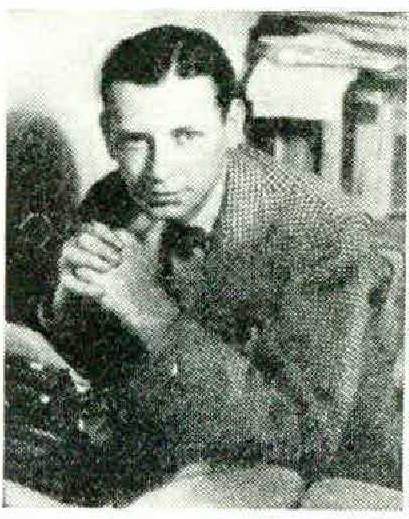
From Roswell, New Mexico, comes our first, narrative for 1938. Now in his early thirties, Paul Morgan (p. 5) was educated at the New Mexico Military Institute and then went on to study for three years at the Eastman School of Music. In 1933 his novel, Fault of Angels, won the Harper Prize.
The desirability of collective bargaining is openly admitted, but its perfectibility is still to come. To-day industrialists and trade-unions are confronted with the specific problem of making collective bargaining work. Sumner M. Slicliter (p. 20), professor of business economics at the Graduate School of Business Administration of Harvard University, speaks with a referee’s knowledge of the competing factions and of the rules of fair play to which both sides must conform. Professor Slichter came to Harvard after serving for ten years as a member of the Department of Economics at Cornell. He has been associated with the Institute of Economics at Washington, he is the author of Modern Economic Society, and recently he refreshed his mind with a six months’ study of tradeunions in England and on the Continent.
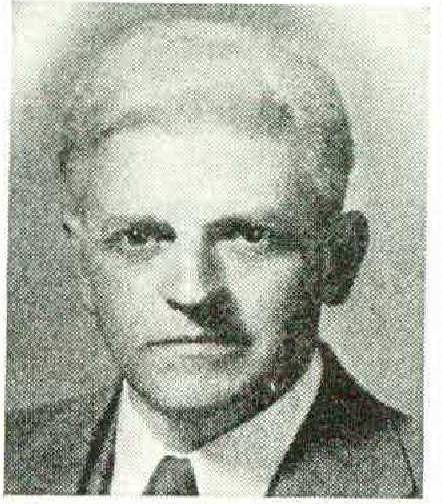
Louise de Maura (p. 28) was born Louise Heron Blair of Richmond, Virginia. She graduated cum laude from Bryn Mawr, then set forth on the Grand Tour. Fate ordained that she should study art in Paris with a Spanish modernist artist, who was later to become her husband. After six months of study, one of her paintings was accepted by the Salon d’Automne, exhibited, acclaimed— and sold! And at the end of the year she and her instructor were married. They set up their studio in an ancient village, St. Cirq-laPopie, their home being part of the barracks built by the Goths during the twelfth century. Of St. Cirq Madame de Daura writes: ‘This is as near to Parnassus as I can ever expect to be.’
How many young men at the crossroads of life will turn away from the avenue to wealth and take the smaller bypath of poverty and independence? Such was the choice of Logan Pearsall Smith (p. 35), who could have made a fortune in the glass business but who preferred to live as a man of letters in England. ‘ I have been both poor and comparatively rich in the course of my existence,’ says Mr. Smith; ‘I have associated with both poor and rich people; but, given the satisfaction of one’s simple needs, I have found that, from the point of view of human happiness, the possession or absence of wealth makes very little difference—that, in fact, my poor acquaintances have been, on the whole, happier than the rich ones.’ Three earlier installments of Mr. Smith’s autobiography have been published in preceding issues of the Atlantic.
What would happen to Narcissus if he lost his way to the pool? What would happen to the egocentric if he could not find an audience? What would happen to the demagogue if he failed to find an applauding crowd, or to the boisterous youngster who has no one before whom he can show off? They all, from Narcissus to the urchin, would feel themselves lost, they would experience a sense of uselessness, they would become low-spirited, somewhat irritable, and feel perhaps ill-treated by fate, lonely.
Thus speaks Dr. Gregory Zilboorg (p. 45) as he sounds out the black depths of loneliness. Dr. Zilboorg is a Doctor of Medicine, a graduate of both the Psychoneurological Institute of Petrograd and the College of Physicians and Surgeons of Columbia University, and a practising psychiatrist and psychoanalyst in New York City. He was born and educated in Russia, and was Secretary to the Ministry of Labor in the Kerensky Government. To-day he is one of the editors of the Psychoanalytic Quarterly, author of The Medical Man and the Witch during the Renaissance (Johns Hopkins Press), and a director of research of the Committee for the Study of Suicide.
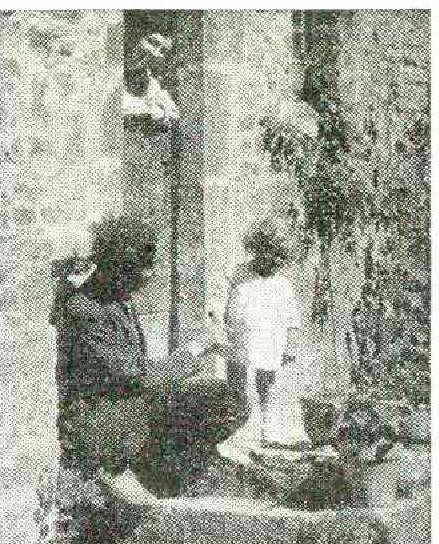
Whether Fiorello La Guardia is a man of the future only time and Mr. Farley can tell. But that he is unquestionably the New Yorker of the moment goes without saying. For a portrait of this triumphant reformer we turn to Karl Sehriftglesser (p. 55), a member of the staff of the New York Times. A liberal partisan and a clearheaded observer of state and national politics, Mr. Schriftgiesser served the Boston Evening Transcript faithfully for a decade. At the beginning of the New Deal he was called to the capital as editorial writer and columnist for the Washington Post. Later he shifted his allegiance to the New York Times.
A New Yorker born and bred, Donald Moffat (p. 64) learned to like codfish during his freshman year at Harvard. Twenty years of wise living in Boston have made him indistinguishable from the native son. Among his close friends Mr. Moffat numbers that amiable autocrat, Oscar Pennyfeather — no kin of George Apley, yet a Bostonian to the bone. Mr. Pennyfeather and Mr. Moffat went to the Yale-Harvard game together, and on the way home they began the argument which appears in this issue.
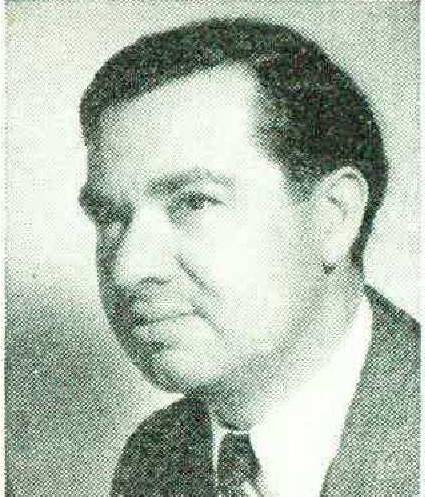
Arthur Guiterman (p. 71) is an American poet with close to a score of volumes under his signature. In replying to the editor’s note of acceptance, he volunteered this information about his ‘Bat’: ‘This one was a Connecticut bat, encountered last month when I was at the Loomis School in Windsor. I’ve found bats hanging to trees during the day, but this was the first time I had ever seen a bat flying in broad daylight for fully ten minutes and apparently thoroughly enjoying the exercise.’
Born in Yorkshire forty-two years ago, H. B. Elliston (p. 72) had just begun his training in journalism when the war broke out. He served in France for three years, and after his demobilization was sent to the Far East as correspondent for the Manchester Guardian and the London Observer. Seven years’ duty on the China coast and four years of editorial writing in New York City well fitted him for his present post as financial editor of the Christian Science Monitor. Mr. Elliston spent last summer in England, and in the course of his survey he made notes for a series of articles on how to do business with England, of which this is the first.
Attending the Longwood Doubles last summer, the editor had the good fortune to meet George Lott (p. 77). The talk turned to the future of certain young stars, and this led to the inevitable comparison of amateur and professional tennis. George Lott coached the 1937 team which restored the Davis Cup to the United States. He was himself a member of Davis Cup Teams from 1928 to 1934, and he was a member of the winning doubles team at the National Championship in 1928, 1929,1930, 1933, and 1934. Certainly he knows as much about ‘Inside Tennis’ as any man alive.
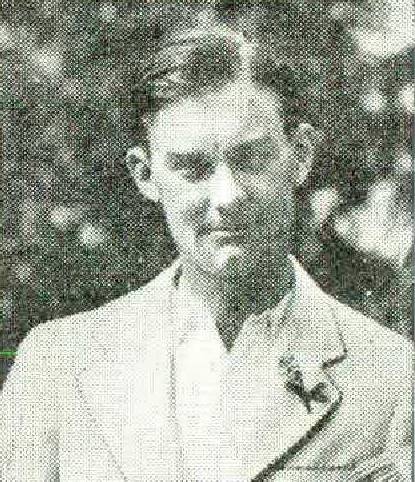
In the Atlantic for May 1937, Gilbert Seldes (p. 82) published a far-reaching article entitled ‘The “Errors” of Television.’ Within three months he was installed as the Director of Television Programs in the Columbia Broadcasting System — which seems to us a perfect example of cause and effect. One of the keenest critics of the lively arts, Mr, Seldes is well-qualified to tell what is worth seeing in the theatre of to-day. He has recently published The Movies Come from America and now has in preparation Your Money and Your Life: A Manual for the Middle Class.
For the three months past, Margaret Dana (p. 86) has been conducting a Consumers’ Forum in our columns, and the reverberation has been heard far afield. ‘At a tea party the other day,’ Miss Dana tells us, ‘a young woman came over to me and said, “I have learned that it is to you I owe the article on furs in the November Atlanlic. I saw that title the very day the Atlantic came, and I grabbed it, because I have been planning for weeks to buy a new fur coat, and felt completely at sea. You straightened out everything for me, prevented me from making what would have been a bad mistake, and I just tucked the Atlantic under my arm when ! went hunting the coat I Finally bought. The clerk probably thought me crazy, but I got it out and checked the fur on your wearability list before I bought the coat. I have told all my friends about it, and they are all using the Atlantic to check their fur buying.”’
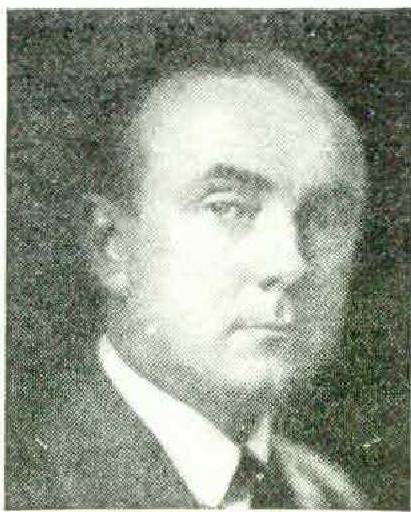
It is his New England blood which makes Gardner Harding (p. 89) so concerned about the future of our shipping. The Connecticut coast is his favorite haunt. Mr. Harding has been a newspaper correspondent in Latin America, Europe, and China, and has served more recently with the National Foreign Trade Council.
Walter Brooks (p, 98) is an American humorist now coming into his own. He spends his summers in Higganum, Connecticut, where, if one can believe his stories, anything is likely to happen. Discerning readers will remember his ‘ Discovery of America,’ in the Atlantic for August 1937.
New England has claim to an advancing young poet, John Holmes (p. 102). He was born in Somerville, Massachusetts, educated at Tufts and at Harvard, and is now the Poetry Editor of the Boston Evening Transcript. He enjoys the freedom that a poet should and still finds time to do justice to the teaching of English composition and modern poetry at Tufts College.
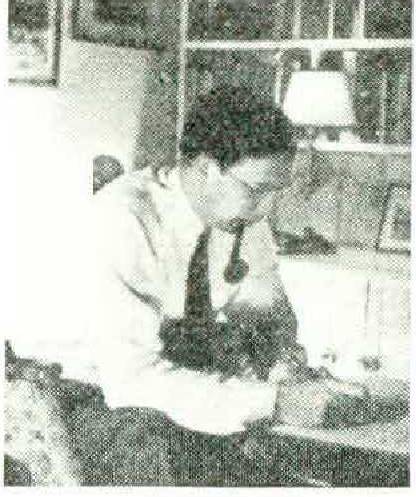
Minnesota was the point of embarkation of Mildred Boie (p. 103), who took her bachelor’s and master s degree’s at the University of Minnesota. She pursued her muse to England, coming home to study at. Radcliffe, then to teach English at Smith College, and then to join the editorial staff of the Altantic.
A professional countryman who knows the secret ways of birds and beasts, Sir W. Beach Thomas (p. 104) has befriended the Atlantic wit h his essays since 1925. Two of his most appealing papers were ‘Animals and Death’ (September 1926) and ‘A Letter to My Dog’ (July 1927).
Carl Joachim Friedrich (p. 110), who has written several articles on education for the Atlantic, is a professor of government at Harvard, where for several years he has been particularly active in the training of men for government service. In his volume on Constitutional Government be diagnoses the strength and weakness of modern politics. Playing the cello and running a dairy farm are some of the things he does for fun.
Probably the best-known naturalist now writing in the United States is Donald Culross Peattie (p. 119). His quest for knowledge has led him to study tropical plants in Florida, the flora of Indiana and the Carolitias, and the bypaths trodden by his famous hero, Audubon, whose life be describes in Singing in the Wilderness. Mr. Peattie is a graduate of Harvard, the husband of Louise Redfield Peattie, the novelist, and last, but certainly not least, the father of three sons.
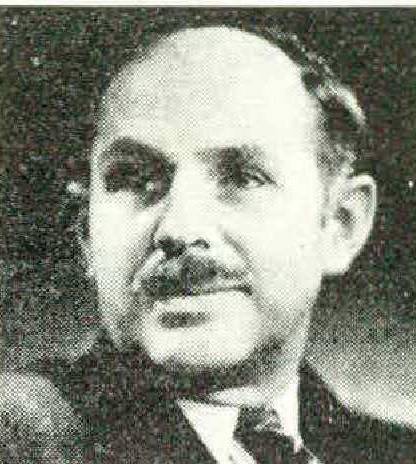
The enlarged format of the Atlantic continues to attract the commendation, the suggestions, and the (rare) reproofs of friendly readers. The editorial eye follows with interest the geographical distribut ion of approval. From L. Crawford Churchill of Lewiston, Idaho, comes this note: —
Dear Atlantic, —
I want to add my congratulations upon the excellent appearance and contents of the Atlantic.
It is a pleasure to read a periodical that is mature, dignified, and full of meat for thought. Thank God there are no pictures.
There is plenty of life in the old girl. Long may she kick. I wish you success and prosperity, and a long sequence of stimulating manuscripts.
From Minneapolis, Minnesota, Estelle Holbrook sends us this bracing encouragement: - -
Dear Atlantic, —
Of the thousands to which your notice went, I doubt if there is one who greeted it with more joy and hope than myself. The new departure indicates a recognition hy the Atlantic of the fact that being the best of all is n’t quite good enough in these days. Magazines, like people, have to find a colorful, striking embodiment of their continuing growth and excellence. That’s what the three serials a year look like to me.
It would mean more to you could I quote to you exactly a comment made by a friend. She asked a group of us if we knew the grand new departure the Atlantic was making, described the appearance, and discussed the ability of Ann Bridge’s Enchanter’s Nightshade. Her phrase that stays with me is this: ‘For years as a Boston girl each Atlantic was the big event in my life, but coming West, and especially now with everything so colorful and full of life, I confess it’s been a long time since I have awaited its coming impatiently. I certainly can’t wait for the next issue.’
Of course every New Englander, whether exiled or not, is always proud and boastful of the Atlantic. I have n’t words for what I think this new departure indicates, But of course you people have, and we at least know it spells a big drive ahead both for your readers and for the Atlantic.
And from the capital we receive a loyal tribute from one who has known several generations of Atlantic editors.
Dear Sirs: —
I want to compliment you upon the changes in the Atlantic. It is like seeing an old friend in a very becoming new dress.
For I was brought up on the Atlantic. My mother always took it. After the death of my parents, I lived with an uncle and it was called the ‘Family Bible’ there. Now I am a subscriber myself.
After seventy-seven years, I still feel it somewhat superior to the other magazines.
Sincerely yours,
AMRAH M. FLETCHER
A Brooklyn reader suggested the possibility of printing the contents on pages with a perforated edge so that those articles desired for scrapbooks could be the more easily removed. While this would be of service to individuals who no longer have the Atlantic bound, it might be hazardous for households with two-fisted two-year-olds. A New Yorker objects that our cover tint is impossible to blend w ith any shade of interior decoration: she would like to see our old buff costume restored. ‘And what, pray, asks Mary Moll ot Milton, Pennsylvania, ’has become of my old friend, Father Neptune? Has the Atlantic swallowed him, or has he made his home in another sea? After looking at him monthly for more than thirty years, I find, on handling your current issue, that I miss him sadly.’ It was not easy to discard our colophon. Yet, faced with the necessity of finding more space on our cover in which to display our additional contributions, we had to choose between using smaller type or giving Father Neptune a vacation. Here, as in other particulars, we made careful experiment before deciding on what seemed to us an improvement.
A Correction
There was a regrettable misprint in the Sonnet to the Ape by Babette Deutsch in the December Atlantic. The fifth and sixth lines read, —
To a brown study framed in dusty fur,
which is not only nonsense but throws out the metre.
This is how the lines appeared in the original manuscript: —
APE
He thrusts between the bars expects the best.
His old man’s face as innocent as calm,
The beggar puts compassion to the test
And fails. He grips the bars; his pained stare grows
To a brown study framed in dusty fur.
Public Utilities
In the Atlantic for August, September, and November there appeared three articles on the vexed subject of public utilities written at our invitation by Mr. Wendell U. Willkie, Dr. Arthur Morgan, and Mr. George Fort Milton. This symposium cast new light on the subject. It also engendered fierce heat among certain government employees who evidently felt that only one point of view should have been represented. In this connection we reprint one paragraph from Dorothy Thompson’s column, ‘On the Record,’ in the New York Herald Tribune.
Temper, too, is important, and especially at this moment. There are men of reason and understanding in the business world and in government. The symposium on the utility question which the Atlantic Monthly published in August and September is proof of it. There Mr. Arthur Morgan, of the TVA, and Mr. Wendell Willkie, of the Commonwealth and Southern Corporation, each set forth their views on the utility question. The amount of agreement far outweighed the differences.
To find ways whereby this kind of temper can function more vigorously and more freely is perhaps the chief problem of liberal government.
‘ A Minister’s Mail’
Many letters have come to the Reverend Joseph Fort Newton in response to his article, ‘ A Minister’s Mail,’ which appeared in the November Atlantic. Of these communications, one of which is reprinted below, Dr. Newton says: ‘They did me a lot of good and I am grateful to the Atlantic because it helped me to put the matter to so many earnest, charming, perplexed people. They seem to think I am a professional solver of puzzles, but I am not. In all such riddles the spirit of approach, the attitude of mind, is the decisive factor; and there I can help. So few can think of their own problems impersonally, as if they belonged to someone else.’
Los Angeles, California
Dear Atlantic, —
The other day, while looking over the November issue, we stopped to read ‘A Minister’s Mail’ by Joseph Fort Newton, rector of St. James’s Church, Philadelphia. He expressed some facts that certainly are most applicable to all of us who are in this world to day. He said:—
’It is not too much to say that human life is a battle against fear in which there is no truce. . . . Never has the world been so full of fear, and it takes all sorts of subtle, shadowy shapes. . . . Oddly enough, the fear most rife to-day is not fear of death, hut fear of life, not only fear for ourselves, but fear of ourselves; and that is not healthy. The thing that benumbs men to-day is fear of failure, of breakdown, of illness, of poverty, fear lest t hey he unequal to the demands made upon them. ... It is this self-fear which makes life an agony for so many sensitive souls. . . . We hate a thing because we fear it; when fear is dead, love lives, and life begins.’
Dr. Newton, we salute you!
We only wish we could shake your hand and congratulate you on the masterful manner in which you have pointed out the greatest enemy we are facing to-day, which many men and women are endeavoring to overcome. Fear may be nothing, but the fact remains that there are few of us who do not have to combat it, in one form or another. We want to salute you, Dr. Newton, for calling the attention of your readers to this enemy, and for telling us that fear can he overcome, and then that love will live and real life begin.
KENNETH J. MURDOCH
Here is an important suggestion from the President of the Julius Rosenwald Fund.
Chicago, Illinois
Dear Atlantic, —
In the December number Mr. Kemmerer makes it seem almost inevitable that inflation will continue, probably with increasing rapidity in the United Slates, He argues that friends of endowed institutions should fight inflation lest it impair endowments which are now largely held in bonds and other fixed-income securities. Is it not much wiser for universities to protect themselves by transferring the bulk of their holdings into equities?
The monetary policies of nat ions will probably be determined, whether wisely or foolishly, by considerations other than the protection of the securities of private institutions. There will be fluctuations in all private holdings in a world which is being shaken as much as ours is to-day. Universities and other endowed institutions will do well to recognize the changing times and transfer their holdings from purely monetary values into shares in the real wealth of the nation. The wealth of America, in addition to land, is largely in industry. Investment in common stocks is the natural way to maintain a stake in America’s wealth.
EDWIN R. EMBREE
The wish to legislate peace.
New York City
Dear Atlantic, —
Mr. David L. Cohn’s article on the Neutrality Act in your November issue started from the premise that the Act fails to be neutral or impartial because it allows certain nations that control the seas to buy from us, while other nations with whom we may be in sympathy, are denied by geographical factors from enjoying the same benefits.
May I point out that the Neutrality Act is incorrectly given that title. It is, as Mr. Charles Warren calls it, ‘a national defense act.’ seeking to keep us out of war involvement through trade. Senator Key Pittman constantly referred to the Neutrality Act as the Peace Art, whose aim was to keep our country at peace.
With the changing alliances in Europe, Mr. Cohn should be less dogmatic in asserting that the Neutrality Act woidd allow England to come to our shores for goods, if she went to war. With Portugal and Spain providing new submarine bases for Italy in the event of war. It will not be an easy matter for England’s ships to cross the Atlantic with our goods.
I believe Mr. Cohn should have set up an altogether different group of questions to test the validity of our determination to pay less attention to what nations get materials during a war than to the fundamental international wrongs that must be adjusted. Air. Cohn ought to ask whether we favor the type of international conduct that turned 1000 Japanese back from Hawaii in 1897 without providing them with another territorial outlet. Since he proclaims us as friends of the Chinese, he should ask whether we would impose the same trade restrictions on an industrially productive China that are now effective against the goods of Japan. Sending ammunition or cotton to China in wartime will not save China to-morrow.
J. MAX WEIS
Director of Research, World Peaceways, Inc.
Paging Miss Stein.
Arts High School
Newark, New Jersey
Dear Atlantic, —
I am one of the army of English teachers engaged among other things in presenting the Atlantic as a model not as a horrible example and in drilling yes drilling some semblance of correctness into the sentences of the youngwho really don’t know better than to write like the intellectuals write. See W ilson Follett in the October number now it may he alright for everybody to just give up correcting the sentences and punctuation and capitalization and spelling of the young and then we teachers could have such a good time such a good time but I’m afraid the boards of education would soon get on to us and then the boards of education would n’t like the situation and we teachers would lose our situations and the young would lose their situations if any and then we would all starve and then people would ask questions that had to he answered and then where would the Allantic be?
Yours faithfully,
D. H. RICH
P. S. I have read it out loud and I don’t like it any better.
A Complete Thought
(apropos of the dying sentence)
Budding authors yet in school,
Are not taught the English Language
As their fathers were by rule.
Nowadays t he poor relation,
That of subject to its verb,
May be found with application
To the lurid jacket blurb.
It is written for the masses,
For the people not so smart,
For deluded lads and lasses
Practising outmoded art.
But our very newest writers,
If you’ll pardon us the quip,
Fear to be too letter-perfect
And agree to let ’er rip.
Shades of Babington Macaulay
With his structure parallel!
He would damn us all unholy
To a literary hell.
Kiddies, also, are quite certain
Toward their education bent,
To supply the coy ellipsis
With much worse than what is meant.
You’ll admit it’s disappointing
When we struggle through a tome
That’s concerned with Freud and Mendel
Both abroad and here at home,
Just to find the story ending
In a manner really brash,
With an asterisk, a hyphen,
Ambiguity and —.
This is the result of my reading Wilson Follett’s article on the ‘Death of the Sentence,’ in the October Atlantic.
BERTHA ADAMS Lynchburg, Virg in ia
Who wants to do away with poverty?
El Paso, Texas
Dear Atlantic, —
I greatly enjoyed Erskine Caldwell’s article, ’You Have Seen Their Faces,’ in your November issue. Confession is good for the soul: it is a better cotton article than any I have done, and I know all about cotton — raising it, selling it, share-cropping, and so forth. I was disappointed that you rejected my two cotton articles, as I very much desire to make the Atlantic. But so would I reject them if I had such choices as the Caldwell article. It has taught me one thing: to tell the facts. I was afraid to write about the cruelty, suffering, or poverty I have seen among our share-croppers, mostly Mexicans. I was afraid the editor would reject it because he would believe I was exaggerating, or the reader would believe so if it were published. It truly is astounding that, on top of such conditions as Mr. Caldwell describes, of $100 yearly incomes for entire families, such men as Senator ‘Cotton Ed’ Smith should say the things he said. He said (more or less): —
‘If a man can live on fifty cents a day in South Carolina, why should he be paid a dollar and a half just because it takes that much to live in Massachusetts? ’
Senator Smith quite evidently believes that fifty cents per day is ample in South Carolina. Why does he? I suppose that, as he has seen people living on that sum all his life, he is so used to abject poverty it makes no impression on him.
Would n’t you think that Southerners would try to do away with such poverty? Well, they don’t seem to care. My observation has been that it is the ‘damn Yankees’ who get wrought up about Southern conditions, and want to end them.
Yours very truly,
GRENVILLE T. CHAPMAN
A welcome footnote to ‘the good old days.‘
Dmrbury, Massachusetts
Dear Atlantic, —
It seems good to see the initials of an old friend in the November ‘Column’ of the Atlantic, signed ‘J. A. L.,’ who writes from Portland, Oregon. Especially interesting to me were his reminiscences of the old office at 4 Park Street where we worked together in the early nineties. In those days sending or receiving telephone messages was a real adventure; and mail west-bound for points ‘beyond Cheyenne’ had to reach the Post Office without delay.
Our salaries were three dollars a week for the first year; but we were given an annual raise (even in the ‘depression’ of ’93); and both he and I were in charge of bookselling in our later years. The Houghton-Mifflin and Riverside Press motto was ‘Tout bien ou rien.’ and in the excellent, making of books we lived up to it. Financially we were rated as AA1, than which nothing could be higher.
And then, of course, the authors! It was truly a privilege, as J. A. L. says, to have such close-up views of them, and wonder perhaps if some day we might be hobnobbing with publishers. I recall two or three more names that might be added to the list: such as General Lew Wallace; Elizabeth Phelps Ward, a very handsome woman; and the young and beautiful Rate Douglas Wiggiri, whose Birds’ Christmas Carol was an annual best-seller.
During Mr. Scudder’s editorship of the Atlantic, Alvaro Wheeler was succeeded as business manager by the genial MacGregor Jenkins. In the general editorial department were Herbert. C. Gibbs. Francis H. Allen, and M. A. DeWolfe Howe, whoso talent and thoroughness have put him in the front rank as a biographer. D. Berkeley Updike, now of the Merrymount Press, expert in fine books and typography, was then in charge of cover designs and formats.
Bliss Perry’s happy connection with the Atlantic is described in his delightful book. And Gladly Teach. It brings back much of the flavor of those still earlier years, never quite to be forgotten.
(REVEREND) ALEN JACOBS