The Importance of Living
by
[Reynal and Hitchcock, $3.00]
WHEN a book by an Oriental has the style of a sophisticated contribution to the New Yorker, we are put at once on our guard. If this author has become so completely one of us, we ask, can he have anything to say for himself? Is it not as if a Japanese were to wrap himself in an American flag at a Rotarian banquet and claim the rotarian wheel as a Shinto symbol? Can we trust a man whose adaptation to foreign surroundings is so perfect? Will he show his true colors?
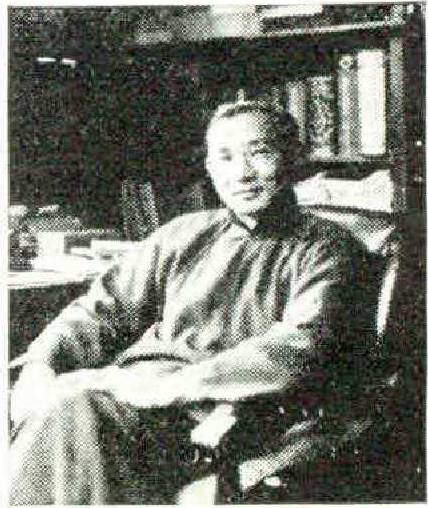
But if the reader suspects this book he soon changes his impression. Dr. Lin has learned to talk our language as we might wish to be able to talk it ourselves, but he has not changed his spiritual home. His insight is too subtle to be merely clever. In the midst of his colloquial banter he preaches a gospel that applies to all men, and behind his sense for the apt American word is the artist’s awareness of the universal.
In his earlier work, My Country and My People, Dr. Lin defended the ‘old rogue.’ The present book extols the virtues of the vagabond and ‘scamp.’ The scamp is one who has a playful curiosity, a capacity for dreams, and a sense of humor. To become scamps we should develop what the philosopher would call a moderate naturalistic humanism. We should cultivate our feelings in their naturalness, open our eyes to the gorgeous world about us, avoid bustle and reform, and learn to love our fellow men through our love for nature and for life. The point of view is thus what we sometimes call ‘civilized’ because its taste is good, and ‘realistic’ because it makes few demands and accepts life with open eyes.
Yet what sort of ‘realism’ does this turn out to be? Dr. Lin wants us to return to the simple life. He does not explain how this is to be done in an age of factories. He wants us to get rid of dictators. But he does not explain how to do this in an age of fanaticism. So while all that he says is witty, and most of what he says is true, he leaves us with the feeling that what is left unsaid is very important, especially since it is what we expect the Orient to tell us.
What we actually want is a type of conviction which will allow us to keep our sanity in a world gone mad and will give us courage to work for a better future. Why should Dr. Lin, an Oriental, not help us to such convictions when he knows both our temper and Oriental thought so thoroughly, instead of holding up a carefree, happy paganism? Where shall we go to be carefree? To what must we not shut our eyes if we are to be happy?
The life of the vagabond may be an ideal for some future time, but for the present there is so much to do that we can only dig in. A wise Chinese like Dr. Lin could help us to know where we must dig and how far in order to be secure.
In one of the many epigrams which are sprinkled liberally throughout the book the author says: ‘William James spent his life trying to prove and defend the Chinese way of thinking, without knowing it.’ We may agree that James tried to defend common sense, humor, and a love of life. But James never missed what he called the ‘more imperative ideals’ which ‘ utter the penetrating, shattering, tragically challenging note of appeal,’and to which the ‘strenuous mood’ responds. Does Chinese insight have nothing to offer here? And will Dr. Lin in his shrewd and canny way not tell us what it is?
J. S. BIXLER