The Contributors' Column
SEVENTY-FIVE volumes bear the signature of E. F. Benson (p. 291), a literary achievement which puts him in a class with those other remarkable producers, Anthony Trollope and his mother. Mr. Benson’s first book was written in 1892, the year he went down from King’s College, Cambridge, to begin his work at Athens for the British Archæological School. His more recent research in the Windsor archives led to his biographies of Queen Victoria (1935) and King Edward VII (1933) and permitted him a friendly and intimate view of the most famous English household of the nineteenth century. Five marriageable daughters are a problem, even for a Queen. From her seclusion following the death of the Prince Consort, Victoria chose the suitors, arranged the dowries, and never relaxed her firm though loving hand.
In this and the next three issues of the Atlantic will appear the letters, the conversations, and the royal commands which established Victoria as ‘the grandmother of Europe.’
Graham Hutton (p. 302) is the Assistant Editor of the London Economist and the rigidhand man of Sir Walter Layton. Now in his thirty-fifth year, he surveys the world with the unprejudiced gaze of the PostWar Generation. His recent visit to the States extended for six months, and in that time he traveled widely, talked with all kinds and conditions of men, and finally emerged with a series of observations which it will do us good to consider.
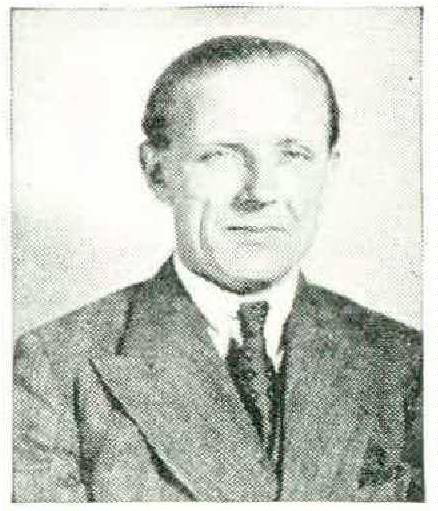
For nine years William C. Rogers (p. 3.12) has tuned up diesel motors as a service engineer. He is thirty-two years old and so absorbed in his job that he seldom has time to sleep under the roof of his New Jersey farm. Here is his streamlined schedule: ‘The business of servicing diesel electric railroad equipment is still a fight. I was on the Reading and in Maine this week. Next week the New Haven Railroad and a U. S. Naval Ammunition Depot. After that back to Bethlehem Steel, and the Aluminum Company is on the schedule. If I got a week off sometime I should n’t know what to do with it.’
Robert Frost (p. 316) needs no introduction to Atlantic readers. He is the most beloved poet in the United States.
David Cornel DeJong (p. 318) was born in Blija, The Netherlands, in 1905. His parents brought him to the United States in His fourteenth year, and from that time forward he has enjoyed the process of Americanization. His autobiography of his years in Holland is shortly to be published under the title Old Haven. Meantime the author has gone back to visit his relatives and to sec the old country through American spectacles.
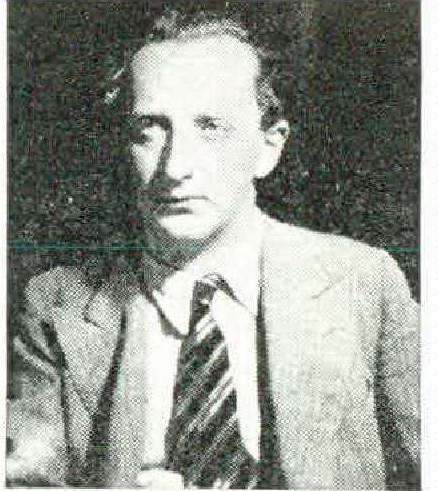
Hubertus Maria Friedrich, Prince Loewenstein, of Bavaria (p. 325), has known what it is to be a pauper, to wear newspapers around his feet, and to be a man without a country. A leader of the Catholic Youth Movement in Germany, be was banished when Hitler came to power. He will not apply for citizenship in any country, as he wants to carry on his fight as a German. His autobiography, Conquest of the Past, was published in the spring.
Now in his early thirties, James T. Farrell (p. 330) is a novelist of the realistic school best known for his big trilogy, Studs Loniqan, in honor of which he was awarded a Book-of-the-Month Club Fellowship in 1937. Chicago’s South Side was his native heath, and the story of how he got his start will be of interest to beginners everywhere.
The National Labor Relations Act was intended ‘to diminish the cause of labor disputes burdening or obstructing interstate and foreign commerce.’ Whether the work of the administering Board has expedited or interfered with this admirable process is at the moment a matter of heated opinion. In an effort to arrive at a calm understanding of the procedure thus far, the Atlantic has invited the opinion of George W. Taylor (p. 335), who was formerly acting chairman of the Philadelphia Regional Labor Board and has presided in a number of important labor disputes in the Philadelphia area.
In Brussels, Albert Jay Nock (p. 344) has an apartment and cuisine fit for a king. There he takes his ease, listens to the European rumor, and trains his long-range telescope upon those of us who stay at home.
‘I am telling you,’ said Donald Moffat (p. 350), ‘woman is at her best between the ages of six months and three years. After three, she begins her career of phases, and it’s no use trying to keep track.’ But his friend Mr. Pennyfeather had a different slant. Being a bachelor, he knew more than a married man could ever hope to know about the ladies.
Professor of Government at Harvard University, Carl Joachim Friedrich (p. 357) spent the spring in Central Europe, where he had an intimate opportunity to observe President Boneš, the modern Horatius who holds the bridge between Democracy and Dictatorship.
From Spartanburg, South Carolina, Archibald Rutledge (p. 366) sends us his remarkable account of the Negro’s power of perception. After thirty-three years of teaching, Mr. Rutledge is now rusticating at Hampton, his plantation home on the lower reaches of the Santee River. ‘Here,’ he adds, ‘is a strange belief of the Negroes: they think a baby’s spirit is inclined to wander away from its new domicile in the body, especially if the child is taken outdoors. When a baby is carried out of a house, someone always keeps calling to the spirit in the most tender and endearing way!’
Having served at various times in the Secretariat of the League of Nations, W. Horsfall Carter (p. 374) became the new editorof the Fortnightly Review and an unofficial ambassador for the new understanding between England and Ireland.
One of our younger and most promising poets (he is still in his twenties), Frederic Prokosch (p. 382) has been studying for the past year in Cambridge, England. In the letter which brought his Ballad to us, he wrote: ‘The ballad form is a natural and eternal one, but the danger is a condescending “quaint” self-conscious treatment of it nowadays. This I’ve tried to avoid. It is not a typical Atlantic product, but I think it has life and feeling. . . . I feel strongly now that poetry, if it is to regain its audience (and it must to become important poetry), must abdicate the propaganda nonsense which most poets have handled with incredible boredom, unreality, pretentiousness, and lack of real feeling: plainly poetry must become more lyrical and more simply human. American poetry has always suffered, but never so much as now, from oratorical qualities — didacticism, posturing, “audience consciousness” without knowing who the audience is.’
Free lance and far traveler, Colonel E. Alexander Powell (p. 384) has come home to recapture the memories of his boyhood in Syracuse, New York. Those who love Americana will certainly enjoy his account of the Elegant Eighties which is shortly to be published in book form under the title Gone Are the Days.
The story by Paul Hoffman (p. 389) was written on a ranch in Wyoming during his leave of absence from editorial work.
George E. Sokolsky’s (p. 393) articles on Labor first appeared in the Atlantic in 1934. His contributions were particularly well-informed, reliable, comprehensive, and in several instances months ahead of the news. Following their publication, industrialists and business organizations turned to Mr. Sokolsky for counsel, and as a result of such professional service he was eventually exposed to the fire of the La Follette investigation. The Atlantic was fully informed of his work in the field of industrial relations, but it declines to accept the inference that a man who works for pay must work dishonestly. We have valued the accuracy of his prognostication and the independence with which he has argued for better industrial relations in the United States. In his present article, Mr. Sokolsky links together the extraordinary findings of the Dewey investigation and shows by what means such corruption has been I able to maintain itself in our greatest municipality.
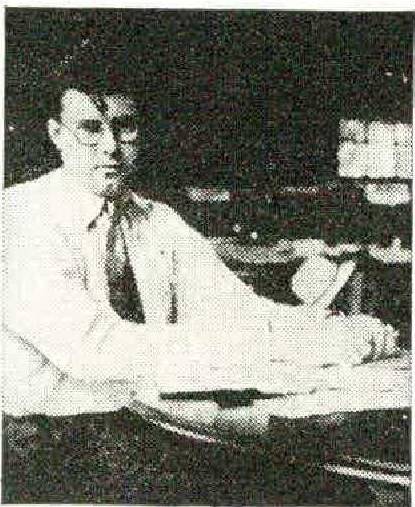
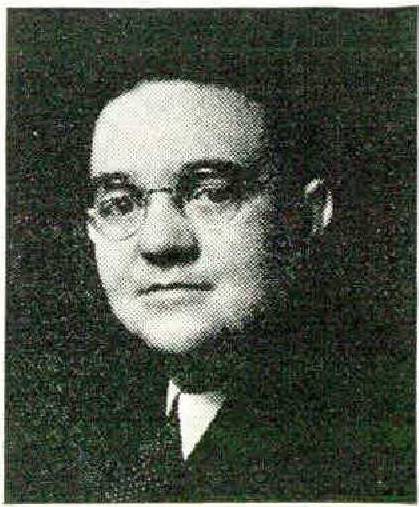
Graduate of a state university in the Middle West, H. O. F. (p. 403) has for the past five years been engaged in newspaper work. He is twenty-six years old. A resident of Greater Boston, Mrs. Sarajo Sawyer (p. 404) offers specific suggestions for increasing the opportunities of the Younger Generation. Are they utopian, or realistic? John Claiborne Davis (p. 405) is a graduate of Union College and now a postgraduate at Princeton University.
H. E. Bates (p. 409) is a short-story writer and novelist who was born in the English Midlands thirty-three years ago. Writing is his trade, and from it he has never deviated. He began at the age of seventeen as a junior reporter on a country newspaper. By 1930 he was clearly established as one of the ablest short-story writers in the Kingdom and a man from whom fine novels were to be expected. Spella Ho makes good this promise.
Aviators, attention! Those Atlantic readers who relished that remarkable narrative, ‘Crash in the Desert,’ by Antoine de Saint Exupéry, are warned to be on the outlook for his new book, Wind and Sand, from which this single episode was taken,
When the repeal of the Prohibition Amendment opened the floodgates of liquor advertising, the Atlantic took a definite stand based upon knowledge and personal conviction. We returned the alluring copy offered us, and, in January 1934, printed in boldface type the following statement: —
A WORD ON TEMPERANCE
Many people who regard the Atlantic as an American institution have written to inquire into our policy regarding the advertisement of liquor.
Our friends have a right to know where we stand.
In its policy toward liquor, the Atlantic’s single goal is temperance. It is our informed belief that beers and wines are not only an aid, but an essential aid, to the temperate life of the nation. We have, therefore, opened our advertising pages to beer and wine.
In regard to liquor, we believe that so long as it is demanded by a large public it cannot be suppressed, but that, every artificial stimulation of this trade is clearly against public interest. The Atlantic has, therefore, refused, and will continue to refuse, all advertising of whiskey, gin, and brandy.
Four years have passed, and it is encouraging to us to note that the largest American brewing interests, recognizing the lamentable conditions which brought on prohibition and accepting a responsibility which such an industry could not avoid, are hewing to the same line.
The editors have been immensely gratified by the instantaneous response to the new symposium, Linder Thirty. One hundred and fortyfive letters were contributed to this department in the vacation month of July, and an increasing number of comments have come in from those over fifty. In the October issue we plan to move this discussion to more ample quarters in the body of the magazine.
Deerfield, Massachusetts
Dear Atlantic, —
I am over thirty. But I have two children under thirty, a daughter and a son, nearly twenty-one, about the age of young Mr. Robert James. He was born while his father was at Plattsburg in an Officers’ Training School. Neither my son, my daughter, nor Mr. Robert James can possibly remember anything about the World War; their childhood was passed in that period of post-war surfeit, when mention of the war was not accepted, in America, as good form. I had been raised in France, and for years letters brought only sad news of dear friends, dead, wounded, fatherless, husbandless, suffering. We did not talk to the children of the war. We knew that they could not be aware of the long succession of horrors that marked those years; but somehow we did not realize that they would not understand our emotional attitude about the advent of Schrecklichkeil in civilized living.
Well, our children went to college, at widely separated institutions. And shortly we were hearing from both that America’s entry into the World War had been a ‘tragic blunder’; that our generation had been fooled by propaganda, duped by the greed of munition makers; that we had been insincere, and, worse, ridiculous, in protesting our idealist intent; that the Versailles Treaty was the greatest iniquity ever perpetrated; that, in short, youth had been let down in a shameful way, and that it was n’t going to happen again.
Now the children are twenty; perhaps another war is coming; they may be asked to die. But not by us! May the blow which fells them also knock off the scales which have blinded them to the fact that an attempt was made to protect them, made by young men of twenty-odd, who longed for life just as deeply as the Robert Jameses of 1938 do, who did n’t write hysterical letters to the Atlantic, but went into the grueling routine of soldiering, and eventually helped stop the force which proclaimed its right to disregard the hard-won convenances of civilization.
This present youth of twenty would need to get ouf old volumes of newspapers to have any idea of the hope, faith, and sincere effort that went into the making of that treaty, not, as youth claims, as a means of attaining revenge, but as an instrument of peace for curbing a philosophy of force proclaiming itself superior to the civilized society of Europe. No one seems to have been able to impress these youngsters with this fact: young men of twenty longed to shield the coming generation. Mistakes were made, true. The intent was to protect this present youth from just that quarter whence came havoc in 1914, and whence, fundamentally, it threatens in 1938. This youth who suffered not at all a quarter of a century ago has applauded and deemed justified every defiance of that treaty which earnestly sought to protect coming generations.
Perhaps Robert James, if he survives the coming war, will understand a quarter of a century thereafter what the Versailles Treaty was all about. Let his generation then put up a better protection for its sons . . . and keep it up!
KELSEY FLOWER
St. Paul, Minnesota
Dear Atlantic, —
When I read the plea of Robert James, I heard the youth of all lands crying out to their elders: ‘Let us live!’
Though my sons are yet well under twenty, I belong to that generation of men and women who fought in the last war. My brothers, my friends, all marched away. Some returned mutilated in body, some in spirit. Some did not return. I became a pacifist. I abhorred war.
My soul cries out for peace. Knowingly I would not harm a fly. Yet I shout, ‘We must have war!’ But this war must be fought by those of my generation, men and women alike. We must all be drafted, for my generation, having lived through one war, would not think of volunteering for service in another. Not us. We are wise. We will follow in the footsteps of our elders, who sent their youth away to war. We believe that our sons, and other sons, should battle for what we believe to be our rights.
Draft us, then, into war. Let us expiate the wrongs we have done to our children in casting them forth into a world of tumult and fear. Let us, if we insist, die on the battlefield so that our youth may draw their breath and live. Let it be a funeral march of the old and not of the young!
MRS. R. S. HEXTFR
New York
Dear Atlantic, —
Through you I should like to answer Elizabeth’s letter that appeared in your June issue.
Our situations are similar, Elizabeth. I too was brought up in a well-to-do home. I also married a man from a poor family. He is still struggling to make a home for his family. And I have one son for whom I hold many of the hopes that you do for yours. But he is just enough older than your boy for me to realize how hard it is to map out a future for him. He had public schooling through the grades, then I tried a private school.
The private schools want only the overbright children. The public schools accept them as they come, but do little individual work. ‘It takes too much out of me,’ a teacher said to me at a P.T.A. meeting, recently.
While I still hold my boy’s confidence, I feel that I lost considerable grip on him in the year that he was away. He thinks too much for himself, and that thinking is typical of the times. The children of my acquaintance practically go on ‘sit-down strikes.’ They want money to spend foolishly and extravagantly. The parents are spending their savings, ‘having a good time while it lasts,’ because they do not know what the next move will be in lowering the value of a dollar. The children see this and, as always, are imitators. It makes life difficult for those of us who can’t keep up with the Joneses.
You want a dictator. But such a paragon as you crave has never existed. A dictator would rob our sons of independence. We do not want rubber-stamp children or unthinking human machines. I want my son to reverence our President, respect our lawmakers, admire our judiciary, and find a job waiting for him when he is old enough to earn his own living. The Constitution has seen us through many generations and difficult times. It is only since the attempt has been made to scrap it that trouble has started.
There is not much difference in our years — ten years, perhaps. But that ten years’ experience has given me this point of view.
FLORENCE
That famous default match.
Denver, Colorado
Dear Atlantic, —
In re ‘Tight Spots in Tennis’ in your August issue, let me point out as one who sat within fifty yards of the default match between Miss Jacobs and Mrs. Moody a common error made by Mr. Lott and the press.
The real objection on the part of Mrs. Moody’s action was not her default, but this: at the default, as the two players walked to the referee’s stand, Miss Jacobs put her arm on Mrs. Moody’s shoulder in consolation, and Mrs. Moody shrugged it off. Those of us who witnessed this action objected to that act of discourtesy on the part of one good player to another, and not to the default.
LEON V. ALMIRALL
What makes reunions enjoyable?
East Hampton, Long Island
Dear Atlantic, —
The realistic picture of reunions so acidly etched by the author of ‘I Would Not Be a Girl Again.’ in the July issue, strikes a chord congenial to many of us who have observed such occasions. It did, however, also move me to somewhat girlish indignation, and I should, like to present another point of view.
Before long I expect to be invited to check this and that and participate in the accumulation of statistics in which most of us, returning to our twentieth reunion next June, will have Little interest. But it has been my experience with previous reunions that you do not necessarily spend your time trying ‘to be a girl again.’ What makes reunions enjoyable is not the alumnæ parade, however humorous that military manœuvre may be, but the sense of continuity that is associated with our personal and social lives and the sympathies that are evoked and redistributed among friends. To my mind these anniversaries are not without educational value; whether or not they rekindle an intellectual interest, they do provide an opportunity for reflection and the exercise of our receptive and perceptive powers.
MARGARET D. REED
Washington, D. C
And still the battle rages!
Dear Atlantic, —
My wail about the color of the Atlantic’s cover has not swelled the general complaint till now only because my pain, even in regarding it, left me inarticulate. My son, as a baby, used instantly to discard any toy of that color; it was pitched overboard with a directness that was eloquent. I am wondering now if it is that same color sense that gives him a distaste for my best reading.
Why not give the magazine a petticoat, — a second cover, bearing the table of contents, — and let us who cannot abide this one tear it off with the wrapper? I usually tear it off anyway.
WINIFRED KEITH PINTO
East Lansing, Michigan
Dear Atlantic, —
Shades of the Masters! Since when is a great magazine’s cover supposed to match ‘pastel shades of tablecloths’ and bathroom colors? The Atlantic is the best, cover and all, that it ever has been. I vote for it as it is. If it jars the nerves of the superæsthetic, they might try a nerve tonic or change the color scheme of their homes.
MARTIN LUTHER FOX