John Fante vs. John Selby
Is there a critical eight ball anywhere around big enough to put Bandini in his place — Arturo Bandini, formerly of Boulder, Colorado, who now roams the pampas of Los Angeles like a fighting bull on a moonlit night? Not likely. For criticism entails mockery, and Bandini has covered that subject like an all-wool blanket. Trifling with him would be like twitting Falstaff grown lean and young — or like trying to catch the west wind in a butterfly net. The only honorable course is to declare, in a bass voice if possible: ‘Bandini, my friend, you’ve got what it takes, and plenty left over,’ This also goes without saying for John Fante, who wrote Ask the Dust (Stackpole, $2.00), in the flickering pages of which he has pressed a bluebell from the Rockies, none other than Bandini.
John Fante’s writing is a kind of poetry. It is no use arguing that his endings do not rhyme, or that the words do not at all resemble splinters of glass stuck in half-column rows. Fante’s poetry breathes in life from a whirligig American existence, far greater than its aggregate members, far wider in scope than any church door. This life is not savored with myrrh, but with hamburger and onions, or perhaps with marijuana smoke. It is brightened only with the sight of a spick waitress, whose proud legs flash in a beer joint where damp sawdust and never a rose strews the floor. It is not much of a life. But it is all some people have, mute legions of them, all the way from leaky-nosed Boston to Long Beach, where nature is a slut in sandals.
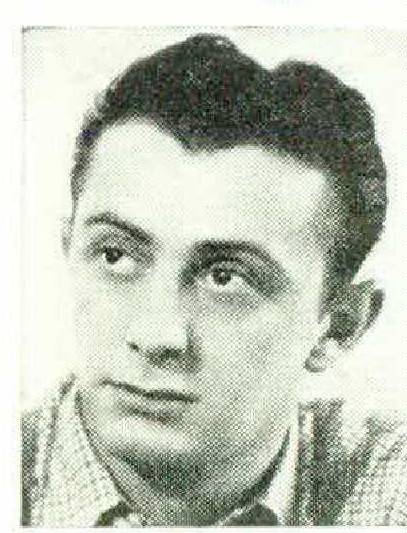
Bandini, dark of hair and eye and longing to be called Jones, first popped on the literary scene in fi ait Until Spring. Bandini. Now he has removed to the polo-shirted wraiths and papiermache of Los Angeles, which he attempts to subdue in the grand manner by the odd method of writing stories. Whether it is the fault of a faultless climate, or because of the oranges snarling liquidly in ids stomach. - for Bandini exists almost exclusively on oranges, — his inspiration is for a long time undependable. It is mostly his forty-page letters of tribulation to Hackmuth, editor nonpareil, which get into print — that is, after ending and salutation have been trimmed.
Such a lonely soul. Arturo Bandini. destined like all of us to learn the hard way. It does not matter the smallest tittle that Bandini is bursting with love, eagerness, and passionate understanding. He is alone, and the darlings on the billboards thumb their noses at him.
Ask the Dust realizes to the full the quizzical wonder inherent in Saroyan’s fragmentary writings, and recognizes the cruelty of man’s lot besides. Fante strikes home as surely as Halper in The Foundry. or Swinnerton in Nocturne, to use two divergent analogues. The love of Camilla for Sammy and her disintegration when it is not accepted would start tears from a stone. Fante must have lived this out at some time. And now that he has written his Wertker, let us hope fervently he can go on to another Faust.
Sam, the All Nations Prize Novel (Farrar and Rinehart, $2.50) by John Selby, who is also author of the Literary Guide post, is by no means equal in calibre to Ask the Dust. It is the sketchy story of a very predatory man, Sam Larson, who rises in get-rich-quick fashion from obscurity to dominate the growing Midwestern city of Centropolis during the early 1900’.s.
Mr. Selby probably did not intend to set the world on fire with his Sam, and so there is not much point in enumerating all its inadequacies. But so unsympathetic is this Sam, and so frequent are the descriptions of his strident voice, and so complacent the psychological treatment of character, that it is hard not to be openly displeased. For example, Mr, Selby would have us believe his hero’s unbroken string of acquisitive triumphs depends primarily on the power of his larynx.
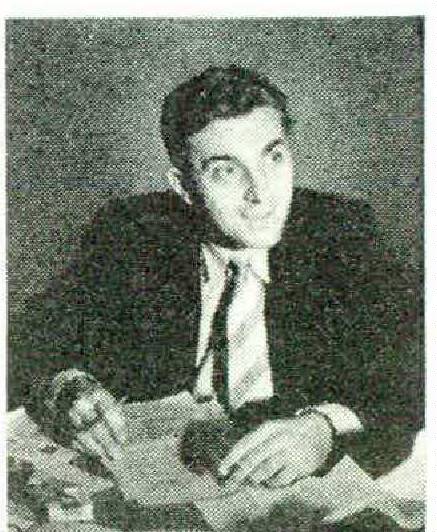
The lesser characters are stiff and incredible, and occasional sharp flashes of commentary from the author do not mitigate this fact. Martha, Sam’s calm and incredibly superior wife, falls in love with Kurt, a great pianist for whom she later creates a symphony orchestra. Says Mr. Selby apropos of this relationship: ‘Touching Kurt was like slipping into a bath of flame.’ There is a good deal of this in the book.
Bid the main trouble is that Sam never really meets his match. In consequence his millions, like his goddamn’s, become rather a bore. Actually power is bred in conflict. Sam is fundamentally the most factitious of romances, a spurious and feebly critical anatomy of success. Mr. Selby, like all newspaper men, has a good eye, but it sees only the surface. Just the same, his book should sell well, and that is something.
E. B. GARSIDE