A Turning Wind
by
[Viking, $2.00]
FOR the third time Muriel Rukeyser has written a book of poems that is both exciting and serious, enchanting and intellectual. This is no mean accomplishment for a poet still in her midtwenties; high seriousness of ideas and respect for and skill of craftsmanship are no common things, though they have been common to the best poets in every century, whether they called their calling ‘the priesthood of poetry’ or something less consciously dedicatory.
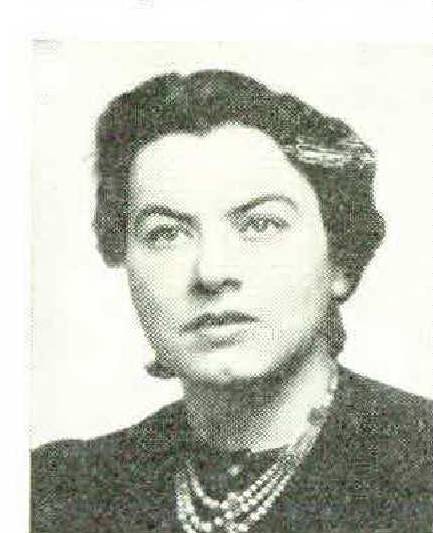
What is exciting about Miss Rukeyser’s work is the vitality and largeness of her ideas and feelings, and the amazing but controlled originality of her methods of expressing them. She does not limit herself to personal emotions about sunsets, moonlight, springtime, a tender moment, a baby-in-the-park episode, or to poetry for poetry’s sake. What concern her are ‘the sources of power that are our inheritance.’ She has lived looking for them, and wherever she has found them—in studies in symbolism, studies in individual lives, and ‘the experience to which I have been open’ — she has taken them into her perceptive and disciplined mind and transfused them into poetry.
One feels this larger seeking in even her short lyrics — the amusing ones such as ‘From the Duck-Pond to the Carousel,’the love poems such as ‘Song, the Brain-Coral,’and the travel poems — as well as in the difficult Elegies and the dramatic portraits or ‘ Lives.’
I he dramatic quality of her verse comes out not only through structure, but also through such fine details as the plunging last lines, the effective interposing of colloquial speech, the movement of modern images, the subtle but never forced or formalized music. Hers is an original and startling talent for the bright expanding image, the concrete phantasy, the magical realities of a world of machines, cities, social forces, and nervous complexities. She uses these images more naturally and successfully than her predecessors because they are the natural furnishings of her physical and mental world. There is no discrepancy in her speaking of ‘tense students at their examinations,’ ‘the newsreel of ministers,’ ‘a gas-mask poster,’ because those things are as real a part of her life as are trees, sun, and hopes. In the same way she can use the rhythms of modern speech without distorting the music of her verse, without making it sound like a popular song or a dictionary of slang; they are part of her speech, selected and intensified as speech always is in the making of poetry.
The only criticism one might venture of the stimulation of her poems is in relation to their larger symbols. In the note which she prefixes to the collection, she acknowledges some of the sources of her symbols; but this acknowledgment will not for all of us illuminate them sufficiently. They ought to carry their own light; they ought, though they speak in a tongue of fire, to make themselves felt along the ear and blood. Sometimes they do not — at least they didn’t to me. Thus, though Miss Rukeyser has avoided the pitfalls of many modern poets — shorthand, private codes, tricks and shocks — and the vagueness, wordiness, and roguishness of mystic, pedagogue, and actor, she does not always give the blessed release that comes from the clear, direct, simple statement.
But even when one cannot put his words on what all her ‘sources of power’ are, one feels she has power. Beauty and thought are tremendously exciting even when we cannot measure their height, or compass their horizons. And even the person who ‘gets’ only the clear, direct, and beautifully unassuming shorter poems, and part of her Elegies, will feel the delight which pays rereading —
That climax when the brain acknowledges the world,
all values extended into the blood awake.
Moment of proof . . .
all values extended into the blood awake.
Moment of proof . . .
the yellow joy after the song of the sun,
aftermath proof, extended radiance.
aftermath proof, extended radiance.
MILDRED BOIE