Farewell to Europe
CHAPTERS 11-15
Favewell TO EUROPE
BY RICHARD ALDINGTON
The story of a man of letters, bred in the old world and finding freedom in the new
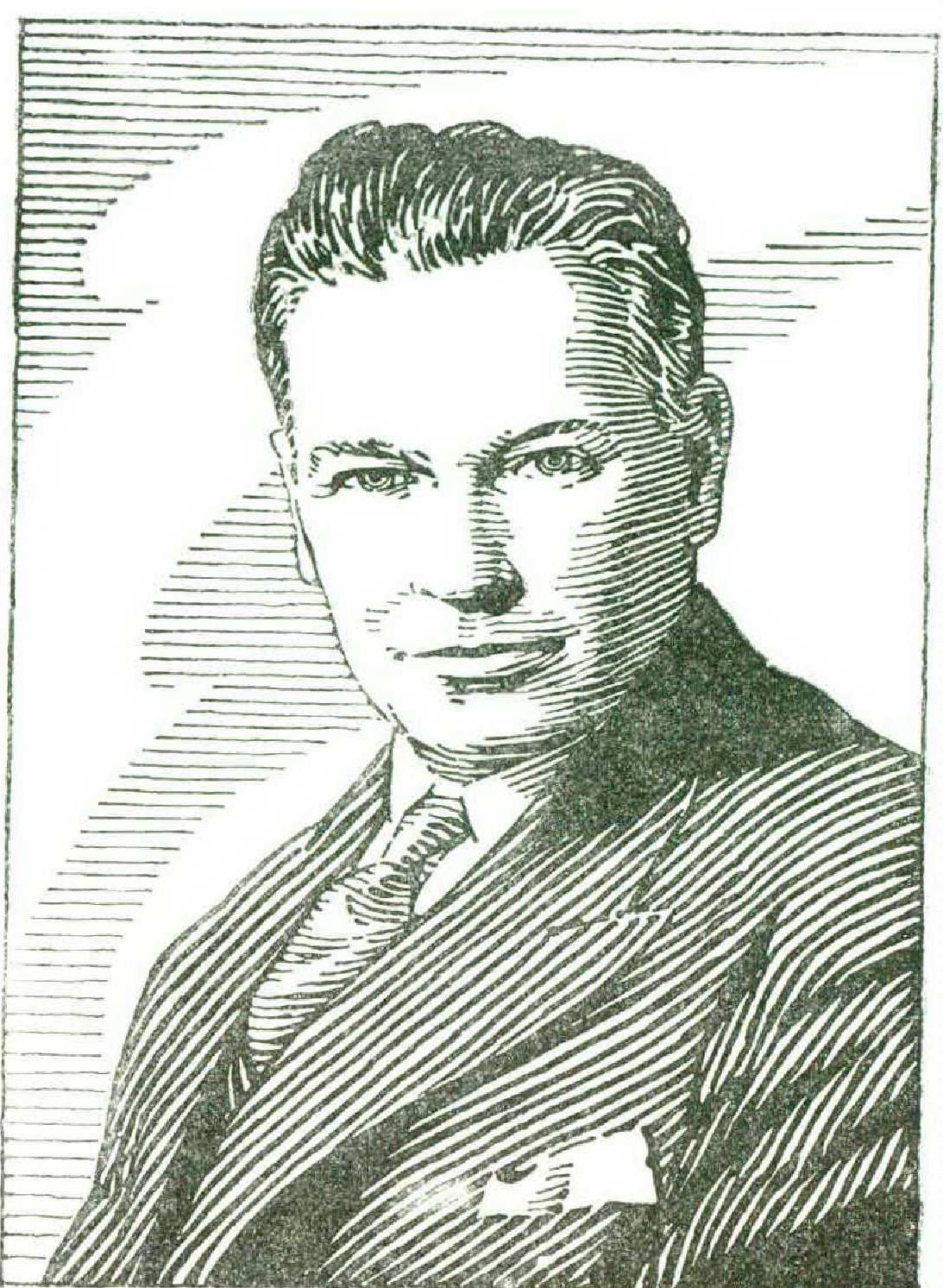
Now an American citizen by adoption, Richard Aldington was born in 1892, in the almost mythical serenity of Edwardian England. One of his earliest memories is the death of Queen Victoria, and the talk of something called the Boer War. A cross-channel trip to Calais was his first taste of the delights of travel; G. B. Shaw’s letter of comment on a poem he wrote when he was fifteen, his first excursion into the world of letters.
When young Aldington moved to London and entered University College, he was already afire with the passionate beliefs in the freedom of living, thinking, and utterance which have never left him. He had few friends in the city. He used to rise with the dawn and walk through the great parks of Hampton Court, fortifying himself for the gray drabness of the College halls, ruminating on the eccentricities of some of his professors, among whom were A. E. Housman and W. P. Ker. Graduating, he resisted the advice of family and friends to take a ‘respectable ‘ business job, determined to try his hand at writing. He served his apprenticeship reporting sports on a newspaper, writing verse in off hours, living on next to nothing. In one week, almost by accident, he met Ezra Pound, H. D., and Harold Monro, three poets who were to have great influence not only on his own life but on the whole development of English verse. He became a friend of Yeats, and in the spring of 1912 he took his courage in his hands and went as a free lance to Paris.
There followed months in Italy and France, where he, with Pound and H. D., became The nucleus of the famous group of Imagists. Amy Lowell appeared, the Imagist magazine was born, Orage was in his ascendancy, Aldington formed a lifelong friendship with Ford Madox Ford. Days of immense excitement and hope. One night a young man with flaming red hair called D. H. Lawrence was a guest at a dinner in Amy Lowell’s apartment in Paris. On the street below the newsboys called an extra. Germany and Russia were at war. A few weeks later Aldington saw Rupert Brooke for the last time, hurrying along Piccadilly, his navy commission in his pocket. A chapter in the world’s history was ending, and another one just about to begin. . . .
FAREWELL TO EUROPE
BY RICHARD ALDINGTON
XI
THERE is a great temptation, I find, to go on writing about people one has known, especially in that pre-1914 period. I perceive I don’t want to leave those happy days of peace and face the first World War over again even in retrospect. With another worse war devastating the earth as I write — and how futile it now seems to write — the whole thing becomes unbearable.
During the long armistice of ‘19 to ‘39,
I was jeered at for ‘ an obsession with the war.’ Perhaps that obsession did exist, and it was certainly only natural that people should want to forget the stresses and miseries through which they had so painfully lived. Yet, in view of subsequent events, it looks as if those who were ‘obsessed’ with the last war were closer to realities than those who tried to pretend it hadn’t happened. The early books of Aldous Huxley hardly refer to the war at all, yet later on he too became ‘ obsessed ‘ with the problems of war and peace, though in an abstract and not very practical way.
All sorts of things were wrong in that pre-1914 world; they must have been, to end up in so lamentable a bankruptcy. But it had two priceless advantages which were lost in the struggle. There was a rough-and-ready European order, even a world order, in which the great majority unconsciously believed. And, though foreigners might be despised and laughed at, they were not hated merely because they came from the other side of a frontier and spoke another language.
I was not in the habit of buying newspapers except when something extraordinary happened, but when I saw the first placard of the Titanic disaster I immediately bought a paper. Another man bought a copy at the same time, and to my amazement turned it over, read the stop-press racing news, and then stuffed the paper in his pocket without even glancing at the main news item. I was shocked. I couldn’t feel so cynically uninterested in the misfortunes of fellow creatures. People have seen a symbol of coming disaster in that sudden wreck of the arrogant Titanic. And there is something suggestive about it. Even more suggestive to my mind is that on the tenth of November, 1918, an old warship called the Britannia was torpedoed off Trafalgar.
Newspapers suddenly became important in those late July days of 1914. It was so hot that H. D. and I (then married only a few months) went every day to the Art Museum in South Kensington, and sat in a large cool room overlooking a courtyard with a fountain, where we read books on Italy and Italian art. We intended to go to Italy about November. But the headlines flared larger and larger across the front pages, the street placards became more frequent and more disquieting. Yet, as I have already said, it was not until the end of the month that we became really anxious. We were assured on all sides that the government (meaning, of course, the British government) would certainly do something about it. Apparently they went off for a long week-end.
I received a telegram from Ford Madox Ford, who was in a remote part of Scotland, asking me to wire him a news summary each afternoon, as their papers were a day late. So every day I sent off what seemed to me the important things. One day at the end of a long list of European calamities I added: ‘France at war with Germany.’ The clerk at the post office looked up and said: ‘That’s not official yet.’
‘I know, but it will be within a few hours of that telegram’s arrival.’ It was.
Following a suggestion of T. E. Hulme’s, I went down to the headquarters of the H. A. C. to register as a volunteer. I was asked if I had ever had any serious illnesses, and admitted that I had undergone an operation in 1910. I was told contemptuously that there wasn’t the slightest chance of my ever getting into the army. I lost my way going out and wandered into the armory, where I was promptly put under arrest by a City clerk dressed as a corporal. He suspected me of being a German spy because I wore a small beard and a French jacket. The aspect of that armory depressed me. I had seldom seen anything so ugly, and the place seemed to radiate a peculiarly drab philistinism. When I was released from duress, I felt rather glad that there was ‘no chance’ of getting into the army.
When I have heard people making optimistic predictions about later wars, I remember that in 1914 most people said the war would be over in six months — some said three. Yet the mental temperature of London fell imperceptibly but rapidly. Business as usual, so popular a slogan among merchants, did not apply to intellectual activities. Literary papers quietly disappeared, literary articles were not wanted, poems had to be patriotic. The old camaraderie disappeared, and along with it the old simplicity. Before the war les jeunes were perfectly happy to dine very simply and to spend the evening in talk on nothing more costly than tea and cigarettes. But as the young men began coming on leave in khaki, they wanted more violent and expensive amusements — good dinners, theatres, dancing, girls.
We began to have casualties among our friends. The first was the French-Polish sculptor, Henri Gaudier-Brzeska. During the Albert Hall exhibit of the Allied Artists, Ezra went round it with his mother-in-law, Mrs. Shakespear. They came to a statuette in what was then loosely called the Futurist style, and Ezra began capering about and making fun of it. Suddenly a gaunt sharp-faced young man, with flaming eyes and long dank hair, rushed at him and threatened him with immediate personal violence. Ezra prudently declined the combat, and at once became a warm admirer of the young man’s work. Thus we came to know Gaudier.
Gaudier had fled to England to avoid compulsory military service in France — before the war, of course. He was extremely poor, and his ‘studio’ was a railway arch somewhere near Putney. As he could not afford to buy stone for his statues, he used to go out late at night and steal pieces of stone from a mason’s yard near the Tate Gallery. Since he was limited to what he could carry, practically all Gaudier’s work was limited in size to statuettes. Such are the disabilities which afflict a creative artist in the twentieth century.
With the war came the slogan, so irresistible even to half a Frenchman, La Patrie est en danger. Gaudier determined to go back to France, though he was liable to severe punishment as a deserter.
We heard from Gaudier from time to time, and he was evidently a good soldier, as he was soon promoted to sergeant. He was killed in a scrap at Neuville-Saint-Vaast. Two years later when I was on that sector, I tried to find his grave, but without success. T. E. Hulme, who had been wounded at Ypres early in the war, afterwards transferred to the heavy artillery. He was killed somewhere near Dunkirk. We were told it was a direct hit from a very big shell, which literally blew him to atoms — a horrid fate for anyone, but particularly ironical for a philosopher who had doubted the reality of phenomena. Phenomenal or noumenal, the shell got him, and he walked and talked no more among us.
In his lifetime Gaudier made little out of his work. I believe Ezra was his most generous patron. On the occasion of Wilfrid Scawen Blunt’s seventieth birthday, a subscription was raised, and Gaudier made a little alabaster box in which a number of poets put autograph copies of their poems. They were W. B. Yeats, Sturge Moore, Ezra Pound, Victor Plarr, F. S. Flint, and myself. Blunt entertained us to lunch and gave us roast peacock, with a magnificent peacock’s tail spread over the table as decoration. Blunt obviously hated Gaudier’s ‘futuristic’ work, and said he wasn’t sure at first whether we were a deputation of poets or horse breeders. Hilaire Belloc came in for tea, which in his case consisted of a pint of claret in a large crystal goblet.
Later on, Ezra and I spent a week-end with Blunt. He astonished us by appearing in the full dress of an Arab sheik with gold-mounted pistols in his sash and by drinking damnation to the British government, which treasonable toast we were forced to accept. In the library on Sunday morning I found a number of books, including a Bible, inscribed: ‘George Noel Gordon, Lord Byron.’ I believe Lady Anne Blunt was descended from the poet. In the same room was a couch on which, according to Blunt, Francis Thompson used to sleep off the effects of opium.
I have no views on Gaudier’s work as a sculptor, though of late years I have come across it in one or two national collections. But, like many modern sculptors, he was a good draftsman. He showed me a large collection of his sketches, chiefly of nudes and animals, and they seemed to me to show real talent. He had a beautiful, almost calligraphic line in drawing deer and antelopes. But when he worked in stone, all that grace disappeared and he seemed enslaved by pedantic abstractionist theories. It seems to me that ‘abstractionism’ is peculiarly inappropriate in a piece of detached sculpture not intended as part of an architectural design. What is the point, except of course as a technical study in planes and masses?
The brief carefree days were gone, never to return again so far as I was concerned. Under the stress of an inner conflict I lost the serenity and harmony which form a large part of success in life. On the one hand, I thought it was a plain duty to be in the army and cowardly to be out of it. As the need for men grew more pressing, I first suspected and then became convinced that the old operation, which had seemed so decisive to the H. A. C. man in August '14, would no longer be considered important. On the other hand, I considered war an insanity. I wanted to keep my head during the catastrophe, and not be swept away by mass emotions or the puerile propaganda which showed such contempt for one’s intelligence. I realized, too, that the situation must look entirely different on the other side of the battling armies, and to a German his country must have seemed like a beleaguered fortress. There were then no Hitler and Goebbels in command, to make the issue clear.
I then exaggerated, I think, the economic motive behind war. Certainly it was there, but I now incline to think it was largely a rationalizing of other and often unconscious desires for mere dominion — a purely psychological problem. One solid fact established by Norman Angell was that war did not pay, either immediately or in the long run. In 1914 Germany had become the leading export country and the problem of the Berlin-Bagdad railway had been settled in its favor. Where was the economic gain in making war? The German thesis that the war was an Allied plot to destroy that prosperity seemed to me rather incredible. On the other hand, I thought there was a good deal in the population-pressure argument, though not in the way it was put forward. The earlier stages of the industrial system had brought into existence an enormous mass of Europeans, mostly of an inferior kind, who were less and less required as the system was perfected. The governments hadn’t the faintest idea what to do with these people, and war seemed to offer a temporary solution. Thus I argued with myself interminably, with a fatalistic instinct that sooner or later I should be involved in the massacre.
In the interim I thought that something might be done in a small way to maintain the tradition of the arts and of a Europe above nationalism. It was a forlorn hope, but not obviously so then. By way of giving a practical turn to this ideal I turned my attention to Remy de Gourmont, who had every claim to being considered a good European in matters of the intellect. I had been in touch with him for some time, and had translated some of his essays for the Egoist. His letters showed that he was in great difficulties. He was elderly, in poor health, and largely dependent on journalism for his living. Practically all literary journalism was suspended in Paris. A large part of his small savings were in Ottoman bonds which had become practically worthless. So for some time one of my occupations was to translate essays, articles, and poems by Gourmont for English and American periodicals, and to send him on the money.
Gourmont died in September 1915, and almost immediately I began to receive letters from Mme. de Courrières and from Mme. Jean de Gourmont. Each of these ladies claimed to be heir, and besought me not to send any money due to Gourmont to the other. This was very embarrassing, but I solved the problem by writing them polite letters of condolence and sending the money to Gourmont’s account with the Mercure de France.
I never saw Remy de Gourmont. He was a complete recluse for a very sad reason. As a young man he had been handsome, but he contracted a form of lupus which disfigured him badly. He was very sensitive about it, and disliked meeting strangers. My contact with him was solely through his books and by letter, and yet it was a real friendship. I admired his range of interests, his erudition, his fine French culture, his unbiased judgment, his original point of view, his skepticism, his individualism. He was free from every fanaticism, any form of cant, any subservience either to authority or to public opinion. He made a small income by his pen, but he never wrote for money. His integrity, his pure intellectual detachment, were never betrayed by him. He was not widely known in his lifetime, even among his fellow countrymen, who were not always fair to him. Yet in 1922, seven years after his death, more copies of Gourmont’s books were sold in France than of any other writer. His sanity and wisdom were obvious correctives to the disorders and fatuities of the war and post-war years.
Gourmont’s work suffers from disabilities. He was slow in developing and he wrote too much. Consequently, there is a good deal of his writing which either doesn’t quite come off or is repetitive. But the best of it is so good that nobody who cares for European literature should miss it. For this reason I devoted a lot of time and trouble to making a comprehensive selection, and I modestly think that the two volumes published by Covici, Friede in America contain all and omit nothing that is essential.
XII
Everything, or almost everything, I have to say about the war of 1914-1918 has been said in Death of a Hero and Roads to Glory. It is impossible for me now to recapture the passion and indignation which inspired Death of a Hero. I worked them out of my system, as people say. And even if I could relive those emotions, they would seem pointless with another and more disastrous war in progress. The European War, the World War, the First World War — whatever you like to call it — is no longer the War. It drops into history, and takes its place with the other fading or unheeded calamities in the long tragedy of human suffering.
I slept ill on my first night in barracks. The blankets were old and dirty, the ‘biscuit’ mattresses lumpy and hard, the unventilated air foul, and the men groaned and snored in their sleep. I lay awake, thinking of Italy and France and the sea and the clean brook running past my Devonshire cottage. I think I can imagine what it must be to spend one’s first night in prison, though prisons are clean and one has the privilege of solitary confinement. It was a relief next day to be shifted to the open Dorset country, into wooden huts with plenty of cracks and crevices to let in air, scrubbed plank beds with mattresses we stuffed ourselves with sweet-smelling straw, and shower baths which Carl and I had to ourselves at almost any time but Saturday night.
I knew that country well; I had walked over it on one of my excursions across England on foot. In the marshes I knew there would be nodding cotton grass and blue gentians, and on the downs clear air and silence except for a distant curlew note or the caw of passing rooks or the clink of a sheep bell. Standing to attention on the barren ugly parade ground, I reflected that not far off sat or slept Thomas Hardy, brooding on the iniquity of dynasts, but doubtless convinced that the war to end wars must be won at all costs. Like every new war, that one was different while it lasted.
If surviving the war was a benefit, and I must say I still think so, then I was extremely fortunate in several little happenings. My friend with whom I enlisted, Carl Fallas, and I did not go to the front with the majority of the battalion. We were given lance-corporal stripes, and held back for training as N. C. O.’s. It was rumored that the men who went out ahead of us were involved in the battle of the Somme and severely handled. All rumors in wartime, particularly those among soldiers, should be suspected, but there is reason to believe there is some truth in this one. Plenty of battalions were cut up on the Somme.
When we did go up the line, we had the further luck of being sent to a battalion of Pioneers. The word ‘pioneers’ sounds rather daredevil and en avant, especially to American apprehension, but in point of fact it was a flattering term bestowed on a body of men who were something between amateur infantry and unskilled engineers. Our lives were a perpetual working party, digging new trenches, repairing old ones, clearing or building roads, pushing out saps into No Man’s Land, removing old wire and putting up new in the same delightful landscape. I was very thankful when I was relieved of these wearisome tasks by being made a Runner.
It would be tedious to enumerate all my chances and escapes at length, but consider these facts. It was by chance that I was given one night off in a period of two months, and that night happened to be one when a shell dropped on a group of officers and runners, killing or wounding all except Carl and his officer. It was by chance that I lowered my head just as a shell burst beside me in a mine crater, so that instead of hitting my face a splinter merely crashed my tin hat. It was by chance that I shifted my foot a fraction of a second before a bullet neatly took the toe from my boot instead of smashing my ankle. It was by chance that, standing in a trench, I turned my head to speak to the man behind me exactly at the moment a large chunk of shell whizzed so close to my check that I felt its harsh and horrid breath. It was by chance that in the last attack of the war my field glasses shifted round over my stomach — when I went to use them I found they had been smashed and bent. And finally (though by no means completely) it was by pure chance that I missed the worst phase of two of the worst battles of the war.
If that isn’t what novelists call ‘a charmed life,’ what is? In my private opinion I was a very poor soldier, and not worth the money the government had to pay for me, still less the time they insisted on my wasting. Not only did I fail to get killed myself (which might have been some consolation to them), but I am perfectly certain I didn’t kill anyone, and I know I saved the lives of two wounded Germans. I also saved a British sentry from being court-martialed (and possibly shot) for the very serious ‘crime’ of being asleep at his post in the front line — the poor devil was much more tired than I was, and I was dead-beat. Finally I was almost courtmartialed for putting my servant to bed when he was drunk, instead of putting him under arrest.
There is a superstition that drowning men live over all their lives again as vividly as they first endured them. If this be true, I hope I don’t die by drowning, for I shouldn’t like to live the war — that little, old-fashioned war I knew — over again. It no longer haunts me against my will, as it did for years. Deliberately what I have set down here has been the trifling, not the tragical. To have relived it all once in the making of a book was more than strain enough. I won’t do it again.
But memory is a faculty not understood, a capricious responder to strange calls. Unexpectedly, in a flash, it may break through that laboriously built wall of forgetfulness. Certain smells, sounds, and sights are the battering rams which suddenly demolish the wall and let the memories escape.
The smell of old wood burning brings back to my lungs and nostrils the hot frowsty air from a dugout on a winter’s night. I can see the rough chalk steps going down through darkness to the candle glimmer, the trench in which I stand, the dark patient sentry beside me, and overhead the cold stars dimmed suddenly by a Very light. The scent of new-mown hay is no longer delicious to me. It is like phosgene, and brings up a picture of dawn over a ruined village and stretcher bearers bringing down gasping foammouthed bodies in stretchers. And that stuff women use to take the pink from their nails smells like tear gas, so that pink nails make me think of masked men groping along muddy trenches. In the vaults of the Escorial I smelled again that awful stench of corrupting corpse. I was with my old friend, Captain Hal Glover, and simultaneously and without argument we both agreed to drop sightseeing and retire to the nearest café for brandy and coffee. We had both smelt battlefields.
Sounds next. The drone of an airplane high up (not near) brings a blue sky filled with the little white cauliflowers of bursting shells. A distant train whinging away into silence on a frosty night brings back the sad whine of shells flying away death-laden to burst, unheard by us, among the unseen and mysterious enemy. An impatient motorcyclist warming up his engine is no friend of mine; he echoes the more deadly machine gun. Yet thunder is harmless to memory; it is so much milder than a barrage.
Sight is much fainter. Only pavé roads and fields of beet bring back the dead horses, with huge starting eyeballs of terror, heads reared back like the horse from the Parthenon, and large pools of dark blood. The New England woods, wrecked by the hurricane, brought back other wreckage of trees and many men’s bodies.
XIII
On the fourth of November, 1918, there was an armistice between Italy and Austria; and owing to somebody’s error this piece of news was falsely announced in America as the end of the war. Seeing that 6 A.M. Western European time is 1 A.M. Eastern American time, I calculate that on the very morning when New York went crazy over the peace I was looking at the luminous dial of my watch in the gray dawn and giving my headquarter’s signalers the order to advance. As far as eye could see to north or south a huge curve of flashing gunfire lit up the sky, and the old familiar roar and crash of drumfire beat on the ears.
Modern warfare is a most complicated piece of organization. My job that morning of the fourth was not to kill Germans but to see that as my battalion advanced I kept my headquarters in touch with Brigade and both flanking battalions with a minimum of break and delay. For this purpose my Field Service message book and those of the other relevant officers contained two pages of mysterious letters and numbers, showing my different positions and those of the other stations at quarter-hour intervals, until the final objective was reached.
I hadn’t to worry about what was going on. What I had to do was to lead my little group of men forward for about five hundred yards, cross a road which my map assured me was there (it was), set up a lamp signal station at once, establish contact in three directions, send and receive any messages, and at 6.15 A.M. precisely move on to another point. These manœuvres were carried out with such clockwork precision that, except when moving, we were never out of touch with the other stations for more than two minutes. I got through the German barrage with the loss of my corporal and one man, passed dead and wounded and surrendering Germans, and lost my knapsack. Our trench-mortar bloke covered himself with glory. Somewhere, somehow he had pinched an old horse, and brought his clumsy mortar walloping into action at just the right moment to knock out two machine-gun nests which were punishing one of our companies. By 7.30 A.M. we had advanced two miles, captured six guns and two hundred prisoners, and could see the enemy retreating with undignified haste in the distance. Field guns galloped up, and went into action.
We had another weary week of marching and actions with rear guards before our armistice, and when it came it was undramatic and undemonstrative. Yet it was not without deep feelings. There was an uprush of confused poignant emotions — relief, gratitude, a stir of hope, a belief that this was the end of war, and an overtone of profound sadness as one thought of the silent ruined battlefields and the millions who never saw the day for which they had fought — and one’s own insignificant little life, saved, but in ruins.
Freedom makes man to have liking!
Freedom all solace to man gives!
He lives at ease that freely lives!
It would be pleasant to be able to say that I remembered those inspiring words of the ancient Scottish lyrist on my first morning of post-war liberty. But as a matter of fact I didn’t, and must be content to quote them as an afterthought. But I felt something of the kind as I dressed on my first morning in London.
I stepped into the streets that morning, almost a free man, with the purest feelings of benevolence to all mankind. Pangloss, Voltaire, books. I hungered for books again, for the surprises and triumphs of the bibliophile’s chase. I remembered the folio Euripides, published at Cambridge in the seventeenth century, and bought for the ridiculous sum of twopence from a junkshop; the genuine Aldine Apollonius Rhodius picked up for sixpence from a Whitechapel stall; the French poets snatched from bondage, the Italian Humanists released from squalor, especially that noble folio of Cælius Rhodiginus published by Froben of Basle. . . .
I had to go to Cox’s Bank for the purpose of drawing some pay, but the Charing Cross road was on my route, and I lingered over the outdoor shelves. I found a complete edition of the Waverley novels for two shillings. The bookseller recognized me as an old though not particularly valuable client. We shook hands, and I again glowed with benevolence to my fellow men. A little farther down was a display of French books. One shelf of about forty particularly held my attention. I thought: ‘This is a remarkable coincidence; it’s the first time in my life I’ve ever seen a row of secondhand books every one of which I’ve read.’ Mechanically I pulled down one of the books and opened it. On the flyleaf was written ‘Richard Aldington.’ I took down another, with the same result.
My first thought was that the house where I had stored my books had been burgled, and, full of righteous indignation, I plunged into the shop to try to trace the thief. Again the bookseller remembered me, and at once looked up his records. If I had been suddenly and unexpectedly hit between the eyes I could not have been more stunned than when I learned that the books had been sold by a ‘friend,’ a Bloomsbury intellectual, who had rooms in the house and therefore access to the storeroom. Evidently he had come to the conclusion that I was unlikely to return from the front, and that since the books were no use to him as books he might as well turn them into beer.
It was absurd of me to be so much affected by so trivial an episode, but, as I have explained, I was in a disturbed state of mind and hence easily affected by small things. It seemed a shabby kind of welcome, and took the zest out of the day.
In a very short time I realized that the London I had come back to was a different place from the London I had left in 1915, let alone the pre-war London. Everything seemed askew. The streets were dirty and shabby — there were no men to clean them and nothing had been repaired or painted for years. There were holes even in the main thoroughfares. The decent, orderly, good-natured Londoners had become as snappy and selfish as the far more sorely tried French. There was a shortage of everything except returning soldiers and debts. People fought for places in the inadequate transport system — a man who was accustomed to make way for women could never even get on a bus. Food was scanty and very dear. Lodgings or apartments were almost impossible to find, because London was crowded with enormous numbers of ‘war workers,’ who still clung to their jobs like limpets. There was a devil-take-the-hindmost scramble for money and position in the new world, and an extravagance which seemed incredible to one who had known the old sober England.
I stood aghast at this degeneration of my people, visible to me as it was not to them, because of long absence. I asked myself anxiously if I too had not degenerated, and it seemed to me I had. I could no longer quote with conviction Baudelaire’s boutade, that a man can live three days without bread but not a day without poetry.
Even more significant and disconcerting was the existence of an indifference verging on hostility towards the men of the returning army. It is not difficult to understand. There was a definite split in the nation. On the one side was an everincreasing number of young men who for two, three, and in some cases four years had been cut off from their homes and civilian life except for letters and infrequent furloughs of a few days. They were turbulent, impatient, full of strange oaths, contemptuous of anything that looked like humbug, and confident that a grateful country would be eager to hand them out jobs for which they were often quite incompetent. They were old before their time from hardship and harrowing experiences, yet immature and often helpless in these suddenly changed circumstances. For years they had abdicated responsibility and had lived a hair’s breadth from death; and now they were abruptly handed an indefinite span of life and required to take full responsibility for it. You could recognize them at once by the new clothes they wore so awkwardly, their tanned faces, a queer strained look in their eyes. They were bound together by a strong though diminishing camaraderie. They were always getting together in groups and talking in a strange jargon of their own about one topic — the war, which they refused to discuss with anyone who had not been in it.
On the other side was the civilian population, frayed in its nerves, crushed with taxation, anxious about its own future, with all its benevolence and emotional sympathy long since exhausted. Men and women had supped full of vicarious horrors, and yet not until the flood of war books ten years later did they realize what their young men had endured. Every privation they had been called on to endure themselves had been excused by the authorities on the grounds of the army’s necessities. What London had seen was a constant succession of young men on leave, crowding the restaurants and theatres. It had forgotten how many of those who laughed and drank and sang so merrily would never return. In fact, these young men who did return were a nuisance, and even a menace to everybody whose job was uncertain. Already crowds of munition workers and supernumerary government servants were being dismissed, and the pawnshops were crowded with the junk they had bought in their period of prosperity. One could see rows of imitation sealskin coats, for instance, hung out for sale by the pawnbrokers, who refused to take any more.
For my part, I had little to complain of, and therefore can speak more freely of the less fortunate among my war comrades. True, through my own folly or worse, I had got my personal life into a tragical mess, which added to my difficulties. And I found that my nervous malady and insomnia increased rather than diminished. I still found it hard to concentrate on literary work, whether writing or reading. By way of dealing with this problem, my father gave me a volume of Congreve’s comedies. Must I confess it? I found Congreve dull and footling, his artificial characters and situations intolerable. Indeed, in my then state of mind, the gift was about as sensible as trying to entertain a man about to be hanged with Huxley’s Crome Yellow. Yet for some mysterious reason I found I could read Scott, and night after night sat up with his synthetic romances until dawn, when I managed to snatch a couple of hours’ troubled sleep.
A few days after I arrived in London I wrote a little sketch describing demobilization scenes, and sent it to one of the big daily papers. To my surprise it was taken and paid for at once. This lucky publication served to advertise the fact that I was alive and in England, and I had what was for me the new and astonishing experience of receiving letters from editors asking for my work.
Austen Harrison wrote me from the English Review, and I promptly sent him three poems which he had rejected in 1915. Either he was magnanimous or had forgotten his former action, for he accepted them like a lamb and added a letter which was as complimentary as his former letter of rejection had been sniffy. Since then I have felt a certain loss of faith in the infallible judgment of editors.
I was also a contributor to the AngloFrench Review, edited by Henri Davray, a Mercure de France man. Owing to the pre-war dislike for ‘Gallic’ literature, Davray had some difficulty in finding English writers who knew anything much about contemporary French work, and so was glad to make use of me. It seems worth remarking that I bridged financially that transition between military and normal life by work from which I had never expected to make anything. I had jotted down poems in a small pocket book during the war, for no other reason than the consolation of writing something; and unexpectedly I found I could sell them for five or six times as much as I got before the war. (That little notebook, which I carried through gas attacks, two battles, and many months of trench warfare, was given to Amy Lowell, and may now be reposing with the other papers she bequeathed to Harvard.)
Moreover, within a few weeks I had arranged with the Egoist Press to reissue my translations and to add the Anacreontea to them; Elkin Mathews bought a small volume of love poems; Allen and Unwin agreed to issue my war poems; W. C. Beaumont was at work on a fine limited edition of war poems with illustrations by Paul Nash, and a little later commissioned a translation of Goldoni’s Donne di Buon Umore.
All this was encouraging, especially as I was making far more money than I had ever done. But the cost of living had more than doubled; much of the work I sold was stuff in hand from the sparetime production of three years; and I not only had difficulty in doing literary journalism, but found that my creative vein had practically dried up. I realized that it was likely to remain so until I got over the effects of the war, and I felt that for some time to come I should have to do some kind of regular work, however distasteful. This problem was solved in an unexpected way, and through one of those apparently flimsy coincidences we all reject with scorn if a novelist dares to make use of them.
One of my friends, I think it was most likely T. S. Eliot, gave me a piece of literary news. Middleton Murry was giving up his post as critic of French literature on the Times Literary Supplement to edit a revived Athenœum, and he needed an assistant editor. The post had been offered to Eliot, and he had refused it as not sufficiently secure. In this he showed his wisdom, for Aldous Huxley, who was appointed, only lasted one year, and, judging from his remarks about Burlap in Point Counter Point, did not enjoy the experience.
I did nothing about the Athenœum job. My experience with the Egoist had not given me any reason to esteem myself as a literary editor. Moreover, though I had nothing against Murry, there had been no outbreak of sympathy on the one occasion we had met. But I thought the Times job sounded much more promising, and therefore wrote to that august institution. A stately and unbroken silence resulted, and I gave up all hope when I was told that, you couldn’t even be a cub reporter on the Times unless you had graduated from Oxford with honors.
Here is where the chain of coincidence begins. During the summer of 1918 I received a letter at the front, expressing interest in the Imagist poets and asking one or two questions. It was signed ‘Winifred Ellerman,’ which meant nothing to me. I answered the letter, put the lady in touch with H. D., and carried on with my job of being stormed at by shot and shell. After I returned to London I received an invitation to dine with this lady and her father, Sir John, and learned with some bewilderment that he was reputed to be the richest man in England. Evidently Miss Ellerman had ‘spoken to’ her father on my behalf, for over the port he made me a speech, and wound up by offering to lend me fifty pounds. I told Sir John I didn’t want money, but regular literary work, and lamented my ill luck at failing to get any response from the Times. Sir John watched me very attentively as I talked, and then said tranquilly that he would give me a letter to the editor of the Times, whom he knew, and another to his friend, Clement Shorter, editor of the Sphere. I thanked him, not very effusively, I fear, because I had already experienced the inefficacy of outsiders’ letters of introduction in the gladiators’ school of journalism.
However, I thought I might as well see these birds, so at my leisure I posted the two letters with covering letters of my own. The replies came back with incredible speed, fixing appointments for the next morning, fortunately at different hours. I saw Clement Shorter first, and I could hardly believe my ears when after a few minutes’ conversation he commissioned six articles at a figure three times higher than I had ever been paid before.
Feeling as if I had accidentally purloined Aladdin’s lamp, I walked rather cheerfully down to Printing House Square. There, after a comparatively brief wait, I was received by that Olympian creature, the Editor of the Times, who is popularly supposed to tell the British government what it thinks. He had Sir John’s letter in his hand, and asked me what sort of job I wanted. When I told him he looked considerably relieved. He wrote a few sentences on a sheet of paper, put it in an envelope with Sir John’s letter, rang the bell for a messenger whom he told to take me to the editor of the Literary Supplement, and then shook hands with me, telling me that if I could do the job it was mine.
I followed the messenger along the corridors in a state of high bewilderment. I had read of such things happening in children’s storybooks, but I didn’t believe they could occur in real life. The clue, if I had only known of it, was a very simple one. Owing to my ignorance of high finance, I was quite unaware that Sir John held a controlling interest in the Sphere and a large block of shares in the Times.
I was still vainly hunting for some explanation when I found myself in the presence of Bruce Richmond, editor of the Times Literary Supplement. I am sure my old and revered friend will forgive my telling the truth about this interview — that he looked annoyed when he read the communication from his chief and treated me with that polite insolence which is one of the valued privileges of the English upper classes. When I knew the truth which was then hidden from me I didn’t in the least blame him. He naturally resented dictation from ‘financial interests,’ and very probably he had already promised the job to some deserving Oxonian.
I left the office with a bundle of new French books and the conviction that it would be very difficult for me to work with Bruce Richmond. In fact, as I reflected on his manner I was tempted to return the books and tell him to take a trip to Tartarus. But I not only needed that job, I wanted it, because it seemed just the framework necessary to rebuild my life. I decided to be patient and to give it a month’s trial. If at the end of a month Richmond seemed still as disagreeable, I would resign.
The arrangement was that I should call each week, to bring the reviews I had done and to discuss what should be reviewed next week. There was no change in Richmond’s attitude, and I went to the fourth interview in a gloomy mood, convinced that it was incompatible with my self-respect to continue on such terms. To my astonishment and relief I found a totally different Richmond, as cordial as he had been frigid and offensive. He discussed our various problems of reviewing in a friendly way, and wound up by inviting me to lunch.
To this day I have no idea what caused this sudden change. It couldn’t have been due to any outside pressure, because Richmond was not a man to be influenced, and anyway I had not spoken of the situation to anybody. I flatter myself that he discovered I was not such a crashing cad as he had apprehended and that I did know something about French literature. Whatever the reason for it, the change was permanent. A few months later my rate of pay was raised fifty per cent, without the slightest hint from me on the subject; and I continued to write regularly for the Times for ten years, long after Sir John had sold his interest in the paper.
Ezra Pound I found still in the same small apartment in Kensington, rather overwhelmingly obstructed with one of Dolmetsch’s spinets and a quantity of poor Gaudier’s statues. For some reason Ezra had become violently hostile to England. At any rate he kept tapping his Adam’s apple and assuring me that the English stopped short there. I thought at first he meant that he had been menaced by the returning troops as a slacker, but it eventually came out that he was implying that the English had no brains. And there can be no doubt that at this time appreciation of Ezra’s works had diminished to a pinpoint. He told me that he was moving permanently to Paris, where he would be among intelligent people. This attitude did not seem a very good basis for a renewal of our old intimacy. It was impossible to disguise the fact that I was English, and therefore also stopped short at Ezra’s Adam’s apple.
Yet there were compensations even for this calamity. One of them was T. S. Eliot, now the model for university Kulturmensch, but in 1919 almost unknown and having rather a tough time. I met him once when I was on leave during the war. He was invited to tea, and turned up an hour late, looking pale and tired. There had been an air raid the night before and he had taken refuge in the subway, only to find himself locked in until morning. This was not a fortunate moment to meet anybody, but even at that first meeting I thought him attractive and intelligent.
Tom Eliot’s career in England was exactly the reverse of Ezra’s. Ezra started out in a time of peace and prosperity with everything in his favor. and muffed his chances of becoming literary dictator of London — to which he undoubtedly aspired — by his own conceit, folly, and bad manners. Eliot started in the enormous confusion of war and post-war England, handicapped in every way. Yet by merit, tact, prudence, and pertinacity he succeeded in doing what no other American has ever done — imposing his personality, taste, and even many of his opinions on literary England. This was a remarkable achievement, and, since I was in close touch with him from 1919 to 1928, I know more of the difficulties he had to overcome, the mistakes he had to avoid, than most people.
Eliot’s early poems amused me. I thought them a skillful and legitimate adaptation of Laforgue’s manner. There was more originality in them than in Ezra’s poems, which are mostly a potpourri of paraphrases. But I believe Eliot’s greatest service to English literature at that time was his insistence that writers could not afford to throw over the European tradition. Just after the war, in the confusion and reaction against everything pre-war, there was an almost unanimous belief among artists and writers of the vanguard that all art of the past was so much dead stuff, to be scrapped. They were willfully trying to make themselves barbarians. I felt unhappy about this, for my instinct was to do just the opposite. After the long hiatus of the war, I thought we should for a time at least steep ourselves in the work of the masters, but nobody would agree with me. I was delighted, therefore, when I came across a sensitive and well-written article by Eliot on Marivaux, in one of the small art periodicals which sprang up in 1919. Evidently here was somebody who could write and who did not believe that illiteracy was a symbol of originality.
Of course, Eliot was not the only one. However much Aldous Huxley may now laugh at his experience on the Athenœum, he and Murry did useful work in maintaining standards. But Eliot was a particularly useful ally. Strange as it seems now, it is a fact that in 1919 to admire his poetry was daring and revolutionary. This gave him a growing influence over rebellious youth which he used, on the whole, modestly and rightly. But the defenders of the status quo in literature — the amorphous mass of Georgians and the formidable rear guard of Victorians — loathed him and went to unprecedented lengths in trying to discredit him.
The publication of some of Eliot’s poems was met with a tremendous counter-attack by the allied opposition. One elderly gentleman, a mild authority on the English eighteenth century but profoundly ignorant of European literature, went so far as to describe them as the work of a ‘drunken helot.’ Under the English law of libel, Eliot could have claimed damages for that aspersion on his character, but he very wisely did nothing at all. I wrote reviews of that book for every periodical to which I had the entry, with the exception of the Times, where I didn’t dare mention Eliot’s name at that time. Even then I found plenty of opposition. Holbrook Jackson was an intelligent man, and yet when I asked him to let me do an article on Eliot he looked amazed and said, ‘But Eliot’s a wild man.’
An American friend of mine was then editing the Outlook, and asked me to write an article telling his readers about young writers and picking out those I thought would make a name. I made a choice which I modestly think wasn’t bad for 1919: James Joyce, T. S. Eliot, D. H. Lawrence, Aldous Huxley, H. D., and Marcel Proust. I received a letter from the editor in these terms: ‘For God’s sake, Richard, can’t you think of somebody who has been heard of or is ever likely to be heard of? ‘
I protested, and my article was submitted to the judgment of that eminent expatriate, Mr. Logan Pearsall Smith, who decided that my writers never would be heard of, and the article was rejected.
In these circumstances it is not surprising that the most high-brow literary critic of his day failed at that time to get his work into any of the English literary periodicals. Meanwhile, Eliot was quietly laying the foundations of his future influence by cultivating the right people. I believe Sydney Schiff (who wrote some very good novels as Stephen Hudson) introduced Eliot to Lady Rothermere’s gang, but as I wasn’t in on that particular racket I can say nothing definite. But it was Lady Rothermere who subsidized Eliot’s Criterion in its early years.
Another valuable ally, but a pernicious influence on Eliot, was Charles Whibley. Eliot was already too much influenced by Irving Babbitt’s pedantic and carping analysis of Rousseau, — indeed to some extent he founded his prose style on Babbitt, — and in Whibley he found a British counterpart. Whibley was a Fellow of Jesus College, Cambridge, and a good scholar, but a hopeless crank about politics. He was the very embodiment of the English Tory don, completely out. of touch with the realities of his time. ‘ Whig ‘ and ‘ Whiggism ‘ were his terms of contempt and insult to everybody he disliked, and anybody can see how Eliot picked them up. But Whibley took Eliot to Cambridge, where his conversation enchanted the dons and procured him friends and allies, vastly more important and valuable than the Grub Street hacks who had rejected him.
Among other compensations for Ezra’s cruel abandonment of England to the powers of intellectual darkness were Herbert Read and the two Sitwell brothers. Shortly after I returned to England I was in Beaumont’s bookshop when there entered a young man in the uniform of a staff captain, wearing the ribbons of the 1915 Star, Military Cross and bar, and the Distinguished Service Order. This was Herbert Read. At first I looked askance at his symbols of military glory, for experience had taught me to associate them with disagreeable personalities, but Read turned out to be a gentle, amiable, and intelligent fellow. Nobody could have carried more modestly his military honors — remarkable in a New Army man who was only twenty-four at the Armistice — and he had a genuine enthusiasm for art and literature. In company he was almost diffident and usually silent, but in private he talked well and thoughtfully. I liked him very much.
As a poet, Read lacks a something which I can only hint at by saying that, while I admire the skill behind his poems, I am never moved by them. They seem to me to lack the passion which gives life to even the worst splurgings of D. H. Lawrence, and the intellectual concentration which so effectively conceals Eliot’s emotional sterility. I also think that much of Read’s work suffers from a kind of metropolitan provincialism, addressing itself to a small group of superæsthetes whose mental fashions change as quickly as those of couturières. But his pamphlet, In Retreat, describing his heroic experiences in the last battle of the Somme, is a classic of the World War and will outlive many more pretentious books.
Osbert Sitwell attracted me by his wit and honesty, and his brother by a passion for beautiful things and a sensitive taste which amounts almost to genius. Both, I think, found happier and more permanent expression of their gifts in prose than in poetry. I had a slightly romantic feeling about them, because they seemed to be carrying on the tradition of the cultivated English aristocrat. Instead of devoting themselves to sport and politics, they read, wrote, traveled widely, and were tireless investigators of Europe’s known and unknown beauties. Wyndham Lewis has attacked them savagely as dilettanti, but then he attacks everybody; and after all, Sir Philip Sidney and Shelley were dilettanti. It seems an exaggerated professionalism to want to bar the upper classes from practising any of the arts. But the newspapers evidently shared Lewis’s views, and attacked the Sitwells bitterly for this ’art nonsense.’
XIV
The year 1919 was certainly an annus mirabilis, if you take the mirabilis ironically. I was a detached but not uninterested spectator of President Wilson’s drive through London. I have never heard such loud and continuous cheering for any official personage. The British crowd evidently expected that quiet-looking gentleman to produce the millennium from his immaculate top hat. He produced the Treaty of Versailles, whose motto should have been: ‘We have scotch’d the snake, not kill’d it’ — the snake being European wars. The treaty was not conciliatory enough to win coöperation of liberal and peaceloving German parties, and not stern enough to keep the warlike parties from further harm. It infuriated Italy and disgusted America, disappointed France, and humiliated Germany without crushing its latent belligerence and arrogance. In England the treaty was received with the apathy of incomprehension. The peace of 1815, made by selfish kings and cynical diplomats, lasted for fifty years; the united wisdom of the enlightened democracies failed to make the peace of 1919 last for twenty years. One notes the progress.
In contrast to the enthusiastic reception of Wilson, the London crowd was apathetic towards the huge military parade which celebrated the ‘peace.’ General Plumer was cheered by the exsoldiers in the crowd, but Haig passed in silence. I don’t know what the enemy thought of him, but so far as my experience went he was much disliked by his own troops. The only real enthusiasm was for the British sailors and the French infantry.
I had almost resigned myself to a dreary existence of rented rooms in London,when unexpectedly Lawrence turned up on his way to Italy and offered to hand over his cottage to me. It was at a place romantically called Hermitage, in Berkshire. In my then state of mind you could have offered me nothing more attractive than a hermitage, and I accepted the offer without even seeing the place. However, it was a safe bet, because Lawrence and Frieda were adepts at finding cheap houses in beautiful surroundings.
During the war the Lawrences had a tough time. Just before the war started, life seemed to be opening out for them. The scandal of Frieda’s divorce had been weathered and they were respectably married. Sons and Lovers had established his reputation, and he had a contract for the novel he was then writing which carried what was for those days a substantial advance. They had intended to pass a few weeks in England, and then return to Italy. The Lawrence I met in 1914 was a happy man, light-heartedly looking forward to an adventurous life and with that happiest of all convictions for a writer-the belief that he had important things to say.
The Lawrences’ troubles began with the publication of the new novel, The Rainbow. There was a police prosecution for obscenity, instigated by the selfstyled Public Morality Council of London, a body of puritanical fanatics who were making themselves patriotically useful by trying to suppress anything they didn’t approve. They particularly disapproved of young and gifted writers who held views different from their own. English law permits any magistrate to order the suppression of a book on his own authority, and in practice he usually does what the police ask. Appeals to higher courts, which in many cases would probably reverse the judgment, are expensive and could only be undertaken by wealthy authors, who for some reason are never involved. The passage complained of was less than half a page in a book of over live hundred pages; and after the war the book was several times reprinted without molestation. The prosecution skillfully obscured the issue by pointing also to some criticisms of the Boer War, which were absurdly maintained to be hindering recruiting.
The suppression of the book was so obviously an error of justice that a question was asked in the Commons, and received the usual evasive reply. Suppression of books, which was introduced by the Borgias and perfected by the Bourbons, always tends to reappear in times of war; it is part of the general tendency to revert to lower levels of civilization implied in the phrase ‘a state of war.’
A man coarse-fibred enough to write an intentionally pornographic or seditious book would have taken the suppression with a shrug. An irresponsible bohemian would have washed away his resentment in beer. Lawrence was wounded deeply. The fact that this action reduced him to penury at a stroke was far less important than the insult, the stigma. He came from a section of the working class which has the deepest respect for law and order, and Lawrence knew that all the friends of his family and the family itself would think him disgraced. He was so intensely English in all his feelings and beliefs that he felt as if his own mother had turned against him. It was obviously an exaggerated reaction, but highly sensitive people do react in an exaggerated way. That is part of the price they pay for their finer perceptions.
Lawrence immediately determined to leave England ‘forever,’ and applied for passports for America. They were refused. Since Lawrence had been rejected for military service (tuberculosis) there could be no reason for this except official red tape, and possibly the pleasure of being disagreeable to an artist. The Lawrences went off to Cornw all, where they lived in a tiny cottage in very great poverty. No English publisher would touch his fiction, and his poems sold about a hundred copies. But for American friends and some publication in America, the Lawrences would have starved.
In 1917 they were ordered to leave Cornwall by the Competent Military Authority under suspicion of what would today be called fifth-column activities. We now know that just at that time the French had a spasm of spy fever, and made strong representations to the British about their laxity. Consequently orders were sent out to round up all suspicious characters. The Lawrences’ cottage faced the sea, a light had accidentally been left uncurtained in the next-door cottage, a submarine had sunk a freighter off the Bristol Channel, Frieda was a German, she and Lawrence sang German songs in the evening, they had some German books, and the local Cornish didn’t like them. Hence the expulsion order.
In those days few of us realized that war cannot be conducted without trampling on all kinds of public and private liberties. Lawrence couldn’t think of himself as one among a number of equally innocent people having an equally tough time because the authorities couldn’t afford to take chances. Obviously Frieda’s nationality was the fact that weighed with the military, and she was a Richthofen — one of the few German names known to every English soldier. For Lawrence it was an invasion of his most sacred rights and privacies as an Englishman. He got into a cold rage, and said bitter things to the officer who searched his house and gave him the expulsion order. In the normal course of duty, the officer had to report these remarks.
The Lawrences retired to London with what Mr. Churchill would call haste and dudgeon, and there I found them a few days later when I came up on leave. They had rooms in the same house as I did, and when I arrived I discovered a strange man lurking on the stairway. I asked him what he was doing, and he somewhat astonished me by saying he was from Scotland Yard and engaged in sleuthing Lawrence. I promptly took him to my room and had a talk with him.
I flatter myself that it was very lucky for Lawrence that the detective met me and not him. Lawrence would certainly have got into a rage and earned another black mark, if he hadn’t been arrested. I was the one person in the house entitled to wear a military uniform, which naturally gave much greater weight to what I said. Although I knew Lawrence was entirely innocent, I discovered how difficult it is to refute a charge which is based not on evidence but on suspicion and inferences from suspicion. Moreover, this thinly disguised policeman thought he was a heaven-sent literary critic and would keep bringing up his literary views: —
‘I’ve been readin’ this feller Lawrence’s books, and I don’t think much of ‘em. What do you think?’
I had great difficulty in holding this trained and logical investigator to the point, but by keeping my temper and patiently going back time and again to the facts at issue, I managed to convince him that he was on a false trail. Naturally I didn’t tell Lawrence what I had done, — he would have been furious with Scotland Yard for carrying out a piece of routine investigation and equally furious with me for butting in on his affairs,— but I believe the intervention was so effective that he was not again troubled in this way for the rest of the war. But, as I shall show in due course, this absurd spy accusation cropped up again later in his life.
During the last year of the war the Lawrences were so poor that they had little to eat but oatmeal, while their fuel was wood chips from trees which were being cut down by Canadian soldiers for use in mines and trenches. Ten years later Lawrence had an international reputation, but in 1918—1919 he was discredited and down and out.
It was no great surprise, therefore, when I had a note from Lawrence to say that he was on his way through London to the Continent. I only wondered how he had the money to do it. Long afterwards when I read his letters, I realized what a desperate adventure it had been, how little money he had, and how much he suffered.
I met him by appointment at the apartment of two American friends, and, as was usual with him in cold weather, he sat hunched up in a chair close to the fire. Unfortunately it was a gas fire, contrary to the Laurentian code of ethics which held that any form of heating except an open fire of wood or coal was immoral. He was in a peculiar mood, which I thought at first was due to the indecency of a gas fire. But no, it went much deeper than that. He was in that state of animosity which comes to a man when he finds himself alone against the world. He was really like a wild half-trapped creature, desperately fighting to get free.
At first I was puzzled and a little hurt, for he twitted me sharply on what he was pleased to consider some of my weaknesses. He told us that Frieda had gone to visit her relatives in Germany, and seemed not to care if he never saw her again. And this was sad indeed after the passion and intensity of their relationship — so vivid and so complete, whether in attraction or repulsion, that the lives of other lovers seemed commonplace in comparison. But I need not have worried about that. After Lawrence met Frieda, no other woman meant anything to him, and those two were as certain to come together as a river to run to the sea.
When we left the apartment that night, the crowds were coming out of the theatres, and as we made our way through them there were jibes and sneers at Lawrence’s red beard, a sudden whirlpool of mob hostility. Of course, they had no idea who he was, had never heard of him; it was simply the ugly instinctive hatred of the crowd for the person who is different from them, which they suspect means some form of superiority. Then I saw the reason for his acrid mood and for his flight from England. There was no place for him in that rather sinister postwar world. Either he must escape from it or it would crush him. He had to go into the wilderness or perish, cease to be the unique thing he was. When I said good-bye to him that night I had a feeling I should never see him again; and that gave me a sense of failure.
It is the fashion now to sneer at the books which have been written about Lawrence. The sneerers forget, that these were produced by people, most of whom were not writers, who had been so deeply impressed by his personality that they could not avoid trying to record what they remembered of him. Exactly the same thing happened with Byron and Shelley. Those who belittle him, who strive so hard to depreciate all he was and did, need not worry; they will never be disturbed by another Lawrence. No phœnix will rise from those poor wandering ashes.
XV
It was December when I moved to Hermitage, and for much of the time I was entirely alone, as my companion had to be mostly in London. Whether so much complete solitude was altogether the best thing for somebody in my then frame of mind, I shall not try to decide. Less than a year of post-war London had so estranged me from that city and its inhabitants that I have never since lived there except for brief periods at rather rare intervals. I have a strong suspicion that what I disliked in most of the people I met in that city (there were, of course, notable exceptions) is much the same thing that Americans dislike—an apparently baseless assumption of superiority strangely coupled with an uneasy self-consciousness which made social intercourse a misery. For years I thought the fault was mine, that I wasn’t aristocratic enough or something, although I got on well enough with continental Europeans; but in fact it was not until I came to America that I found English-speaking people who were unaffected, straightforward, and simply themselves, and took for granted that I should be the same. It was a great relief.
So, as I truly preferred the country to the town, I came to accept with relish a modified solitude. At any rate, it afforded plenty of time for reflection and work. I have a rather vivid recollection of one evening in December 1919, soon after I went to Hermitage. While Mrs. Brown was clearing up after dinner I stepped into the garden for a few minutes, as I usually did at night for many years. It was a clear moonless night of many stars with a touch of frost, the kind of night which in the mild climate of England passes as cold. I stood listening to the silence, gradually discerning the dark bulk of the knoll behind the cottage with its jagged fringe of larches black against the stars. But, as always, it was the silence and darkness I liked. There was no rumble or roar of distant or near night firing, no shell burst or rattle of machine guns, no trampling and cursing of transport columns and working parties, no sinister sudden glare of Very lights showing a landscape bristling with barbed wire. Such were the nights I had known for more months than I care to count; and the contrast of silence and untroubled darkness was very healing.
Now that I have explained how and why I went to the country, it will be convenient to treat the next seven or eight years more or loss en bloc. This period of about 1920-1928 is now known to journalists as ‘the gay twenties,’ and I am popularly supposed to have been one of the maddest, and merriest of the gaymakers, un petit Byron de nos jours. It will be of small use for me to deny this, because people are less interested in the truth than in legends which seem picturesque. But in fact those years were a period of almost continuous work, during which I read widely, and between my own writing and translation turned out about 200,000 words a year. My routine was as regular as that of any office worker, and my hours much longer. Nothing could be less dramatic, more lacking in the characteristic flavor of the gay twenties.
But first I moved from the Hermitage cottage to another about fifteen miles away in the valley of the Kennel, in Berkshire. It belonged to an impoverished family of ‘gentry,’ and was a rather tumble-down affair, built against the end wall of an ancient malthouse. The strategic position of this cottage was superior to its accommodation and perhaps to its appearance. It was two hundred yards down a side lane which was a dead end; one flank was guarded by a row of tall unpolled wallows and the unused Kennet and Avon canal; and otherwise it looked on to the garden, meadows, and osier beds. I designed the garden myself and stuck to the cottage tradition-plots for vegetables surrounded with old-fashioned English flowers, clove pinks, phlox, sweet william, hollyhocks, sunflowers, columbines, and large poppies. It was really very beautiful in the late spring and summer. On summer evenings we had dinner out of doors, and watched the light fade and the stars come out, as we sipped yellow Puglian wine from tall tulip glasses.
Except for Windsor and Eton, I had never supposed that Berkshire, either historically or in the matter of landscape, had anything of interest. But as I gradually extended my walks in all directions during those years, I found out that there was plenty of stimulus for the eye and the imagination.
Among all the excursions in that district I think I liked the Ridgeway walk best, although, since it occupied three days, it was necessarily infrequent. Starting from the cottage with rucksacks, we crossed the railway and the Bath road, and climbed the high ground bordering the Kennet valley to the scattered and undistinguished village of Beenham. Once that was left behind, the modern world was abandoned, for most of the walk was by footpaths or tracks. On the next ridge beyond Beenham we passed the Bolingbroke avenue, as I called it, and then came to the deep valley of the little Pang, which joins the Thames eventually at Pangbourne. An hour or so of walking then brought us to Yattendon, where rather surprisingly the choir was furnished with old church music, beautifully printed at Oxford, and presented by Robert Bridges.
From Yattendon you could go on either to Aldworth or East Ilsley. Near Aldworth was a knoll with a deep moat round it, evidently ancient, and an old farmhouse. This was all that remained of the castle of the great De la Beche family, who fortunately extirpated themselves and a great many other feudal ruffians in the Wars of the Roses. One of the De la Beche family was tutor to the Black Prince, and in the little church of Aldworth were nine magnificent tombs of the fourteenth and the fifteenth century, all of De la Beches, and all sadly mutilated by puritans and village louts. Left intact, they would have been as fine as similar monuments in the great cathedrals.
But a better walk was by footpaths to East Ilsley, a remote village hidden in a deep cup on the bare chalk downs. For some reason I always felt it was at East Ilsley that Matthew Arnold’s scholargipsy was seen ‘at some lone alehouse in the Berkshire moors.’ At any rate, he would have had plenty of choice there, for in that little village almost every other house was a pub, because it was the market for the sheep farmers. It was once a prosperous place, but the sheep had dwindled, and miles of some of the finest sheep pasture in England were misused for training race horses. A racing stable is a moral disaster for any neighborhood, for a blight of vulgarity and demoralization spreads rapidly from the parasites of this sport. I was grieved indeed when that fate overtook East Ilsley.
The second day’s walk was wholly along the Ridgeway, the Icknield Street or Icenhylt of the Saxons. But it was far older than either Saxon or Roman, being in fact the work of the rather mysterious prehistoric peoples who built the stone circles of Avebury and Stonehenge. It is now a broad track running right across Berkshire on the highest line of the bare chalk downs. To the east it crosses the Thames near Streatley, and gets lost before it reaches the coast. To the west, it runs plain and broad from a point just north of East. Hsley, a day’s walk, to White Horse Hill.
It was a curiously lonely walk for England, especially since it was not sixty miles from London. There is hardly a house all the way, and on the four or five times I made the walk I saw no human being—after the racing people were passed — except a lonely shepherd or a man ploughing a distant field. To the north there was a wide prospect across the plain towards Oxford. It was from somewhere on this Ridgeway, you remember, that Thomas Hardy’s Jude looked out and saw the distant towers of Christminster (Oxford). I stared hard to see it myself, but never saw it, but I suppose it can be seen, in a novel.
Down in the misty blue valley you could see the diminished spires of village churches and sometimes a little curl of white smoke from a train, but there was no sound but the wind or the call of a stray bird or the rustle of beech leaves from the rare clumps still left in piety over the barrow graves of the forgotten people. Twenty, twenty-five, thirty centuries dropped away, and you were back in those dim ages when most of England was bog and forest, and these bleak uplands were not only the safest but the most fertile parts of the island. It is the oldest trade route in England, and has seen men of the Stone and Bronze ages, the Roman merchant, the Saxon robber, the Norman knight, the Mediæval chapman, Shakespeare’s Autolycus, the eighteenth-century peddler, and finally, no doubt, Matthew Arnold, dreaming of scholar-gipsies and the Education Act.
The day’s walk ended at Uffington castle, the second of the tremendous defensive earthworks on the ridge. Here cut in the chalk is the famous white horse, which is certainly pre-Roman; and a hill called the Dragon, significantly, for the Celtic Pendragon means something like ‘ king of kings’; and-anticlimax in the village just below the hero of Tom Brown’s Schooldays spent his childhood. A little farther to the west along the Ridgeway is Wayland Smith’s Cave, complete with orange peel and empty bottles, and beyond that a bare stretch of upland covered with the stone-hut circles marking a prehistoric village.
The last day’s walk was down the beautiful Lambourn valley to Newbury, but once when I had time I pushed on for a day or two more along the Ridgeway. Sometimes it shrank to a mere footpath, sometimes a short section was incorporated in a modern road, but it went on and on, until finally it brought me to the sarsen hill above Avebury. These sarsens are glacial boulders, of which there are such quantities all over New England, but which have mostly been broken up and removed all over old England. Superstition and their size and the barren land beneath them have protected the sarsens, which are great oblongs of stone from twenty to a hundred tons. From the hill you look down on Avebury, with its great earth circle and some of the ancient stones still standing upright. How those neolithic people managed to move and then to set up such vast stones is a mystery, for the only tools found are shovels made of the shoulder blades of oxen, and picks of deer antlers. Even more mysterious is the problem of how the inner circle of stones at Stonehenge got there, for they come from a geological formation which only exists in Pembrokeshire, Wales. And who built the great earth pyramid near Avebury, known as Silbury Hill, and why?
Thus, within a few miles of my cottage existed relics and fragments of all English history. To someone with a sense of the past it was fascinating, a great book, with many blanks and torn pages, but more vivid than the written word. I am glad that I had eyes to see these venerable remains, knowledge to understand them, and imagination to reconstruct the life from which they sprang. And in these bitter days there is even consolation in a sense of the past. Those primitive people of the Ridgeway must have thought it a terrible, an irremediable disaster when the cruel Romans slaughtered them or drove them back to the west. So too the Saxons when the Normans overran their country. Yet in time came Sir Thomas Browne, after how many drums and tramplings, to muse over ancient urn burials; and the ford where the Saxon drove his oxen across the Thames became the city of dreaming spires and lost causes, ‘beautiful city, so venerable, so lovely, so unravaged by the fierce intellectual life of our century, so serene!’ — though I apprehend that Mr. Morris’s motor factories are a distinct invitation to German bombers to shatter the serenity of Oxford, and to remind it that the fierce life of this century is anything but intellectual.
(To be concluded)
With each twelve months of the Atlantic
THREE GREAT BOOKS OF THE YEAR