The Contributors' Column
TRAINED as an airmail pilot, Antoine de SaintExupéry (p. 1) won his spurs by flying the mail over French Morocco at a time when a forced landing meant captivity and perhaps torture by the Riffs. Subsequently he has flown the airways over Africa, South America, Europe, and Asia. He made a record-breaking flight from Paris to Indo-China. Much of that experience has been unforgettably woven into his fine novel, Night Flight (1932), and Wind, Sand and Stars (1939), his testimony of experience, parts of which appeared in the Atlantic. When the war broke, he immediately offered his services as a pilot. Although over age for front-line flying, he overcame official objections and got himself assigned to an observation squadron at the front — the most dangerous of assignments. And there he remained as a captain-pilot until the collapse of France. His new book, Flight to Arras, which is to be published in the spring by Reynal and Hitchcock and which the Atlantic is privileged to serialize in this and the next two issues, has been admirably translated by Lewis Galantière.
Stacy May (p. 21) is Chief of the Bureau of Research and Statistics of the Office of Production Management in Washington. On a visit to England in the autumn he was impressed by the fact that war expenditures within Britain this fiscal year will absorb something over 45 per cent of her total domestic resources. Having observed what this did to Britain’s economy, he is very downright in his explanation of what our defense effort will mean to us. Mr. May is at present on a leave of absence from the Rockefeller Foundation, where he has been Assistant Director for Social Sciences since 1932,
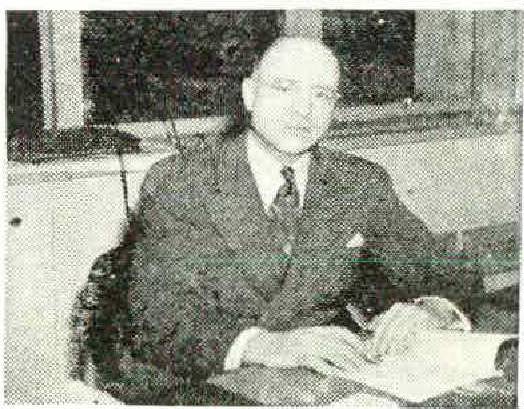
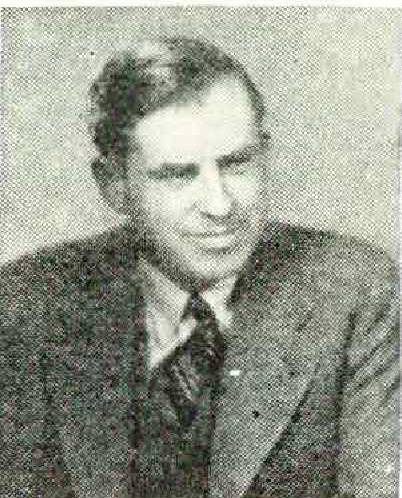
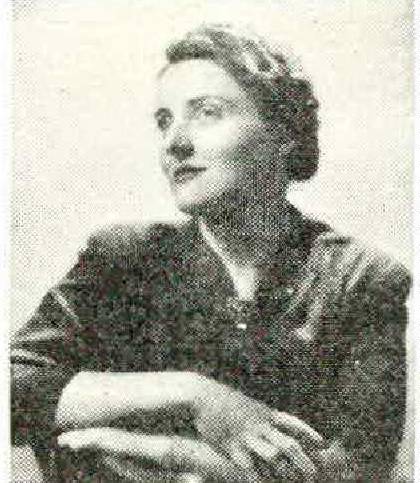
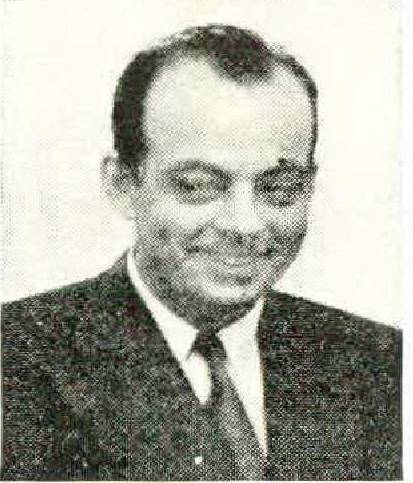
Believing that there are many theatregoers who would like to know something about the author of Abe Lincoln in Illinois and There ShallBe No Night, the Atlantic invited John Gassner (p. 26) to prepare a prose portrait of Robert E. Sherwood. Mr. Gassner is head of the Play Reading Department of the Theatre Guild, a member of the New York Drama Critics Circle, and Chairman of the Theatre Department of the New School for Social Research. In 1939 Mr. Gassner compiled Twenty Best Plays of the Modern American Theatre and in 1940 he published Masters of the Drama.
Vice President Henry A. Wallace (p. 34), who was Secretary of Agriculture during the first two administrations of President Roosevelt and who is today Chairman of the Economic Defense Board that has charge of all post-war planning for the United States, is particularly well qualified to discuss the part the farmer is playing in our national defense and the reservoir of food we are building up against the day of liberation. In his farsighted and statesmanlike paper, Mr. Wallace identifies the foundations of peace.
In his dialogue, George de Santillana (p. 42) is speaking to an American student, as in fact he has Spoken to many students, last year at Harvard and this year at M. I. T., where he is an instructor in the History of Science and Philosophy.
In this issue two short-story writers, both young and both Southerners, make their first Atlantic appearance. One of them is Robert Gibbons (p. 47), of Alabama, a protégé of Hudson Strode’s, and a married man who does his writing in the time he can spare from a full-time job.
From A Convoy Gunner (p. 54), an Englishman who shall be nameless, we are fortunate to receive a first-hand account of what it feels like to cross the perilous bridge to England when each new dawn shows that the convoy has drawn closer and smaller.
Not since Lord Bryce’s American Commonwealth has there been a scrutiny of our American way of life comparable to that which Raoul de Roussy de Sales (p. 60) has compressed within his forthcoming volume, The Making of Tomorrow. For this issue we have drawn a third installment from that volume, and a fourth, on America’s Future, will appear in February.
A close friend of H. L. Mencken and George Jean Nathan, and a Philadelphian with a delicious sense of humor, Philip Goodman (p. 69) began his career as an advertising man, gravitated to playwriting, and ended by being the producer of Broadway hits. Toward the end of his life he began the compilation of his memoirs, which are to be published this spring under the title Franklin Street.
From time to time Judge Robert P. Eckert, Jr., of Freeport, Illinois, receives by postcard brief penciled messages from his English friend, Second Lieutenant John Buxton (p. 74), a poet twenty-eight years of age who has been in ten different prison camps since his capture in Norway in the spring of 1940. With other prisoners he is restricted to a one-page letter and three postcards a month, but his captors are more generous in the allowance of his poetry which is sent to his wife and his American friend.
Men who love the sea, women who pine for adventure, will be rewarded this year by a book which is as vivid as it is permanent — Admiral of the Ocean Sea, The Voyages of Christopher Columbus, by Samuel Eliot Morison (p. 75). Here, the Atlantic can say with confidence, is the story of Columbus as it has never been told before — of his daring expeditions to the New World and of what the New World did to revivify the Old, a narrative which has waited four hundred years to be written.
We asked Robert Richards (p. 85) for a thumbnail sketch of himself, and here is what he wrote: ’I was twentysix last October, born in Louisville, Kentucky, attended high school and Memphis State College at Memphis. Wrote my first story at fourteen — sent it off and did not even get a rejection slip in return. Started working for the Press-Scimitar part time while a sophomore in college; spent a year on city desk reporting, two years as sports writer, three years on copy desk editing copy. Recently the editor decided I must get out and view the seamy side of life. He forthwith put me on the courts, whereupon I have covered the trial of two accused murderers and the divorce case of a woman who accused her husband of leaving her for seventy-three hens.’
Liverpool was the birthplace of Margaret McGovern (p. 91), who came to this country before she was old enough to be recognized as a poet. She now earns her bread at Wyman House, in Cambridge, Massachusetts.
Nicolas Nabokov (p. 92) was born in St. Petersburg in 1903, studied music in Russia and from 1920-1923 in Stuttgart and Berlin. For ten years thereafter he lived and composed in France. His first, ballet-oratorio, ‘Ode,’ was produced by Diaghilev’s Ballet Russe in Paris and London in 1928. In 1933 Mr. Nabokov first visited the United States, where his ballet ‘Union Pacific,’ based on a story by Archibald MacLeish, was an immediate success. His symphonic suites and his two symphonies have been played on many occasions by our leading orchestras.
John Mason Brown (p. 100), dramatic critic of the New York WorldTelegram, is now adding the finishing touches to his autobiography as a lecturer in America — a book whose good humor will be very refreshing in this year of anxiety. Look for it under the title Accustomed As I Am.
Hubertus, Prince zu Loewenstein (p. 104), of Bavaria, has known what it is to be a pauper, to wear newspapers around his feet, and to be a man without a country. A leader of the Catholic Youth Movement in Germany, he was banished when Hitler came to power. Now in the United States he carries on his fight for the liberation of Catholics abroad.
Editor of the University of Minnesota Press, Helen Clapesattle (p. 115) has completed a biography for which Americans have been wanting these, past twenty years. In it she tells the story of the three Mayos, the Old Doctor who was a pioneer in surgery
and his two famous sons, Dr. Will and Dr. Charlie, who founded on the Minnesota frontier the most famous medical centre in this country. From this big book the Atlantic has been fortunate to draw four invigorating installments, Americana as authentic as any that have appeared in the magazine this year.