The Contributors' Column
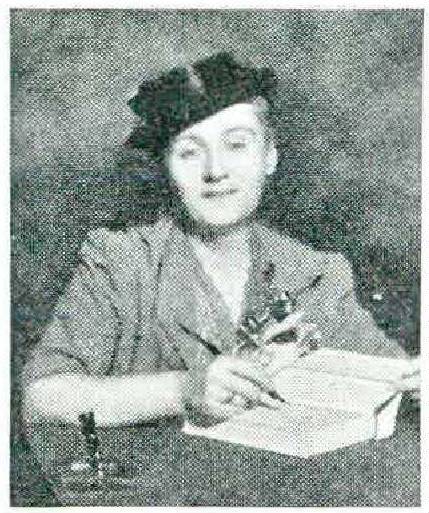
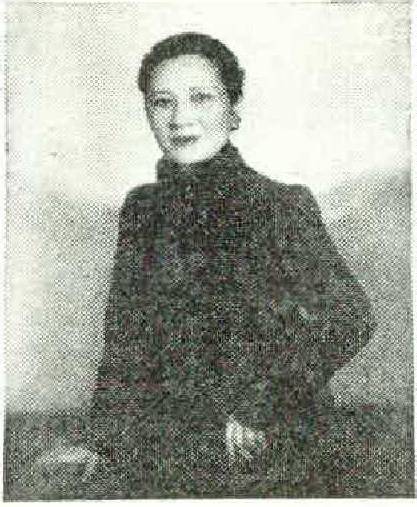
THIS is our first spring in the war, and we shall need every ounce of the fresh energy which comes with the green. Rumors are ominous — ‘The German bread ration is stricter than it was in 1918’; ‘If Hitler fails to take Baku, his machine power will be exhausted within eight months’; but no less ominous are the threats to our own life lines. In the midst of such tension, it fortifies us to hear from China, a country which for five years has withstood the most ruthless force in the Far East, a people whose patient courage and whose confidence in the future are indestructible. ‘When the struggle is over,’we say to ourselves, ‘China’s word will prevail in the Far East.’ And with this thought in mind, the Editor wrote to Madame Chiang Kai-shek (p. 533) last September, asking her to define the future of China.
Her article, ‘China Emergent,’ was completed after the historic meeting between Gandhi and Chiang Kai-shek. Then, the air mail being uncertain, it was sent by radio from Chungking to San Francisco and wired to Boston. From the Headquarters of the Generalissimo, this fifty-one page telegram came through in less than nine hours. A new declaration of independence for China, it speaks with a determination and a hopefulness which every American must respect.
If China holds the key to the future, Russia holds our hopes for today. Throughout the winter her rallying spirit has raised the hope that history is repeating itself. The answer is not yet. But as wo await the test, it is stirring to read Tolstoy’s prophetic novel, War and Peace. With unerring timing, Simon and Schuster have republished the book. This introduction by Clifton Fadiman (p. 538) sharpens our perception of the sources of Russian morale.
Meantime on our domestic front we have troubles of our own, not the least of them the Poison Pen which contaminates our thinking and divides our people. William L. Shirer (p. 548), who saw sedition spread through Germany and then through France, tells us to beware.
Serge Koussevitzky (p. 553), for eighteen years conductor of the best orchestra in America (this is Boston speaking!), begins in this issue a series of short essays interpretative of his favorite composers. His paper on Debussy will follow in June. Mendelssohn, Moussorgsky, Tchaikovsky, and Sibelius are others to come.
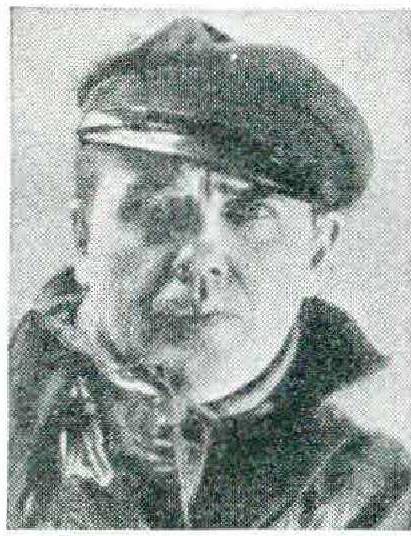
Two new storytellers break into print in this issue, both Californians and both in their twenties. The first of them, Robert Easton (p. 557), loves horses and the range. He completed his Harvard education by working as a cowpuncher on the McCreery Ranch not far from Monterey. Last January he quit his job to enlist in the Field Artillery and is now training at Camp Roberts, California. The Atlantic has bought his first three manuscripts and has asked for more. Now watch him ride!
Few of our armchair strategists appreciate the magnificent job which the War Department has carried out since 1939. Few of us appreciate the size and swiftness of the Army which Generals Hershey, McNair, and Marshall have selected, drilled, and staffed. The record as described by T. H. Thomas (p. 563) of Cambridge, a staff officer at Chaumonf, 1917-1918, is one to be proud of.
Periodically the Atlantic selects the work of young poets for special attention. Of the four in this group, two make their first bows. Winfield Townley Scott (p. 570) edits the
provocative column, ‘New Verse,’ in the Providence Journal, and for the poems in his volume, Wind the Clock, he received the Shelley Memorial Award in 1940. Miss Jeremy Ingalls (p. 571), who teaches as well as writes good English, had her first volume, The Metaphysical Sword, chosen for the Yale Series of Younger Poets in 1941. John Buxton (p. 572), the young English prisoner of war in Germany, has appeared before in the Atlantic. This time we have selected one of his pre-war lyrics and a sonnet written in captivity. May Sarton (p. 573) is now shaping for a book to come the poems and impressions gathered in the course of a pilgrimage which took her through most of the forty-eight states.
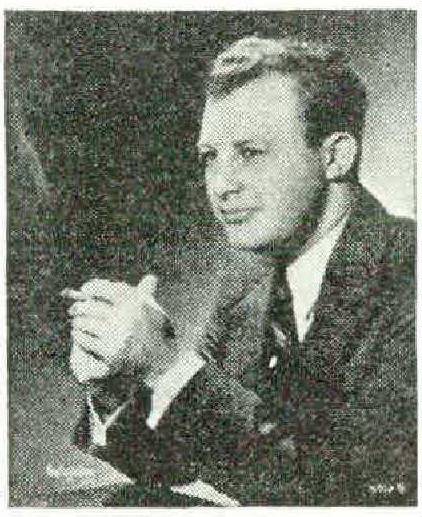
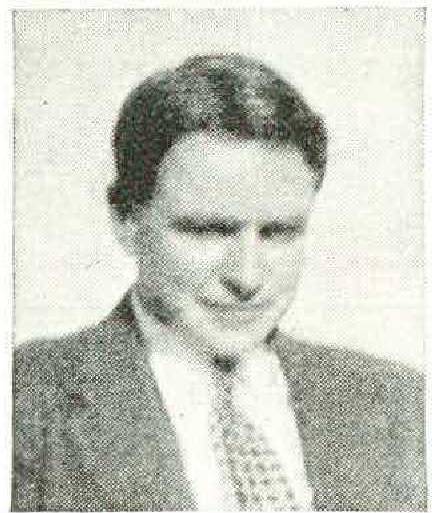
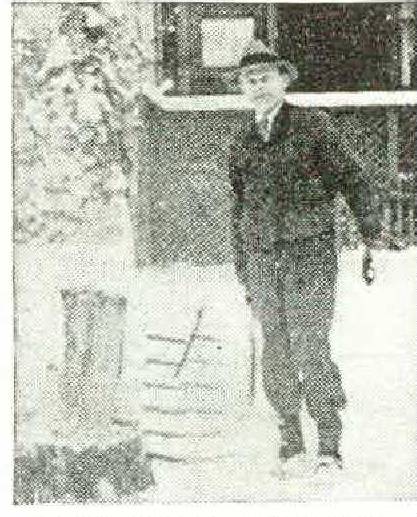
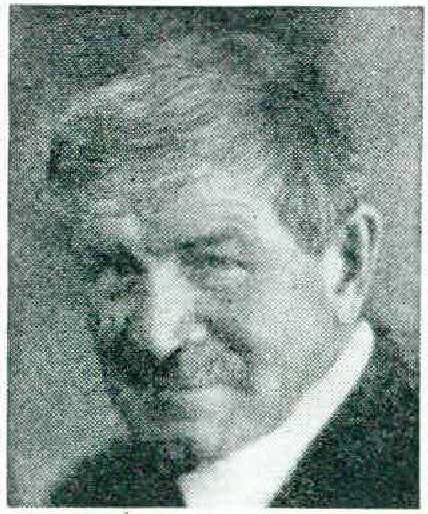
To survive in a war economy, our private schools must reduce their budgets, enlarge their curricula, play a larger part in community affairs, and still remain within reach of the hard-taxed parent. Richard M. Gummere (p. 574), Chairman of Admissions at Harvard College, gives us an overall survey of the problem, and Claude M. Fuess (p. 579), one of the most vigorous headmasters in America, tells us exactly what Phillips Academy, Andover, intends to do in the Emergency.
‘I remember reading, in an early number of the Atlantic under your editorship, that one thing you hoped to do was to coax the shy essayist to peep out, occasionally, from his modest, or immodest, burrow. Well, I herewith make three furtive peeps, from various outlets to my own particular burrow.’ So begins a letter from Tahiti, written by James Norman Hall (p. 583) and sent by the first boat in three months to touch at that far island. Needless to say, Mr. Hall’s peeps were very welcome.
A biographer with a long and friendly identification with New England, M. A. DeWolfe Howe (p. 588) gives us a prose portrait of the most fastidious printer in our time, Daniel Berkeley Updike.
In our rush to bring order and recruits into the Civilian Defense, we have almost completely overlooked the farmers upstate who, as Amos White (p. 597) reminds us, have an urgent need for volunteers and an immense amount of work to be done.
Richard Eberhart (p. 603), the fifth of the young poets to appear in this issue, is teaching English at the Cambridge School at Kendall Green in Massachusetts.
Austin Strong (p. 604), now a pillar of the Century, was born in San Francisco but spent most of his boyhood in the South Seas. He lived with his parents at Vailima, Samoa, his grandmother being Mrs. Robert Louis Stevenson and his mother Isobel Field, the favorite amanuensis of R.L.S. The blood of his New England ancestry stirred in him when he first saw the island of Nantucket, and he at once became friends with the old whalemen who had all been to his home islands in the Pacific.
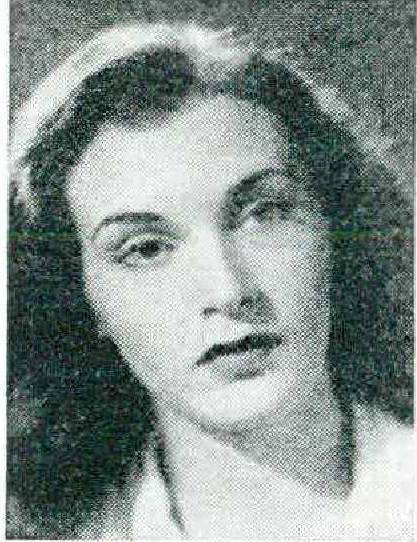
From Hollywood, California, came the manuscript of Nancy BickelFrent (p. 608), and on closer inspection the author proved to be of very real promise and pulchritude. Ohio born, in her early twenties, and the wife of a young Viennese actor, she admits to being a pupil of Thackeray and Dostoevski. ‘Gift of the Gods’ is her first story to be published, but we hope to see more of them, and eventually her novels under the Atlantic imprint.
We do not know in what respects the German fighter planes may have been remodeled in this past year. But William L. White (p. 620), who first won his spurs as an American correspondent in Finland, has received permission to tell us of four new models now going into production for our own Air Force. This wall give no aid or comfort to the enemy.
The Editor is able to give his personal assurance that Stephen Leacock (p. 627) is hale and in good humor. Who remembers the comic impact of Mr. Leacock’s Moonbeams from the Larger Lunacy? His Canadian blend of plausibility and foolishness is balm for the mind these days.
Preëminent among American Quakers is Rufus M. Jones (p. 634), and his testimony of direct mystical experience is a message to be taken seriously in this anxious world.
With this number we conclude Nina Fedorova’s (p. 647) novel, The Children — a novel which owes its inception in part to China, where the scenes are laid; to Eugene, Oregon, where in
friendly sanctuary the book was written; and to Mother Russia from whose philosophy and compassion the author has drawn so liberally. The story traverses the border line between tears and laughter, to tell the tale of young men and women without a country in the Far East today.