Mexican Bus Ride
By EDWARD P. MORGAN
A MEXICAN is one of the world’s politest people. But place this gentle creature behind thee wheel of an automobile, and then run for your life — if there is still time.
The trouble is the Mexican carries the bullfighter’s instinct into the driver’s seat; and with twenty million matadors on wheels you, like the bull, can never win. The torero’s technique is to pass in front of the beast us closely as possible and still avoid a collision. If a plunging horn grazes his navel, so much the better; but the nearer danger gets, the more bored must be the matador’s expression.
Translate this tradition to the boulevard and you get a cool disdain for death in the afternoon or at any other time of day or night. The Mexico City taxi driver who can’t peel the paint off his rival’s fender at fifty miles an hour is instantly broken and shipped back to the bush leagues, where he can try to improve his aim with practice on oxcarts and burros.
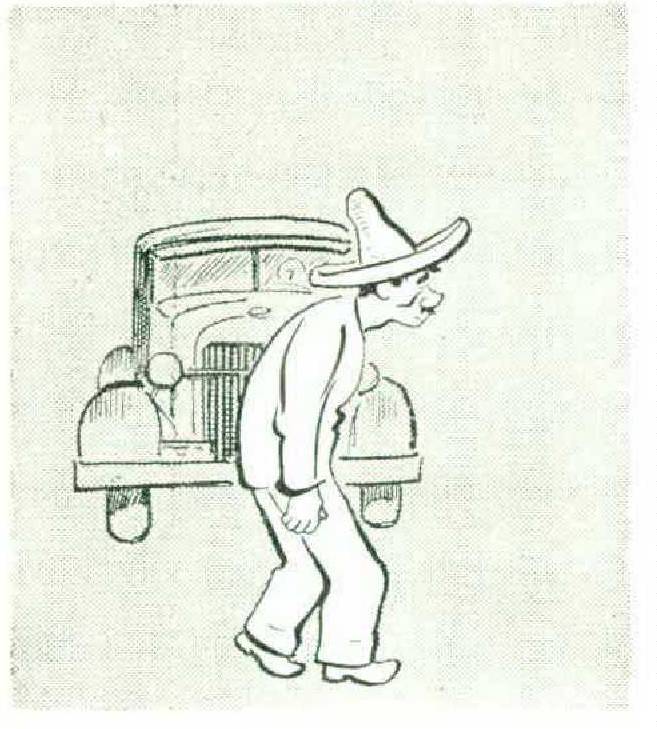
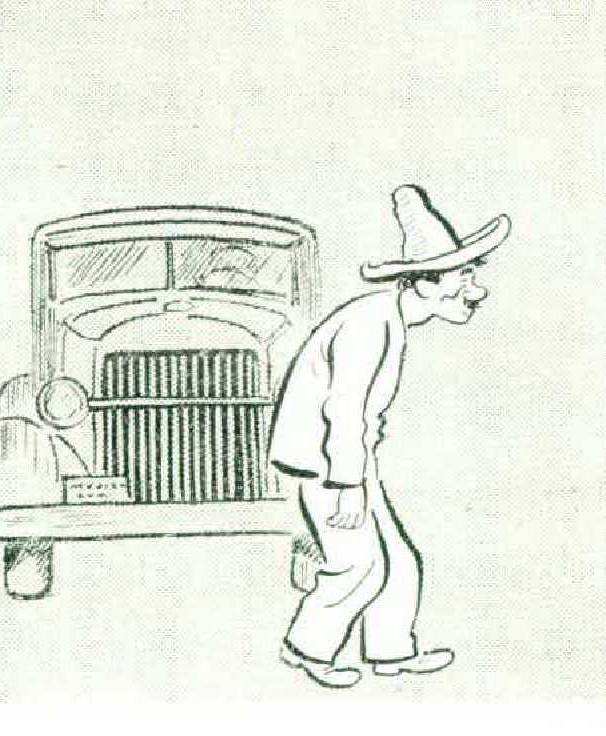
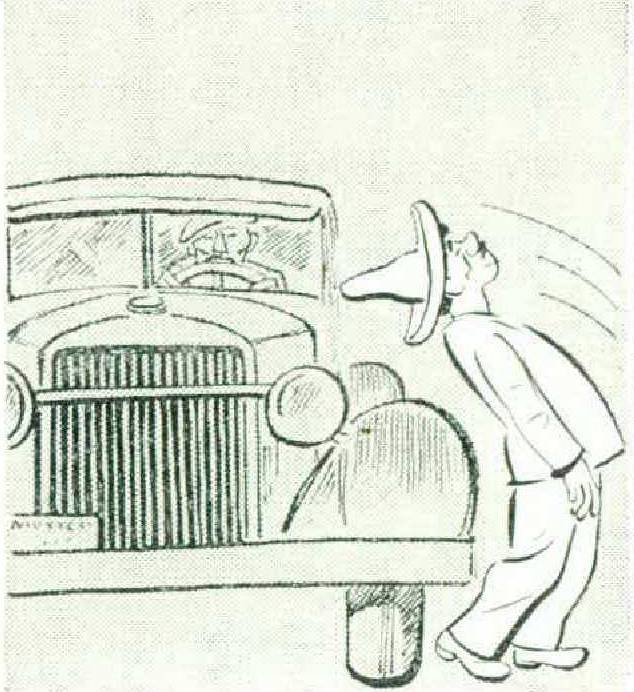
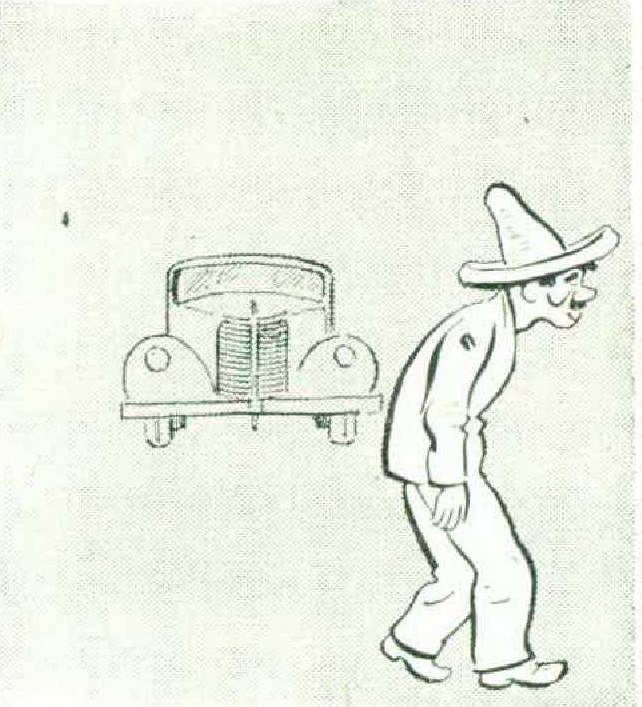
The pedestrian who has had his baptism of fire and steel bumpers is just as daring as any driver in the capital. He plays an unending game of bullfighting with all moving vehicles. It is extremely bad form to cross the street at an intersection, except against a red light, the traditional color of the bull ring. The faster a car bears down on a pedestrian, the slower and more deliberate becomes the latter’s pace. If both contestants are professionals, the man on foot will advance to a given point where he stops dead and yawns just as the vehicle roars by, whipping a little plume of dust from the seat of his trousers. The timing of such encounters is magnificent, but a foreigner rarely has a chance to appreciate it, because almost invariably at the climax he swoons in the rear seat of his taxicab. The protagonists are becoming steadily more skillful: while 241 people were killed in the capital in 1940, only 212 were killed in 1942.
Chief of the United Press Bureau in Mexico City for three years, EDWARD P. MORGAN, a native of Washington and a graduate of Whitman College, is now a London correspondent of the Chicago Daily News.
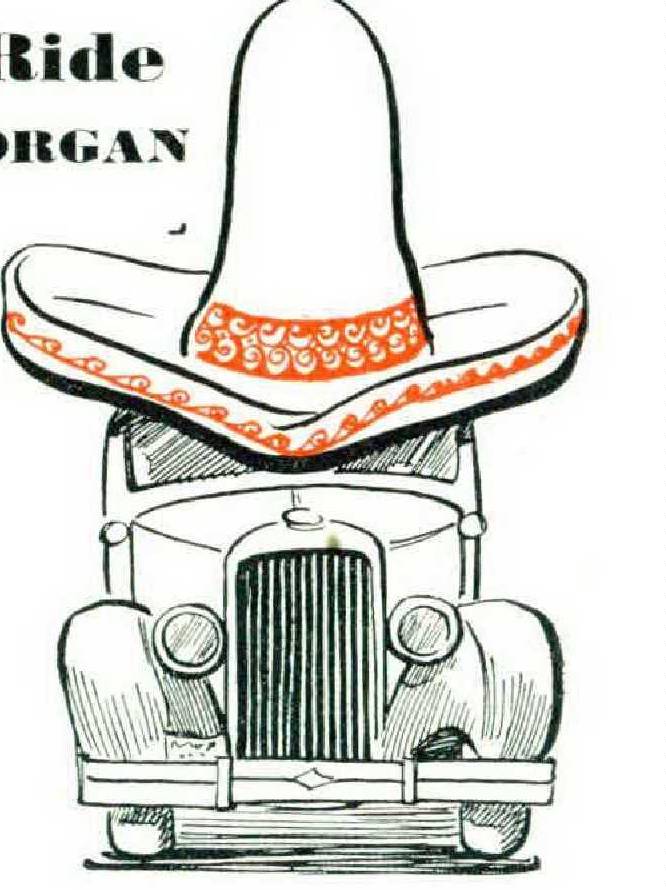
Another pastime, a sort of perpetual Indianapolis Speedway classic, has found wide favor among Mexican bus drivers. It is a common sight to see buses of the same route thundering two or three abreast along the beautiful Paseo de la Reforma in a brisk mile-and-a-furlong race, sailing past bus stops and frantically waving customers. The technical explanation is that the drivers are in a king up time, to avoid being lined for delayed schedules. But one look at the grim but ecstatic face of a pilot in one of the events would convince the observer that here is Ben Hur lashing his horsepower to the limit and rupturing all the repressions of a poky childhood.
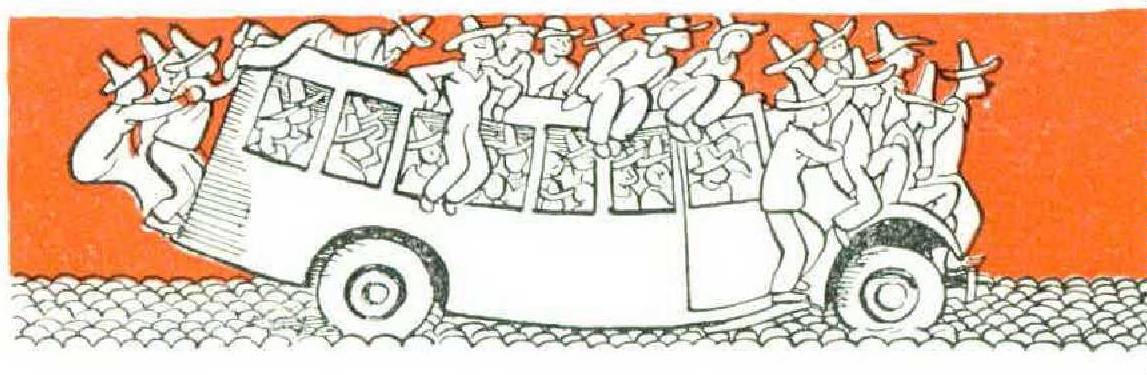
A Mexico City bus ride involves only some of the hardships of travel over the Trans-Siberian Railroad. The gravest problem is getting on. There are 2200 buses in the federal district, — operated by 39 separate lines, — but that is barely one bus for every 1000 persons; and not even the Mexicans can always get 1000 persons on one bus, although they never stop trying. A camién will come careening down Avenida Juarez with people clinging desperately to the sides, rear, and roof like grasshoppers caught on a radiator grille. The conductor, usually a lad of eighteen dressed in overalls and a beret, with a Sam Browne belt around his middle, gamely crawls through, under, and over the throng like a pickpocket, collecting fares and scolding the patient public. Because of the density of the load, he is sometimes out of direct touch with the driver for long intervals. In such blind spots, the conductor signals “all aboard” by thumping the side of the bus twice with his fist, as if he were prodding old Dobbin in the buttocks, or he may vary the procedure by whistling shrilly through his teeth and shouting, “ Vámanos! — Let’s go on.”
The buzzer systems on the camiones are often broken, but that never worries the passenger. When he wants to get off he yells, “Esquina — corner!” squirms to the doorway, and dives off with all the grace of a hobo leaving a fast-rolling freight. The bus only occasionally comes to a full halt at a corner, because this might pitch the straphangers through the windshield and also rob the ascending and descending public of the sport of catching or quitting the conveyance in motion an intricate operation when the passenger has a baby in one arm and a charcoal brazier or a bundle of washing in the other.
During these pauses the conductor, his voice muffled under somebody’s overcoat down the aisle, is orally signaling the driver on the flow of passengers. “Saben, hajan, bajan más,” he shouts. “They come up. They get down. More gel down. Vámanos!”
Transit employees wear their old clothes on duty. Streetcar motormen are partial to battered felt hats. Many wear collarless shirts with the collar button gleaming in front, as if they were called unexpectedly away from the breakfast table to substitute for a sick friend. Bus drivers are inclined to caps and coveralls. This studious spurning of the uniform is supposed to be pregnant with social significance in a land where everything is pregnant with something. But it merely shows good sense. A natty uniform wouldn’t be fit for a rummage sale after a day’s work.