Boys in Men's a Shoes
By
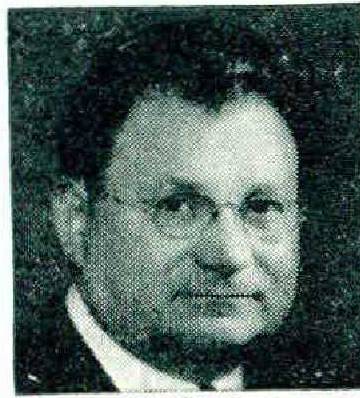
SOCIAL workers and methodologists in the welfare field should give a thoughtful reading to this uncommon book. It contains much that is not to be found in their Manuals; its terminology would not fall into the “approved” category of most agencies; some of its programs for underprivileged boys would seem fanciful or even horrifying to the “objective criteria" type of worker. Yet anyone who has observed welfare work, especially that part undertaken by so-called private agencies, must have wondered at times at the appalling want of those very qualities which Harry Burroughs brings so lavishly into play.
Mr. Burroughs is the founder and the guiding genius of a recreation center for newsboys in downtown Boston. In the summer months, his Foundation maintains a newsboys’ camp in Maine. Both are ambitious in their scope, to say the least, and they have caused considerable headwagging among the more cautions authorities on child welfare. Some argued that the downtown building was too elaborate for its purpose. The camp, it was contended, could not afford a full-sized amusement-park merry-goround, and there was no need of providing horses for the boys to ride.
Instead of watering down his theories to meet such intimations, Mr. Burroughs has continued to ginger them up and to enforce their success. No boy in a city slum, he argues, ever had enough rides, ordinarily, on a merry-goround. Slum boys dream of riding horseback; yet many have never seen a horse other than a peddler ‘s nag. What is so queer, he demands, in gratifying so great and so harmless an aspiration? If they live at home in tumult, why shouldn’t his camp wake them up, of a morning, with soft chimes? It may not be in the Manual, but the boys like it a lot.
“In my own newsboy life of nine years,” Mr. Burroughs writes, “one week end was the extent of my vacation. I spent that at a camp in Gloucester, and the charge was three dollars. In return I received only a change of air and an unforgettable experience: there were not. sufficient counselors to supervise the swimming period, and I almost drowned.”
If Mr. Burroughs’s practice of engaging a Parker House chef and of dazzling his “clients” with international swimming champions seems to go to the other extreme, he will tell you that every shot must count when you are dealing with the adolescent: if you let him grow up without ever encountering the more attractive things, the more outstanding people of a boy’s world, he will never have even a glimpse of what he is missing.
Fortunately for these picturesque experiments, a number of public-spirited men and women have found them worth helping. The case histories which Mr. Burroughs’s book includes suggest that their support has not been fruitless. An excellent foreword by Sheldon Glueck of the Harvard Law School confirms that impression.
A Russian immigrant, who supported himself as a boy by selling papers on the downtown corners, Harry Burroughs divides his time between his foundation ‘s affairs and an active law practice. His opinions on how to deal with boys are not to be taken lightly. Neither are his views as expressed under the heading, “Budgetitis”:—
“The yardstick for judging agency budgets should be not how many dollars are spent per boy, but how much good is done to the boy per dollar; as soon as the agencies know they are judged not by how much they spend but by how much good they do, there will be fewer delinquent and maladjusted boys.’ Macmillan, $3.50.
CHARLES W. MORTON, JR.
CHARLES W. MORTON, JR.