The Micro-Bus of b.A
By RAY JOSEPHS
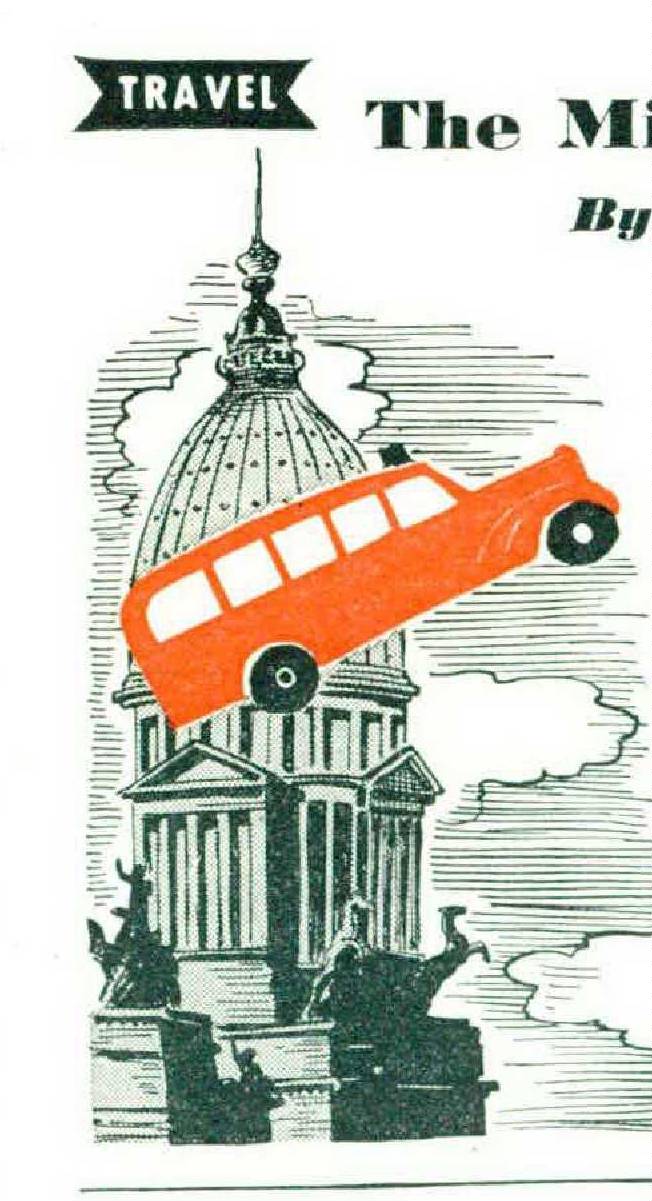
GETTING my first colectivo ride in Buenos Aires was no easy job. I had seen these brightly colored, fifteen-passenger micro-buses that seemed to combine the intimacy of a private car with the thrills of a roller coaster, the speed of a Glenn Campbell racer and the nimble dodging of a bullfighter. They stream round the central Plaza de Mayo, which is their downtown loop, and then race out the tree-lined Avenida de Mayo, past the rows of gayly awninged sidewalk cafes or out the smart, new Diagonal Norte. But I never had the courage or skill to try getting on.
It takes special knowledge and courage. For the colectiveros—a special breed of hombres who make the self-assertive Manhattan hackmen or the independent London cabbies seem like milksops never stop save for women or the blind. Men are expected to set on and off while the micro is in motion. You board the micro by running alongside as it slows down, grasping the handrail at the left of the lone narrow doorway, then bounding on.
When there’s a crowd and a sign indicates space for only one more, jumping aboard becomes as precarious as catching a ring on the merry-go-round, with the added thrill that you might be bounced in the path of another colectivo. Waiting in line for anything or taking a little ticket with a priority number as on the Paris buses has always been scorned in the Latin capital.
But Buenos Aires portehos consider the sporting side of colectivo-riding only one of its inducements. Its chief advantages are the speed and low cost with which — without the need of transfers — you can get. from the center to almost any part of a city whose physical area is greater than sprawling, far-flung Los Angeles itself and whose population is close to 3,500,000. in no other city in the world do people get up earlier or go to bed later, dash home for a two-hour lunch and siesta or go to cafes, eines, restaurants, and clubs more. And since Buenos Aires subways and major bus lines follow only direct main thoroughfares and stop running at 1.00 A.M., the colectivos, which double back, twist and turn, to get to every part of town, attract every type of rider from the wealthy estanciero to the lowly stockyard worker.
No ride costs more than 40 centavos — about ten cents U. S. — and that would take you all the way out to the Tigre, a green-grown Venice where Buenos Aires rows and boats of a week-end. Most rides within the city require only a one-zone, tencentavo fare, which is two and one-half American pennies. A\ith the speed and maneuverability of the colectivos intown trips usually take live to ten minutes. And if you miss, or can’t push your way on one, there’s always another in two or three minutes, since size and economy of operation make it possible to run many small units instead of concentrating on larger ones as in U. S. cities.
Comfort and peace of mind, if you’re the type of rider who worries, are of course sometimes lacking. Colectiveros, rather than regarding their cars as vehicles, often consider them as weapons, particularly if the drivers of rival lines try to cut in. Some nonportenos who haven’t been able to stand the pace have also reported that any driver caught going around a corner on all four wheels is automatically suspended.
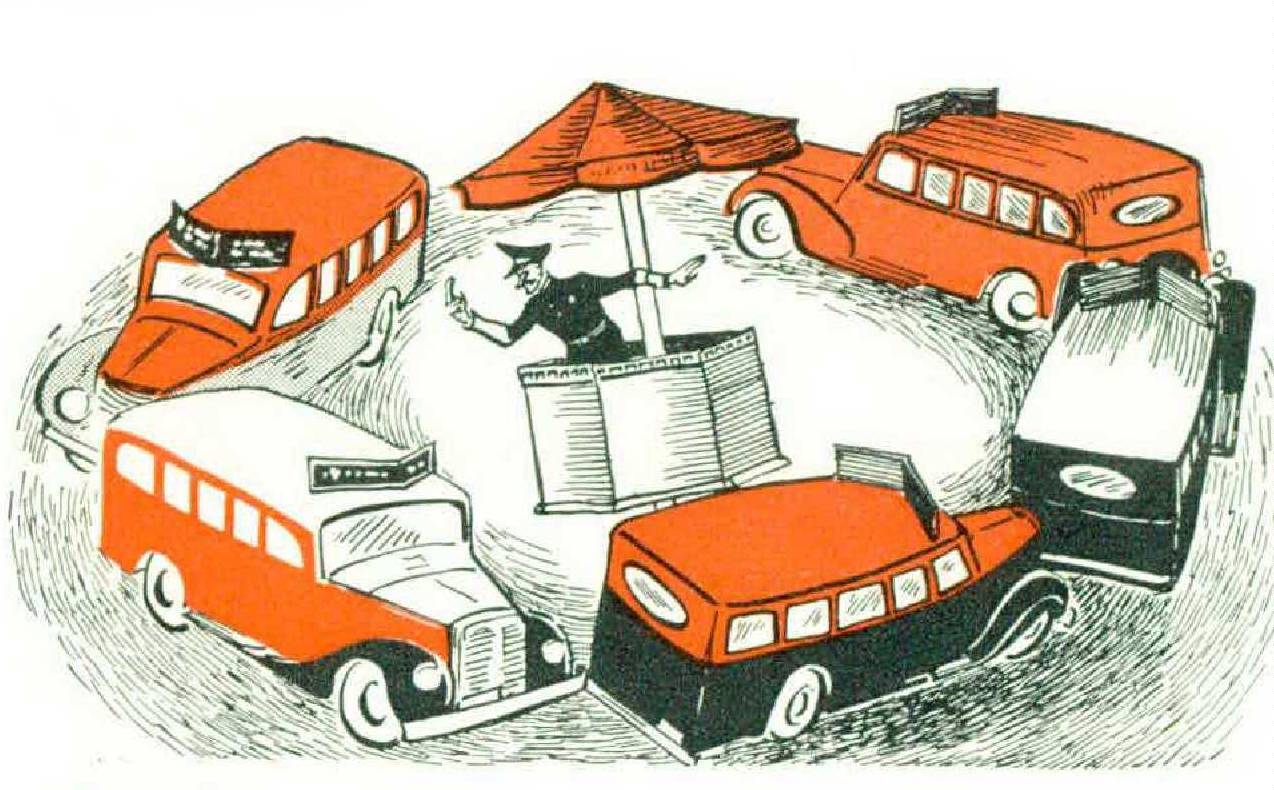
After I learned how to get on and how to shout “Esquina!” (corner) a block before I was to jump off, and discovered that no colectivo ever returned on the street down which it started, but followed a circuitous route home, my favorite rides were Route 42, which went down through the flower-gardened docks to the Costanera along the wide Rio de la Flat a, or Route 59, which whisked out. the Diagonal, past the smart shops of C’alie Santa Fe and the Palermo Race Track out to suburban Olivos in just about twenty-two minutes. The vehicle for Route 59, although like all other colectivos a standardsize job built on an American Chevrolet chassis, offered a premium ride with double fare and a seat guaranteed.
In order to get to know Buenos Aires in all its cosmopolitan complexity, I once planned to ride every one of the 330 routes. Each one is run by an association of fiercely individual owner-drivers who jointly determine their own schedules and routes and design their own elaborately decorative schemes and safety rules with only the slightest control from the federal district of Buenos Aires. The mult imillion Municipal Transport Corporation has taken over the British trolleys, the German and Spanish subways, and the French buses, but has never been able to make much headway against the colectiveros.
My plan failed when I was bogged down by other business. But. the colectivos were always the prime source when a cable on public reaction was demanded by editors. Once aboard, you didn’t even have to ask questions. The colectivero, beholden to no one but himself, would repeat the latest political story every few7 blocks, volunteer a commentary on international events, and report the sentiment of riders on the previous runs. If the authorities were up lo some new scheme affecting the little man, the colectivero knew it and had the details. And if anything was stirring at the Foreign Ministry, he could tell by the movement of the white-license-plated diplomatic cars.
But in one respect the colectiveros, whose voice was powerful enough to keep Buenos Aires from getting traffic lights, who defied the colonels’ ban on political demonstrations byr driving pro-democratic marchers free, were the same as all other drivers I’ve met. Hand them a big bill to change and the same stream of choice language would be forthcoming, only this time with a Buenos Aires accent.