Moon Cheese
ByHOWARD HAYES
MAYBE you’re too young, but do you remember the story of moon cheese? Anyone who lived through those great days can never forget it. Remember the universal thrill when the first of the rocket travelers (I mean those who didn’t get killed) brought it back? Their pictures in their pressurized suits, plus the cheese in full color, were everywhere. Then the movie actresses and bathing beauties were shown nibbling it, the nutrition experts issued lengthy statements, and finally the President served the cheese in the White House at a very grand affair.
What a wild scramble there was to get hold of the first samples of that wonderful cheese! An amateur adventurer could pay for his lunar voyaging by bringing it back. I remember when a good solid block of pure “ moon,” say eight inches all three ways, could command, in New York, the price of the round trip. A tiny dab of it at any cocktail bar was good for ten dollars, and plenty of takers.
But as more of the cheese began to arrive, it was soon obvious that the whole bulk of the moon was not made of green cheese — even a low grade of green cheese. In fact the best cheese was hardly green at all, but was heavily streaked with pink and even purple. Most of the moon was made of a grayish stuff which was not of much consequence to anyone.
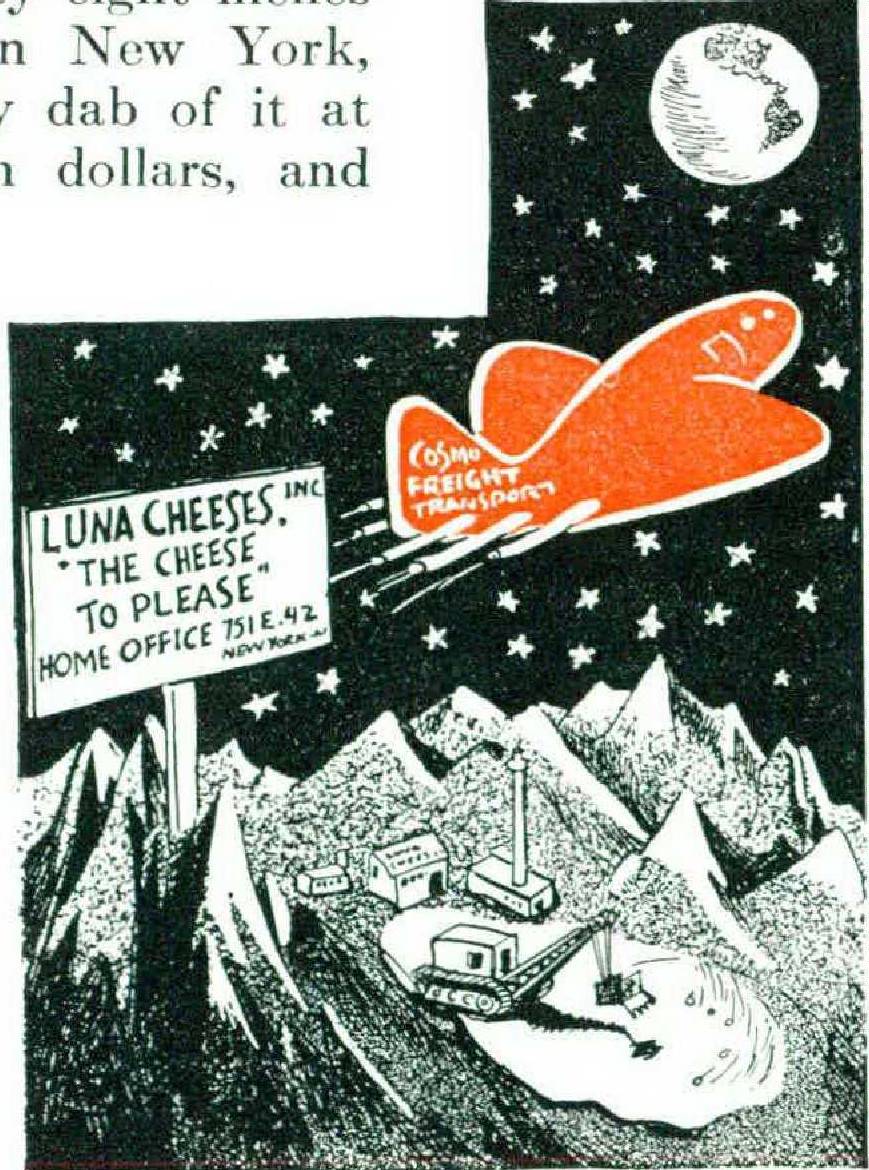
But there was really no disappointment. There was still plenty of good quality cheese if you were willing to go out and hunt for the best outcroppings. Of course it was pretty heavy work for the early ones, what with being dressed from head to foot in that clumsy oxygen suit. Yet enthusiasm ran high, the market seemed unlimited, and the future looked bright.
Then stock piles began to grow, speculation slowed down, adulteration reared its ugly head, and the moon cheese market was in danger of becoming stabilized. Besides, practically everybody by this time had tasted moon cheese, or said he had. Sophisticated people stopped scrambling to get it. Movie actresses and bathing beauties turned to other things. As a subject of conversation it had been pretty thoroughly worked over. Even the jokes about it by the radio comedians were showing a bit of mold.
About this time the big dairy corporations took hold. Whereas, before, the cheese had been brought in only by sportsmen and other adventurers, who could always maintain a certain glamour about themselves, now the dairy outfits sent professional cheese-gatherers and even plain laborers to the moon. After that the discovery of a new deposit of moon cheese never ruffled the market at all and got no further than the business section of the papers.
As efficiency was improved and heavy mining equipment was brought in, production was stepped up and costs were reduced. The price of moon cheese came down to a point where school children could have a bit of it in their free lunches — in dilute, “processed” form of course. Still, the sharp, salty taste was there, and the small government subsidy involved was considered well worth the democratic morale-building that resulted. Every school child could now have his bit of moon cheese, just as the rich had had it at first.
In the end, however, it got so that moon cheese was pretty hard to sell. Regardless of the “out of this world” vitamins that the advertising engineers found in it, moon cheese became just another product to be seen on the shelves of your food store neatly packed in a little waxed carton. Any housewife could take it or leave it.
Just the other day I was in a restaurant with a friend of mine when the waiter came up and asked, “Will you have some moon cheese, sir? We’ve just received a private shipment. It’s the very best. You should see its color—”
But my friend cut him short. “No, thanks,”he said. “Just a piece of apple pie and coffee.”