How to Stock a Pond
Author of the best-seller The Big Sky, A. B. GUTHRIE, JR., of Lexington, Kentucky, divides his time between writing and teaching.
OUTDOORS
by A. B. GUTHRIE, JR.
WE HAD a canopied truck and, in the bed of it, three hundred pounds of ice, ten milk cans with screened tops, two tarpaulins, a double-cylindered tire pump, and a thermometer.
The trout-hatchery man had looked over our outfit approvingly. “Watch the temperature,”he said. “If it goes up, cover the ice and the cans with the tarps. And pump some air into them cans once in a while.”
“O.K.”
“You’ll be all right. You’ll have some loss, but not too much.”
We could stand some. We had five thousand rainbow finger lings in the cans.
I gave the man my check for a hundred and fifty dollars.
My friend George had come along for company - and also in the reasonable expectation of fishing for these fish some day. He asked, “ Are you sure you haven’t got too many to the can?”
“Sure,”the man said. “You just work the pump once in a while, and they’ll get plenty of oxygen.”
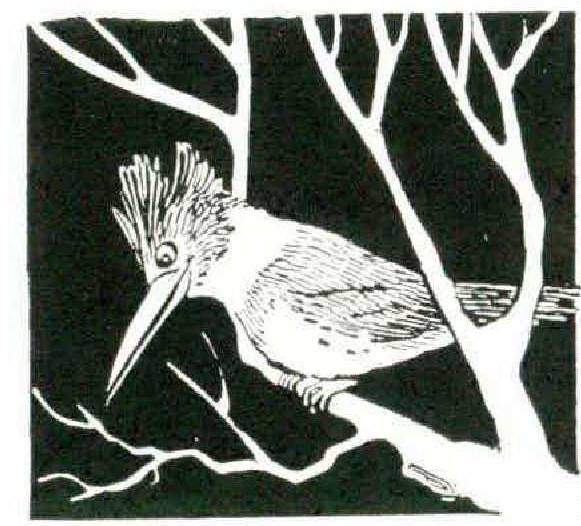
A dead kingfisher lay in the grass by the truck. The man picked it up by one toe. “Once you get your fish planted, these are the babies you’ll have to look out for.”
“Oh.”
“We shoot ’em all the time. They’re death on trout.”
“That’s one thing I don’t have to worry about,” I said. “I haven’t seen a kingfisher on the place all summer.”
I ground the truck into low and we bumped to the highway. It was eight o’clock of a Montana evening. A three-quarter moon showed silver over the mountains to the east. In the west the sun had left one dying streamer. It would be dark in half an hour. We had 283 miles to go and the Continental Divide to cross — 283.6 miles. We knew. We had just driven it.
We headed east, for the two lakes that were mine now that, in partnership with my sister-in-law, I owned a little summer ranch near Choteau on the eastern slope of the Rockies. Elsewhere people would call them ponds, but in Montana any body of water that affords landing facilities for a mallard is a lake.
There had been fish, good ones, in the lakes once, until the combination of a dry summer and a hard winter killed them. We wanted fish there again. But we didn’t want to get them free from the state hatchery, for the state insists that the public has a right to cast for the fish it has paid to rear. We would buy the fish and post our place,
George and I made our first stop at Missoula. It was dark by then, and George took the flashlight from the jockey box and went around to look at the fish. “Lively as crickets,”he said as I stepped back.
But they weren’t. They just weren t, except for a comparative few that darted around near the surface. These were the ones he had seen. The rest, saving some obviously dead ones that floated belly up, lay in still, close bunches deep in the cans. When we stirred the water, the sad little masses of them rolled to the wash of it.
“They can’t be dead,” George said. “ The man said to stop every fifty miles, and this isn’t more’n forty. He said they might not need any air this soon.”
“That’s what he said.”I checked the temperature. It was 52, or practically perfect.
A dead fish comes to the top. These can’t be dead.'’
“I don’t know.”
“They can’t be. Let’s give ’em some air. They might come out of it.”
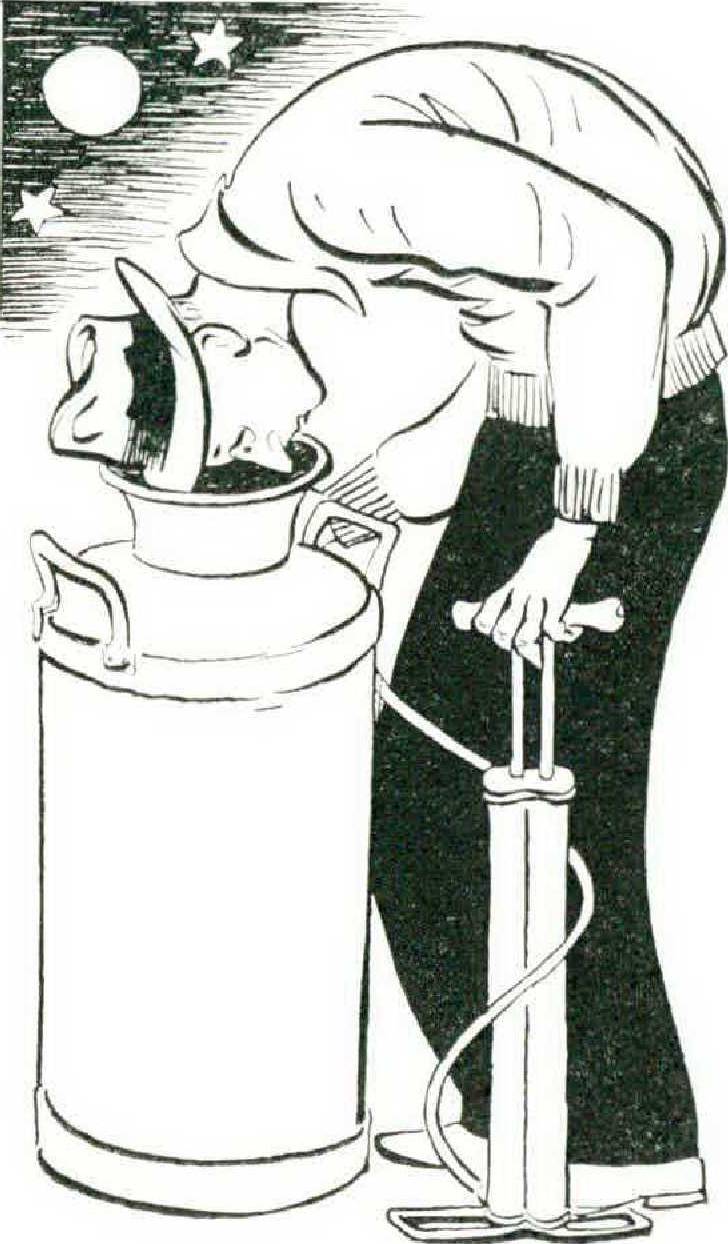
We got out the tire pump and pumped the cans, fifteen hard strokes to the can. It was an awkward thing, for the canopy was low and we had to crawl in over the tail gate and work the pump hunched over.
Then, numbed and silent, we hurried to a lunch counter and ate an overdue supper and hurried out again. The fish didn’t look any better. We pumped some more and took their temperature. It was still 52. It was also ten o’clock.
We had been on the road since 6 A.M. and we were tired. We had ridden the sun down and the moon up and would ride the moon down and the sun up before we got to the lakes. The moon shone yellow, flattened toward the under side, as we rode through Hellgate Canyon and started up Clark Fork, up toward Drummond and Garrison and McDonald Pass over the Divide.
The roadsides swam by in the glare of the headlights, the borrow pits on either side, grown up in dusty clover, and beyond them the willows and cottonwoods still in the still air. The dark arches of the mountains raised around us. We saw a deer’s face just off the road, fleeting and flat like a face caught with a flash bulb.
We pumped the cans at Drummond and Garrison and two lonely points between. One was high on a shoulder, and we turned the engine off and heard unseen water flowing below us, and above-so high it didn’t touch us — the wind moving in the trees. It was too nice a night to be convoying sick fish or dead ones. Fifteen more pushes to the can. Temperature 53. George was humming a song. He sounded sleepy and sad.
“Maybe it’s no use,” I said, “but we’ll go by instructions. No one’s going to say we would have been all right if we had just kept on pumping.”
“A dead fish comes to the top.”
“Anyhow, we can keep alive the ones that are alive.”
“Maybe there’s more of them than you think.”
“Maybe.”
“ Maybe quite a few more. The flashlight’s pretty dim.” George began to hum again.
But he was done with humming by the time we topped the hump and rolled down to Helena and leveled off for Wolf Creek. The moon had ridden its arc and the night was dead, and our bones ached and our minds had begun to drift with sleep, Fifteen strokes to the can. A hundred and fifty to the set. Temperature a steady 52. Back into the truck again. There was no traffic at this lost hour, no sound but the motor, nothing alive but the engine and the headlights and the slow road winding under us and the flat images of two deer and the black, rolly bulk of a porcupine. We missed him by a quill. Neither of us said anything.
We were still silent as we pulled in to Augusta, 53 miles from destination. The eastern sky was reddening, and it was 4.30 o clock, and the temperature of the cans had dipped to 51. One, two, three. . . . The fish, caught by the dim eye of the flashlight, boiled up to the blow of air and settled again in their sad masses.
The town of Choteau hadn’t awakened. We were grateful for that. Me sneaked through. Just 23 miles to go now, but we stopped again anyhow. We didn’t need the flash. We could see. The fish were dead all right, or most of them were. We took the temperature and we pumped just the same, pumped without speaking, pumped out of weary and perverse habit, and climbed back in the truck.
We counted the live ones when we got to the lakes. We dipped water out of the cans and dipped lake water in, so as to equalize the temperatures and not shock to death our gallant little band of survivors, and then we counted them and planted them tenderly, stumbling back and forth, sometimes giggling because we stumbled, or because things had gone sour, or for no reason at all.
There were 465 live ones. We slid the dead ones in an old posthole and covered them with stones. In the cheerful early-morning sun the western mountains glistened.
We lagged around to the vacant ranch house and put a pot of coffee on to boil.
“Anyhow,” George said, looking at me through eyes drawn small, “you got a start on your fish.”
I said, “Yeah, but they cost me better than thirty cents apiece.” Still, he was right, and I said “Yeah” again, and looked out the window and thought I saw three birds on a dead limb over the spot where we had freed the fingerlings.
George has better eyes than I. I said, “Look,”and while he looked one of the birds dropped from the limb and splashed the water.
He didn’t need to tell me, “Kingfishers, sure as hell!”