The Peripatetic Reviewer
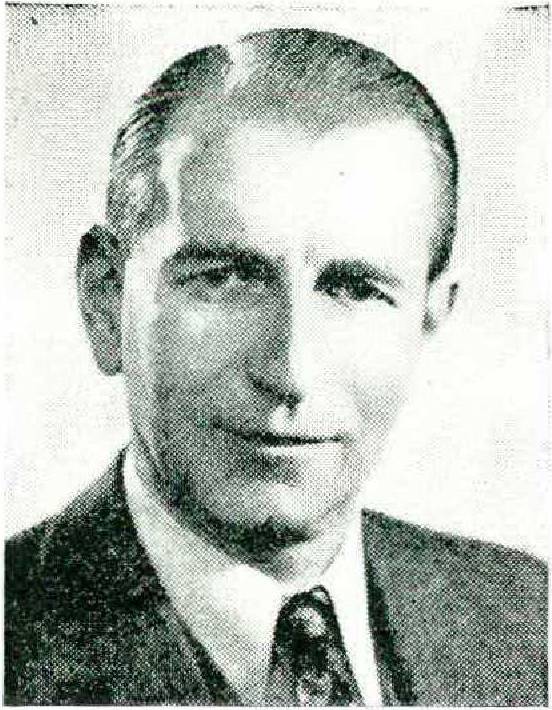
IN the throes of his novel, The Rescue, Joseph Conrad pushed his manuscript to one side and wrote to his friend, critic, and confessor Edward Garnett:—
“Since I sent you that part 1st I have written one page. Just one page. I went about thinking and forgetting — sitting down before the blank page to find that I could not put one sentence together. To be able to think and unable to express is a fine torture. I am undergoing it—without patience. I don’t see the end of it. It’s very ridiculous and very awful. Now I’ve got all my people together I don’t know what to do with them. The progressive episodes of the story will not emerge from the chaos of my sensations. I feel nothing clearly. And I am frightened when I remember that I have to drag it all out of myself.”That letter was written in 1896, yet the novel in its completed form did not appear until 1920, an indication of how long it took Conrad to be even partially satisfied with the final draft.
When he was in full st ride Conrad averaged about three hundred words a day, the equivalent of one page of typewriting, and there were many days when he never reached that figure. Anthony Trollope, who did not have to take the hurdles of an acquired language, went at the steady jog trot of a thousand words an hour, writing with his watch face open before him. Modern novelists who compose on a typewriter can hit as much as five to eight thousand words at a stretch, though at that high figure they have a tendency to “spread" and almost certainly will have to tighten up in their second draft. Speed and polish are both determining factors of a writer’s quality. But there are others.
“How vain it is,”Henry Thoreau wrote in his Journal, “to sit down to write when you have not stood up to live! . . . How much forbearance, aye, sacrifice and loss goes to every accomplishment! I am thinking by what long discipline and at what cost a man learns to speak simply at last.” Kenneth Roberts quotes those words on the last page of his new book, I Wanted to Write (Doubleday, $3.50): they speak for his own experience as a writer, and he wants them to stand as a guidepost for vague or impatient beginners. I Wanted to Write is the honest, loquacious, sometimes tedious, highly personalized chronicle of how Mr. Roberts came into the full possession of his powers. He tells of his enterprising beginning as a cub reporter, of his prodigious output as a magazine writer, and of the research and discipline which finally yielded his historical novels.
Historical fiction feeds an enormous appetite in this country, and Mr. Roberts has qualified as one of the top flight in this field along with the late James Boyd, Walter D. Edmonds, and Hervey Allen, to name but three. To his fiction he brought a healthy streak of New England skepticism; he would take no legend for granted; he applied his own acid test to the history we have inherited; he had the temerity to make a hero of Benedict Arnold (before disappointment and corruption ruined him), and in Oliver Wiswell, an even bigger book, to take up the cudgels for those Boston Loyalists who suffered as severely from the stupidity of the British leaders as they did from the persecution of their American neighbors. History to Mr. Roberts is a balance which needs constantly to be redressed, and he holds there must be something a little screwy about anyone who disagrees with him or his interpretation.
Kenneth Roberts made the editorial board of the Cornell Widow as a freshman in 1905. He wrote verse, light prose, football songs, and — with fire in his eye—editorials that flayed the policy of the University. Writing in the Cornell Alumni News, Romeyn Berry recalls young Roberts with his “lust to flay hypocrisy, double-dealing, stupidity, sordid self-interest, laziness, and everybody else who disagrees with him.” The description is apt and abiding. Mr. Roberts still flays at the slightest provocation. He gets hot in print, and that makes for good reading.
As a cub reporter he won the backing of Edwin A. Grozier, the owner of the Boston Post. The Sunday edition gave scope for his more humorous stories of Mr. Page’s lost pants, the P. T. Barnum freaks, and the windy theories of a phony professor, “Morton Kilgallen, F.R.S. of Balliol College.”Mr. Roberts quotes these stories in exfenso, forgetting that warmed-over newspaper stories are no more tasty than hash. But the stuff when fresh had juice. Its publication brought him a five-thousand-dollar offer to write the gags for the Katzenjammer Kids — which he turned down — and the prompting to send light verses and prose to the old Life, a target which he hit with increasing success.
Friends and mentors
I am impressed by Mr. Roberts’s buoyant capacity for work in these green years. He could turn it off at an astonishing rate, and it was publishable, it found a market. I am also impressed by the mentors who helped him on his way. During the First World War he became a friend of Rupert Hughes, under whom he served in Military Intelligence. The manuscripts which he typed on the transport returning him from our Expeditionary Force in Siberia made an instant ten-strike with George Horace Lorimer, editor of the Saturday Evening Post, whose staff correspondent he became for the next seven years. And when he made the shift to fiction it was Booth Tarkington, his neighbor in Kennebunkport, who counseled him, and the scenes which recall their friendship are charged with affection.
Finally there is Mrs. Roberts, who kept the accounts, who never let him forget the Travel Fund (which was to pay for their free-lancing abroad), who did the typing, who listened to the new passages (or the grief), and who kept him from flaying out of bounds. One of the cardinal rules of writing, says Mr. Roberts, is “Marry the right woman.”
Here, then, are the early successes and the prodigious energy of a man breaking in. Just to follow the article-itinerary of Mr. Roberts’s first three months in Europe is to realize with what speed and capacity he assimilated and then wrote. But this is what a man must learn to do if he is to earn more than two thousand dollars a year by his writing.
In addition to his assignments, Kenneth Roberts was keeping a writer’s diary, a workbook of fascination to anyone who likes to hear a writer tick. Here in tight, angry, exasperated, and sometimes exhilarating phrases is the record of the reading, the assimilation, the eternal tracking down of details, the enormous correspondence, and the starts and stops of a historical novel in progress. Here is the reason why it took three years to write Oliver Wiswell and five years to complete Lydia Bailey, Here is what you go on doing, once you have learned to write.
Like other writers geared to a large output, Mr. Roberts is sometimes faced with the problem of cutting, and from the internal evidence of his books, particularly this new one, I gather that he is a little short in self-criticism and very loath to omit. Such passages as his conscience has persuaded him to extract from I Wanted to Write he has simply transferred from the body of the text to a vast Appendix which, like a huge scrap basket, holds some unexpectedly good bits — the profile of Tarkington is the best — and quite a lot of trash.
Isn’t it strange that a man who so loves to flay others should himself be as tender-skinned as a baby when it comes to criticism? The relationship between a touchy author and the hostile critics was bound to show in this book. I have no more use for the sweeping denunciations of Burton Rascoe than Mr. Roberts has; but good critics, like good editors, are trained to detect the weakness and the strength of a book, and I wish there were a little more respect for them in these pages. We know today that Sir Walter Scott’s novels are longer than they need to have been for the best effect. Is it criminal or constructive to offer the same suggestion to a contemporary writer like Mr. Roberts? I think Mr. Roberts is naïve in reprinting reviews which he felt insulted his work and in following them with what he considers a model of book reviewing, one which drips with syrup; I applaud him when he scores the stupidities of Hollywood or expresses his natural exasperation with the Pulitzer Prize Committee when they passed over Wiswell, but he doth protest too much.
This is such a good book, so warm, so edifying, so honest in its account of the whole industry of writing, that I hate to see it marred by tedious insertions, personal invectives, and bouquets of congratulations. For saying that, I shall probably have my ears chewed off, so let me hasten to add that the good far outweighs the petty.
A critic off duty
Fair-minded, good-tempered, and thoroughgoing, Lewis Gannett has long served as the reliable literary critic for the New York Herald Tribune. Year after year he has consumed his quota of more than three hundred new books without losing his appetite or blunting his judgment. The secret of his refreshment he now discloses to us in a volume of essays, Cream Hill: Discoveries of a Weekend Countryman (Viking, $3.50). Here is the true story of how he came to terms with a Connecticut hilltop, a refuge to which he has been escaping from literary cocktail parties these past twenty-five years.
His gardening, since he is not dependent upon the result, is agreeably hit-or-miss. He plants at a dangerously early date, gambling to astonish the natives with early vegetables, and if the gamble does not work, he replants. He tells us of the wildflower garden which follows the contour of the yard, of the modest success he has had with arbutus and lady’s-slippers, of his failure with the fringed gentians, and of his panic when the wild columbine and ferns, new imports, began to crowd him out. Local “characters” wander in and out of these pages for brief, friendly interludes. With Mr. Gannett, we observe those lovely transients the migratory birds. We follow the calendar of the spring and summer, and as the talk, the planting, and the walks continue, we pick up the local lore and a genuine liking for this old town. This book is as unpretentious and comfortable as an old shoe — easy to ramble along in.
What makes the American magazine
It is a neat job of compression to pack into 294 pages the information, the thumbnail portraits, the history and interpretation, which James Playsted Wood has brought together colorfully and cogently in his volume Magazines in the United States (Ronald Press, $4.00). He begins with the magazines which broke away from their English progenitors in the 1740’s. He has good things to say about those magazines which were a literary and educational force in the first halt of the nineteenth century. He shows how the opening up of the country, the steady increase of our national wealth, and the improvements in printing— the roller press and the half-tone engraving — produced an ever increasing number of periodicals and among them an ever enlarging circulation. There were 700 periodicals of all kinds in this country in 1865; the number had jumped to 3300 twenty years later and was still going up.
In his story of the Curtis publications, Mr. Wood does full justice to the editorships of Bok and Lorimer but sidesteps the flare-up that occutred under Wesley Stout. He is at his best, it seems to me, in his analysis of the Luce publications and of the growth and the remarkable editorial achievements of Harold Ross.
Mr. Wood indulges in few editorial opinions of his own and I was struck, in his judicious context, to find him endorsing the New Yorker’s“ Talk of the Town” and disparaging Howard Brubaker in this statement: “How readers can rejoice equally in ‘The Talk of the Town,’and, say, ‘Of All Things,’is difficult to understand.” My own opinion is that Brubaker has a decided edge on Punch’s Charivaria over the years, and that no paragrapher of our generation can match the quality of his uninterrupted output.
Mr. Wood tries to cope with “advertising as a social and economic force” in some seventeen pages: what he achieves is an economical history of magazine advertising, but with no conclusions as to the effects of the advertising on contents or readers.
Again, while Mr. Wood stresses the economic influence of the American magazine and is both terse and accurate in his comments on the early days of the muckraking article, he makes no mention of such critical papers of reform in the 1920’s as that powerful series, “From Main Street to Wall Street,” by William Z. Ripley in the Atlantic — a series which certainly had a lasting effect. But obviously, it was impossible to cover the waterfront in so brief a compass, and I am grateful to Mr. Wood for combining fact and interpretation in a readable balance.