Pass the Crowbar
WABREN MONTROSS has worked in the radio and aviation industries, taught public speaking, screed as a labor organ her, and is now a freelance writer. He ines in Elmhurst, Long Island.
by WARREN MONTROSS
WHAT the modern kitchen needs is a complete kit of burglar tools. There used to be a trick with a flour bag, a bit of sleight of hand known only to women, by means of which one of the numerous 1 breads holding the top of the bag together could be snipped and pulled out in a single deft motion. It was a ticklish moment when the fifty pounds of flour was being poured from the bag into the bin of the kitchen cabinet, but all one had to do after that was dip out what was needed.
Not so those days. We buy flour in five-pound sacks of what is described with uproarious understatement as paper. All other paper bags fall into shreds at the touch of a dump bottle; the glue is preconditioned to come unstuck at 74° Fahrenheit and 61 per cent relative humidilv. Hut the paper if paper it b used in flour bags is blood brother to the material of ihe Federal Reserve vaults. I would gladly pay a dollar for a dab of the glue used on flour bags if I could gel it on the legs of our Windsor chair before the stuff turns to granite.
There is a way to open the modern flour bag. Never attack from the top or bottom. Hold the bag sideways over a large roasting pan and have an accomplice pierce the side of the bag with an embroidery stiletto and enlarge the hole with a single-edge razor blade. An additional advantage of pouring from the side is that the pamphlet embedded in the flour will probably adhere to the weld at the top of the bag. You won’t want to read the pamphlet; it tells you how easy it is to use the flour.
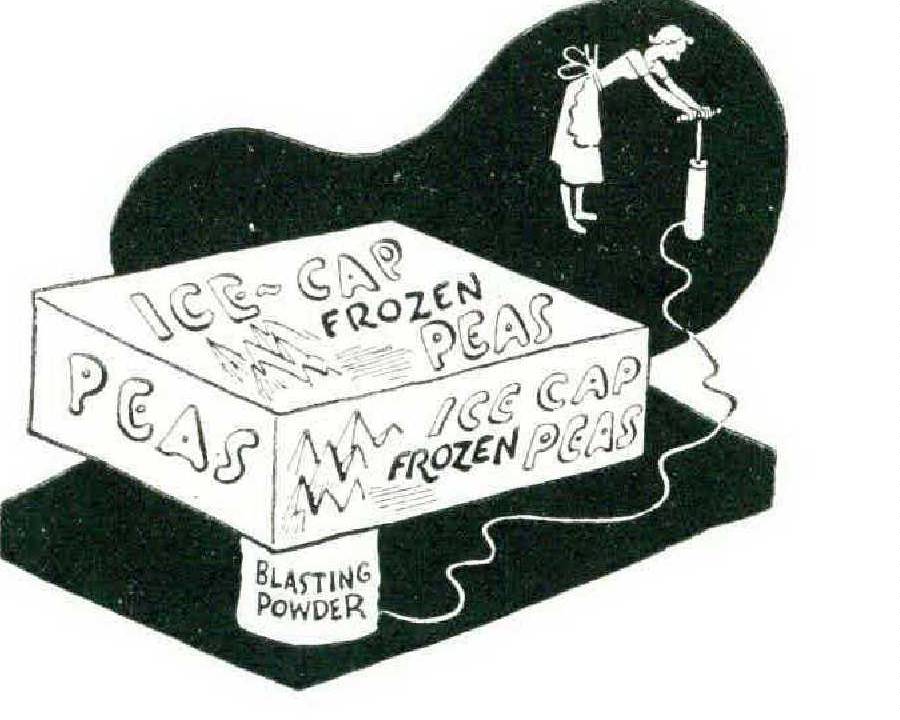
The processors of frozen vegetables coddled their early customers by placing the product directly inside the heavily waxed box. A few minutes of defrosting — letting the package stand on the kitchen table while the water was coming to a boil — was sufficient to loosen the vegetables from the sides of the box. It must have occurred to some merchandising expert that no housewife would ever remember the name of a product she was able to wangle that easily. Frozen peas, for example, are now scientifically packed in a practically invisible liner of cellophane which apparently has been riveted into place by some secret process.
Post-war manufacturers of small cans of potted meat products have risen to the challenge of the times. They retain the weakened band of metal around the sides of the can — as do the processors of coffee — but they now leave out the key that used to be tucked under the paper wrapper. The small cans can’t be tackled with the old-fashioned can opener; the o-f ran opener goes righl through the top and bottom of the can and into the table. And they aren’t high enough to permit leverage for the roller type of opener. It is possible to get at the meat by grasping the can firmly in one hand and pulling at the tab of the band with a pair of pliers. The band may will slip and cut your left hand. It’s for you to decide whether you want polled ham or a golf score in the eighties.
I’m not the only person bothered by modern packaging. lake the couple on whom I eavesdropped in our supermarket. “Look,”the husband cried to his wife, “jelly with a screw top.”She went over to the shelves. “They only have mint jolly with the screw top,”she told him, ”and you don’t like lamb, and mint jelly is only good with lamb. He smuggled a jar of mint jelly into the shopping cart as soon as her back was turned. Maybe he scooped out the mint jelly, threw it away, and transferred whatever other flavor they had around the house into the jar with the screw top. Or maybe he wanted a jar of jelly he could open and close.
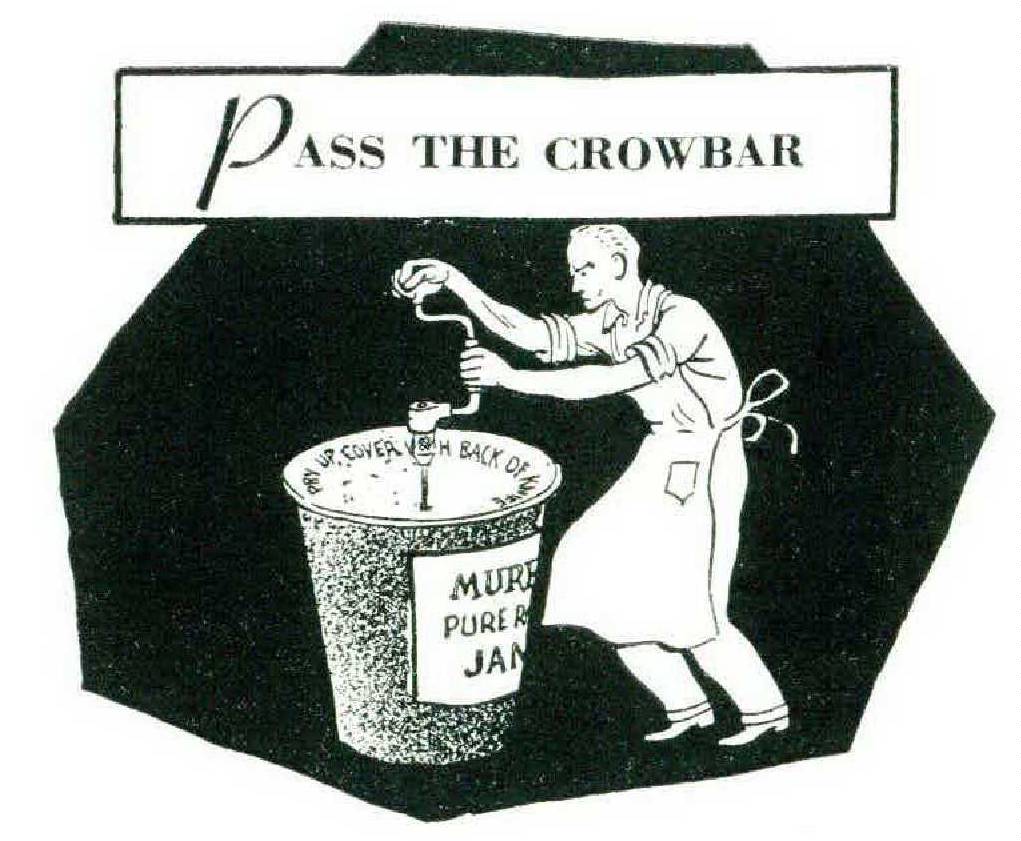
“Pry up cover with back of knife.”Where in Damascus do you get such a knife? A knife with a back thin enough to fit under the cap is also a knife too fragile to take the punishment required. The lid can be sprung off with a beer-can opener, deforming it so that it will never again fit anything. There may be a higher degree of spoilage this way, and more jelly sold, but not to me.
When we discussed flour with the manager of our supermarket, he asked why we bothered with flour at all. Get a box of ready-mixed yeast dough and cut out all that trouble with messy flour. Package of yeast right inside the box; add water, wait around a while, bake.
The yeast was in an envelope inside the box, just as the manager had predicted. There was also a business reply postcard. If the yeast had expired from age, the card said, all I had to do was go back to the grocer’s, buy a fresher package of yeast, fill out the postcard, go out in the rain and mail it, and in due time they would send me a check for my nickel. The simple expedient of stamping the expiration date of the yeast on the outside of the box had not come up in the meetings of the sales staff. Or perhaps they had one too many employees in the accounting department and this whole elaborate procedure had been worked out to keep him away from the water cooler until he was eligible for a pension.
Whatever the plan was, I look the superannuated veast and the prepared mix itself back to the store for a full refund. Nothing for my time at seventy-five cents an hour; just my money back.
Go atom, come hydrogen, the devices most patented are variations on the basic can opener. It’s nice to know that there’s somebody on our side in the relentless war of the packaging engineers against modern man.