Three Months in the Sun
SYLVIA MAIITIN has spent twelve of the last thirteen years in traveling and living abroad. She has written a book about the people of Mexico, and is the author of many magazine articles.
PLEASURE AND PLACES
by SYLVIA MARTIN
THE outstanding fact about the West Indies is that they are plantation islands. Whatever its sins, the plantation pattern of civilization is very pleasant for the tourist. It makes him a pukka sahib. Shrugging off the inhibitions of Middletown, he can become a Maugham character in tailored shorts and sun helmet by day and dinner jacket by night — on his arm his lady, displaying pearly shoulders and orchids. Because it takes a little time to get into the spirit of the thing, a West Indian vacation is most satisfying when it runs into a month or more. Three months are ideal.
The Caribbean archipelago forms a broad curve of islands with Cuba at the top, straining toward Yucatán, and Trinidad at the bottom, a chip off Venezuela. Tropical, they grow sugar cane, coconuts, cacao, bananas. Jamaica, further, has coffee; Trinidad, oil; Cuba, tobacco. Native to their tables are papaws, mangoes, soursop, plantain, yams, breadfruit, rum, and sea food. Almost everything else is imported, including refined sugar. The islands are mountaintops lifted above the sea, and now and then they are shaken by subterranean convulsions. They are densely populated by the multiplying descendants of African slaves, who keep darkening the pink upper classes and paling their own complexions.
With these generalities, likeness ends. Each piece of the broken wall between the Caribbean and the Atlantic stands alone. The fact that Martinique and Guadeloupe are French possessions, while most of the others are British, is as important to the tourist as to the mother country, for national idiosyncrasies have taken root in the tropical outland. British islanders, for example, preserve the custom of afternoon tea; the French drink wine. The British play golf and tennis; the French talk politics.
Even within national groupings there are no carbon copies. Each island is its own little world. While its top families may speak the English of Oxford or Sorbonne French, the plain people have their own language. As colorful as the glimpse of undersea life on a reef, it changes from island to island. Two British subjects talking “English” entertain with sound rather than sense. You could easily dance to those drumming accents — but understand them? Never.
There are two ways of doing the islands. I have tried both. The advantage of a sea voyage is the long approach, the slow forming of island after island on the far edge of a simple world of sea and sky. But a cruise is essentially ship life — and the Caribbean is a beautiful sea to live it in. The islands, however, are too brief pauses, commas in a rounded sentence. You have bought a twelve or twenty-one day “package” at $20 a day or more. You can’t lie over at an attractive port and hop the next ship. This kind of travel was easy years ago when the archipelago was well served by interisland ships. It is simpler now to go by sea from New York to Hong Kong than from Grenada, say, to St. Kitts.
By air (Pan American or KLM), on the other hand, you can move about freely, stopping where you choose. But what to choose? For variety of experience I select Trinidad, Barbados, Martinique, and Guadeloupe — two British possessions, two French. The farthest island, Trinidad, is a nine-hour flight, nonstop, from New York by Pan American clipper. All are inexpensive by our standards, hotel prices ranging from $6 to $10 a day. There are also guesthouses and pensions with lower rates. Unfortunately, the word is getting around that by concentrating on the de luxe, Jamaica and Haiti are getting $20 and even $30 a day from the rich Americans, and prices are beginning to creep up everywhere.
Trinidad is the most carnivalesque of the islands. A T’dadian when he isn’t talking to himself loves to talk about himself, and his opening gambit is: “D’you know what they say about Trinidad? It’s where the birds have no song, the flowers no smell, and the women no virtue.” This is followed by “We’re all a bit balmy here, y’know.”
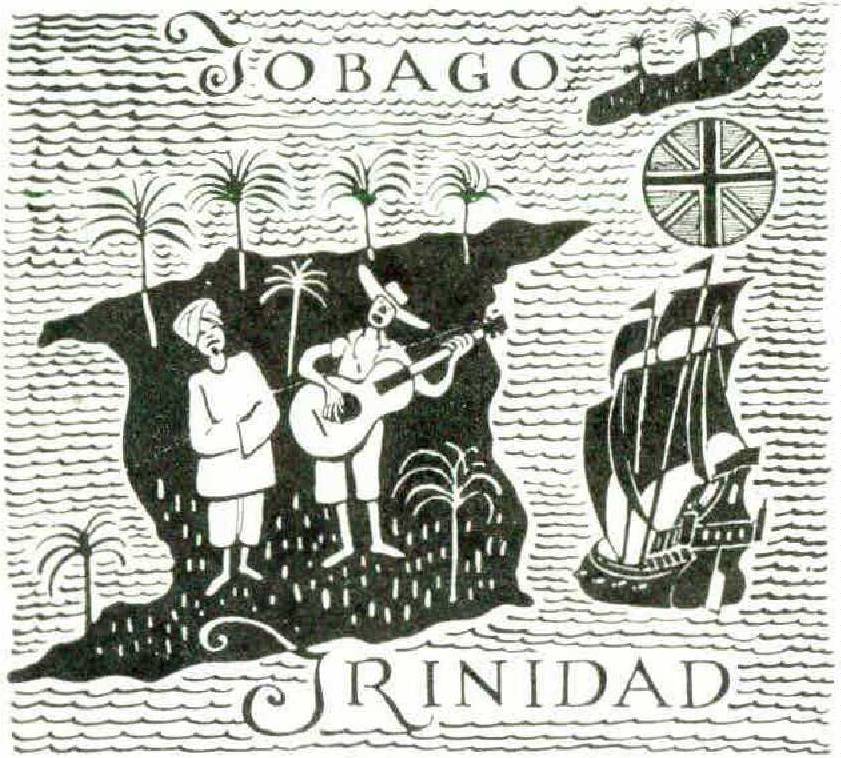
The mild lunacy that seems to pervade Port-of-Spain is probably the result of English habits in collision with the tropics, rum with Angostura bitters, hot curries, and a polyglot population. No other island has such a mixture of peoples. When the slaves were freed, indentured servants, mostly East Indians, were shipped to fill plantation needs. Trinidad is rich, and as it flourished, men in search of sun and profit came from many parts of the world. World War II brought European refugees and Americans. You see many exotics as you stroll between the shops and milk bars of Frederick Street. A woman in a sari and bangles. A slit-skirted Chinese girl. A Mohammedan wearing the fez, and a monk with sun helmet. A Hindu draped in white muslin. A Venezuelan pinched in the waist, padded about the shoulder. And the Negro blade, the Sweet Man, in the local version of the zoot suit. This is the capital of the Calypso song. For a gratuity, you can have one composed in your honor: —
To the blessed isle of la Trinitee.
The island is lush and beautiful. Port-of-Spain, however, is wonderfully ugly and various. Victorian England has gone berserk here, even to the respectable mansions on the Long Circular Road; they have borrowed gables, eaves, scallops, pinnacles, pillars, and jalousies from all quarters of the imagination. The city’s playground is the Savannah, two hundred acres given over to cricket, Rugby, and horse races. The show place is the very beautiful Botanical Garden. Social life is centered in the Queen’s Park Hotel and the Country Club.
Although there are beaches on the east coast, everybody who is anybody flies or sails over to Tobago, an island appendage. Tobago has its own hotels and guesthouses. The newest is the Bluehaven — $8, meals included (as of summer; it will probably be more by winter). The beaches are many and excellent. Swimming, beach picnics, goggling at the marine life under Buccoo Reef, tennis, and horseback riding make up Tobago’s dawn-to-sunset life. At night you drink, dance, learn all about Planter X who is going to the dogs, and keep religiously indoors after sunset to frustrate the Anopheles mosquito.
Many of the islands are home to Americans who have got away from it all and gone native on a thousand dollars a year. On Tobago I met two extremes of escapists — a retired businessman and his wife living in a little cottage above a blanket-size beach their very own; and a young exPrincetonian, refugee from Wall Street, quartered in an abandoned windmill and very busy pioneering green beans and asparagus on a commercial scale for the hotel trade.
Moving from Trinidad-Tobago to Barbados is like exchanging Soho for Mayfair. Uritish for three centuries, Barbados is the custodian of tradition. Typical is the cable said to have gone to Whitehall on the outbreak of World War I: “Go ahead, England. Barbados is with you.” Geographically, she is not a part of the archipelago but a piece of coral st anding all by itself out in the Atlantic. She is bathed in a light so pure that it seems the sun’s own benediction on selfrighteousness. She has no malaria, her drinking water is nectar, her climate n ea r-per feel.
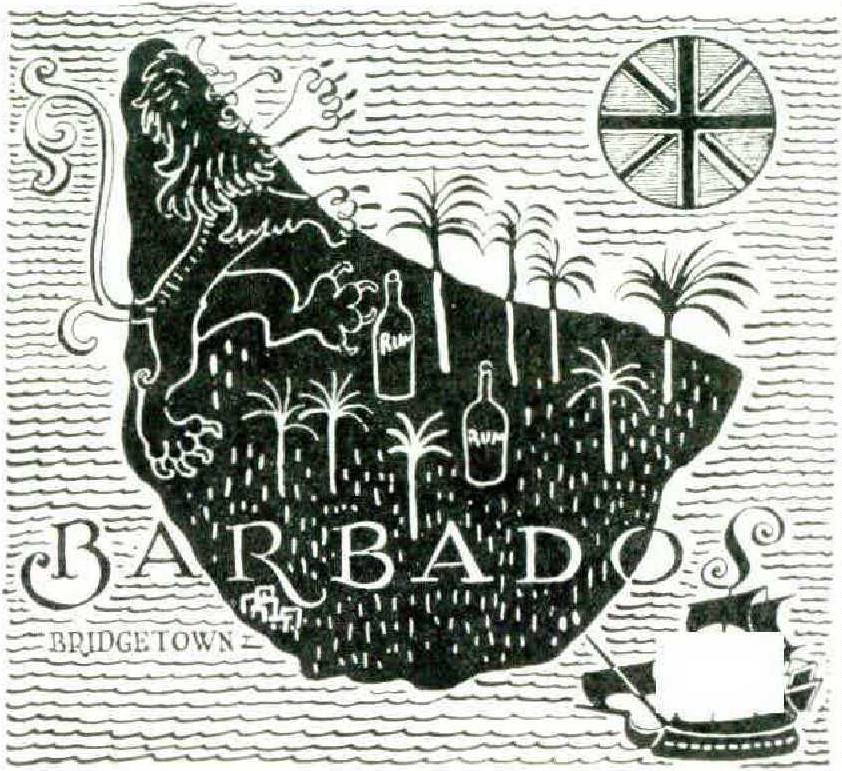
The port is Bridgetown —neat, orderly, and eighteenth century. Its Careenage is a huddle of masted schooners. Broad Street has “Shoppes” and Trafalgar Square, of course, a monument to Nelson. The narrow winding si reels of shipping anti insurance agencies are named Flower Pot Alley, Light foot Lane, Literary Row. The Savannah has a race track, polo grounds, and cricket pitches. Hotel rates are about $10 a day American plan, but there are dozens of inexpensive “homes from home” run by respectable maiden ladies. You can swim at the Aquatic Club in town or at the Paradise Beach Club on the outskirts.
You don’t stay long in Bridgetown, for ihe countryside is lovely, reminding many travelers of the Cornish coast and the Scottish glens. The Negro shacks are interspersed with handsome Great Houses in the style of the English manor. The gentry are more hospitable than Bridgetown’s aristocracy. Condemned to boredom, they are very kind to the foreigner, who serves as an excuse for a fresh round of teas, balls, beach parties, and club doings.
There are beaches at Hastings, Worthing, and several oilier points, but one of the finest in the world is the stretch of pink coral sands at the Crane. Sam Lord’s Castle, on the ridge above, is now a hotel — a “residential club.” It was the fancy of a nineteenth-century gentleman who made a fortune by rigging up misleading lights so that ships were wrecked on the reef and he could leisurely pirate their cargoes. Sam Lord’s pile of masonry and mahogany is both grand and amusing. As a hotel it charges about $12 a day, with meals.
Barbados has an English kitchen. The damp, flavorless meals lean heavily on yams, breadfruit, potatoes, and rice, but there is good sea food. Flying fish and sea eggs are the specialties. The inhabitants drink well — rum punches and swizzles, lime squashes and gin slings.
From England to France is a big step; from Barbados to Martinique is a bigger. Barbados is ordered in shape, climate, landscape, and society. Martinique is messily exotic in all these things. The ponderous weight of tropical fertility presses down from the volcanic peaks to the water’s edge. Racial prejudice is more political than social. A white who talks against les nègres is usually that almost extinct bird of conservativism, a Royalist. A black who rants against les blancs is a Communist. There is little more you need to know to understand the lively gestures of political argument.
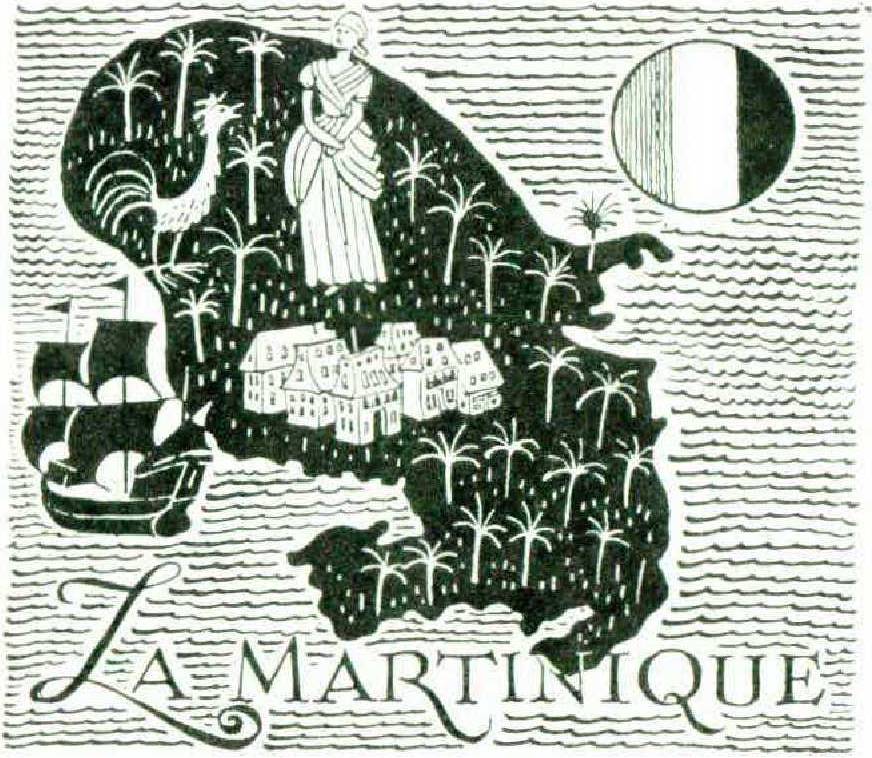
Fort-de-Franee, the port, semicircles a blue bay. It is a town of high mansard roofs, latticework, wroughtiron balconies; a place where people who look like members of a musical-comedy chorus take apéritifs and ices and Coca-Cola; and crazy wooden houses that lean over the two rivers, Monsieur and Madame. The entire complex has the air of the careless shrug, as if the jungle were being held back by one man with a machete. Only the Savane is groomed. This broad green lake of grass is dedicated to a statue of Napoleon’s Josephine, who was born in a little village across the bay. Fortde-France goes to bed early, after a long, lingering, memorable dinner. The one spot of night life is the wooden barn named Le Select Tango. Not in the least select, and having nothing to do with the tango, it is the home of the beguine. This is a dance which, seen here in its native haunts, would make a maiden aunt blush to the soles of her feet.
There is a curious Frenchness about a Martinican, an air of jaunty, looselimbed grace. Even the most ragged and Negroid looks as if he had had something to do with Paris, or at least Marseilles. The girls are famed for their beauty, but it is the old women who have style. This is a matter of dress and bearing. They alone wear the old costume — which would make any woman a goddess. In another decade it will, alas, have disappeared. The silks, satins, brocades, and lace are now too expensive.
Everybody who can lives out of town, for Fort-de-France is stickily hot. Villas, each an expression of some private fantasy, are in the residential hills. The tourist stays close to his hotel. The new Lido Hotel, four miles out and on the sea, has bathing, ping-pong, and a dance floor. It is comfortable but too modern to look, feel, or smell Martinican. The oldtimer is the Vieux Moulin, two miles from town, with a swimming pool and a rarely used tennis court. Its rooms sacrifice privacy to ventilation. The Lido, and the Grand in Guadeloupe, charge about $16 a day, double, with meals; the Vieux Moulin somewhat less. Hotel food is superb. The premeal drink is the petit punch martiniquais — white rum, syrup, lime, and nutmeg. You change wines with the courses and finish up with cognac.
Apart from the tiny village of Trois Islets, which has the remains of Josephine’s childhood home, the “sight” of Martinique is yet another ruin. St. Pierre. The old capital of fashion, beauty, elegance, and sin, sketched in many meomoris as the world’s most enchanting colonial metropolis, was wiped out by the eruption of Mont Pelée in 1902. A new town is slowly rising, but you feel uncomfortably close to the terrible disaster when you trace the old foundations in the heaps of rubble and look at the pitiful, firefused bits of iron and glass in the little museum.
Few visitors to Martinique escape the impulse to hop over to Guadeloupe. It’s just one of those things, like Trinidad-Barbados. Guadeloupe is plural. It is two islands separated by a narrow channel — Basse-Terre on one side, Grande-Terre on the other — with some island dependencies dotted around, including the leper colony of La Desirade. The port, Pointe-àPitre, has none of the charm of Fortde-France and is even less touristminded. It does have a badly needed new hotel, the Grand, on the Miami Beach model. The old standby, more colorful, is the Hôtel des Antilles. Pointe-à-Pitre, several times thrown down by earthquakes, is a town of corrugated iron roofs, broken balconies occupied by fanning, rocking grandpas and grandmas, and the noise and dust of eternal port improvements.
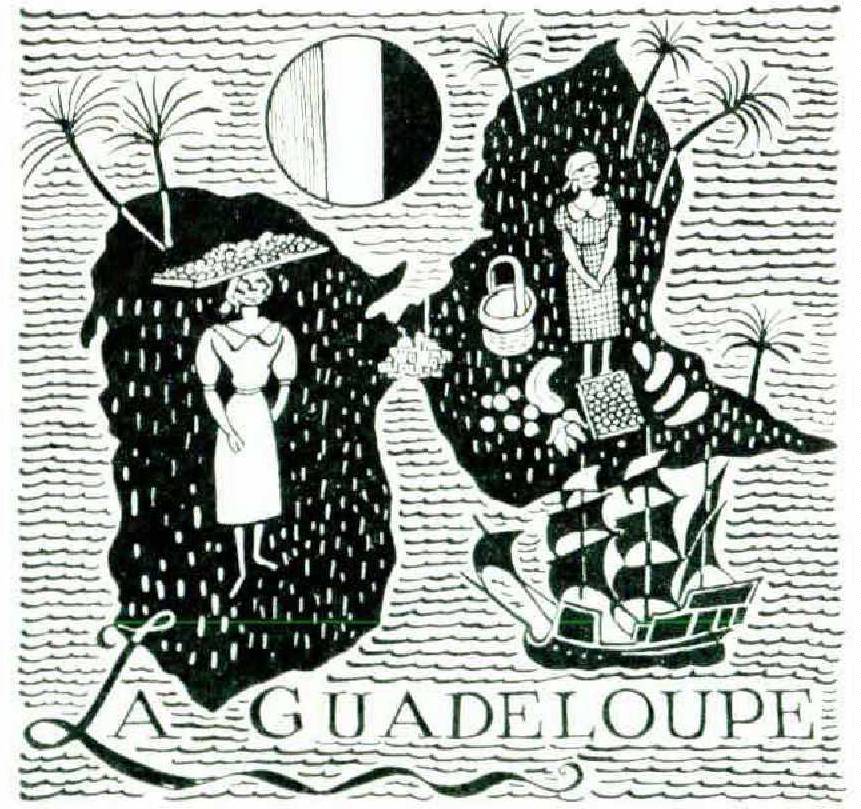
What is beautiful in Martinique is in Basse-Terre heightened to superlatives. The hills, the mountains, the volcanoes, covered with voluptuous, tangled green life, are humbling. Water gushes out of rock. Roads, plantations, and estates look ridiculous. And you can safely walk — no fer-de-lance. The favorite retreat is the little bay of Gosier near Pointe-àPitre, which has a good beach and an attractive restaurant, the Pergola, serving a five-course lunch for about $1.25. St. Claude in Basse-Terre, at the foot ofSoufrière volcano, is a good view-site. A path, overgrown in the upper reaches and requiring the services of guide with machete, leads to the crater. It is a stiff climb, and only the determined go all the way.
All in all, temperament is the best dictator in the Caribbean. Restless souls will get the greatest pleasure out of island hopping. Loafers can just sit under their sun helmets. I recommend the happy compromise of a certain amount of hopping combined with stationary periods. The tropical variety of British gentlemanliness, restraint, and sportsmanship, with its commendable absence of loud, empty hilarity and nasality, should be experienced by every American at least once in his lifetime — also the French Creole gracefulness and chesty dedication to la gloire in islands Where civilization bandy holds its own against the jungle.
Somewhere along the way you will find the unbelievably right hotel on a cliff above a half-moon beach. Before you stretches the bluest of oceans, with islands in just the right places to be colored by the long, violent sunsets. A book from the hotel library is on your knees — unread. The orchestra is playing somewhere in the hibiscus. The air is perfumed. And across the terrace glides the sahib’s deferential servitor bearing his long, cool drink.