Air Travel With Stopovers. Ii
by Mitchell Goodman
By means of the multi-stopover plan, the lover of big city contrasts can have a handful or a bucketful all the way across Europe, north and south, and deep into the Near East, if time allows.
Taken by air, Europe is much like New England taken by road. From Paris, for instance, flying the Viscount, it is 1 hour 15 minutes to London; 2 hours 35 minutes to Hamburg; 1 hour 15 minutes to Geneva; 2 hours to Nice; 2 hours 50 minutes to Madrid; 3 hours 25 minutes to Rome; 3 hours 35 minutes to Vienna; 4 hours to Casablanca. From London to Rome is 3 1/2 hours. From Rome to Athens is 2 1/2.
Given these foreshortenings of time, the energetic traveler can, for the price of a ticket to his furthest destination, choose from dozens of cities all over Europe, the Near East, and Africa, and throw in a number of islands as well. He can even, for the same round-trip fare, make a circle — outbound, for example, by way of Paris and Central Europe; homewardbound by way of the Mediterranean and the Azores. KLM puts it this way: “Any airTRIP to Europe, Africa, Asia, or Australia can be converted into an airCRUISE at no increase in travel cost.” BOAC advertises 312 stopover cities on six continents.
Examples of what is possible in Europe: TWA offers a circular roundtrip to Cairo ($773) that includes stops in Europe, the Near East, and Africa — among them Dublin, London, Amsterdam, Brussels, Cologne, Düsseldorf, Frankfurt, Stuttgart, Munich, Milan, Pisa, Rome, Athens, Istanbul, Rhodes, Beirut, Damascus, Jerusalem, Cairo, Algiers, Lisbon, the Azores, and New York. This itinerary, or ten different variations of it, can also be had on five or six other airlines — or by combining the connecting routes of several lines.
Even on the relatively short run to Paris, variations are possible. Pan American, for example, flies to Paris by way of Shannon, Dublin, London, Amsterdam, and Brussels, and then back through Lisbon, the Azores, and Bermuda (for a rest perhaps?). The range and diversity of a stopover tour are limited only by the willingness of the traveler to keep moving. Along all these many routes the airlines stand ready, at each stop, to arrange accommodations, sightseeing, car rental, and other matters.
City, skis, and beaches
1. Milan — even aside from its opera, cafés, and art museums — is perhaps the most vital city in Europe today, a focal point of work in the arts, design, and music. It is, as the Italians say, the sveltissima city of Italy (and svelta means much more than just svelte). From Milan (a wintry city) one can jump in an hour or two to the stylish and warm Italian Riviera or to some of the best ski resorts in the Alps.
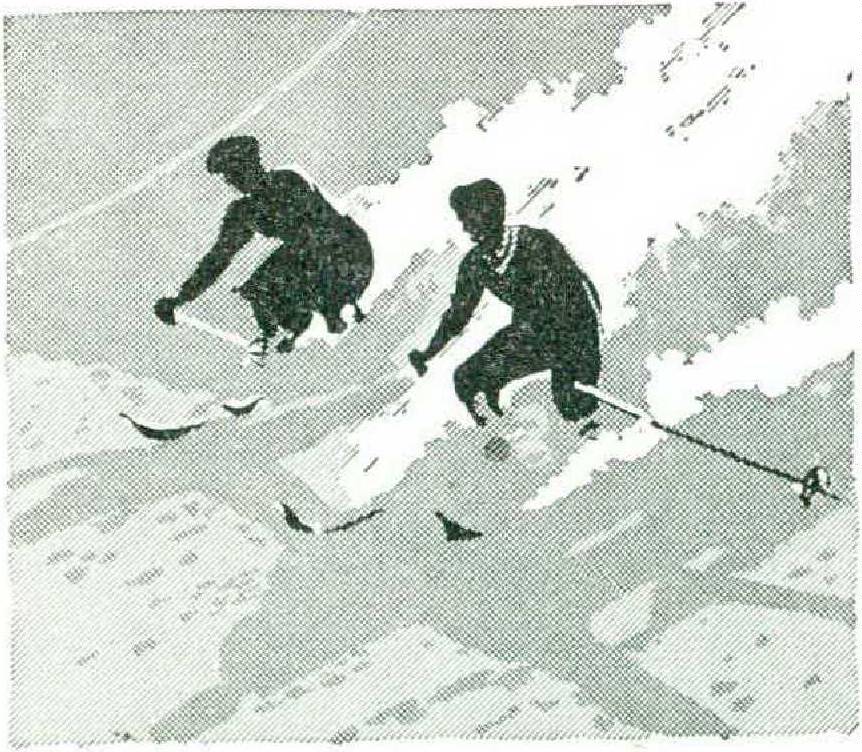
2. Barcelona, on hills looking down to the Mediterranean, is the largest and probably the most interesting city in Spain (superlative bullfighting, seafood, museums, cathedrals, cafés) — mild in winter. Nearby is the unspoiled Costa Brava, on the Spanish Riviera, where many small inns are known for their cuisine and comfort. Eighty miles away, at La Molina in the Pyrenees, there is good skiing (four lifts).
3. The warmest wintering place in Europe is Malaga, with swimming possible at most times through the winter.
4. In Lebanon (3 hours by air from Istanbul), a wonderfully rich Mediterranean country (the Biblical “land of milk and honey”), Beirut and the very fine beaches are within an hour of the superb winter resort at Cedars of Lebanon (10,000 feet)—skiing from January to April. A nicely condensed country this: in an area 120 miles long and 35 miles wide it contains orange and olive groves, banana plantations, ancient hill villages, some of the best Roman ruins, modern cities, Turkish mosques, good hotels ($8 double), crusaders’ forts. It is a place almost unknown to Western travelers. Hospitality is extreme. The season at the resorts like Aley and Bhamdoun is July to October, but the winters are very mild. English is generally understood. A good place to buy brocades, embroideries, rugs, brass, Persian silver. New York to Beirut is $773, 26 hours. A possible stopover is Damascus (45 minutes away): as old and exotic as it sounds, but cold in winter.
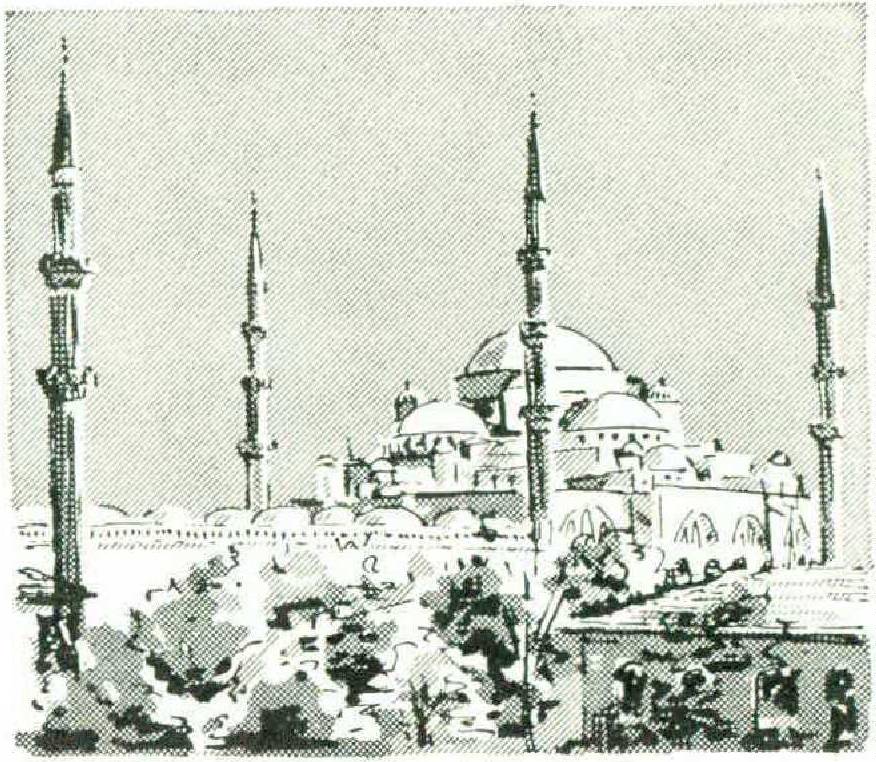
5. Turkey — almost untouched by tourism — combines cosmopolitan centers with beach and winter resorts simultaneously. Larger than Texas, but good local air service brings the south (with a climate comparable to Florida) within reach of Istanbul, where one of the world’s most modern hotels stands near the mosques, harems, and castles of the Sultans, and the bazaars. October, November, and December are the best months, but the Anatolian Riviera (Antalya and smaller resorts) is a pleasure throughout the winter. The Turks have a genius for food and hospitality.
6. Sicily — still another semitropical haven where skiers look down from their heights upon sunbathers on the beach. Springtime comes in December or January (oranges and almond blossoms and a million flowers). In the same months (and up to March) there is good skiing on volcanic Aetna and on the hills behind Palermo.
Sicily is indeed the most relaxed and lush of all Italian places, complete with ancient Greek theaters and temples, grand opera (Palermo and Catania) on a high level, lively cities, a wild interior, and the mixed remains of Norman, Moorish, and Spanish occupations. A warm and simple people, mostly poor — but wholly without sourness.
7. North Africa — more beaches and/or offbeat skiing. Climate: like Southern California along the Mediterranean coast. But go south — politics and rebellions permitting. Marrakech is very good in winter, and there are convenient tours through the south of Morocco: Arab palaces and mosques, and the kasbahs of the southern mountains. The Atlantic coast of south Morocco is way off the beaten track, and delightful: Safi, Mazagan, Mogador, Agadir, have magnificent beaches (swimming through the winter), excellent hotels, and there are the colorful Portuguese seaports nearby. Also: Azrou, Meknes, and a number of resorts in the mountains beyond Marrakech. There is good skiing in the Atlas Mountains. The Moroccan State Tourist Office has built modern, comfortable, and inexpensive accommodations at all the interesting tourist places. The Arabs of these regions are very proud and very hospitable. The gateway to these places is Casablanca (4 hours from Paris).
Further east, in southern Algeria, is another marvelous winter vacation area: the string of Arab oasis towns well known to some alert Europeans, almost unknown to Americans. Among them are Colomb-Bechar, Timimoun, Adrar, In Salah, El Golea. The climate is dry and warm, there are palm trees and mosques everywhere; the Arab life is undiluted.
There are a number of fashionable hotels, and communications by Air France from Oran and Algiers are very good and fast, the line making a circuit through the most notable of these resorts. Colomb-Béchar for example, is only 1 hour 45 minutes from Oran.
8. Cyprus — 2 hours from Athens is Nicosia, a stopover on certain BEA routes. The beaches are very good (winter bathing), as are the seaports, especially the old walled town of Famagusta (a product of imperial Venice, now part Greek, part Turk), where there is an excellent new hotel with its own beach and harbor. Five dollars a day will pay for everything at the best hotels, like the Ledra Palace.
High in the Troodos Mountains the skiing is very good from late December to March, and the lower hills are embellished with many old monasteries and castles. Cabarets, tennis, golf courses. There are more of the great Cedars of Lebanon here than in Lebanon itself. This is, altogether, an island to match Rhodes and Sicily for beauty and variety of vacation possibilities.
9. French Riviera — too cold for swimming, but very pleasantly sheltered and sunny. Only 53 miles from Nice, there is skiing at Auron and Valberg in the Maritime Alps.
Skiing around the world
Pan American, BOAC, and others offer air ski-tours around the world: to the Himalayas, Alps, Dolomites, Hokkaido, as well as to some of the places mentioned above. The tours provide, for instance, for a choice of three weeks at one (or two) of the best Alpine resorts, at an all-inclusive price of $750, or two weeks elsewhere at $680. But tours aside, there is plenty of skiing to be had by way of stopovers — and ski equipment can be rented at almost, all the resorts. Twenty days — with room, meals, bath, and ski-lift charges, will cost only about $100 in Austria.
To avoid the crowded slopes, go in the skiing off season, from January 10 to February 6. (Europeans prefer spring skiing with hot sun, but by then most of the snows are mushy.) From Salzburg and its music it is only 2 hours by train to Austria’s best skiing: Badgastein and Bad Hofgastein. (This might be combined with an evening at the recently reopened Vienna State Opera. The city’s old reputation for gaiety is reasserting itself.)
In Spain, besides Barcelona, there is skiing in the mountains near Madrid and 12 miles from Granada in the Sierra Nevada. Facilities have been improved with government support, and hotel with meals runs to $4 a day. Even Paris and skis can he mixed; there is the new resort at Meribel in the Savoy Alps, 10 hours by train.
The European islands
This is another Europe; sun, ruins, flowers, beaches, hot sun, far from the big cities (but easily reached by air); on the fringe, temperamentally as well as geographically. Serene, untouched by the hand of tourism. Air service to these islands is frequent and good.
Perhaps the most neglected (certainly by Americans) are the Canaries and Madeira, Spanish and Portuguese islands off the African Atlantic coast. Reached by Aquila Airways (4-engine British flying boats) on regular run from Southampton, or from Lisbon. Also by Spanish line from Madrid (5 hours) or Seville. Startlingly beautiful, semitropical volcanic islands, highly civilized, and less expensive (especially the Canaries) than almost any other place in the world. Mountains as high as 12,000 feet, lovely beaches with bathing through the winter.
Majorca, by now too well known, is best seen in the winter months — spring comes in January. An hour by plane from Barcelona. Visit the nearby, almost untouched islands of Minorca and Iviza, with striking white Moorish architecture.
Then, eastward, to Corsica, overtouristed only around Calvi and Île Rousse (but accessible only by boat from Marseille in winter); warmer than the Riviera, a striking mountainand-sea landscape.
Sardinia (right next to Corsica), an untrodden and highly flavored island where accommodations have recently been much improved, is easily reached by daily service from Rome (1 1/2 hours). See D. H. Lawrence’s Sea and Sardinia, as good a travel book as there is.
The Aeolian Isles (off Sicily) are primitive and serene. Elba (off the Tuscan coast) is a delightfully pastoral distillation of that rich province, but not as warm in winter as the islands further south.
The Yugoslav coast
The ports and islands of Yugoslavia, above all, are the undiscovered treasure of European travel (the climate, though mild, is not at its best in winter). The Kvarner Riviera, around Opatija, is sheltered by high mountains and has an almost semitropical climate — this and Hvar (“the Yugoslav Madeira”) are best in winter, with good hotels. (Camellias, magnolias, bananas, bamboo, and lemons grow on the Kvarner Riviera.) Further south, along the Montenegrin littoral, the road from Budva leads to dozens of lovely little towns like Milocer and St. Stefan and Kotor, a preVenetian walled town at the head of a truly magnificent mountain fjord. It is then 4 hours by boat to Dubrovnik, probably the most complete and impressive medieval town in all of Europe, which G. B. Shaw called “the only heaven this earth affords.” Inland there are good ski resorts in the mountains of Bosnia (near the fascinating Moslem city of Sarajevo), in Slovenia, and in Macedonia. Yugoslavia— still in the process of remaking itself—is the most spirited country in Europe. Swissair and the Yugoslav airlines provide regular service. Prices are very low: the best hotel in Dubrovnik charges $6 a day, American plan.
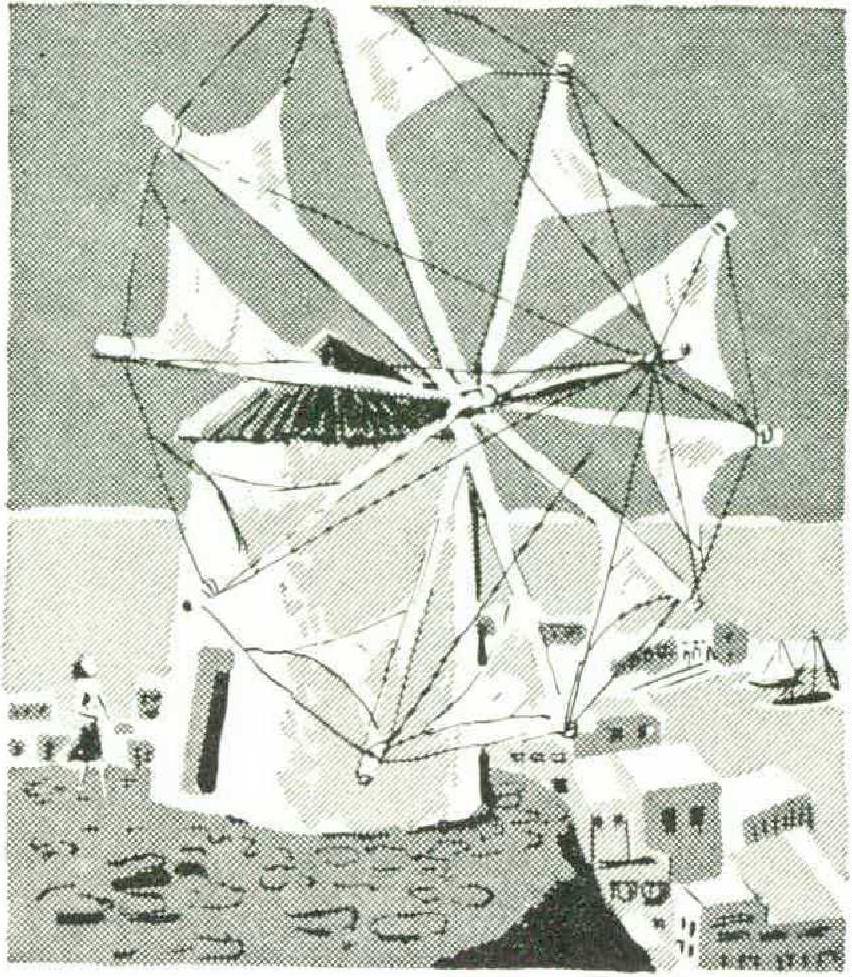
The Greek islands — silver-gray sheen of olives, the smell of dry myrtle and juniper, the unearthly pure light of morning: a paradise of islands, innumerable. Mild through the winter. There is frequent plane service from Athens to the major islands. Rhodes (1 1/2 hours) and Corfu (under 2 hours), two of the largest and most beautiful, have organized resorts, fine hotels, very low prices. Mykonos (10 hours by boat) — windmills, pure white houses, marvelous beaches — one of the most fashionable of the Aegean islands, with a new hotel; very quiet in winter. Crete (one hour byair) — ruins of the great Minoan civilization. Delos (an hour by air from Mykonos) with its excavated early Greek city. There are hundreds more, some of them touched by the 5-day Aegean cruise from Piraeus run by the National Tourist Organization. Athens itself — the air crossroads from Europe to Egypt, East Africa, the Near East, and Asia — is small enough to be seen in a day or two, or on the way to the islands. Add Sicily and Cyprus, to complete this island world on the edges of Europe. Taken alone or in bunches, they are almost as far away from it all as the islands of the South Seas.
Other directions — briefly
The Far East — here again there is very extensive (and intensive) air coverage. The comfortable new vibration-free Turbo Constellations of Northwest Airlines have exclusive authorization to fly the short Great Circle Route to Japan, and then on to Manila and Hong Kong, cutting the New York-Tokyo distance by 1197 miles (compared with the southern route through Honolulu). The fare on both routes is $1076 round trip. For $196 per person the Japan Travel Bureau will tailor-make an 8-day tour (on an independent basis) that includes hotel and meals, and an English-speaking guide for local trips. Japan is cold in winter.
By way of Honolulu and the Fiji Islands, Australia is 35 hours from San Francisco (less by more direct routes). Hotels are not usually luxurious, but many travelers feel compensated by the wild, exotic landscapes and the frontier character of the Australian outback, and by the sheer novelty of the place. The country is larger than the United States, but domestic air service is excellent. Much of Australia resembles the life of nineteenthcentury America, with the emphasis on hunting and fishing and other outdoor recreations.
Tasman Airways (of New Zealand) operates tours through the South Sea islands — a round trip of 4626 miles in 4 1/2 days ($265) that includes Tahiti and Samoa. From the Fijis there is good service to New Zealand, another outdoor paradise; fabulous vegetation, fjords like Norway’s, great mountains and glaciers, wonderful hunting and fishing (deer are considered a pest, and a bounty is paid for them); the music, dance, and ceremonies of the indigenous Maori. Note: these winter months are summertime down under. Here again prices are very low: about $7-$8 a day for everything.
The Caribbean and the Bahamas — both Pan American and BOAC fly very comprehensive routes through these islands, making stops almost everywhere. There are as many different worlds here, and varieties of sunny pleasure, as there are islands. There is life in the French, Dutch, English, or the indigenous West Indian style. Here are the finest beaches in the world, and fishing to match. There is high style (Nassau, Bermuda), there is rest and quiet, there is the near-primitive. Airline service, hopping from island to island, is frequent.
BOAC flies a fascinating circular tour from New York through San Juan, St. Thomas, Antigua, Martnique, Barbados, Grenada, Trinidad, Caracas, Kingston, Montego Bay, Nassau, and back to New York, for a fare of $312. There is also a short circle, including San Juan, Haiti, the Dominican Republic, Jamaica, and Cuba for $263. Stopovers are unlim’ted.
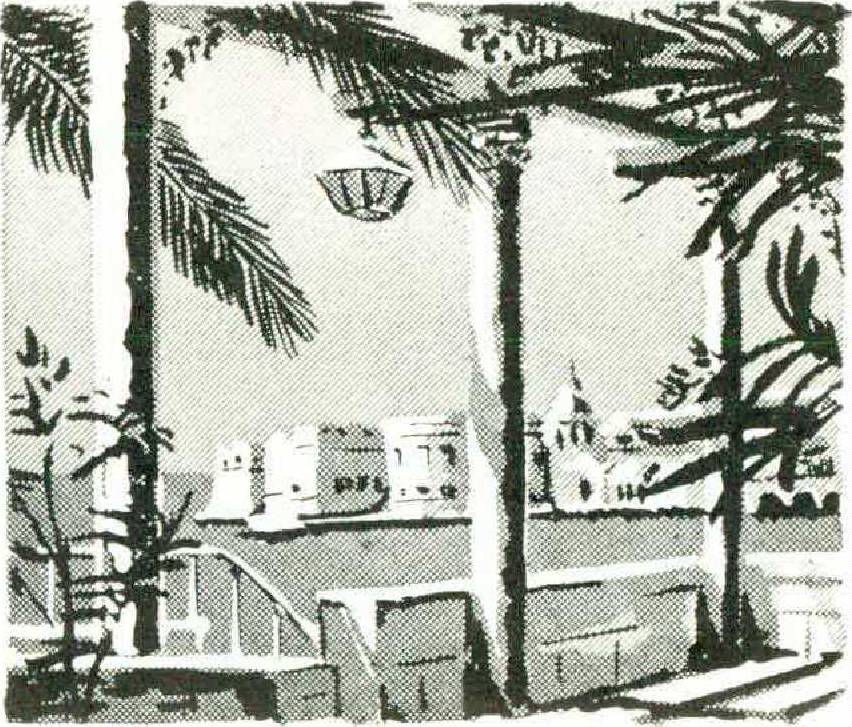
The British islands are on the whole, the least expensive. For a wonderful combination of vivid life and unspoiled island quality Trinidad and nearby Tobago are especially good; off the Venezuelan coast, 9 1/2 hours from New York ($282 round trip).
These two are the most colorful and polyglot of all the West Indian islands: Portuguese, French, Chinese, Spanish, African; East Indian women in saris with rings in their noses; calypso singers; Hindus in traditional dress going to Hindu temples; Moslem mosques; Hindu bazaars. Superb climate, especially January to March. Full of hummingbirds and tropical flowers. Five or six different cuisines: Creole. East Indian, Chinese, French, and others. In January the calypso tents spring up and the “war” of the singers begins. East Indian and Chinese bazaars and fine British shops along Frederick Street. Two thousand miles of good motoring roads (with drive-yourself cars to be rented) to places like Maracas Bay through bamboo groves and teak forests over the lovely North Coast Road. British woolens and other products at British prices. High tea is a ritual —evening clothes are worn. Tobago has some of the best beaches anywhere, small but modern hotels at very low rates, and that rare unspoiled quality. It is, appropriately, a sanctuary for the Bird of Paradise.
Shopping Note. Buy what is light, Excessive baggage costs heavily, and that which is shipped home is not eligible to enter under the traveler’s $500 duty-free allowance.
This is the second of two articles by Mr. Goodman about the variety of travel experience made available without additional cost by the new stopover privileges on the air routes.