Mozart Festivals
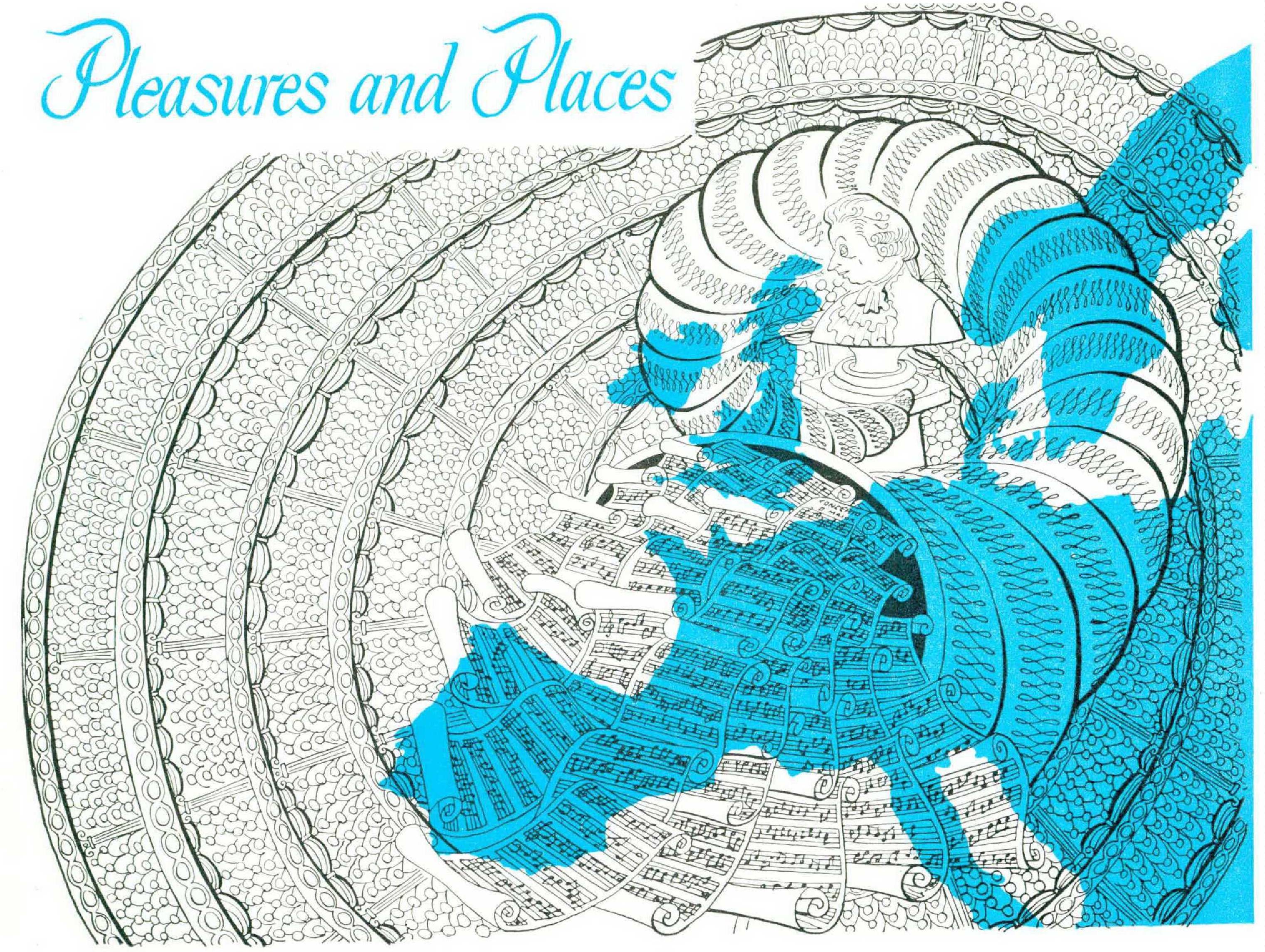
THOSE music-lovers who fidget through the overture and cannot wait for the curtain to go up on the “real” performance have cause to rejoice over the coming musical season in Europe. The score or two of concerts that have already been held there in honor of Mozart’s bicentennial are clearly only a prelude to the great flood of music that is to be poured out in homage to him this summer. To celebrate the memory of the most European composer who ever lived — his music, a perfect blend of Nordic and Latin influences, is as cosmopolitan as the life he led in a dozen different eities — virtually every orchestra from Oslo to Istanbul has been busy this spring tuning up its instruments. The result bids fair to be the greatest harvest of Mozart music that Europe has reaped in the two hundred years since the composer’s birth.
This may pose a problem for people who don’t happen to appreciate Mozart. They can solve it either by going to South America or, less cravenly, by going in August to the Bayreuth Festival, where thick Wagnerian incense will still be burned before the altar of Siegfried. It is only fair to add that they can also get a good earful of bel canto by going down to Italy, which remains faithful to Puccini and Verdi; and they can have their pulses quickened with invigorating shots of Granados and Albéniz in Spain. But everywhere else the world of music will be invaded as never before by Mozartian arias and minuets.
Austria
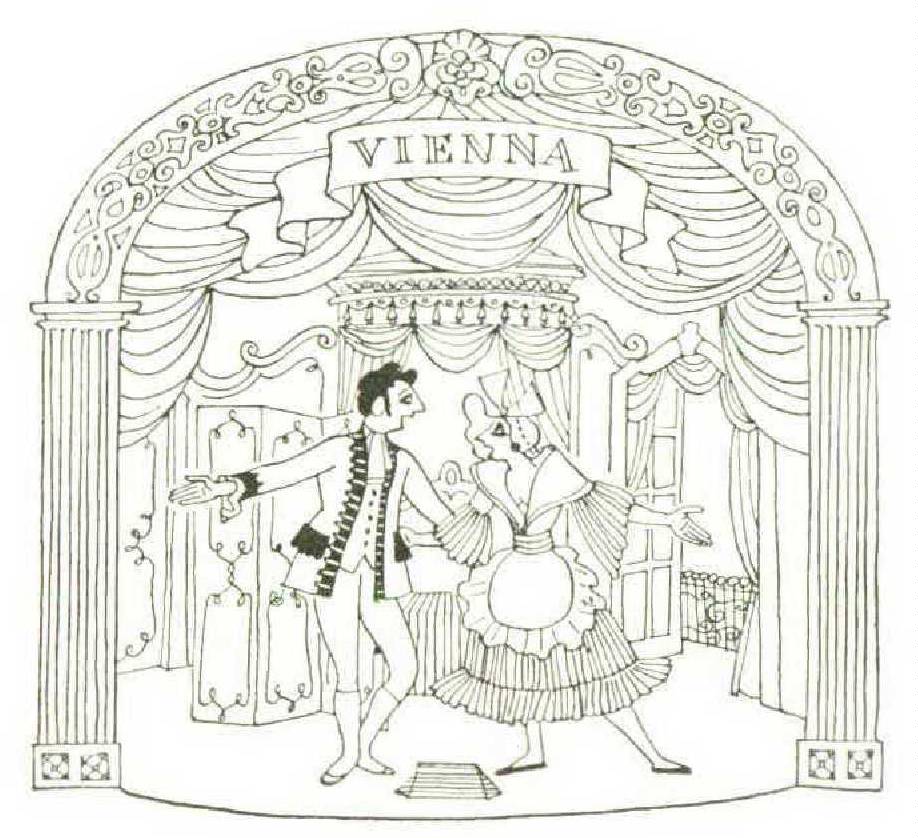
The most important festivals in this Mozart Year will be held, naturally enough, in Austria, which has an uncontested right to lead the international recognition accorded to the greatest of her musical sons. The opening comes in Vienna in June, with an International Mozart Festival scheduled to last three weeks (June 224). It will include thirteen performances of Mozart operas by the Vienna State Opera and a whole series of concerts to be given by the Amsterdam Concertgebouw and the Prague, Berlin, and Vienna Philharmonic Orchestras. Among the conductors invited are Bruno Walter, Josef Krips, and Herbert von Karajan.
Coinciding with the opening of the Vienna festival, an International Mozart Congress is to be held at the Vienna Academy of Sciences from June 3 to June 9 for all professional Mozart-lovers. It will be presided over by the Austrian musicologist, Erich Schenk, who has greeted this bicentennial year in his own fashion by publishing a new definitive biography of the composer. And to keep the spirit of Mozart alive in the city of Johann Strauss, a number of outdoor evening concerts will be given through July and August in the stately courtyard of the Vienna Town Hall.
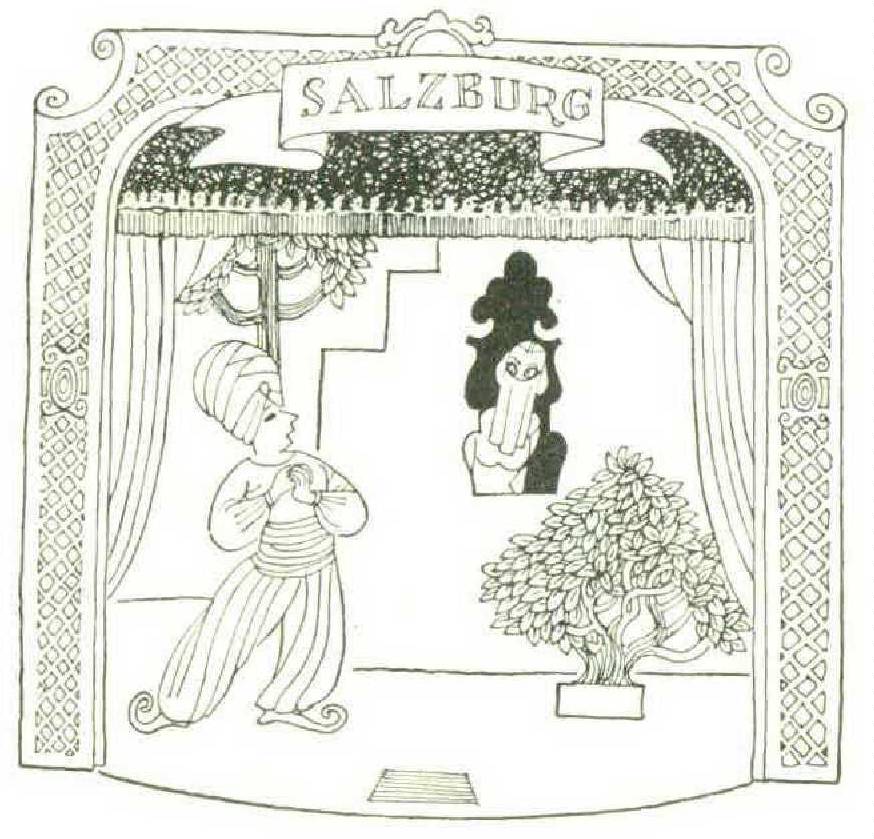
Impressive as this effort is likely to be, it seems certain to be surpassed by the baroque splurge which Salzburg is planning this summer, to honor the infant prodigy who was born there in 1756. The normal festival length is being increased this year from five to six weeks, so that it will start in mid-July rather than at the end of the month. All six of Mozart’s great operas (The Magic Flute, Così fan Tutte, Don Giovanni, The Marriage of Figaro, Idomeneo, and The Abduction from the Seraglio) will be presented, to the exclusion of all other operas. They will be performed in the Festival Hall and the arcaded Felsenreitschule, though plans are being made to stage Don Giovanni out-of-doors in the noble Residenz square, where the traditional Salzburg morality play, Jedermann (Everyman), will continue to be shown.
Here, as in Vienna, an important conference of Mozart experts is scheduled to take place in August, under the auspices of the Central Institute for Mozart Research. While this is certain to attract the connoisseurs, the amateurs will be able to entertain themselves by going to see Salzburg’s unique Marionette Theater, which recently toured the United States. This summer its repertory is to be given over almost entirely to Mozart from July through to September. In addition to a miniature presentation of The Magic Flute, it will offer marionette performances (with music) of Several youthful operettas that few Mozart-lovers have ever heard — Apollo and Hyacinth (composed when Mozart was eleven) and Bastien and Bastienne (composed when he was twelve), along with a humorous piece of operatic vaudeville called Der Schauspieldirektor (The Stage Manager) which Mozart composed in later life, and which depicts a vocal duel fought out between two rebellious prime donne and their manager.
Not content to leave the celebration of the bicentennial to Vienna and Salzburg, other Austrian cities are joining in in their own way. Graz is planning to put on a five-week Mozart festival (from May 1 to June 5) which may afford amusing distraction to energetic tourists worn out chasing chamois over the nearby Siyrian Alps. Innsbruck is planning to commemorate the great composer in jolly Tirolian style by giving a series of serenades in the arcaded court of its Museum of Art and Folklore in July and August.
Germany
If your itinerary takes you to Germany rather than Austria, you may still indulge your taste for Mozart, for next to the Austrians it is the Germans, the most conscientious musiclovers on the Continent, who are out to make a big thing of the bicentennial. The old city of Würzburg has decided to exploit the prestige of its great palace — former home of the bishops and grand dukes of Würzburg, which miraculously escaped destruction during the war — to stage a two-week festival from June 9 to June 23 with the help of the Bavarian Radio Orchestra, Edwin Fischer, Irmgard Seefried, and the Koeckert Quartette.
From the 23rd to the 24th of June an unusual Mozart festival is to be held in the monastery church of Seeon, in the foothills of the Bavarian Alps near Chiem Lake where mad King Ludwig II built his rococo imitation of Versailles. It was in this convent church that young Mozart conducted the first performance of his Offertory for the Festival of St. John the Baptist.
The stellar event of the German season will take place in the castle of Ludwigsburg, situated on the fringe of the Black Forest near Stuttgart, from June 29 to July 15. It is an appropriate place for a Mozart festival not only because Mozart himself stayed some time here, but also because it is a magnificent eighteenthcentury Schloss (“a perfect imitation of Versailles,” as the guide will unsmilingly inform you) with baroque gardens, a museum, a portrait gallery, a private chapel, and a baronial hall which lend themselves perfectly to a summer celebration of this kind. The festival, which is being organized by the German Mozart Society, will feature a wide diversity of Mozart works, from his seldom-played operetta, La Finta Giardiniera, to littleheard choral pieces. The concerts will be played for the most part by the German Southwest Broadcasting Company Orchestra, with the participation of French, Italian, and German soloists, including Wilhelm Kempff.
France
What the Germans will offer you with painstaking thoroughness, the French will present with Gallic ingenuity, and they are taking considerable pains to discover elegant ways of hailing the memory of the little court favorite who when he was only seven played before Madame de Pompadour. An important concert is to be held on May 14 in the chapel of the Palace of Versailles to commemorate Mozart’s visit there, and this is likely to be followed in June and July by some evening Mozart concerts in the Palace gardens, highlighted by illumination of the fountains.
In Paris (where Mozart’s mother died and was buried) a number of Mozart concerts are planned in some of the great town-houses. One will be held in June in the stately, colonnaded court of the Hôtel de Soubise (now the home of the French National Archives); another is scheduled for the same month at the Hôtel de Beauvais (the former Bavarian Embassy, where Mozart stayed during his first visit to Paris); and a grandiose Concert Serenade is due to be put on in July by the Paris Opera and its huge Corps de Ballet in the great court of the Palais Royal.
Besides the programs in Paris, the picturesque Alsatian city of Strasbourg will devote its entire festival (from June 8 to June 23) to Mozart works, to be played against the background of one of the finest gothic cathedrals in Europe, and in the elegant eighteenth-century court and salons of the episcopal palace.
For its summer festival (July 7August 2) Aix-en-Provence is planning to import the Paris Conservatory, the German Southwest Broadcasting Company Orchestra from Baden-Baden, and the Quartetto Italiano to play concerts, in which the pièce de résistance will be Don Giovanni.
In the little town of Prades, in the Pyrenees, Pablo Casals is likewise planning to give a lot of attention to Mozart. Once again this festival, which is to run from July 3 to July 18, will be an all-chamber-music affair. Among the noted guest artists who are scheduled to take part will be Yehudi Menuhin, Joseph Szigeti, Rudolf Serkin, and the Vegh Quartet.
A festival featuring the music of Mozart’s contemporaries is to be held in July at Sceaux, just eight miles from Paris, in the elegant seventeenth-century chateau which Louis XIV’s minister, Colbert, filled with murals by Le Brun. Not to be outdone, the watering spa of Vichy has decided to stage a Mozart Week in mid-July. It will be welcome news to those gourmets w ho have eaten too much pâté de foie gras: they will be able to pamper their eardrums while curing their livers. And for those who like music with their aquatic sports, there are glad tidings from sunny Menton (next to Monte Carlo on the Côte d’Azur), where some Mozart Gala Nights are scheduled during the Riviera Festival (August 1-15).
England
On the other side of the Channel, the British are preparing to honor the bicentennial with appropriate decorum. This year’s Glyndebourne Festival (June 1 July 31) is to be entirely devoted to Mozart. As at Salzburg, all six of Mozart’s great operas will be presented here in the theater of the graceful Elizabethan and Queen Anne manor house which has become one of Europe’s great musical landmarks. There will be five performances a week, with all the traditional trimmings — evening dress, and a dinner intermission full of roast beef and Yorkshire pudding.
For the festival which he is once again preparing at Aldeburgh (on Britain’s North Sea coast) Benjamin Britten is also scheduling a good share of Mozart melodies (June 1524). They will enliven a sparkling program that includes a lecture concert by the French composer François Poulenc, a talk on music by E. M. Forster, a dissertation on art by Sir Kenneth Clark, and a poetry reading to musical accompaniment by Dame Edith Sitwell.
The Edinburgh Festival, from August 19 to September 8, will make a Highland bow to Mozart. Its main attraction will be the visit of the Hamburg State Opera, under Gunther Rennert’s direction, which will present The Magic Flute, Richard Strauss’s Salome, Stravinsky’s Mavra and Oedipus Rex, and Cornelius’s The Barber of Bagdad. Some Mozart church works are also due to be sung here by the Vienna Hofmusikkapelle, which will close the festival on a lofty note.
Italy
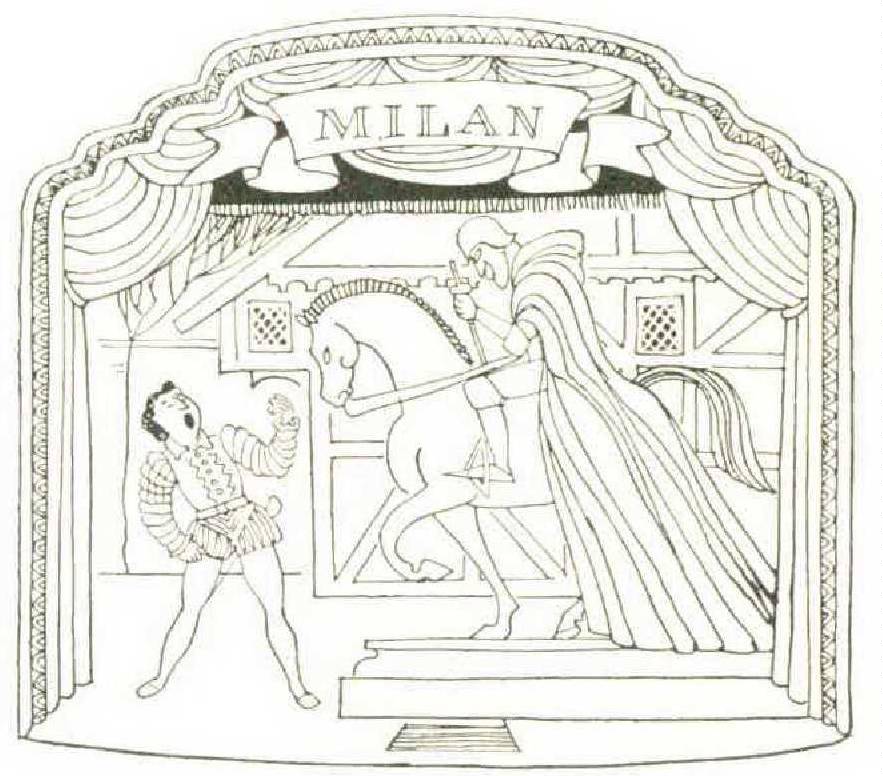
The Italians, of course, have never forgiven Mozart for having been born on the wrong side of the Brenner. However, certain Italian cities are making a special effort to forget momentarily their national allegiance to Verdi, and are planning to make a Mediterranean salute to the composer of Dcn Giovanni. Florence will be playing some Mozart during its forthcoming Maggio Musicale (Musical May), which is always a gay event in this most bewitching of Renaissance cities. In Milan, the Scala, conscious of its international prestige as one of the great opera companies of the world and as the one which has done more than any other to revive eighteenth-century opera, is preparing a two-month-long salute to Mozart (May and June). The celebrations will include special performances of Così fan Tutte in the tiny jewel of an opera house which the Milanese recently built next to their big one especially for eighteenth-century opera — a theater which is now baptized the “piccola Scala.”
The smaller countries
Many smaller countries in Europe are also scheduling Mozart programs. The city of Zurich in Switzerland is planning a June festival which is to be well seasoned with Mozart, and the citizens of Geneva have organized a Rose Week (it is a week lasting thirteen days, from June 18 to June 30), which will feature outdoor performances of Mozart works.
The Dutch are planning a monthlong Festival of Music and Drama (June 15-July 15), featuring Mozart performances, which will be given in Holland’s three capitals — Amsterdam (business), The Hague (political), and Scheveningen (seaside-recreational). The Swedes will hold a big festival (June 3—13) with performances by the Royal Opera Company. Mozart’s early operetta, La FintaSemplice, will be put on here at the quaint eighteenth-century court theater of Drottningholm Palace.
Faraway Finland will honor the great Austrian composer with performances in late April of three of Mozart’s operas by the Helsinki Opera Company. And there are unexpected tidings from Turkey, where the Ankara Opera Company is planning a special salaam to Mozart, though no dates have yet been set. It is welcome news for those ardent globe-trotters who would like to have the best of both worlds, and would love to be able to hear the strains of Figaro after watching the sun set over the Golden Horn.
(Additional information on specific Mozart celebrations may be obtained by writing to the European Travel Commission, 295 Madison Avenue, New York City.)
CURTIS CATE