The American Abroad
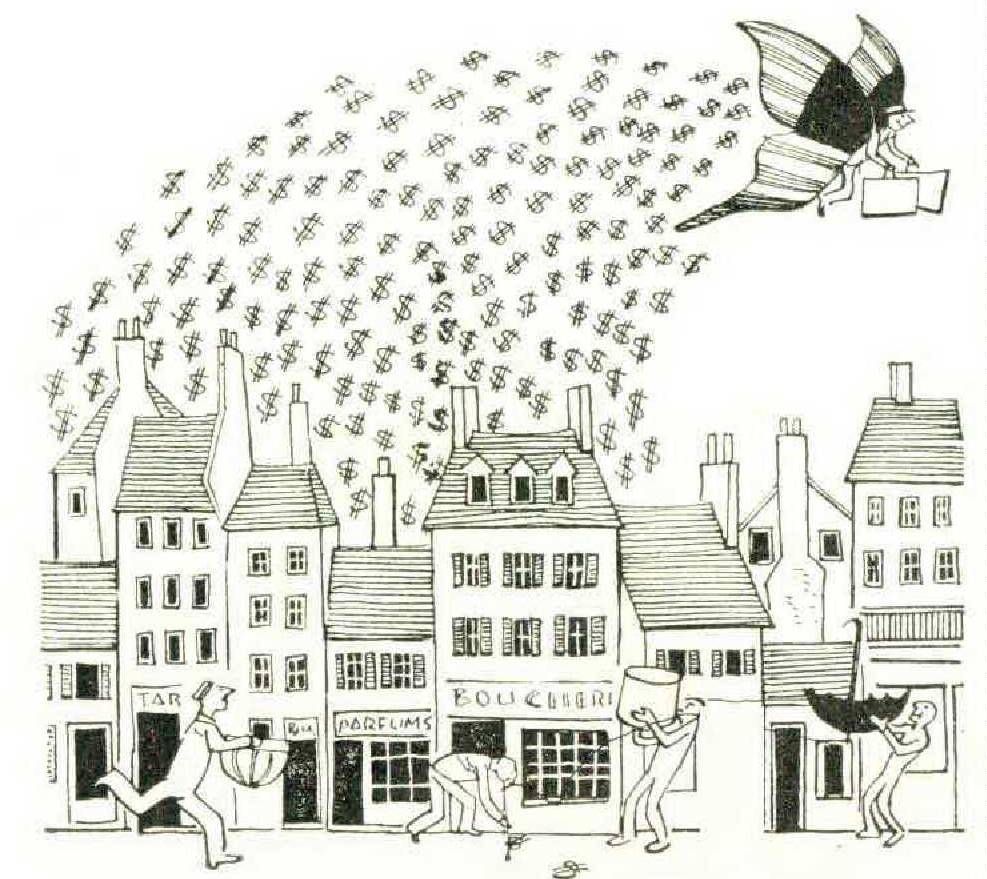
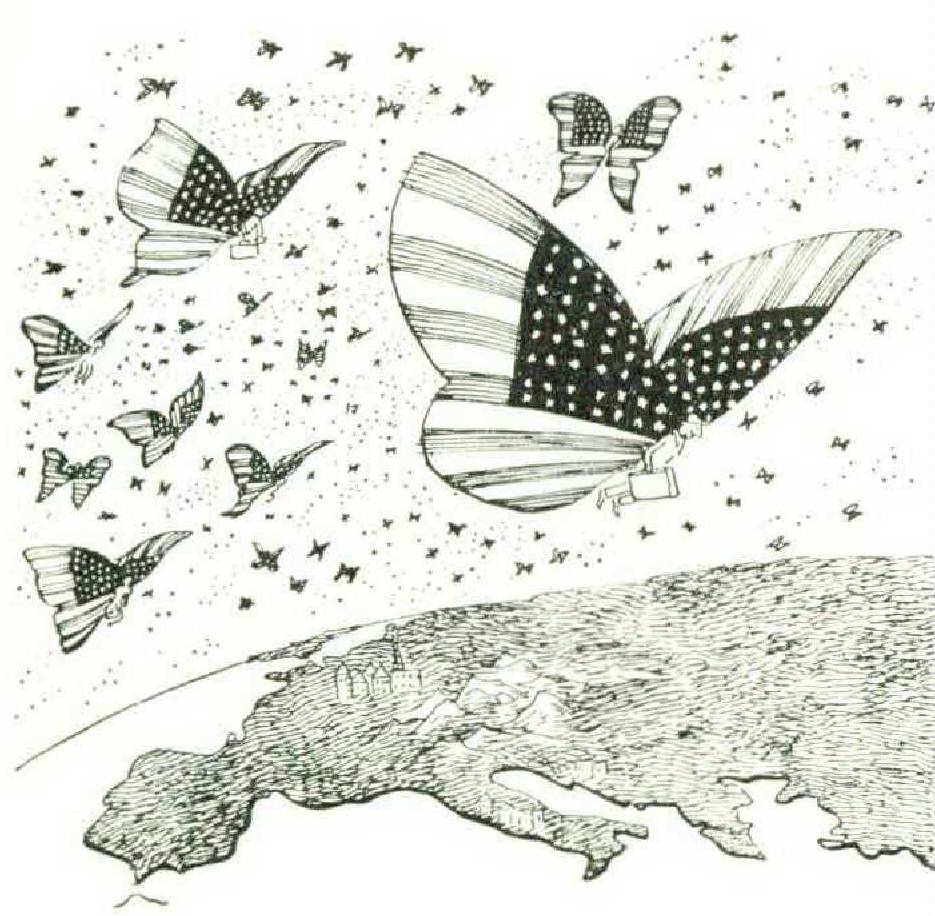
The American abroad is a delightful, exasperating, or formidable phenomenon, depending on from where you look at it. He is a blessing for festival promoters, wine waiters, and souvenir salesmen; a problem child for bureaucrats and officials engaged in the care and upkeep of international good will; and he alternately delights and exasperates the local populace with the kindness of his heart and the loudness of his voice. Everybody agrees that the impact of the American on the foreign scene has been tremendous. So, for that matter, has been the impact of the foreign scene on the American abroad.
Overseas travel has increased fabulously in the past ten years and is still going up. Ten years ago, less than 200,000 Americans went to Europe and practically none went to other continents. This year, over 600,000 went to Europe, and large numbers went to Asia and Africa; curious, enterprising Americans now go to Iron Curtain countries, the Soviet Union, Yugoslavia. They want to find out firsthand what’s behind the headlines. Experts refuse to predict what overseas travel will be like ten years hence, should ocean travel fares be drastically reduced. (One project: 105,000-ton, 35-knot, four-day, one-class superliners. Round-trip fare SI 50.)
Currently the trip abroad is still a luxury, irrespective of whether you pay as, or after, you go. According to Commerce Department statistics, 575,000 Americans last year spent $475 million in Europe and the Mediterranean area, an additional $350 million on transportation. The average traveler spent $1565 on his trip, 2.5 per cent more than the previous year. In Italy, 259,000 big spenders shelled out $94 million, in France 300,000 spent $85 million, while in Western Germany 217,000 spent “only” $53 million. Thirtyseven per cent of the travelers were foreign-born Americans going back on a sentimental journey, staying an average of seventy days. Native Americans spent one third more money though they stayed only forty-seven days.
Anyway, more Americans than ever before go abroad, spending more money there than ever before. This year some sixty ships of nineteen lines with 250,000 berths and 247 weekly airplane flights with almost 17,000 seats were available, but space was still at a premium. The airplane has stimulated more boat travel (somewhat as radio helped the growth of the recording industry). About half the travelers get there by boat — which, as the ads say, is half the fun. Some day in the near future the trip abroad will be pleasant routine for the average American.
THE AMERICANIZING PROCESS
American tourists have revolutionized the economies and finances, technology, standards of comfort, manners, and morals abroad. Americans paid for a considerable segment of Europe’s (and the Near East’s) tourist facilities, either indirectly, by Marshall Plan and other subsidies, or directly, by signing their travel checks. They helped to bring back hundreds of industries. Everywhere the word “tourist” has become synonymous with “American,” The World’s Preferred Paying Guest. New investments are made in the hope of getting the U.S. trade. In Switzerland, the classic hotel country, new hotels were built and old ones renovated to suit the peculiar needs and idiosyncrasies of the American guest. Even the most conservative European hotel owners have accepted the facts of American life.
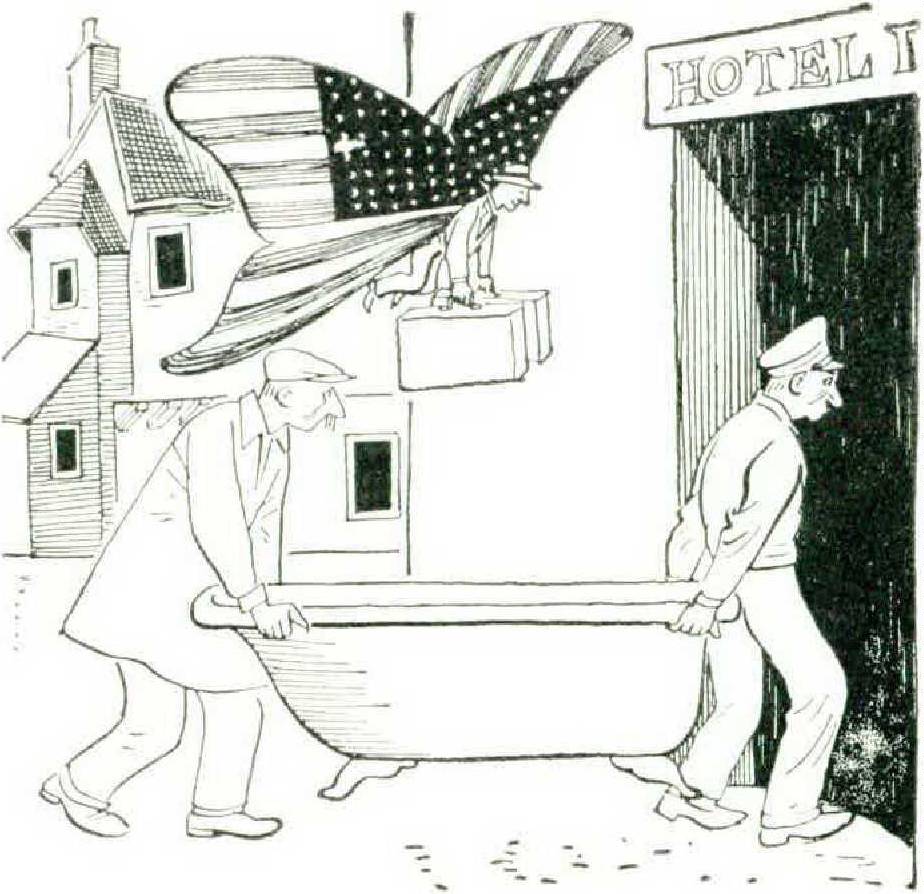
Americans, they know, care less about the size of their rooms than about the plumbing of their private bath. They are unimpressed by the fin de siècle façade of their “palace type” hotel but want bar, newsstand, and fast telephone service in the house. They expect innerspring mattresses, individual lamps, good room service, warm toast, ice water. They are more finicky about their coffee and dry Martini than about Persian rugs in the lobby and the view from the balcony. A great old Continental hotel that was proud of its personalized service, down to the pin-and-needle cushion in the drawer, has reluctantly installed radios in its rooms and Kleenex boxes in its bathrooms. All over Europe, millions of dollars have been invested because Americans have to have plenty of hot water, good heat, closet space, towels, and hangers.
The American influence abroad is still somewhat superficial but already habit-forming. The rustling of popcorn bags can be heard during the tense, low-voiced love scenes in French cinemas. Chewing-gum sticks have been found pasted below the seats of the august Vienna Staatsoper. Venetian gondoliers don’t even swear any more at the sight of the brightly painted Coca-Cola motorboats. Monte Carlo’s croupiers have learned the technique of crap shooting. Though American automobiles are far too big for Europe’s narrow, crowded highways, the possession of an American car gives its owner a definite cachet and is the dream of the average European.
American motion pictures (featuring more European stars than before), books, magazines, gadgets, clothing, eating and drinking habits are accepted and imitated. American slang expressions (“strip-tease,” “cheesecake,” “trouble shooter”) are now part of the German, French, Italian languages. German newspapers use American expressions, with capital initials, to be sure, and French papers often misspell them or give them a wrong meaning. A popular French magazine is called Match, a popular German magazine Quick. Bavarians eat Krafft cheese, made in the Allgäu. Motels are put up along the Autobahnen. The roads between Roman ruins are dotted with Esso and Mobiloil stations, where you are promised “American service.”
Germany’s business executives now work as hard and play as hard as their American Kollegen. German burghers and French citoyens wear their shirts outside their pants on hot days. Somehow it doesn’t look as good in Munich or Marseilles as in Miami or Santa Monica. Millions of Frenchmen eat less and lighter. The trend is from heavy sauces and civet to fruit juices and steak.
Snack bars and milk bars all over France are crowded with Frenchmen‚ despite vigorous denials by members of the Académie des Vins de France. M. Mendès-France was unable to make his countrymen like milk; the Americans will do it. Just give them more time and let them install better refrigeration. The ambulant chefs of the Compagnie des Wagons-Lits now prepare meat and vegetables the way Americans like them. European customers have to take it or leave it. The day is coming when Californians will get the salad before the entree.
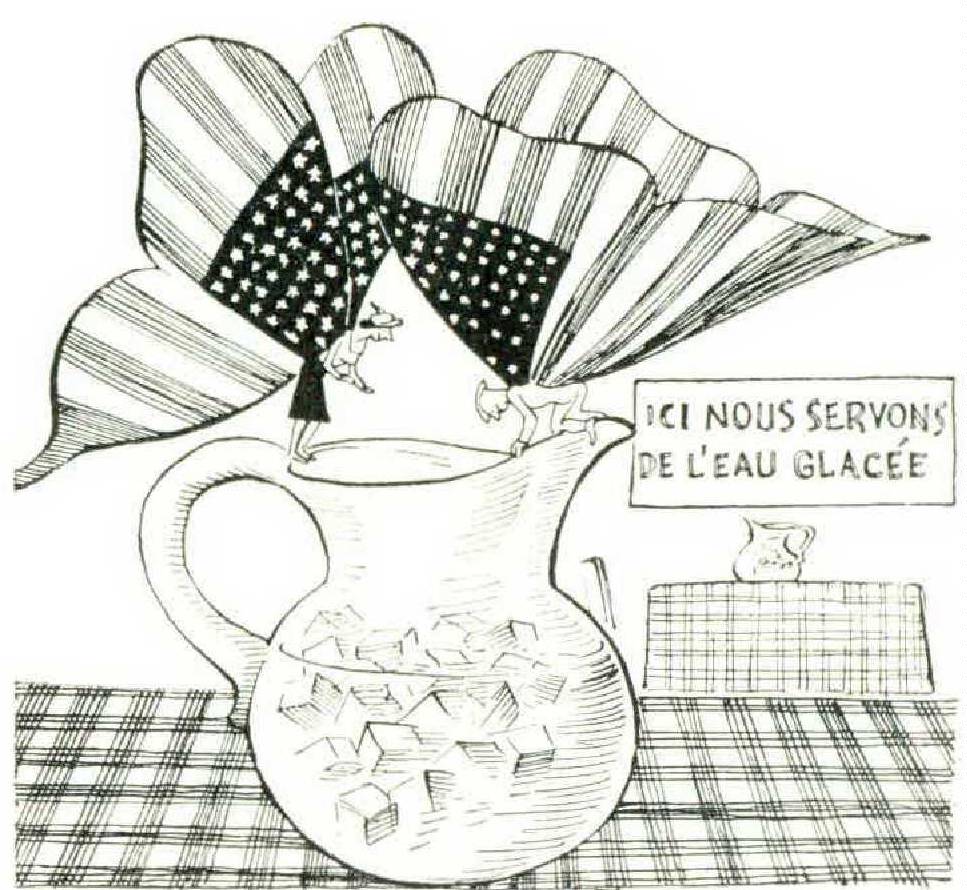
Waiters are no longer shocked by the sight of cigarette butts on the plates of women, next to the leftover potatoes. And the Bastille was stormed again — this time by the Americans — the day the first French waiter put a carafe with ice water on the table of his American guests without being asked for it. Only he who knows the Frenchman’s atavistic horror of water will gauge the depth of the revolution.
In Vienna, the classic music city, young music lovers swoon when Americans perform. “An American accent is more important nowadays than a high C,” a soured Austrian colleague said. He should have added that most American singers brought a good singing technique along with their accent. American orchestras, conductors, jazz stars are widely acclaimed all over the Continent. Local critics have stopped being condescending about American artists. Festival programs are shaped to suit the taste of American listeners. American musicals (Kiss Me, Kate — Wonderful Town — Annie Get Your Gun) were produced at Vienna’s Volksoper by Marcel Prawy, an Austro-American, and are now performed all over the Continent. American plays (The Teahouse of the August Moon, The Caine Mutiny CourtMartial) were popular successes, too.
THE ILLUSION OF ADVENTURE
Europeans with time-honored experience in the technique of painlessly extracting cash from foreigners’ pockets have correctly gauged that Americans like to travel abroad provided they don’t really have to leave home. They’ve seen the U.S. armed forces and U.S. oil companies spend millions to give their personnel the illusion of living in a European or African suburbia filled with shopping centers, post exchanges, movie houses, ice-cream parlors, juke boxes, and American-style parking lots. Smart promoters now give the American abroad exactly what he wants. Hotel rooms are furnished to please him, meal hours drastically advanced to suit the American habit of eating dinner at 6 P.M., arrangements made to satisfy the Americans’ affection for crowds, action, and noise.
Guided tours include “surprise elements” and “picturesque charm.” The promoters know that Americans like their sights drenched in nostalgia and their local color wrapped in clean cellophane. “They want an air-conditioned fishing village,” a Frenchman says. Americans like to appear unsentimental but break down during the thickly sentimental zither songs in a Viennese new-wine garden. They are discoverers at heart and love the small bistro around the corner or the back-road inn no other American ever heard of (they think). They put down the address in their little black book and will give it only to their very best friends on their return. Quite a few bistros and back-road inns have built up a prosperous trade on the adventurous and optimistic spirit of the late pioneers.
Europeans had to jack up their standards of comfort, cleanliness, transportation. The rickety buses of French film comedies are replaced by Greyhound-style monsters. “Europe’s newest trains compare favorably with America’s Super Chief,” a German paper wrote proudly. All “sights” are classified according to price range. Local “contacts” are mobilized to give the American traveler a chance to meet what is called “real people.” They are about as real as the smart aristocrats who fixed up their dilapidated castles and run them for a small, snobbish minority of well-heeled foreigners who are flattered to pay heavily for this privilege. Everywhere shopkeepers study the American tourists’ taste and stock their shelves accordingly. It is a dubious trend: the traveler often comes away with a polished, inaccurate impression of the foreign scene. It’s like finding out about Paris by taking a bus with the sign “Paris by Night.”
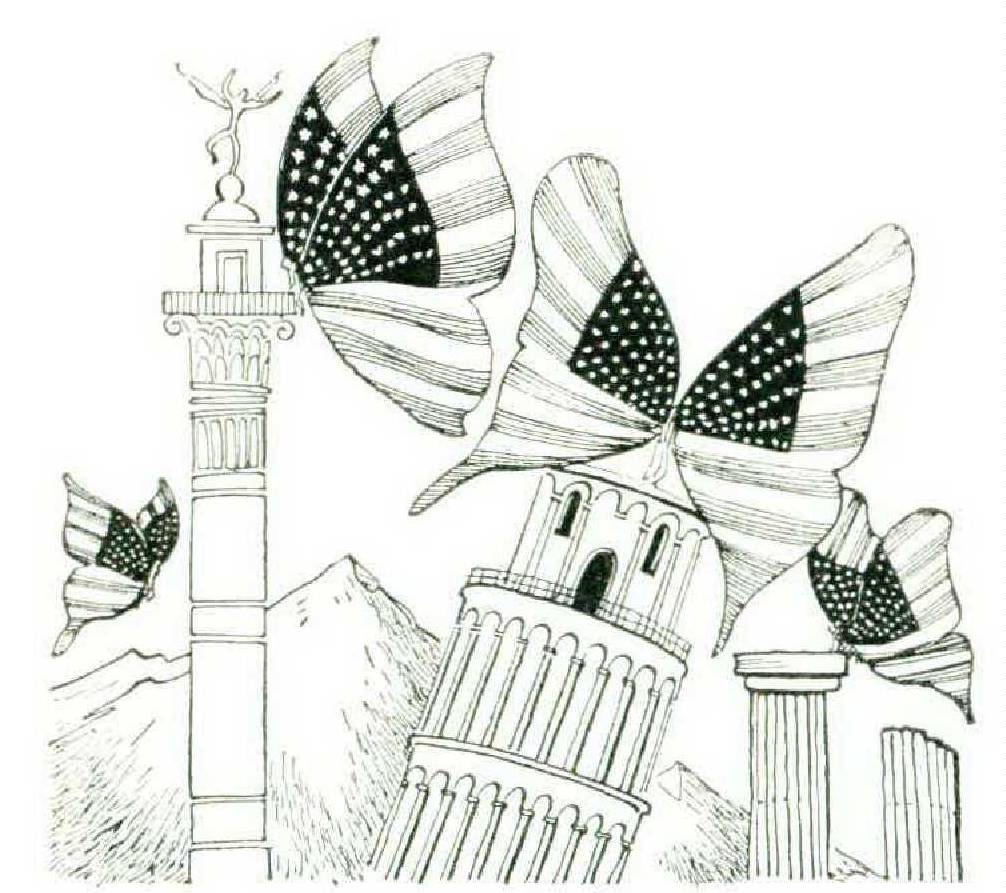
American travel abroad now goes through its Sturm and Drang cycle. All grand tours include the four “high spots”: Paris (visited by an estimated 400,000 Americans this year), London (270,000), Rome (250,000), Madrid (200,000), followed by Venice, Amsterdam, Brussels, Florence, Copenhagen, Zurich, Munich, Stockholm, Lucerne, Geneva, Vienna. A new mass movement has brought over 22,000 Rotarians, scientists, lawyers, doctors, boy scouts, legionnaires to Europe for congresses and conventions. Seaside, lake, or mountain resorts near large cities or easily accessible are popular: the Ardennes, Ireland’s Yeats country, the Connemara fishing region, several fjords in Norway, the Bürgenstock near Lucerne, the Dolomites, the Adriatic Riviera, the Greek islands of Rhodes and Corfu. The more adventurous are offered “off the beaten track” tours of Sweden’s pastoral landscape, Spain’s Costa Brava, San Marino, Liechtenstein.
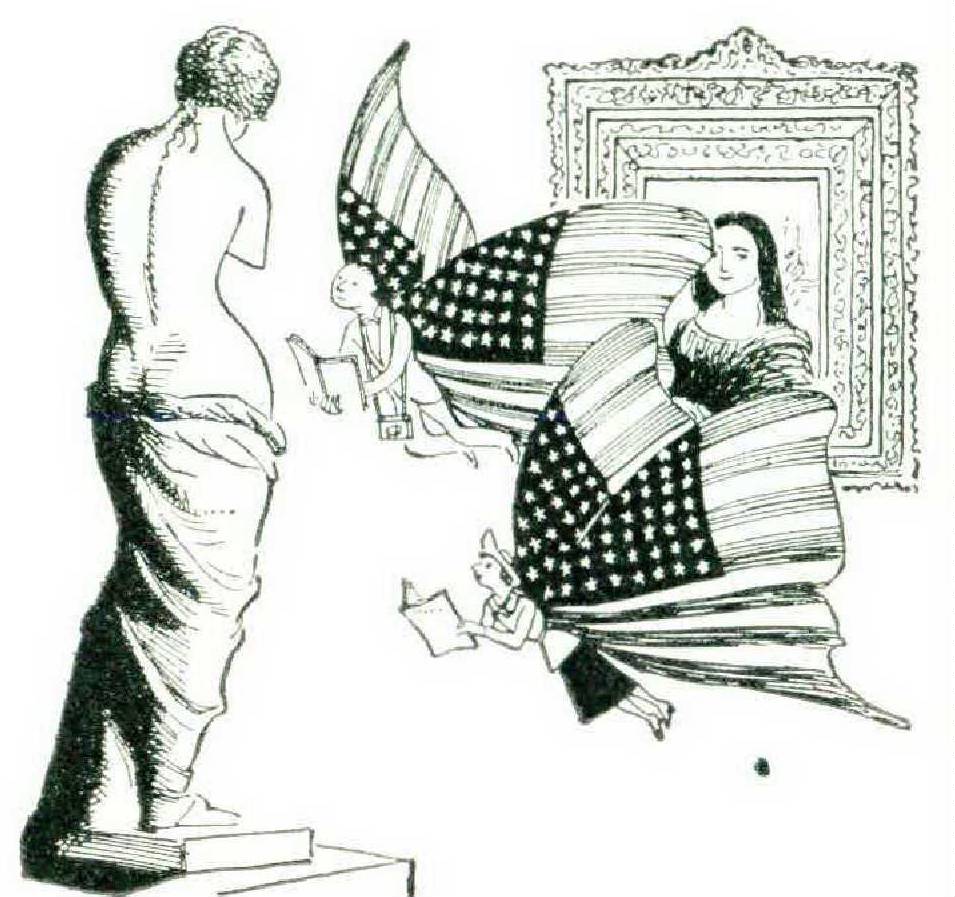
The travel promoters know that Americans like to work hard even on their vacations. They keep them busy round the clock. Many allot half an hour to the Louvre (“just the Mona Lisa and the Venus of Milo”). They now have a six-hour “midnight-sun excursion” by plane. The tourist must be on the move all the time; a quiet day of contemplation might bore him. Americans are no longer Innocents Abroad, as in the days of Mark Twain, but they are still in a hurry. They try to “make” as many sights as possible in a short time. They admire the gratin de langoustines and perdreaux casserole but happily settle for hamburger and ice cream. (The European landscape is dotted with hamburger stands and ice-cream parlors but both are often disappointing.) They busily prepare for total recall back home and collect maps, pictures, souvenirs. A stock cartoon character of the comic papers in Europe during the Wilhelminian era was the German tourist in knickerbockers, carrying his Baedeker, crossing off three-star sights. The current American tourist carries a Dacron suit, camera, ballpoint pen, a popular guidebook telling him where to go after 11 p.m. “while the wife stays at the hotel”; but he, too, busily checks off threestar sights.
NAïVETÉ AND NOISE
One of the great fascinations of travel is to leave one’s identity at home, read: “to relax,” Even the British, most civilized travelers, don’t always behave abroad as they would at home. Americans, the most vigorous, most prosperous travelers of all, are no exception. Well-balanced citizens arrive on the eastern shores of the Atlantic in a confused state of mind, a mixture of inferiority and superiority complexes. They hide their bewilderment by hotel hall porters, taxi drivers, ticket scalpers, arrogant headwaiters behind the strength of their vocal cords. Everybody talks a little louder than back home, finding comfort in the sounds of the English language. (Actually, many Europeans in all ways of life understand a little English.)
Americans who wouldn’t doublepark their cars in their home town throw their weight around in European hotel lobbies. They seem torn between admiration for the foreign scene and resentment of the foreigners’ peculiarities. Like our statesmen, they try so hard to be liked they often wind up being disliked. They spend too much money. Europeans who never had the American genius for doing things in a big way often misjudge the Americans’ generosity for ostentation.
Because of the antics of some early post-war travelers and exuberant members of the armed forces, all Americans were labeled “naïve” and “noisy.” Anti-American elements in Europe — French intellectuals, Italian left-wingers, disgruntled businessmen— would play up isolated, minor incidents. Today Europeans know that there is generosity behind the Americans’ “naïveté” and good will behind their “noise.” They sometimes say the wrong thing but often do the right one. They impress Europeans by backing up their idealism with hard cash. Best of all, they demand nothing in return.
Europeans are surprised about the Americans’ attentiveness to old people and young children, about their good automobile manners. “When I see a car stop at an intersection to let pedestrians cross, I know the driver is American,” a Swiss policeman said. “No European does it.” The Americans’ patience and lack of discrimination worry European hotel owners and restaurateurs whose help gets sloppy as a result of the Americans’ willingness to put up with everything.
“They never send back a dish,” a famous restaurant owner says. “But without difficult customers we can’t keep up our exacting standards. The Americans are not difficult enough.”
AN END TO ISOLATION
The American who exercises so much influence abroad is in turn strongly influenced by the foreign scene. It was the accumulated impressions of twelve million men and women in the armed forces during and after the last war that helped to shape American public thinking and foreign policy. Many veterans have gone back to look at the places they saw during the war, or plan to go there when they have the money. Many find out firsthand about the problems of foreign countries and return with a better understanding of America’s leadership in the free world — and of the high price we have to pay for it. You won’t find many narrow-minded isolationists among the returned travelers.
What would anything like a commensurate amount of travel in the United States by Continentals bring to pass? For one thing, better mutual understanding. It may be true, as Europeans complain, that Americans are often ignorant of Europe; but Europeans are even more ignorant of America. Most Europeans get their information about the United States out of their newspapers (which often confuse news with opinions), popular American movies, and occasional displays of such phenomena as Elvis Presley and the late Senator McCarthy.
The small group of Europeans who visit America are bewildered by the scope and sweep of the country, the Americans’ ability to do big things fast, the miracles of American technology. Rarely do they stay long enough to comprehend the meaning of American democracy or to understand the undercurrents of American thinking. Visitors are exhilarated and depressed by our large cities, overwhelmed by the hospitality of the American people, puzzled by America’s paradoxical attitudes. Sample questions: “Why are Americans the best salesmen of cigarettes and soft drinks and the worst salesmen of ideas and ideals? Why do Americans make a lot of sense in their own country and often no sense whatsoever abroad?”
An educated European summed up the case a while ago: “You Americans are too successful, too prosperous, too conspicuous, trying to do too much in too short a time to be liked universally. But you are better liked than ten years ago and you’ll be better liked ten years hence.”