The Door Knocker: Further Notes on My Father
Author, connoisseur of modern art, and country squire, SIR OSBERT SITWELLbegan in 1942 the writing of his monumental autobiography, a fire-volume work which, on its completion with NOBLE ESSENCES in 1950, was described by the London TIMES as “an outstanding contribution to literature.”
OSBERT SITWELL
IN THE dining room at Renishaw there hangs among the assembled portraits one which was not there when I was a child. It is not a work of art; in fact the tortoise-shell frame which contains it is responsible for any effect that it contrives to make; nevertheless it is plainly — I fear plainly is the precise and operative word — a painstaking, and a painsgiving, likeness. It represents a young girl, who carries perched on the crook of her left arm a rather mean-looking and curiously undecorative green parrot. The girl herself wears on her slightly smug, round face an expression of insipid, innocent surprise; I apprehend that she would look even more astonished could she be aware of the circumstances attendant on the last purchase of her portrait and its reappearance in this house.
We must, since one thing leads to another, begin at the beginning, or even before it, and touch on matters seemingly unconnected with the portrait, but which in reality shaped the course of small events which led to its acquisition — events which though minute in themselves are part of the chains and fetters of the inexorable law of cause and effect. During the winter of 1920-1921, the door of the house in which my brother and I lived in London lacked its knocker for a period of some three months, and any friends of ours passing would have been able to interpret the message which its removal carried: that my father was in London — in addition, if they went by frequently, they would have comprehended that he was paying a longer visit than was his wont, for in the same way that the presence of the Sovereign in a city is made evident by the flying of a standard over his palace there, so, albeit obversely, the taking down the knocker from the door of his sons’ house signaled to those in the know that my father was in London.
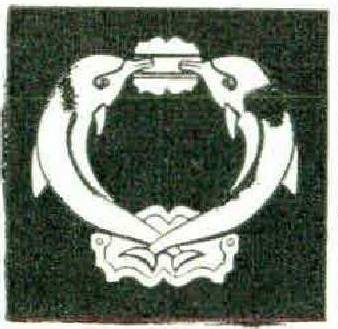
The explanation of the periodic disappearances of this object was that I had found it in a lumber room at Renishaw, where it had reposed for years; it must have come from Italy, is made of bronze, and its shape — that of a ring slightly pulled out at the sides — is formed by two dolphins, face to face, fin to fin, their entwined tails closing the circle. Seeing it, I at once grasped how well it would look on the door which it now still embellishes, and took it to London without revealing to my father that I had done so, for though he had several years previously handed Renishaw over to me, he still liked to be consulted, and I knew from experience that the words which came most easily to his lips were “No, certainly not!” or, with a note of warning in his voice, “Oh‚ I shouldn’t do that if I were you!”
All those dreary long winter weeks, therefore, I was obliged to conceal the knocker, my father having sought refuge in London for reasons which I will shortly disclose. In the days of which I write, Scarborough, ancient and historic borough and a modern pleasure resort, yet retained a marked character of its own. Many incidents of past years in the seaside town I could relate, and, though varied, they would be no less grotesque. Of them all, the Adventure of the Phantom Special Commissioner of Inland Revenue is perhaps the most exceptional — as unexpected as the episode in London to which, by making my father spend the winter there, it led up.
In those days we still had a house in Scarborough — Wood End — always referred to by a writer in the local press as “Sir George and Lady Ida’s marine residence”; a description which ever summoned to my mind the image of some submerged and finny grot at sea bottom with huge fish darting in and out in strictest privacy: the words certainly served to make the place sound cool and remote. However, Wood End was not so isolated or lonely as the description suggests. Several taller houses overlooked its rectangular block, built of dark gold stone, set in a large garden and within range of all the sea’s voices — its roarings, its tremendous thunder and lionvoiced threats, its occasional purring and lighthearted delusive promises.
It was some time during the late summer that my father first noticed one of the Special Commissioners of Inland Revenue, so he asserted and continued to maintain, skulking on the roof of the nearest house, observing him through binoculars. My father declared him to be a dignified-looking individual, wearing striped trousers, a morning coat, and a tall hat — no very suitable garb, I reflected, for someone literally “on the tiles” who must wish to escape attention. Apparently the stranger stood there for hours, patiently watching Wood End. At the beginning my father was furiously angry and would stare back through the spyglass which he always carried about with him when at Renishaw or Wood End so as to be able to obtain the distant view — in other words, in case he should see a chance of knocking down some building and beginning to erect another in its place.
I was never able myself to discern the mysterious stranger, and my own feeling was that he was either my father’s Narcissus-like Doppelgänger, a projection from and of his own personality such as Edgar Allan Poe was concerned with in his story William Wilson, or else that victim of delirium tremens who had lived ten years before — and apparently was still living — in the house in question. From time to time the victim of the most oppressive alcoholic nightmares, he was probably, if it were he, scanning our garden for stray pink elephant or undulant boa constrictor; but my suggestions to that effect were contemptuously rejected. No, my father had guessed the identity of the prowler immediately, and once and for all. He did not believe in ghosts, but with his whole being he believed in the existence of his Special Commissioner. Nothing could shake him. When I said to him, “How can you be so sure that he is one of the Special Commissioners of Inland Revenue?” he resorted to the use of one of his favorite and most irrefutable replies: “ We happen to know.”
The phantom continued to haunt him, so he decided to go away. He would not visit Renishaw as my guest, for the insolent intruder might follow him there, hide in one of the stables or outhouses and steal out unobserved, to watch and follow and pry, and, in fact — like the hosts of Midian — to “prowl and prowl around.” Instead, he took the lease for the autumn and winter of a furnished apartment on the sixth floor of a block of flats in Knightsbridge; at least there he would not be overlooked and would be free from the daily persecution — as he had grown to regard it — that he had suffered at Scarborough.
SO IT came about that my door remained for several long months without its customary knocker. From his new and temporary eyrie, my father could pursue his many interests: he could be seen, if the Commissioner in question had followed him, leaving the building every morning for the reading room of the British Museum — where he was at last in the final round of a long hand-to-hand tussle with the Grosvenor pedigree — wearing frock coat and silk hat, the wellknown air cushion like a life buoy on his arm.
Though the conduct of his life followed its customary course in London, the experiences of the last few weeks had left him in a more than usually suspicious frame of mind. When, therefore, he received a letter from a stranger, asking him to visit his house, my father’s reactions were mixed. (The Commissioner again?) The correspondent claimed to be an ex-naval captain, lived somewhere at the top of Hampstead Heath, and had written to say that he had lately purchased at a sale a small portrait which had formerly hung at Renishaw and which depicted a Sitwell ancestress as a child. He never sold — he proceeded to write — anything he had bought, but on this occasion would like to make an exception and offer the picture to my father. He would be at home on Tuesday afternoon, and could show the painting.
This letter at once excited my father’s predominant interest — in family history — and roused his latent fear that, since his life was of such great importance to the country, someone might attempt to kidnap him for ransom or even to kill him. There had been that odd incident, he recalled for my benefit, of the sample of cocoa that had reached him through the post (he had caused it to be put on the fire at once, but even then it had burned with a curiously colored flame and had made a spluttering noise). But at whatever cost to himself, he intended to inspect the portrait (which would it prove to be, Katherine Sacheverell, who had married George Sitwell; or Francis Sitwell’s wife; or Mary Reresby? much depended on that); there was no point, however, in incurring needless risk, so he would take with him his man Robins, who could carry a harquebus — what did they call it now? — of course, a revolver! Robins no doubt would require considerable coaching beforehand in how to act and how to handle the weapon, but my father would give him a few hints, so he could not go far wrong.
The instructions which Robins received were that he was to sit beside the driver, to draw a revolver ostentatiously from its holster directly he arrived outside the house, and when my father alighted was to remain holding it in an obvious and menacing manner, at the same time lolling to show he felt no fear himself, till my father should give a signal. My father said he would know by the atmosphere of the house after he had been in it for five or ten minutes what course of action to follow. If all were well, he would make certain faces and gestures, which he had previously taught Robins to interpret, from a window or possibly from the garden; if he failed to appear within a quarter of an hour, Robins was to fight his way in at the point — or, rather, at the barrel — of his revolver, for if the owner were really an ex-naval officer, he might be a good hand with a cutlass.
The day came, the taxicab was hired, and they started; they arrived, and the house seemed an ordinary Hampstead dwelling, rather pretty. My father rang the bell and the door was opened almost immediately by a neatly dressed parlormaid. Robins watched the house and garden with anxious attention and was relieved, after some eight and a half minutes had passed, to see my father’s face grimacing at him from a shrubbery just the other side of some oak palings, and to read its message and that of the accompanying gestures: “All clear.” What the ex-naval officer — who proved to be of a well-known type, bluff, hearty, adventurous, and intelligent — can have made of the highly unconventional behavior of his visitor, who in every other respect seemed so dignified and courteous, we shall never know. The taxi driver, for his part, from whom some reaction might have been expected, did not seem in the least astonished; he commented, as my father got out, “Nice gentleman, that, quite in the old style.” But certainly my father, with his beard, as he had signaled across the fence from among the speckled laurels, laburnums, and privets of a suburban garden, must have looked rather strange, unusual today as a satyr in a glade. The adventure had, it is true, a happy ending; no one was killed, my father left the house with the picture under his arm, the ex-naval officer had acquired the twenty-five pounds he had asked for it, and in time I was able to restore the door knocker to its accustomed place. Nevertheless, the expedition had left a tender spot in my father’s memory, for when one day, some years later, I asked him about it, he gave me a severe look and said, “Don’t ask silly questions, dear boy.”
AT SCARBOROUGH, the trim, prim terraces, crescents, and gardens seemed in the springtime and summer months to offer a field for comedy and even for farce. The fact that my father had seven times been a parliamentary candidate for the borough and had in consequence called on every voter on at least seven different occasions — for those were the days of a more limited franchise, and a personal visit was expected from each of the candidates — provided wide opportunities for comedy; because in consequence we possessed innumerable friends and acquaintances of every sort in the town, and among them are two I must describe for the unfolding of this episode.
One of them, Sister Dorothy, was an acquaintance more than a friend, though circumstances often forced us to see her. For several years she had been in charge of Jezebel House, which my grandmother Sitwell had established as a home for wayward girls, and when that establishment shut, she settled herself comfortably on my religious Aunt Florence, who had, most conveniently, just become a permanent invalid. Sister Dorothy was middle-aged and buoyant. In appearance she seemed positively bursting with ill-health, though she contrived in the end to live to be eighty; except for the tea-liend’s protruding teeth, her face looked as if it had been roughly thumbed into shape out of an overripe tomato. Perhaps because she was a member of some sisterhood vaguely affiliated with the Church of England, and in order to stress her almost official status, she always dressed in the character of a nun.
Miss Susan Tugworth, the other person I have to describe for the purpose of what follows, was a real friend, whom I can remember from a very early age. My mother and the rest of the family were very fond of her, and she had become a figure in the house, my mother often employing her on various errands in which tact, trustworthiness, and a knowledge of people in the neighborhood were required. I first recollect the figure of Miss Tugworth when she came to teach me how to write the letter “S,” pointing out to me that it was shaped like a swan. I still recall my efforts to make it look like one, and how the view outside was everywhere of swan’s-down, because snow was falling and covered everything, even the trees, with white, soft feathers.
Miss Susan, the eldest of her family, was kind and sad and overworked, never from the weight of any particular job, but from the drift and variety of the small burdens which she had assumed, the different kinds of task which she had been obliged to undertake in order to earn a living for herself and her drove of sisters. They were in a genteel way bitterly poor, and lived in a small white house which had belonged to their father, an artist of some repute, known in his day for his pictures of tall, slender, and beautiful women, carrying on their shoulders Grecian water jars and posed among almond blossom and peach. By a mysterious decree of fate, however, he had drawn as his allotted share of children only the very opposite of the type he liked to paint. These sisters, stunted, short-legged, long-bodied, their long, dog-like faces blue with cold, were all of them charming in their own way — that is to say, they had charm, but not of the sort which he would have appreciated. Now he was dead, some of the daughters had married, and others were invalids. It had devolved, therefore, on Miss Susan to support the afflicted. She remained patient, with an air of almost amused resignation and humility before the tricks of destiny.
AT THE time of which I am writing, the First World War was over and my father was again filling our Scarborough house with miscellaneous objects he had bought in Italy and was pouring them into Renishaw as well — which, however, was large enough to absorb the contents of many vans. As to their aesthetic effect, not everyone felt it; for the English taste is both more sober and less funereal. Thus Henry Moat, my father’s butler, whom readers of my autobiography will remember, plainly felt a distaste for these gimcrack but imaginative pieces. He was wont to say of them, as he did, too, of my father’s alterations and decorations of rooms, “Everything for show, and nothing for convenience.” If it had been left to him, all would have been of good, sound oak. My father often used to go to Renishaw for a short visit in the winter before the house was shut up — a process to which he always referred as “running over to Renishaw for a few days picnicking.” And first, before quoting the letter which gives Henry’s opinion of the furniture, I cannot refrain from presenting in its entirety a fascinating glimpse of the technique of this camping out.
The letters are addressed by Henry Moat from Wood End to Maynard Hollingworth, then subagent at Renishaw. Mrs. Westby, to whom reference is made, was for many years housekeeper at Renishaw.
All been well Sir George and I will arrive at the Hall tomorrow evening the train arrives GC 8.32 please send to meet us Brougham and heavy cart Sir George would like Hot Milk and bread the moment he crosses the threshold (please tell Mrs Westby Hot water bottle in his bed) Sir Geo will dine in the train
I am bringing 2 Chickens 2 Soles caviar Bacon plum Jam coffee Apples Biscuits Rice Loin of Mutton Blanc Mange Flour Tea and Mustard so will you please ask the good lady to order in the other things that she thinks is necessary. . . .
P.S. Look out for a wire cancelling everything I will wire Mrs Westby if so.
Regretfully leaving unexplored the mysterious ceremony of the hot milk and bread, so reminiscent of primitive festivals recounted in Sir James Frazer’s Golden Bough, we turn to a matter more immediately in hand. In an earlier letter he writes: “. . . Sir Geo arrives monday at 2 oclock and would like you to have the cases unpacked in the morning already for him to go through I am going to ask him if he will allow me to go through them after him with a huge hammer.”
Whatever may be the true estimate of the objects, they continued to arrive for some twenty years, except between 1914 and 1918. Fresh loads of gaily ramshackle furniture — painted and gilded chests, tables and chairs, or cabinets gone to the other extreme and blacker than black — would come from Naples, Palermo, Florence, Rome, and Venice, bringing with them more than their fair portion of woodworm and deathwatch beetle. A few years later, it is true, my father sent back most of these pieces of furniture to Italy; but at the moment they led to the house being very crowded. A consequence of this was that one morning my mother sent for me to her room and said, “The lumber rooms, as usual, are getting much too full, and I think I shall sell the contents of the first of them at the top of the stairs; not that there is much in it that will fetch anything — though there’s an old piano that might sell.” After a moment’s pause, she added, “It’s curious, I don’t remember seeing it before. Don’t say a word to your father or he’ll only make a fuss. I’ll let the auctioneer know and he can perhaps take the things away next week when he’ll be at Renishaw for a few days.”
They were duly moved, and in time the auction took place, bringing in some seventy-odd pounds, of which the piano accounted for six guineas. (It was one of those recurrent moments when to sell a piano brings in little, while to buy it costs a fortune.)
What my mother had not known was that Sister Dorothy had, a short time before, received as a legacy a piano which proved too big for her to house, and that she had therefore asked my father to shelter it for her until she could contrive to find for it a permanent home. My father, who liked her for her practical common sense — as he termed her lack of imagination — and also, perhaps, to be different, had therefore consented. The instrument had duly arrived and had been carried straight up to the lumber room while my mother was out.
At some moment within the following fortnight, my father must have received a letter from Sister Dorothy to say that she had at last bought a house in which her brother would live and where she could join him on her retirement. She could, therefore, have the piano — to which I may add that neither of them, perhaps fortunately, could play a note — and accordingly a van would call for it. My father did not mention the matter to anyone — he saw no need to — but when the van arrived and the men were sent upstairs to the lumber room to remove the piano and found nothing there, he rushed into my mother’s room and said without a previous explanation, “Where is Sister Dorothy’s piano?”
Though this was the first my mother had heard of its ownership, she immediately grasped the situation. Not, however, realizing that the vanmen were in the house, she said, in order to gain time and because the kindly Miss Tugworth had always solved so many difficulties for her, “I think Miss Tugworth has got it.”
My father tore out of the room saying, “I never heard of such impertinence — to remove a piano without even consulting me!” He then rushed downstairs, spinning like a tornado, and directed the vanmen to Miss Tugworth’s house.
The door was opened by one of her sisters, and before she could say whatever is said on such an occasion — Jack Robinson, or something stronger — four men in green baize aprons had entered the house.
They strode by instinct straight into the drawing room, where poor Miss Susan Tugworth was sitting alone in a heavy coat, enjoying the brittle, cold splendor. This room was one of the few possessions of which the whole family felt proud. It had stayed as it had been left by their mother, full of spindly tables and useless knickknacks, small shoes in silver and heavily cut glass scent bottles with silver stoppers. It also exhibited a grand piano, which had not been played upon since their mother’s decease. Going up to the piano, the apparent chief of the gang playfully struck a note and said, “’E told us to take it away.” (Obviously the vanmen had been impressed by my father’s considerable personality, for not one of them ever referred to him directly, but as though his name were taboo, because sacred, alluded to him as “ ‘E” or “ ‘Im.”) The other three men now advanced inexorably on the piano, and together they whisked the heavy instrument out of the room. It was a scene which, to look back on, might have been invented by the contemporary Kafka. Miss Tugworth kept on saying weakly, over and over again, “You can’t do that,” to which they would reply:
“Oh yes, we can. ‘E told us to take it away.”
“But it’s my piano.”
“That’s not what ‘E says. It’s by ‘Is orders.”
“Who is ‘He’?”
“‘E said you’d know ‘oo ‘E was.”
Poor Miss Tugworth, so kind and pliant; the van started and carried away her piano to embellish and make genteel Sister Dorothy’s new house. Several days passed before Miss Tugworth could even find out where the instrument had gone or who had given the order for its removal. Whether she ever received it back again I cannot recall: only that she laid no blame on anyone. My mother, on the other hand, was furious with Sister Dorothy and retired to bed for a week, and no one for many years was allowed to mention the word piano in her presence.