Macmillan Rides the Storm
A novelist and political correspondent on the OBSERYER, HUGH MASSINGHAM is generally acknowledged to he the most influential commentator in Britain today. He is the son of H. W. Massingham, the famous editor, brother of H. J. Massingham. the naturalist, and of Dorothy Massingham, whose play, THE LAKE,was produced in America. His latest novel, THE WANDERING EYE,was favorably received on both sides of the Atlantic.
BY HUGH MASSINGIIAM
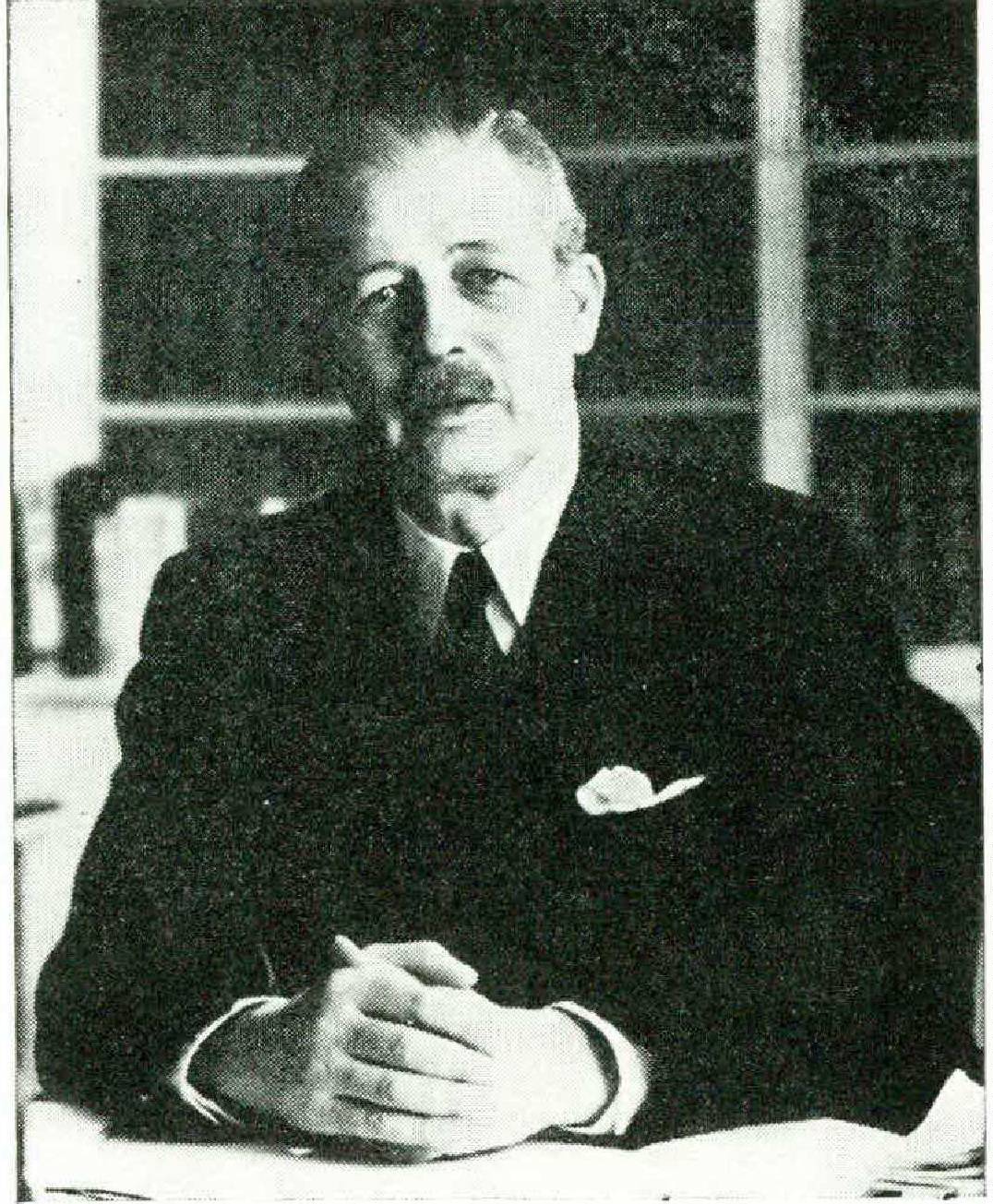
A REMARKABLE change has come over the political situation in Britain. Last spring every objective observer would have agreed that Prime Minister Harold Macmillan’s chance of being returned to power at the next general election amounted to no more than a tenth of a gnat’s eyebrow. The Tory vote in the by-elections was falling so catastrophically that even safe seats became suddenly marginal. Every messenger arrived with still worse tidings. In fact, up to a short time ago the Socialists took it for granted that they would win the election, and indeed anybody who dared to whisper a doubt was dismissed as being either incurably malevolent or not quite right in the head. But all dreams have suddenly been shattered in the last few exciting months. The public opinion polls show that the Tories are drawing ahead and would almost certainly be returned if the election were held tomorrow. For the Conservatives, night has turned into day, and the panic that was spreading through their ranks has been transferred to their enemies.
To understand the drama of the situation, it is necessary to go back to the day when Macmillan became Prime Minister. He inherited a bankrupt estate. Sir Anthony Eden’s Suez policy had ended in a defeat so complete, so humiliating, and so patent that it could neither be concealed nor be dressed up in a heroic disguise. The party was in agitated disarray, some blaming the Americans and others the Socialist Opposition. There were even Conservatives who whispered that Macmillan had stabbed Sir Anthony in the back and was no better than a Right-Wing Brutus.
Americans cannot easily understand what the Suez fiasco meant to the British people. Superficially, it might seem that the Conservatives were on one side and the Labour Party on the other — but that is not what happened at all. Old friends parted forever and father was set against son and son against father. So hysterical was the atmosphere that those Conservatives who did not agree with Sir Anthony could not enter a familiar club without being cruelly ostracized.
The angers, the resentments, the nagging feeling of frustration festered on long after the disappearance of Sir Anthony and the advent of Macmillan. This came out very clearly during a sensational by-election early this year in the rural seat of Torrington — a by-election that the Liberals won against all the odds. After it was over the Tories held a secret inquest. When people were asked why they had deserted the Government, person after person gave reasons that were palpably absurd. Many of them, for instance, said that they had voted Liberal because food prices had gone up, and the fact is that food prices had not gone up. The conclusion at Conservative headquarters was that many Tories had suppressed their feelings over Suez and were no longer aware why they had turned against the Government. They had rationalized their disappointments into a superficial grouse against things that did not even exist.
Not that there were no solid reasons why humble Conservatives should be sulking and refusing to vote at the by-elections. The Tories were returned at the last general election in 1955 on what, in effect, was a spurious balance sheet. Those were the happy days when R. A. Butler, then chancellor of the exchequer, used to talk of how the lucky British were going to double their standard of life in twenty-five years: the path ahead would no longer be stony; in fact, it would be pleasant all the way. He then proceeded to introduce a soft and optimistic budget which, among other concessions, handsomely cut the income tax by sixpence. The general election followed almost immediately, and the Conservatives were not only returned but increased their majority. Six months later, in order to curb the inflation that he himself had created, Butler was forced to bring in a second budget that undid most of the work of the first.
Worse followed some nine months after Macmillan became Prime Minister. In order to save the pound, his Government had to raise the bank rate to a staggering 7 per cent and order an even severer credit squeeze than Butler had thought necessary. Politically, these measures hit the very people upon whom the Conservatives rely. The small shopkeeper struggling against a temporary setback, the engineer wanting a new car, the flustered middle-class parent determined to send his children to a good school could no longer turn for help to a smiling bank manager. They could consider themselves lucky if they were allowed the honor of even speaking to him.
All the same, Macmillan could comfort himself with the thought that he was being brave and patriotic. “At a time,” he might have said, “when democracy is calling out for leadership, we have had the courage to introduce unpopular measures. The by-elections may be against us now, but I have sufficient faith in my countrymen to believe that they will eventually understand what we are doing.” Unfortunately, Macmillan failed to strike this high-minded note. On the contrary, he dismissed the criticisms with the jaunty remark that the British people had never had it so good. This may have been true, but it is hardly tactful to say so to people who have become convinced that they have never had it so bad.
Nor is this the end of the sad story of Macmillan’s difficulties. Five months after his tough policy had been introduced, Peter Thorneycroft resigned from the treasury together with his chief henchmen, Nigel Birch and Enoch Powell.
There is no doubt that, at the time, the resignations greatly added to the panic of the Conservatives. Thorneycroft’s charge that the Government was not serious in its fight against inflation was damaging because it was known that there was not a single member of the cabinet who honestly agreed with the classic economic views of the three ministers. This was particularly true of Macmillan. The hair shirt has never figured very prominently in his bright and extensive wardrobe. Joseph’s coat of many colors is more to his taste.
This, then, was the situation at the beginning of the year. There were a number of influential Conservatives who, for one reason or another, disagreed with Macmillan on various issues; there was thus a distinct probability of revolt, and in the meantime the by-elections were still running against the Government. Even the Prime Minister sometimes gave way to doubt and weariness. “What on earth are we doing wrong?” he asked.
GIVEN this state of affairs, there was only one possible strategy. However bad the news might be, Macmillan must somehow hang on as long as possible in the hope that the mood of the electorate would change. Time was what he needed. If he could hold his people together, Suez would eventually be forgotten; the whips and scorpions of his economic policy could be laid aside, and he himself might emerge as a national figure, perhaps on brave Churchillian lines. As a leader, the Prime Minister was admirably suited for this difficult and hazardous adventure. Lord Hailsham, the chairman of the party, once described him as “unflappable,” and during these lugubrious days he certainly remained unaffected by the doubts and glooms of his frailer brethren. Within nine months of the ThornEycroft resignations he could even claim that he was at last having some success. The bank rate had been brought down from 7 to 5 per cent, and the cost of living was steady.
The public, however, continued to sulk, and at this point in the story the fascination of the drama was whether Macmillan could prevent his party from falling to pieces. Some Conservatives clamored for even tougher measures against inflation; then, almost in the same breath, they would demand a cut in taxation — anything, in fact, to please the disgruntled middle class. Morale was so low that the slightest setback was immediately magnified into a disaster. Thus a minister had only to make a bad speech in the House, and the Prime Minister would hastily be brought back to restore order.
Nor was Macmillan’s own bearing calculated to inspire confidence. He sometimes likes to remind us that his forebears were humble Scottish crofters, but his general manner seems to have been modeled on the ways of polite society some forty years ago. That limp and weary handshake, those slightly dandified clothes — they may have been fashionable shortly after World War I, but they appear curiously out of place in the gray utilitarian world of the common man. And it was not only Macmillan’s manner that was at fault. He may be as “unflappable” as Lord Hailsham says he is, but there were times when some of us could not help feeling that “insensitive” might be the mot juste.
Then there was Macmillan’s unabashed happiness in his work. This is not how the ordinary man likes to see his politicians. He likes them to be hagridden with care. He likes to hear them say that, if they were to consult their own wishes, they would long ago have retired to some rural retreat where they intended to spend the rest of their lives fruitfully contemplating the universe and their prize breed of pigs. But not Macmillan. When he became Prime Minister, he celebrated his victory by going off to the Turf Club and dining on champagne and oysters. Butler, Macmillan’s deputy and a far shrewder judge of the British character, would not have made the same mistake. Number 10 Downing Street would have remained in darkness, and it would have been given out that the new Prime Minister was engaged in a prolonged bout of fasting and prayer. “This is the saddest moment of my life,” he would have said afterwards in an interview that would have become justly famous — a model of how these things ought to be managed. “I had been looking forward to putting my feet up and reading The Decline and Fall of the Roman Empire. However, given a choice between my inclinations and the good of the country, I must clearly put the country first.” It is not for nothing that Butler is regarded as one of the smartest operators in the business.
And yet despite Macmillan’s lack of touch; despite Thorneycroft; despite Suez; despite the disillusionment of the electorate, a Conservative who kept his head could at least find one gleam of light in this darkening situation. Tory majorities might be tumbling, but the disillusioned had not yet gone over to Labour. They were either staying away from the polling booths or were supporting the Liberals. Indeed, although the Socialist Party ought to have been riding high, its vote was scarcely more than steady. In some of the by-elections it had even gone down.
To EXPLAIN this is not at all easy. A year ago, when the Socialists met for their annual conference at Brighton, it seemed that the party had removed the one danger that might wreck its chances of being returned to power. Despite the Government’s difficulties, the leaders were haunted by a recurring nightmare: their problem child, Aneurin Bevan, might suddenly spoil everything by blowing his top and staging another revolt. Temperamental and yet with a political flair that few of his rivals could equal, unstable and yet capable in his speeches of leaving an impression of fanatical devotion and steadfastness, surrounded by faithful followers who had often risked their careers for his sake, and above all, carrying about with him what he hinted was the ark of the Socialist covenant, he might not only suddenly lash out and accuse the hierarchy of betraying the principles of the movement; he had the power to raise an army overnight.
Exasperated by this constant threat, the leadership decided to have a showdown. Bevan, it was agreed, must be presented with an ultimatum. Either he must conform or he would not be foreign secretary in the next Labour Government.
His admirers were quite unaware of this hidden drama as they gathered in Brighton on the eve of the conference. In the past Bevan had always surrounded himself on these occasions with what might almost be described as a personal bodyguard. He and his friends would sit together in the lounge of Bevan’s hotel, planning the tactics for the conference and enlivening the proceedings with caustic criticisms of Hugh Gaitskell. But not at Brighton. If, during a carefree stroll along the front, Bevan saw some of his old playmates approaching, it was observed that he hastily turned back in order to avoid them. The ultimatum, in fact, had been delivered; Bevan had surrendered, and he and Gaitskell had apparently become as close as two peas in a pod.
The leadership naturally left Brighton in the highest spirits. Bevan had become reconciled to Gaitskell, and there was no longer any danger of a split within the party. The skeptical were not so hopeful. Bevan, they said, would be on the rampage again the moment things began to go wrong. Even at the time this seemed a superficial judgment. Before Brighton Bevan’s strength was that if he fell out with the leadership, he had only to raise a finger and the whole of the Left would have marched to his support. But not now. Never again. Indeed, the irony of the situation is that there is a sense in which Bevan needs Gaitskell more than Gaitskell needs Bevan.
But something else happened at Brighton. The British Socialists have never been a party in the ordinary meaning of the word: they are really a confederation of distinct and even contradictory forces. There is the Left and the Right; there are the intellectuals and the all-too-solid trade unionists; there are the pacifists and the old-fashioned Imperialists. All these groups, though often speaking with discordant voices, sharpened one another’s wits and kept the movement alive. What Bevan did at Brighton was to destroy the Left. He thus removed an element which, though often wrongheaded, helped to preserve the party’s integrity.
No such intuitions crossed the minds of the leaders when they returned to Westminster after their seaside holiday. Macmillan might still be in the ring, but the poor chap was obviously groggy; one shrewd blow and Gaitskell would be Prime Minister. But as the weeks passed, as debate followed debate, it was seen that something had gone wrong. It was not only that the Socialists were monotonously getting the worst of the argument. What mattered was that the Opposition again and again gave the impression that it was playing politics even on matters of the gravest national importance.
Nor could the British public feel much confidence that the Labour Party would effectively handle the danger of inflation. Rather the contrary. Consider for a moment what the Socialists are pledged to do if they are returned to power. They would increase pay in the armed forces; they would municipalize housing; they would introduce a state insurance scheme for everybody; they would raise old-age pensions; they would nationalize the iron and steel industry; and all this, we should remember, in a capitalist system which they now accept. Even before the present Conservative revival, the British electorate could surely be excused for contemplating the alternative to Macmillan with a certain amount of apprehension.
Thus the Tories always had a chance, and the change in public opinion seems to have come over what at the time looked hardly more than a triviality. In May Frank Cousins, the leader of the largest trade union outside Russia, called a strike of the London busmen. It was a foolish move, doomed to failure even before it began. No Government need fear a bus strike. It does not close any factories. It does not slow down production. All it does is to annoy and alarm the public. Cousins made matters worse by attempting to spread the strike, thus laying himself open to the charge that he was determined to challenge the authority of the Government. It was an unjust accusation. Cousins was not trying to create a revolutionary situation; he was merely a very frightened man, lashing out blindly and hoping, by some miracle, to escape from an impossible situation. The Trades Union Congress, always cautious and conservative, inevitably refused to support him in such a desperate adventure, but by that time the harm had been done. When the next crop of by-elections came around, the Tories were delighted to find that they had done a good deal better than any of them had remotely anticipated.
More important was the sudden emergence of the Prime Minister as a national figure. Macmillan has his faults, but he is also a man of many virtues. He has an agile and brilliant mind; he is by no means a reactionary, and indeed the misery and poverty of the thirties still powerfully influence his thought. Above all, he knows how to delegate work and so leaves himself time to think out the broad aspects of policy. In fact, as a technician, his admirers could make out a case for saying that he is the best Prime Minister the British have had since the end of the war. Certainly he presides over his cabinet with much greater efficiency than any of his immediate predecessors.
Until recently, the trouble was that these private virtues were never manifested in public. What people saw was a rather precious and dandified figure, who was not only too clever by half but who seemed to belong more to the Edwardian age than our own. Macmillan is not always happy when addressing a mass audience; sometimes he is too witty, and sometimes he goes off into a Churchillian peroration that sounds phony and second-rate. Where he excels is in private conversation. Completely relaxed, filling his pipe, sipping a whisky and soda, he gives an impression of friendly naturalness.
The public was unaware of this side of his personality until he gave a number of interviews on television. The medium suited him perfectly. As in his own study, he did not show off or strain after dramatic effect. He was amusing; he did not hedge, as Gaitskell is apt to do; on the contrary, he radiated confidence. The electors sat up and took a second look at him. Here was a man, they seemed to have decided, who knew what he was doing and had clear ideas of what course Britain should take in the changed world of today.
But although Macmillan is much better placed than he was, there are still many imponderables. We live in a tempestuous age, and at any moment yet another crisis may blow up where we least expect it. Consider only one of the dangers. The Jordanian Army might revolt against the King, and the small British force in Jordan might then be overwhelmed if it tried to intervene. Macmillan’s present popularity would almost certainly not survive such a catastrophe. But ignoring these possibilities, Macmillan can wait for the future with more confidence than at any other time since he took office. Times are getting easier; the bank rate is down; the credit squeeze is almost over; the banks are ladling out money; and in six months the chancellor of the exchequer should be in a position to introduce a bumper budget. No wonder the Prime Minister now feels that he can and will win the next election.