Scott Fitzgerald and the Tor Girl
Critic and author, ARTHUR MIZENER has been regarded as an authority on the fiction of the 1920s ever since the publication of his definitive biography of F. Scott Fitzgerald, THE FAR SIDE OF PARADISE,in 1951. Mr. Mizener, who has taught at Yale and at Carleton College, is professor of English at Cornell.
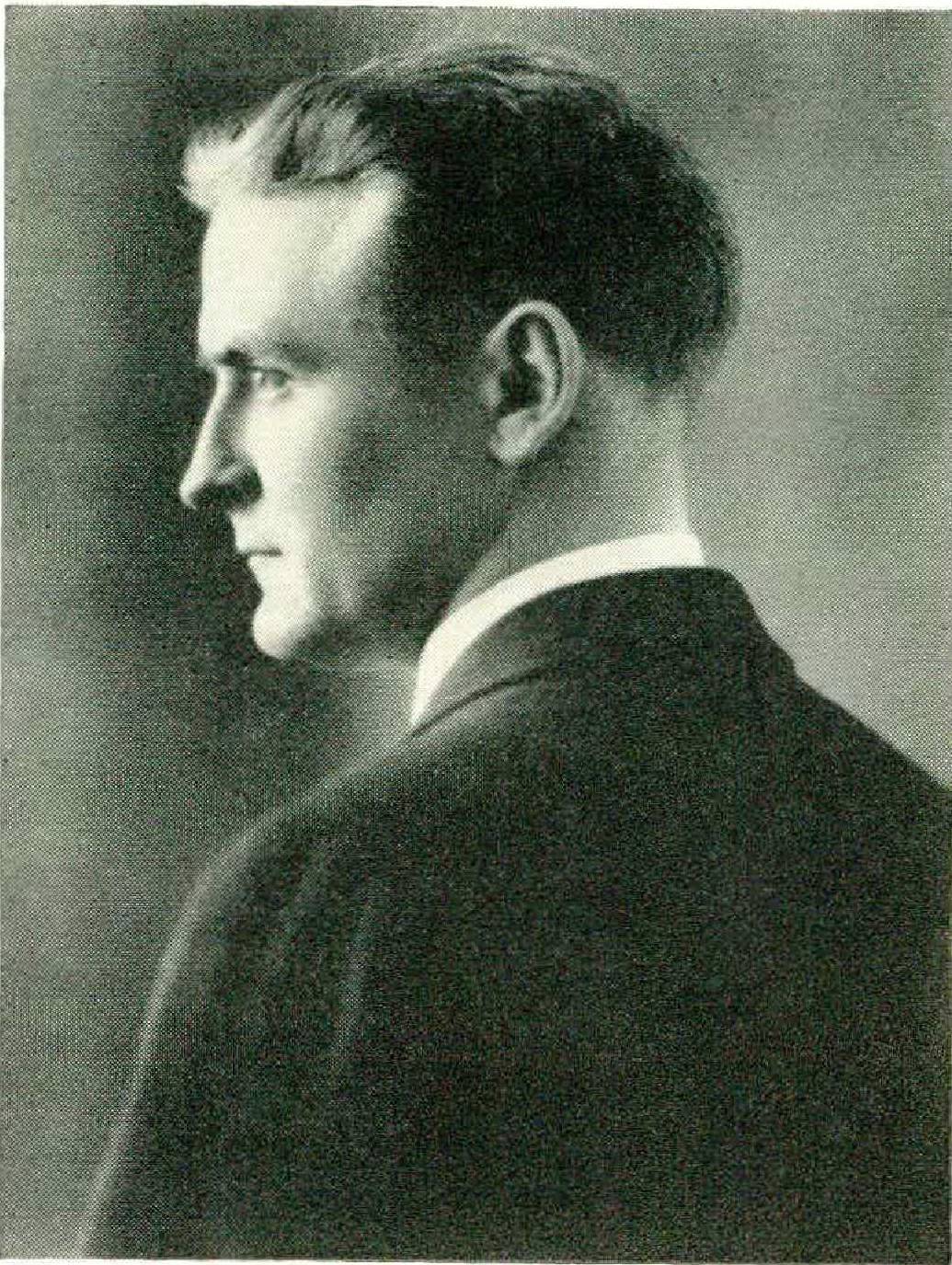
WITH the publication of Beloved Infidel our knowledge of Scott Fitzgerald’s relations with Sheilah Graham at least approaches our knowledge of his life with Zelda Sayre. If we add to this knowledge what we can deduce from Fitzgerald’s books, we can define with some precision his experience of love. This experience is interesting because it throws light on his work and because Fitzgerald’s life itself is remarkably characteristic and revealing. He experienced the world in a curiously representative way, and he revealed what he felt with astonishing directness.
As a boy he once found himself sitting in a motorboat by the clubhouse pier at White Bear Lake listening to a famous Princeton athlete proposing to “the popular debutante of the year” in the boat just ahead of him. He was so impressed by the proposer’s “manly pleading” and his “fine sense of form" and by the grace with which the debutante “threw her arms around his neck and hid her face in his coat" that “my enthusiasm knew no bounds and I was all for becoming engaged to almost anyone immediately.”
Fitzgerald’s characteristic attitude toward love — and, indeed, toward experience as a whole — is revealed by his recollection of this boyhood incident. Although he has an ironic sense of the conventionality of his hero’s “manliness,” of the slightly comic period quality of the lovers’ sense of form, he knows very well that the conduct of life is, especially at its best, a performance. The value of any action, he believed, lay in the enlargement of its meaning that an achieved sense of form gives. These two people, the Princeton athlete and the St. Paul debutante, were at the top of their world because they could realize successfully the ideal of conduct that governed their world and expressed its values. They brought an ideal to life.
Aware though he was of the provincialism of the form these people were realizing, he recognized that it was the only one available. The available form may be ultimately frustrating, if the values of a society are inferior; Fitzgerald’s consciousness of this possibility is the source of his characteristic, amused irony. But since there is no actual alternative to the established form, he never considered rejecting it. He believed deeply in the power of the idealism and the imaginative energy he could bring to his own realization of it and was sure he could transform it. In spite of the comic exaggeration of his assertion that watching these lovers made him feel that “almost anyone” would do for an engagement, this remark expresses a serious truth. He never loved merely the particular woman; what he loved was her embodiment for him of the splendid possibilities of life he could, in his romantic hopefulness, imagine.
He did not think of himself as having been born to the world of the men and women for whom a lifelong familiarity with the established form of conduct made the realization of such possibilities easy. He was always the boy in the boat behind, observing eagerly and longing to emulate. Like any self-made man, he knew that in some ways he was better than those to whom the life of that world came easily, if only because he had earned it by hard work and they had not. But he also knew that they were at home in their world in a way he never would be. If the self-consciousness of the self-made man kept him uncomfortably aware that he was playing a part uneasily, it also showed him how much better he appreciated the possibilities of their world.
“I didn’t have the two top things — great animal magnetism or money,” he once said of himself. “I had the two second things, tho’, good looks and intelligence. So I always got the top girl.” He did, too. It is astonishing how often such girls succumbed to him. He seemed to look on the task of winning them as a competition; “it excited him . . . that many men had already loved” the girl he pursued. This girl was no longer a Sleeping Beauty surrounded by hedges and thorns but an early riser long since alerted by her experience to her assets and opportunities, hedged in only by competing admirers who had to be outsmarted. The most useful gifts for this competition, he recognized, are animal magnetism. like that of Tommy Barban in Tender Is the Night, and money, like that of Tom Buchanan in The Great Gatsby.
Fitzgerald knew he had neither, and because he always longed to be “an entire man in the GoetheByron-Shaw tradition,” he worried about it. From his undergraduate days he experimented sporadically with what he called “[hunting] down the spectre of womanhood that, for a little while, makes everything else seem unimportant.” But, like his desire to be a gourmet, this ambition never really engaged his imagination, and as a result he never made much of a success of these experiments in sensuality, however often he tried. “No one, I think,” Lionel Trilling has observed, “has remarked how innocent of mere ‘sex,’ how charged with sentiment is Fitzgerald’s description of love in the Jazz Age.” It was a description of his own love.
Just as his imagination refused to engage itself with simple sensuality, so it refused to become engaged with the acquisition of money. In Tender Is the Night, Dick Diver is never tempted by Nicole Warren’s wealth, is in fact repelled by it. But he is not protected against Nicole’s confident grace, and that grace is “the product of much ingenuity and toil”; for her sake huge industries “swayed and thundered onward.” This rich girl’s grace was something Fitzgerald had the honesty and courage to recognize as an important part of women’s charm, even while he also recognized that such charm was not for men like him except when the Nicoles were shaken and pervious. When they were their wholly integrated selves, they belonged to the Tommy Barbans, not to the Dick Divers, just as Daisy belonged not to Gatsby but to Tom Buchanan. But to recognize in this way the power of animal magnetism and money in the competition for the top girl is not to want to possess them for themselves.
When Fitzgerald was ten or eleven, a girl nam d Kitty Williams “told Marie Louty and Marie repeated it to Dorothy Knox who in turn passed it on to Earl, that I was third in her affections.
. . . I then and there resolved I would gain first place.” About all the girls he later won, he remembered this kind of competitive challenge, remembered that he had had to best Bobby Jones for Zelda’s hand and persuade Sheilah Graham to break her engagement to a marquis.
THIS, then, was the sense of life Fitzgerald brought to his experience of love, but he brought with it his “heightened sensitivity to the promises of life,” his “extraordinary gift for hope,” his “romantic readiness.” These things did not, oddly enough, blur his perception of the actualities of his experience; in some queer way, in fact, they sharpened it. But they did make him optimistic about the chances of realizing the promises he could imagine. “Of course she might have loved [Tom Buchanan] for just a minute, when they were first married,” says Gatsby, making what is for him an enormous concession to actuality. “In any case, it was just personal.” For Gatsby lived with “those illusions that give such color to the world . . . that you don’t care Whether things are true or false as long as they partake of the magical glory,” as Fitzgerald put it in a letter about Gatsby in which he is plainly expressing his own feelings.
If, then, Fitzgerald brought a sometimes disconcerting tactical realism to what he conceived of as the highly competitive business of wooing, his strategic objectives were nonetheless idealized images, like Gatsby’s image of Daisy, in which the girls sometimes had trouble recognizing themselves. It is amusing to see Zelda Sayre shrewdly exposing the jealousy behind Fitzgerald’s ostensible flattery of her as a princess. “Scott, you’ve been so sweet about writing — but I’m so damned tired of being told you ‘used to wonder why they kept princesses in towers.’ ” But real as that jealousy was — and justified, too — this is nonetheless the princess Gatsby saw in Daisy, the girl whose outrageous demandingness was only a part of her divine remoteness.
Fitzgerald eventually came to feel strongly about “the awful toll exacted from others ... by the eternal children of this world,”but he never learned not to love them for being, or wanting to be, princesses.
Though there were, first and last, a good many girls in his life, only three of them ever wholly fixed his attention. The first of these was Ginevra King. Fitzgerald met Ginevra King at a dinner dance in St. Paul in January, 1915, when he was eighteen and she was sixteen. They were both, he thought afterward, more concerned to exercise their dramatic talents than to experience any genuine feelings. Ginevra did not have to act a part in the way he did, but she was a performer by temperament, having “that curious mixture of the social and the artistic temperaments found often in two classes, society women and actresses.” What she wanted to feel was “the full flush of her own conscious magnetism"; she was more interested in playing the heroine’s role in a romance than in loving anyone. “The future vista of her life seemed an unending succession of scenes . . . under moonlight and pale starlight, and in the backs of warm limousines and in low cosey roadsters stopped under sheltering trees.”When the heroine of This Side of Paradise, who is modeled on Ginevra, first saw Amory Blaine, she was disappointed; “she had expected him to be dark and of garter-advertisement slenderness.” But she made do because she was “conscious that they were a handsome pair,” and when, with considerable dramatic intensity, he told her he loved her, she “was quite stirred.” “Everything was wonderful to-night, most of all this romantic scene in the den.”
But for Fitzgerald this beautiful girl was an embodiment of his freshman dream of a splendid life. She had been born to the glittering social world of Chicago and Lake Forest and had for him the air of a woman who had already been loved by brilliant men (like the hero of White Bear Lake, “some of them bore athletic names that made him look at her admiringly”). He was acutely aware, as was Jay Gatsby with Daisy Fay, that his presence in her world was a kind of deception. If he was a Princeton man, it was not because he belonged to a family whose sons habitually went there; if he was good-looking, he was distinctly not one of the men who entered Princeton “from the great prep schools with graceful clothes and the deep tan of healthy summers.” In a way perhaps incomprehensible to Ginevra, he was playing a part, not just the part of a romantic lover but also that of a Princeton gentleman. This part he carried off successfully that Christmas in St. Paul and on a dazzling weekend in New York the following June, but when he visited Ginevra’s family at Lake Forest that summer, he was unable to sustain his role and became jealous and possessive of a girl who, as she said of herself with some amusement later, “was definitely out for quantity not quality in beaux.”
Ginevra soon lost interest in Fitzgerald, but he had invested a good deal of his feeling for the promises of life in her, and for Fitzgerald that kind of investment was always final; once he had defined his indefinite feelings for the promises of life in terms of a particular girl, he knew no way to change his image. He came ultimately to believe in the girl whose splendor was, like his own, acquired rather than given, as Ginevra’s was, but Ginevra remained for him all his life the image of what his kind of girl was trying, with his enthusiastic cooperation, to become.
IT WAS not until the autumn of 1918 that he fell really in love again. He did not do so in quite the storybook way he sometimes imagined afterward, for as he himself once observed, “My army experience consisted mostly of falling in love with a girl in each city I happened to be in.” He arrived in Montgomery in the middle of June and first met Zelda Sayre in July, when he was pursuing a girl named May Steiner, a dark-eyed beauty who once wrapped herself in an American flag in order to be photographed with Fitzgerald, who emphasized the effect of his officer’s uniform (from Brooks Brothers) by striking a manly, straddling pose. It is a characteristic example of Fitzgerald’s feeling for the absurdity of the conventional expression of feelings he nonetheless wanted to realize; for the rest of his life he could not be persuaded that his failure to get overseas and into combat had not excluded him from an almost mystically significant experience. During the summer ot 1918 he spent more time on May Steiner’s front porch trying to outsit her other beaux than he did pursuing Zelda Sayre.
But by September he and Zelda were very much in love. It was not an easy relation. For Fitzgerald, Zelda was the embodiment of the gay, ambitious, daring spirit of their generation; an important part of her attraction for him was her confidence that she could do and have what she wanted. She was a girl of great beauty and charm, and these qualities permitted her to demand with confidence a mode of life that was not easy to provide. She was never prepared to settle for anything but the best and certainly no more willing than Ginevra had been to sacrifice the pleasure of her freedom and popularity, the excitement of continuous courtship and romance.
On his part, Fitzgerald insisted that she be what he imagined her. When, for example, she arrived in New York with her provincial Southern idea of what to wear, he was openly horrified and sent her off with an old St. Paul friend to choose her clothes. Demanding as he was of her, he understood perfectly the demands she made on him; the very qualities that made her demanding were the ones that made him love her. It was therefore natural, if not exactly logical, that he wanted to possess her for himself. Like Gatsby with Daisy, he was surprised to find early in their courtship that he felt, quite simply, married to her. He was even more surprised to find that, true to the nature that made him love her, she “was cagey about throwing in her lot with me before I was a moneymaker.”
At this point, Fitzgerald was sent North with his unit to Camp Mills; only the Armistice prevented their being sent overseas. By November, however, he was back in Montgomery, having got involved in a spectacular row with a hotel detective in New York for having taken a girl up to a room and having finally rejoined his unit in Washington accompanied by a couple of girls and a bottle. None of this made him any less in love with Zelda or any less jealously possessive of her. Nor is there any doubt that Zelda delighted in their intimacy. But she clearly had no intention of devoting herself exclusively to him. Of her many conquests he was no doubt the most fascinating, but she was not prepared to give up all the other pleasures her charm could command and commit her life to Fitzgerald’s enthusiastic but unsupported visions of a future.
During that fall and winter she went out in Montgomery as much as ever and attended college dances everywhere. In the middle of February Fitzgerald set off for New York, more or less engaged to her, to win fame and fortune. Acutely aware of Zelda’s skepticism and impatience, he pursued her with morale-building telegrams, even going so far as to send her one in the care of her date when she went to Auburn with a particularly threatening admirer, an all-Southern football player. But telegrams were not enough. By April Zelda had become seriously restless and uncertain that marriage to Fitzgerald offered anything but genteel poverty and struggle. She wanted something more splendid than that, and the very fact that she had not been born into such a life made her, as it made Fitzgerald, well aware of what its achievement required. Moreover, she knew that the limits of opportunity for a woman are set by her husband’s life.
Zelda was, for all her daring, fundamentally dependent. Her novel, Save Me the Waltz, shows that as a girl she depended on her father to make a world for her to live in; her frequent defiance of his discipline only emphasizes that dependence. There is, indeed, a suggestion in Save Me the Waltz that she never quite knew where she was after she had moved out of her father’s world. For all its invented detail, Fitzgerald’s account in Tender Is the Night of the effect on Nicole of her father’s betrayal may represent a real insight into Zelda’s feelings. Perhaps it should be added that Zelda’s own explanation lays greater stress on the failure of the world Fitzgerald made for them and that this explanation is taken into account in “Babylon Revisited.” In any event, the heroine of Save Me the Waltz thinks of her marriage as a process of moving out of her father’s world into her husband’s.
When Zelda gave herself in love, then, she counted on her husband’s providing for her a world as splendid and permanent as her romantic vision had suggested it could be; she, too, had her heightened sensitivity to the promises of life and, as she said afterward of the heroine of her novel, had “envisaged everything except that love might roll on using the bodies of its dead to fill up the craters in the path of its line of action. It took her a long time to learn to think of life unromantically.” This image is violent, but probably not more violent than her disappointment. In a passage that was cut from the published version of Save Me the Waltz, she described the departure of a lover modeled on a man she herself fell in love with in 1924: “Whatever it was she wanted from Jacques, Jacques took with him . . . and the blank in Alabama’s heart was no blanker than before she had known him.” This is plainly the way she felt her life had turned out.
It is easy enough to call her dream of a lifetime of romantic joy extravagantly unrealistic, and no doubt it is true enough that she could never have found such a life, no matter whom she had married. The fact remains that she had the imagination to conceive such a life, knew that she would have to depend on her husband for it, and was right to doubt that a $90-a-month author of carcard advertisements could provide it. Fitzgerald understood her attitude perfectly; he had the same vision of a life himself and was as ready to demand the necessary feminine qualities of her as she was to demand of him the masculine ones. Moreover, he agreed with her estimate of his situation: “my shabby suits, my poverty, and love. ... I was a failure.” When she broke their engagement in June, he fought strenuously, even hysterically, to persuade her to go on, but he never really questioned the rightness of her decision; “loving him still,” he believed, “[she] had lost faith and begun to see him as something pathetic, futile, shabby, outside the great, shining stream of life toward which she was inevitably drawn.”
When This Side of Paradise put Fitzgerald back in that stream and they were married, they had their few years of careless happiness, years that came as close as actuality ever perhaps could to the splendor they had dreamed of. Remembering long afterward how they had quarreled and laughed at themselves in those years, Fitzgerald wrote:
And though the end was desolate and unkind To turn the calendar at June and find December On the next leaf; still, stupid-got with grief, I find These are the only quarrels I can remember.
He called this poem “Lamp in the Window.” At about this same time Zelda wrote him, after an unsuccessful meeting at the sanitarium in Asheville:
Dearest and always Dearest Scott,
I am sorry too that there should be nothing to greet you but an empty shell. . . . Had I any feelings they would all be bent in gratitude to you and in sorrow that of all my life there should not even be the smallest relic of the love and beauty that we started with to offer you at the end. . . ,
WHEN Zelda broke down mentally in 1930, Fitzgerald at first fought with all his energy and optimism to save her. He loved her very much, and he loved what she represented for him and what they had been together. But as Zelda had to live more and more in sanitariums and as he had to reconcile himself to their separation and to making a life for himself apart from her, his feelings unavoidably changed. However great the longing with which they remembered the happiness of the past, they became less and less intimate in the present; their relation was bound to become rather an echo of a past than a representation of a present feeling.
Once Fitzgerald took her from the sanitarium to lunch with friends and she drank a glass of wine that threw her off badly. He sat down beside her and quietly started a kind of game with her, pretending she was a princess in a tower and he her prince. “High in a white palace the king’s daughter, the golden girl. . . ,” “Why did they keep princesses in towers?” But it was only a dream remembered, something they were both, in different ways, playing at. To that memory Fitzgerald was loyal to the end of his life; to have betrayed it would have been to betray a part of himself.
But however hard he tried, he could not live a memory, and he knew he was speaking of himself as well as of others when he wrote in his notebooks, “The voices fainter and fainter — How is Zelda, how is Zelda — tell us — how is Zelda.” It seems likely, nevertheless, that he would not have fallen in love again had he not met someone who reminded him of Zelda in ways we shall never wholly understand, for all the hints of them in the love story of The Last Tycoon. It is only necessary to read the description of Stahr’s feelings the first time he talks to Kathleen in The Last Tycoon to realize that, however personal the relation between them, it is for Stahr partly a relation with his dead wife. Kathleen is much too close to Sheilah Graham for us to be able to believe that this crucial aspect of Stahr’s feeling is an accident, and, indeed, it is not easy to imagine Fitzgerald’s emerging from the self-imposed isolation of his life in Hollywood under any other circumstances.
Thus, though it is impossible to believe Miss Graham right in thinking, as she tells us in Beloved Infidel she did, that “this man appreciates my mind as well as my face,” she is undoubtedly right that it was not simply her physical beauty that attracted him. It was rather all that he imagined her to be, all that he in fact made her when he transformed her into Kathleen, as he had transformed Ginevra King into the college freshman’s vision, as he had transformed Zelda Sayre into his adult vision. The complicating element in his love of Sheilah Graham was that she was for him, at least to some extent, a ghost — perhaps a double ghost.
No one was better placed than Fitzgerald to understand, when he finally learned about it, Lily Sheil’s lifelong struggle to make herself over into the quite different person she called Sheilah Graham. Anyone who had, like Gatsby, a “Platonic conception” of herself and worked with all her might to realize it was bound to have his sympathy. He never ceased to believe — though sometimes toward the end of his life he tried — that without a strenuous effort to remake the world and oneself according to some vision of their possibilities one could not live. Nevertheless, the Sheilah Graham with whom he fell in love was not only a girl on whom he had exercised his idealizing imagination; she was also a girl who had already been transformed according to the requirements of her own imagination.
“No amount of fire and freshness [in an actual girl] can challenge what a man can store up [as an image of her] in his ghostly heart,” as Jay Gatsby discovered about Daisy Fay. The worst of it was that, much as he might regret it, Fitzgerald knew that. The strangeness and the magic of the Sheilah Graham he fell in love with and portrayed in Kathleen were certainly very real to him. But of the homely reality of Lily Sheil, the girl who had fought her way up from the slums of London’s East End, of this Lily Sheil there is hardly anything in Kathleen, though Fitzgerald lived with Lily Sheil and was very much aware of her presence, as he showed with sometimes terrifying violence when he was drunk and despairing. In fact, he showed it clearly enough, though less obviously, in their everyday life when he struggled to educate her up to the character she had adopted in the way he felt he had educated himself. (The ironic version of this impulse is the “Schedule” Gatsby wrote in the back cover of a copy of Hopalong Cassidy: “Bath every other day/Read one improving book or magazine per week.”) He fought by her side in every way he knew — sometimes to her acute embarrassment — to help her establish the public image of Sheilah Graham.
What that image was for Fitzgerald, Kathleen shows us. Though she had been “nobody,” Kathleen had been presented at court by her stepmother and had been, for most of her adult life, the mistress of a king. Both culturally and as a woman, she had learned a great deal from him that fascinated Stahr with its strangeness. After they have first made love, she smiles up at him and says:
“I feel like Venus on the half shell.”
“What made you think of that?”
“Look at me — isn’t it Botticelli?”
“I don’t know,” he said smiling. “It is if you say so.”
She yawned.
“I’ve had such a good time. And I’m very fond of you,”
“You know a lot, don’t you?”
The simplicity and directness of that “I’ve had such a good time” must have appealed to him as much as the unselfconscious — and, to be sure, imprecise — reference to the Birth of Venus. “Such an awful rain,” she would say casually, “so loud — like horses weeing,” a simile Sheilah had actually used. Thus, in addition to her haunting resemblance to Stahr’s dead wife, she has for him her romantic strangeness. Kathleen is this kind of person because she is the Sheilah Graham whom Fitzgerald loved, and what charmed him most about Sheilah Graham was the upper-class European air Lily Sheil had so painstakingly acquired.
But it is also possible to see in Beloved Infidel that Fitzgerald was moved by the awkwardness with which Lily Sheil wore the air of Sheilah Graham, “The British Aristocrat.” Lily Sheil’s awkwardness must have touched him as the awkwardness of James Gatz, “The Oggsford Man” who had lived like a young rajah in all the capitals of Europe (including Venice), touches us, as Scott Fitzgerald, “The Well-Known Writer” he was always boasting of when he was drunk, does. In all these instances the essential innocence and idealism of motive behind the effort to realize the image of a self are so evident that one wants to accept that image as the final reality — as, at least in some dramatic sense, it perhaps is.
What Fitzgerald loved was the girl who longed with incurable innocence to be something finer, however inadequate in fact her conception of what was finer — the Lily Sheil who wanted with all her might to become Sheilah Graham, the Zelda Sayre whose defiance of provincialism was made more touching by the fact that she was so often dependent and afraid, who longed to become one of those she thought the great and splendid of the world. The loves of Fitzgerald’s life were girls who, like him, were passionately ambitious to realize in their lives some self more splendid than the self they were born with, and who, like him (though without his ironic recognition that they were doing so), conceived these selves in the only concrete terms available to them, what Fitzgerald called in The Great Gatsby “a vast, vulgar, and meretricious beauty.” In loving them and sharing their ambitions in the way he did, Fitzgerald perhaps came as close as anyone in his generation to experiencing the essential quality of what Henry James called the “complex fate” of being an American,