The Peripatetic Reviewer
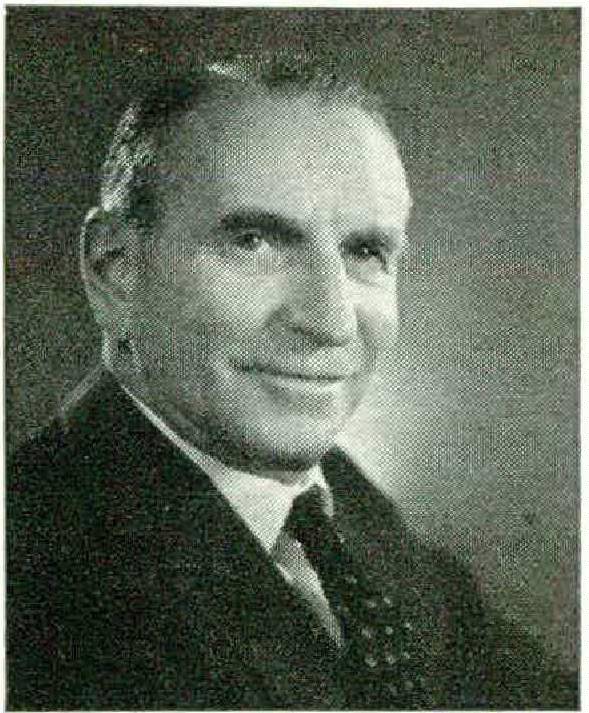
BY EDWARD WEEKS
HUMOR is the most perishable of literary commodities: it does not travel, is difficult to translate, and very rarely lasts from one generation to the next. It defies analysis and survives only by being quoted and read aloud and by its instantaneous power still to provoke uncontrolled laughter. In my generation there have been a handful of American humorists to rank with our greatest—Will Rogers and Fred Allen, who came up from vaudeville, and the three who made their fame in the New Yorker, Clarence Day, E. B. White, and the most versatile, JAMES THURBER. This is an attempt to express my more than thirty years of delight in Mr. Thurber.
We began with his drawings, which grew on us as they grew on his editor, Harold Ross, who at first rejected them. (“That is not the way a seal looks!”) The Thurber dog, he first drew in college; and there is — or was — a room full of these animals in the Faculty Club at Ohio State, pensive, outsize, short-haired, each bearing a faint resemblance to a bloodhound. A Thurber bloodhound. (Remember The Bug and the Dog?) Then we were caught up in the war between the sexes, the lumpish, overbearing women and the defensive, leering little men, dancing wildly, drinking aggressively, or keeping each other awake, preferably unclad, much as Freud was showing us to ourselves, and leading in time to that incomparable visit to the nudist colony. Two pictures of this vintage are my special favorites, the Seal in the Bedroom and the drawing of the first Mrs. Harris, so watchful from her post on the top of the bookcase. When we begin to study the animals, Thurber’s “fauba,” I am irresistibly attracted to the Owl in the Attic, the fish with ears, and Mr. Jennings’ Bear, and to those improbable creatures, Pritchard’s olf and the waffle-crested bly, which ought to be in Bronx Zoo if they are not. What is so striking about the simple black lines in all these drawings is not so much their incongruity or their absurdity as their impudent freshness, which time does not diminish. They regale you as if you had never seen them before.
In Thurber’s prose, as, indeed, in his drawings, there is a wild quality peculiar to himself and productive of conversations as mad as anything in Lewis Carroll. The talks that take place at Tim Costello’s between 1:00 and 3:00 A.M., the torture Mrs. Maxwell is subjected to at one of those devastating cocktail parties in Connecticut are uninhibited, very funny in their allusions, and totally unpredictable. The best portraits Thurber has ever written are those of his parents in The Thurber Album. He says of his father that “he was plagued by the mechanical. . . . Knobs froze at his touch, doors stuck, lines fouled, the detachable would not detach, the adjustable would not adjust. He could rarely get the top off anything, and he was forever trying to unlock something with the key to something else. In 1908, trying to fix the snap lock of the door to his sons’ rabbit pen, he succeeded only after getting inside the cage, where he was imprisoned for three hours with six Belgian hares and thirteen guinea pigs.” 1 he chapter about his mother entitled “Lavender with a Difference” probes deeper and is more endearing, and the account of her visits to New York when she was nearing eighty and when her son was famous make me feel I know her, and I wish I might have. I have a tender regard for this piece, and close beside it, “ The Secret Life of Walter Mitty.” In a special category I should put his book about his friend and editor. The Years with Ross. The one shortcoming in Thurber’s repertoire is his inability to write literally or amusingly about children, and, as he seldom tries, it doesn’t matter.
In LANTERNS & LANCES (Harper, $3.95), a new collection of twenty-four pieces, three of which appeared in the Atlantic, the comedy ol the early Thurber has been blended with a more serious satire. The wildness is here, especially in the reveries that attack him as he lies awake before dawn (“I am a three o’clock waker”), such insomnia being a penalty we all pay alter sixty-five for the fourth Martini. I particularly applaud his tirades against television English and singing commercials. Thurber has a prodigious memory; he can play back by ear the Ohio accent of his boyhood, the linguistic monstrosities of Madison Avenue, and the piffle which comes to us in the singing commercials with excruciating accuracy. He takes great delight in the pun; he enjoys using words playfully and precisely; and when he wants to be serious, as in “ The Wings of Henry James,”his criticism is penetrating and a credit to his wide reading and uncanny recollection. He has lost none of his relish for verbal warfare, and when a chapter entitled “The Saving Grace” begins with this beautiful opening: “ I have wanted to argue with you since 1951,’ said a woman who sat down next to me, around midnight, at a recent party in Connecticut,” you know that Thurber is going to lead her astray, and your ears prick up at the possibility. “I am, au fond, a mellow foxy grandpatype philosopher,” he tells Mrs. Thurber at the end of this triumphant evening. “While we finish the nightcap, I shall count your lucky blessings, name them one by one. ”
“ ‘Then,’ she said, ‘we’ll only need a short drink.’ And she made us both a short one.” Here, as elsewhere in his writing, his wife emerges as a woman of considerable endurance and terse good sense.
INDIA’S POTENTIAL
BARBARA WARD’S new book, INDIA AND THE WEST: PATTERN FOR A COMMON POLICY (Norton, $4.50), is in many respects the most important she has ever written. The qualities which she brings to her writing — her gift for historical analysis, her explanation of difficult economic problems, and her reasonable faith in the initiative of the free world — were never more needed. Since 1953 the West has been steadily losing ground and, what is more, the power to influence the new nations arising from the old colonialism. For most of those eight years, Miss Ward herself has lived in the new nations: in Ghana, where her husband, Sir Robert Jackson, has been an invaluable counselor, and India, which she has studied in depth and with sympathy. “It is still to be proved,”she writes, “that any ex-colonial territory can reach effective economic strength within a liberal framework. Moreover, it is not at all certain that the Western nations feel any further responsibility for their former colonies’ future advance.” There is the mainspring of the book. For she believes that India, with its long liberal indoctrination, can expand its industrial strength to a point of self-reliance, but only if our aid is prompt.
India and the West divides into two halves. The first half is a brilliant exposition of the economic growth in the West, of how a century of Industrial Revolution built up the strength and the savings which made private enterprise possible, and of how capitalism readapted and refreshed itself when the prophets of doom, Marx and Lenin, were sure it was finished. She speaks of the new concept of a “mixed economy, part public, part private,” and she shows that when government took to regulating hours and inspecting conditions of work, it did not undermine capitalism; it undermined Marx. She is more critical when she comes to examine the importation of capitalism to the colonies. This involves her in a confrontation of Lenin’s Imperialism: the Highest State of Capitalism, published in 1916 and the bible of Red China today. Lenin’s belief was restated by the Chinese paper Red Flag a year ago: “Communists believe in the absolute correctness of Lenin’s thinking; war is an inevitable outcome of systems of exploitation, and the source of modern wars is the imperialist system.” Miss Ward does not minimize the threat of this shrewd assessment; she realizes that Communism exercises its most irresistible influence in the earliest stages of modernization, and she knows that there are leaders in the developing nations who frankly envy Stalin’s ability to carry his country from the wooden plow to the atomic pile in forty years. This example is infectious. Is there another, more in keeping with the West?
Miss Ward believes that there is. She has seen at first hand the great potential of the Indian democracy, and she is reassured by the ability of the various elements — the wealthy entrepreneurs, the disciples of Gandhi, the believers in public ownership — to work out a fluctuating consensus. Her diagnosis of India’s dilemma and her blueprint for the country’s awakening, which form the second half of the book, are masterful; here speaks the former editor of the Economist with swift perception and in a language that laymen can understand. Tea, jute, and cotton textiles — the common staples — are not capable of any rapid expansion. It is heavy industry, “the great multiplier in any economy,” which must be expanded and serve the markets of 500 million. India, she tells us, is as short of trained minds as it is of roads, steel, and power, yet today there are a million university students, and not only must that number be multiplied, but the direction of their learning must be changed, away from the arts and toward science and technology. Only so will it be possible for this great nation to emerge in its own strength. She believes that, given our aid, with the impetus of a moderate-sized Marshall Plan, it will be possible for India to make the transition to industrialization without adopting the brutal methods of Communism.
WHITE WATER
When the French ruled Canada, each spring after the ice went out of the St. Lawrence great brigades of trading canoes left Montreal bound for the west. Thirty-five feet long, built of birch bark, cedar, and spruce, decorated with gaudy designs, each canoe was manned by a crew of ten, and each brigade was under the command of the Bourgeois, the boss, who would be responsible for the navigation, the fur trading, and the return. For two hundred years the voyageurs ran the rapids, marked the portages, held off the Indians, and explored the lonely land. It was their story which prompted SIGURD F. OLSON and five of his friends, four Canadians and the Netherlands ambassador in Ottawa, to retrace the voyageurs’ trail through the hazards of the Churchill River, a thousand miles northwest of Lake Superior, The record of this rugged contemporary trip Mr. Olson has told in THE LONELY LAND (Knopf, $4.50), with attractive illustrations by Francis Lee Jaques.
The former president of the National Parks Association, Mr. Olson, the “Bourgeois" in charge of their three Peterborough canoes, had had years of experience in the north before they embarked. He had the best maps available and such meager advice as the Crees could give them, which wasn’t much. Since he was the cook, he was the first up and usually the last to bed. They lived on dehydrated foods and the fish they caught, and on one memorable day when they landed three twenty-pound northern pike within seconds of each other, he sat late over the campfire smoking the fillets for their luncheons to come. They averaged twenty to thirty miles a day and lived for the thrill of the white water, the sight of the virgin country, and moments of rum and reverie which brought them closer at twilight.
The lonely lakes at dawn and sunset, the unexpected little islands where they pitched their tents, the relief of finding a sheltered cove on an outcropping of the Canadian Shield for a landing in the pelting rain, the ancient Indian campsites, and the prehistoric rock paintings are what made their days, and what constantly impresses the reader is the order and resourcefulness with which the trio kept going. Mr. Olson writes with affection for this lonely land, with only a mild trace of humor, with an eye for creature comforts, and with modesty about the more dangerous encounters.