Autumn Hunt
Author of a well-remembered novel, NOW IN NOVEMBER,and an essayist of grave and perception, JOSEPHINE W. JOHNSON lives in a century-old house on the outskirts of Cincinnati, where she shares with her children the discovery of a secret world.
WE WERE noisy walkers in the warm dry woods, over the dry yellow leaves. Leaves so brittle that a falling leaf from the hickory trees, scaling down along the dry bark, made as much noise as a falling walnut. And the warm sudden wind sent an avalanche of gold leaves from the locusts. Not that walking with a child would ever have been a silent stealth of moccasined feet between the leaves, dampness or no. But considering that we had set out on our annual autumn hunt to find the mythical autumn panther, we made an unholy scrunch and rattle, and Carol delighted in the crashing fall of herself on the steep hillside, chuting downward, half buried in brown leaves, purple leaves, acorns, and dry snail shells. Only the deeply attached things, far-rooted trees, tight moss, failed to take fright and run before our walk.
Reports of panthers seen in this county come yearly: panthers of three colors, black, tan, and brindled; and the panthers differ much in size, shrink to two feet, rise to the stature of great Danes, leap upon dogs or run from apples, refuse a proffered fish sandwich, and leave footprints as large as lions’. The citizenry, calloused to thugs and death by auto, fearing not bullets, squirrel hunters, or death by radiation, have shown a strange and wild alarm over the panthers’ rumored presence. The unknown walks inside the ghostly panther skin, and some old fear from the pioneer days we never knew nor understood is with us.
Susan Fenimore Cooper wrote in her Rural Hours almost a hundred years ago of a panther’s having been sighted near New York. “Again we hear the panther story.”she wrote in some astonishment. “The creature is said to have been actually seen by two respectable persons in the Beaver Meadows. . . . A man, out with his gun in the woods saw a large wild creature in the distance, he fired and the animal leaped over a great pile of brush and disappeared. It would be passing strange indeed if a panther were actually roving about our woods!”
We made it down the steep slope to the woodchuck hole under the maple, the hole full now of red leaves, and past the green mossy tree root that holds a great slab of rock in its vise, like the hairy arm of a green gorilla gripping its stony sandwich; and paused for a moment of silence on the flat rocks of the drying creek. There were still pools with darting fish and little frogs, and all along the edge were the willows thick as jungles, and their gold curling leaves shook down and covered Carol’s hair like a shower of corn flakes. In the pool the fallen leaves had turned dark and leathery. A small brown frog with gold eyes leaped into the water and then leaped out again. We caught him, and he felt like an icy snowflake in the palm.
There was a steep bank here of blue crumbling clay, hundreds of thin layers of blue clay, either of stone turned mud or mud turned stone; layer on layer like a giant torte, and the rocks of the creek were limestone filled with thousands of little bones and shells, crumbling crinoid bones and the imprint of coral. It seemed strange, on this dry warm autumn day, for our warm living selves to be resting dryly upon the cold rocks of a wild wet sea that had turned to stone.
“These are very scientific rocks,” Carol said, peering down at the little shells. “Once, in the old days, a pile of animals were all grumbling around together, when suddenly there was a great explosion and a pile of mud and lava caught them! And then the day came when they couldn’t get away forever because it was all turned to stone!” She crumbled the blue layers of the cliff in her hand and made mud dishes for future children to find and ponder over, when this day had become the old days and mud had become stone and all the grumbling animals of this autumn hour were gone.
In the clear water of the pool, which is only a foot deep, the trees go down and down into the infinite distance of the sky, and then suddenly a leaf from the top of an elm falls upward, rising and rising until it reaches the surface, and rising shadow and falling leaf meet on the water. One leaf seemed not to rise but to swim horizontally, deep in the blue-white water, until I looked up and saw that it was a buzzard drifting in the blue-white ocean of the air.
A loud murmuring came from a hole in the sycamore tree beside the stream, and Carol said she heard the “air winding” of the bees and was entranced by all the activity, the sound, and the coming and going of so many creatures who did not flee before us. These were not the great furry bumblebees of garden flowers but small blackand-yellow businesslike bees, and the bark around the hole was stained with pollen and undulated like a small fountain with bees. Aster and goldenrod and tree flowers and the musky honey of milkweed blossoms are probably jammed in these wild combs, but it did not seem sweet or fragrant enough for the peril of finding out. Once, when Carol was younger, I was speaking of the large bumblebee which nests underground, and I had said that only the queen survives the winter, all the rest die of the cold, and she alone, because of her richer diet and greater quantity of food, lives on to meet the spring. Carol lifted her chubby face in proud delight. “Are you talking about me?” she asked.
She had enough of the bee tree soon, and we followed the stream in search of panther tracks. We found the pad marks of hound dogs, the hand marks of raccoons, the delicate traces of the herons’ feet, ail written in muddy script beside the water, but no message from the panther. We found the skin of a black snake, white and perfect, complete with white glassy shells where the eyes had been and even the thread for a tongue. The delicate skin was marked like a honeycomb, the mouth wide open. It seemed a miracle that such a frail thing could have been shed without a single wound — the ghost of a cold, damp snake, light and transparent now as a spider’s web.
We heard the gray owls calling to each other in broad daylight. A mysterious, haunting sound, even in the sun, and Carol, beating aside the purple hoops of the raspberry vines and the dusty goldenrod, was sure she saw “the holes of lions in the hills.”In a later notation in her diary, Susan Cooper tells us: “Again we hear strange rumors of the panther,” and goes on to say that the Dutch called it Het Cat or Het Catlos, from whence the Catskills were named, and that the largest panther was eleven feet three inches, the normal size from seven to ten feet. Well, it would be passing strange indeed a hundred years later, but mingled with fear there is a great desire to hear the leaves crackle under great paws and see the pale tawny shape, the unmistakable cold amber eyes, the worn elbows of a myth become panther here in the fragrant dying woods.
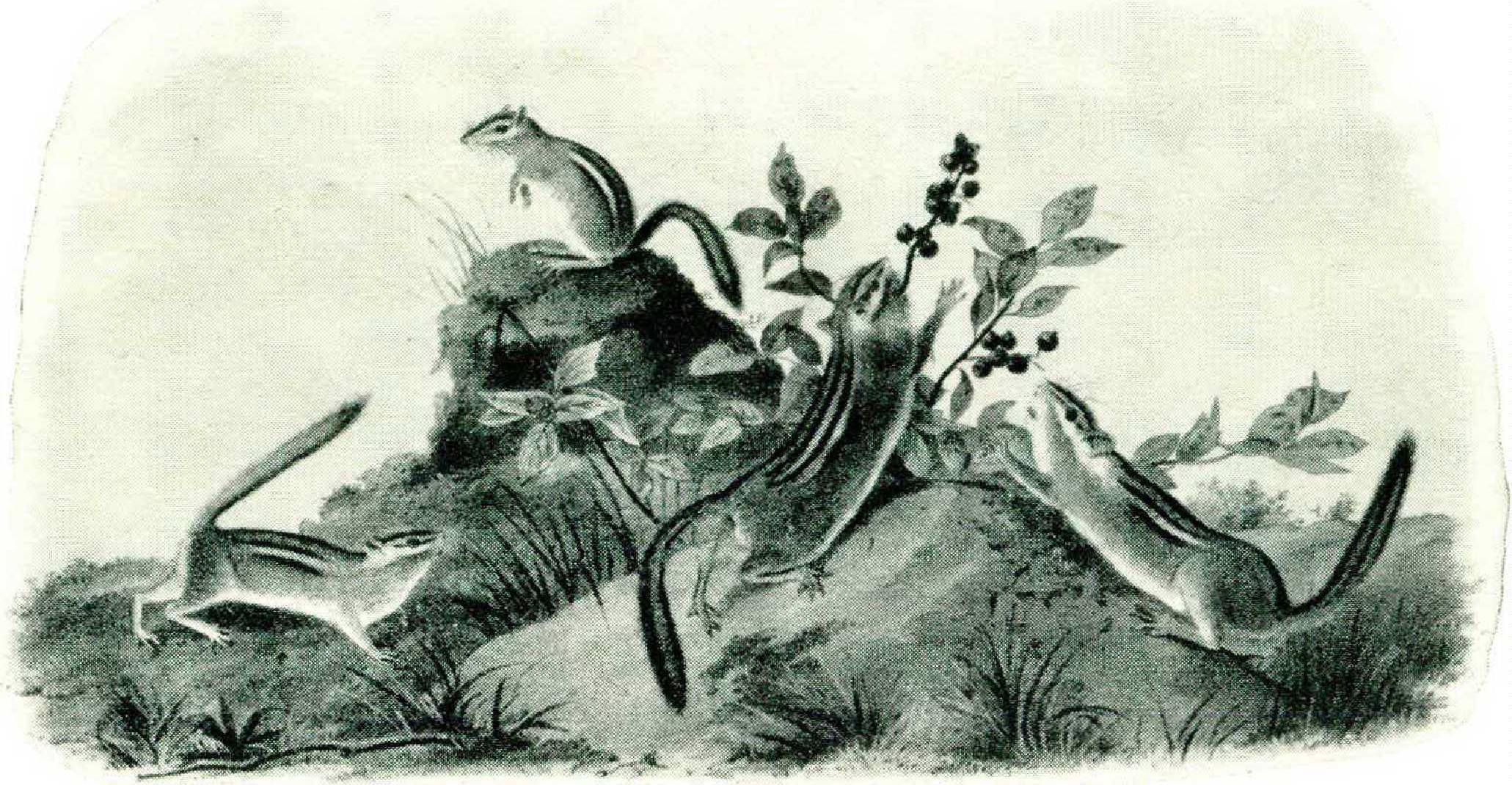
CAROL’S holes of lions seemed more suitable for the chipmunks who had made them, and the lion ledges were scattered with gnawed shells of hickory nuts and small wild-cherry stones. We know we will never find a Het Cat (Susan’s was found and shot in that same winter), but the years, even the months, take away the fox and the raccoons; the hawks move on, the buzzards diminish, the quail go. The sound of the bulldozers comes from the south and east and west, the trees go down and are not replaced, the fields are plowed under, and the roads circle, cross, and recross the once living world. There is very little real country left; there is very little plan for retaining that little left. Smaller and smaller become the number of surviving animals, more numerous the hunters, wider the roads, until the day seems at hand when even the people will be embedded in rock and cannot “get away forever,” swallowed in concrete like the fossil shells and rigid bones.
But there is left a marvelous and minute world of silver lichen, pods and seeds, and thousands of frail daddy longlegs who gather in the fall and move delicately among the dying grass stems. Marvelous and seemingly inexhaustible, it takes away some of the pain from the loss of that larger world. The wild violets had grown by the chipmunk stones, and we picked some of the big green pods and laid them down by the cherry stones; and then an odd thing began to happen. The violet seed pods began to open in a series of small backward shudders. The seeds were brown and bright metal like bird shot, and the pod looked like a small snake baring its teeth. There was a long time between each twitch, and the mouth opened wider and wider each time, and then suddenly the first seed shot out and was gone, the open jaws folded together, and every seed disappeared in the air like a flash of light. The small black crickets, the moths and shining ants of the underworld of the violet leaves must have felt this brief bombardment, but we could not find a single seed. It gives one a startling sensation to have a small vegetable thing come magically alive. As though we had found the powder of life from the witch of Oz.
Carol finds the house-making roots of a buckeye tree stretched over the mossy rocks of a small ravine. The mosses are her “tree flowers,”and she peoples the great roots instantly, warmly, domestically, with parents, relatives, and friends, all bearing singular names like Argo, Carney, and John Woody. This is the high point of the walk for Carol. Far better than hunting for some invisible panther who never shows, some chipmunk who vanishes into thorns, or finding the fluting of an ancient shell that doesn’t do anything. She digs deep under the leafy humus to bring up chocolate ice cream for her horde, and the life of her invisible dynasty could go on forever, visiting among the roots, serving ice cream in large quantities, shopping for groceries, cooking, going to school, reminiscing over gay parties. I am the one who tires of it first. With certain omissions, I have a similar empire waiting at the woods’ end. And after a while I suggest we leave Argo and Woody quarreling among the fallen acorns, Rasher and Carney to make themselves snug against the frost, and just be our own solitary old selves again.
Carol sighs. She reburies the chocolate ice cream and shuts invisible doors. “John Woody doesn’t like you,”she remarks briskly. “He says you don’t let him do anything!”
Woody is a troublemaker from way back. He should drop dead, or a panther should spring from the nearest buckeye branch and swallow him whole, bottle-brush head and button shoes, down to the last gray Woody whine.
And so by degrees, by way of jewelweed patches and mossy rocks, we made the steep climb back. With intervals, in which Carol would plunk herself beneath a young walnut or against a hoary stone and instruct me cheerfully to go ahead, and “I will sit here and call for you to come back.” But eventually, like weary hunters returning from the far northern forests, we made it home. And bearing only bright leaves, bronze nuts, and silver lichen, wet stones, coiled pods, and skin of snake, and brushing aside the frail hordes of daddy longlegs who drifted across the doorway, we fell joyfully inside.