The Development of Medicine
Professor of surgery at Harvard Medical School and chief of surgery at Beth Israel Hospital in Boston, DR. JACOB FINE is a corresponding member, formerly an active member, of the medical advisory board of the Hadassah Hebrew University Hospital and Medical School.
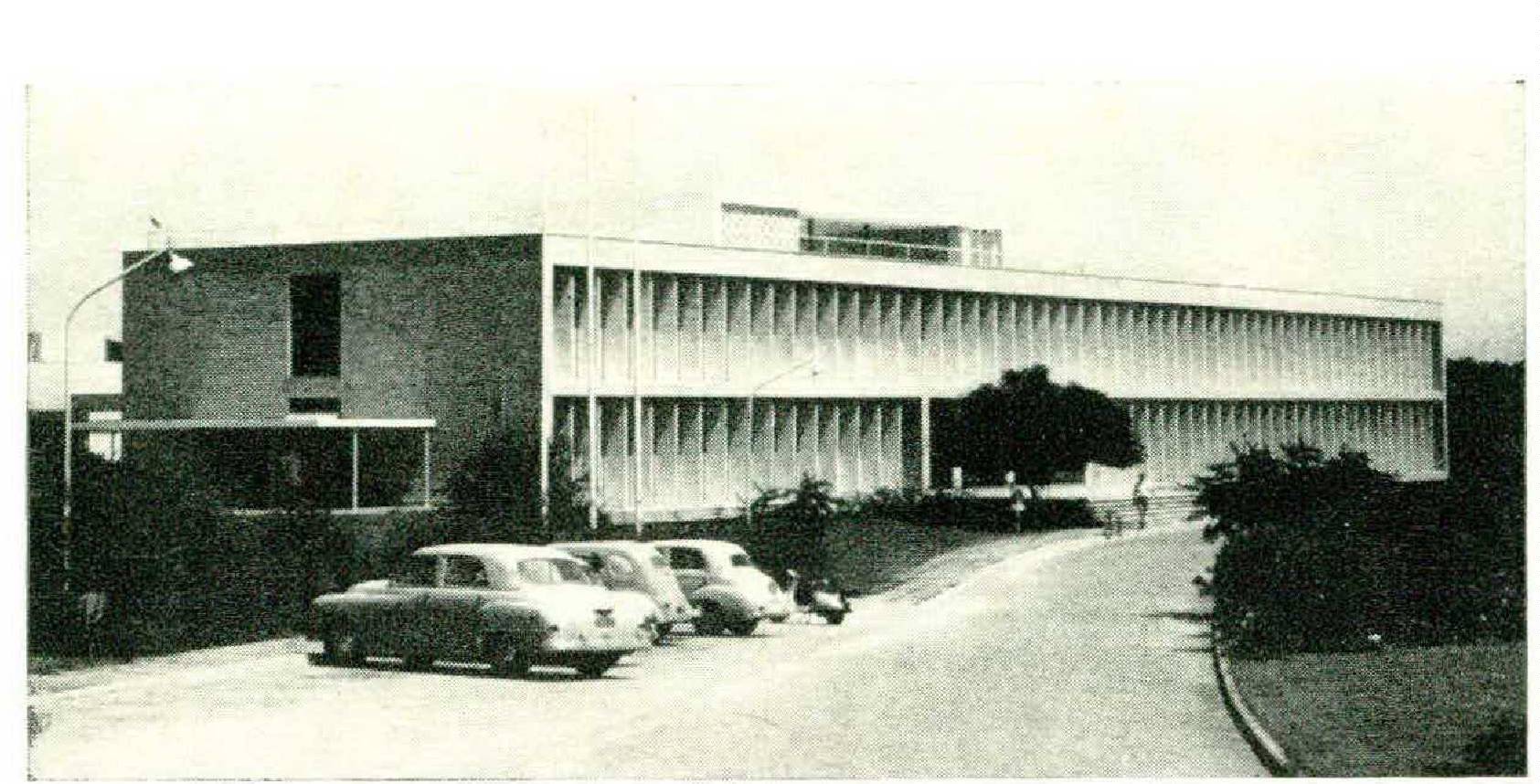
MEDICINE is off to a good start in Israel. The refugee immigrant and the farmer in the most remote village receive care of adequate quality by American standards. In some areas it is even better than that, because of the availability of community welfare centers, which integrate health with family and social welfare services. Medical care for 70 per cent of the population is provided by the Kupat Cholim (the “Sick Fund”) of the Histadrut. This organization operates a complete medical service, including hospital, dental, convalescent, and home care, and employs most of the physicians and ancillary medical personnel in the country.
Since one of the cardinal rights of the immigrant is that he shall be allowed to follow the occupation he pursued in his country of origin, and since Jews as a people have always found the medical arts and sciences suited to their hearts and minds, there has been no lack of physicians among the immigrants. Of the 5000 physicians now in Israel, some can be excluded from the roster of active practitioners because of age, or because they have been too remote from practice to be abreast of modern developments. Others, who are younger but whose training is of doubtful quality, are allowed only limited opportunities, with provision for refresher courses at graduate teaching centers of the Sick Fund. But 10 per cent are graduates of the Hadassah Hebrew University Medical School, which has been in existence for only ten years. These graduates have received an excellent education at the hands of a faculty recruited mainly from the ablest of the immigrants and native-born physicians. Postgraduate training is modeled to some extent upon the American system; all must have a year of internship. Those who go on to advanced training are given increasing responsibility, but the system is not so well organized as in the United States, because the number of jobs for intensively trained specialists is small, and there is a relatively slow turnover. Most graduates take a post with the Sick Fund; a few teach, engage in research or in public-health activities. The number of patients who can afford private care is so small that such practice is largely in the hands of internists and other specialists in the large cities.
When the Jewish pioneers came to Palestine late in the nineteenth and early in this century to establish a Jewish homeland, water and the fear of drought were overriding problems. Another source of anxiety was sterility in domesticated animals. The fertility of stock, like a rich harvest, was considered a divine blessing. The climate was Mediterranean, subtropical and tropical, with a correspondingly variegated flora and fauna, including an impressive variety of migrating birds.
Research vital to the Middle East had been done solely by Europeans and Americans. The French scientist Gay-Lussac made the first analysis of Dead Sea water, and the fauna and flora were first adequately studied and described by H. B. Tristram in a classic volume published in 1884. Not until after World War I did the Zionists erect an agricultural research laboratory, an engineering school, the Technion, and, in 1925, the Hebrew University. Of the three departments of this new institution, one was for Jewish studies; the second was for chemistry, which Weizmann believed was needed for exploitation of the vast botanical resources of neighboring Africa; and the third was for microbiology, a discipline concerned with microscopic life, in particular the parasites, which were and are the cause of vast human suffering in tropical and semitropical countries. Dr. Saul Adler came from England to direct this department. It was to his laboratory that Israel Aharoni brought one male and two female golden hamsters from Syria, and from the first colony reared in this laboratory came the thriving hamster industry which now serves medical scientists the world over. Between the two world wars the mandatory government set up a department of hygiene and one of veterinary science. These activities were essential if the area was to be made fit for habitation and development.
The Hebrew University created its Faculty of Science in 1931. Soon thereafter, the Daniel Sieff Institute of Science was founded in Rehovot. The latter has become the Weizmann Institute of Science, which does distinguished work in most fields of science, including the biological sciences. It attracts men of ability and distinction from abroad to work or confer with its staff.
The biologist and medical research man in Israel, as everywhere else, is concerned with problems of general interest — genetics, antigenic structure, and so forth. But with the founding of the state in 1948, the special local problems demanded his talent and energy. Among the primary needs were food from the land and dairy cattle. Local breeds of cattle were uneconomical, and European breeds were generally thought to be incapable of thriving in tropical countries. But veterinarians proved that this was caused by tick-borne diseases. Today there are healthy herds of Frisian cattle in the Jordan Valley, which is tropical.
Another area of study stimulated by resettlement of the land is research on the health of Europeans who are obliged to work in as many different climates as prevail in Israel. For example, a problem which arose in consequence of a shift to a new environment was a sudden increase in the incidence of kidney stones. It was found that living and working in a climate where a sparse water supply is combined with a high sweat loss produces a urine in which stone-forming salts are not sufficiently diluted to prevent crystallization.
Much of the work necessary to control these and other threats to the viability of the area was facilitated by the resources of Hadassah, the Women’s Zionist Organization of America. This organization was created by Henrietta Szold in 1912, the year after her visit to Palestine. Its first act was to send two nurses to set up a welfare station for maternity care and the treatment of trachoma. During World War I it sent an American Zionist Medical Unit of forty-four doctors and nurses to Palestine, and inaugurated a school for nurses. In 1920 it began to build hospitals in the larger population centers, most of which have since been transferred to the government. It opened mother and child care stations, out of which developed a group of community health centers, notably the Nathan Strauss Health Center in Jerusalem. In 1934 it began a collaboration with the Hebrew University for the establishment of a university hospital and medical school. The hospital and its nursing school started functioning on Mount Scopus in 1939. Close by, Hadassah also housed the university’s postgraduate medical research institute, where American Army officers in World War II were taught tropical medicine. In 1945 Hadassah was the primary health arm of the Jewish Agency. As such it carried most of the responsibility for a Jewish population suddenly swollen to over a half million, owing to the influx of war and post-war refugees. It then became aware of the need to send its medical personnel abroad for advanced training.
WHEN the state of Israel was established in 1948 and new boundaries were set, all that Hadassah had built on Mount Scopus was lost. But hospital activities were continued in outmoded buildings in the New City of Jerusalem. In 1949 Hadassah set up an emergency hundred-bed hospital for Yemenite immigrants, who were rapidly acquiring, and dying of, tuberculosis. In the same year, it built the Lasker Hygiene and Child Guidance Center in Jerusalem and a hospital in Beersheba to serve the people of the Negeb. In 1952 it broke ground on the hills at Ein Karem, outside of Jerusalem, near the Jordanian border, for a new university hospital, opened a school for practical nurses in Beersheba, and celebrated the graduation of the first class of medical students of the Hebrew University, whose training it helps to finance. In 1953 Hadassah built a model community health center for immigrants at Kiryat Hayovel, where the family, treated as a unit, can come for social and recreational as well as health needs. In 1954 the university hospital inaugurated a cardiac surgical service and a department of psychiatry, and in 1955 a dental department, at the same time that the university inaugurated a dental school.
The creation of a professional staff worthy of a university hospital and medical school was a substantial achievement. At the outset, the key professional posts were held almost entirely by physicians educated in Europe, who brought with them the European tradition of the chef de clinic, an institution that still characterizes the organization of clinical services in much of western Europe. Under this arrangement, a hospital service or department is a sort of private domain of its leader, who is virtually a law unto himself and who is concerned for the welfare of his staff as much or as little as he pleases. Men of ability often wilt on the vine in such an environment.
A traveling-fellowship program, started in 1945 by Hadassah, was based on the realization that the future staff of the hospital and medical school would have to come from among the youth of Israel. Recruits of proved ability from abroad were extremely difficult to obtain, since acceptance meant the surrender of relative affluence for hardly more than a bare subsistence, as well as adjustment of the family to a new and trying environment, In the subsequent fifteen years, the fellowship program has yielded some 150 young medical scientists and clinicians, most of whom received their training in the United States. This sets the stamp on the kind of medical care to be expected in Israel, at least for the next decade.
The creation of a national medical service of quality has already yielded an exportable service. For, just as American men of medicine have put their resources at the disposal of Israelis, so now the Israelis have undertaken in turn an even heavier burden in behalf of the newer African countries by establishing in Israel an undergraduate and postgraduate medical school for students from these countries.
Other institutions of major importance to the health of Israel include the Israeli Institute for Biological Research, which was established in 1952 by the government to deal with publichealth problems. This institute sits amid gardens in the town of Ness-Ziona, and its departments of bacteriology, biophysics, biochemistry, entomology, and virology work interdependently on insect vectors of such diseases as leishmaniasis, leptospirosis, and malaria. It also studies the action of insecticides and manufactures vaccines. Recently it established a department for the study of air pollution.
The Technion is Israel’s institute for training engineers, architects, and scientists. It has six faculties and six departments, including one for food technology and another for biology. It has 3000 students and 450 faculty members, most of whom are engaged in research.
The Negeb Research Institute in Beersheba deals with the physiology of arid-zone plants and with human physiology in arid regions. It is also concerned with developing methods for the desalinization of water, so as to convert desert to habitable country.
The Veterinary Institute produces the vaccines for the prevention of anthrax, contagious abortion in cattle, enterotoxemia of sheep, leptospirosis, rabies, distemper, and foot-and-mouth disease. It also makes vaccines against various protozoa and plasmodia.
Finally, the Ministry of Health licenses all health personnel, enforces health legislation and sanitation, and is responsible for the health education in schools. It has taken over a number of Hadassah’s institutions and now operates 5000 beds out of a total of some 12,500 in the country; and in its four large community health centers it provides regional preventive and therapeutic services. It will soon take over the care of all patients with severe neuropsychiatric disorders. But its major task is and has been to deal with the colossal public-health problems created by immigrants. who are admitted regardless of their state of health. In 1948 the unrestricted immigration of a million people began. Among them were 50,000 victims of schistosomiasis, thousands of cases of trachoma, leishmaniasis, and filariasis. After Adler and Theodore demonstrated that phlebotomus flies carry the virus of leishmaniasis, eradication of this fly, as well as the Aëdes mosquito, became primary goals. Success in this project brought malaria and leishmaniasis under control, and abolished dengue, papatacci fever, and relapsing fever as well. Bacterial and amoebic dysentery are still common. But tuberculosis is as rare as it is in the United States, and infant mortality is the fourth lowest in the world. The average life span of the Arabs in Israel was fortysix years in 1945; by 1955 it had been increased to sixty-one.
Israel is an evolving social, economic, and political experiment by a people with a firm faith in the Western world’s concept of democracy. Within that framework they have built a state with capitalistic, as well as socialistic, features. Many of its characteristics and its drives stem from a tradition of charity, pity, and centuries of bitter experience with persecution and a pariah status. Its physicians, the professors and specialists included, are no better paid than its skilled laborers. Even so, the stamp of medicine in Israel is that of “I am my brother’s keeper.”