At the Hemingways: Ernest Returns From War
BY MARCELLINE HEMINGWAY SANFORDIn .June of 1917, Ernest Hemingway graduated from Oak Park High School in the same class with his older sister Marcelline. All thoughts of college had been driven from his mind hv the war. Ernest’s efforts to enlist, what the family heard from him, the wounds which he received in Italy, and the long, sometimes restive convalescence which he submitted to at home are here described in affectionate detail. This is the third installment to be drawn from Mrs. Sanford’s family portrait, AT THIS HEMINGWAYS,which will shortly be published by Atlantic, Little-Brown.
WHEN June, 1917, arrived, the boys in our senior class had the war, even more than college, on their minds. President Wilson had given up neutrality in April, 1917. Ernest put off deciding where to go and tried to line up some work for the vacation. Our Uncle Alfred Tyler Hemingway, of Kansas City, was a friend of Colonel Nelson of the Kansas City Star, and Dad hoped Ernest could get a summer job on that fine paper. Uncle Tyler made inquiries, but there were no openings on the Star until September; the paper would take Ernest as a cub reporter at that time if he was willing to wait, our uncle told Dad. Ernie decided to wait.
Twice before, at the beginning of vacation, Ernest had walked up to Walloon Lake after taking the boat across from Chicago to the lower part of Michigan. Once Louis Clarahan went with him, and the other time, as I recall, Harold Sampson made the long hike — nearly four hundred miles — with him. The boys camped along the way, sleeping in pup tents, cooking their own meals, swimming or fishing when they pleased. They were grateful for lifts they got from passing cars. Our parents admired Ernie’s initiative, and perhaps it was his account of his adventures on the way to the cottage that inspired Dad and Mother to make the journey in an open car. Daddy and Mother and Ernest, with baby Leicester on Mother’s lap, drove all the way to the cottage in Daddy’s Ford touring car 460 miles from Chicago to Walloon Lake. It took them four days to make the trip over the dusty, rutted roads. (Meanwhile, we girls were going by boat and train.) Part of the way, especially near Traverse City, Dad told us, was only a sand track. He had to use the shovel they carried along for emergencies on several occasions.
Dad brought a tent for camping, and some of the party slept in the car on their way north. He took pictures of Mother and Ernest frying eggs over a campfire as they all breakfasted along the route toward Petoskey. When our parents and their two boys finally got to Windemere, they were as proud as if they had discovered a new continent. Dad was right. It was an achievement in that year to drive so many miles with a two-year-old along. Hotels were found only in the larger cities, and they were many miles apart in 1917.
All that summer Ernest worked with Dad on our Longfield farm across the lake from Windemere. With the help of a farmer, Warren Sumner, and Warren’s mule, they moved off the old tenant farmhouse on a stoneboat. Under the apple trees, they built a new icehouse, which Warren promised to fill during the winter. He said he would cut the ice after Walloon froze over and store it between layers of sawdust until we were ready to use it the next season. Daddy and Ernest took care of a big vegetable garden on Longfield, and they both cut the hay on about twenty acres of hilly land on the farm. They also put in more fruit trees. It was not all hard labor; Ernie had some boys come up from Oak Park to visit him, and I had quite a special party.
I met a wonderful crowd of new friends in Bay View, a mile from Petoskey, that summer, among them Sterling Sanford, a senior at the University of Michigan. Red-haired Frances Butterfield from Louisiana; the Grundy family, Bill, Lillian, and Mary, of Louisville, Kentucky; and the Gregory girls, Ruth and Alice, also from Kentucky, joined with Owen White and his little brother, Kenneth, and others in picnics at Menonaqna Beach, swimming parties, and trips to the roller-skating rink. I hated having to leave all this when it was time for me to go home. At Walloon that August, Mother agreed that I might return the Bay View hospitality by asking the whole crowd to a potluck picnic at our cottage.
Ernie was delighted they were coming. When we talked over plans for the party, he offered to take our open launch down to the foot of the lake to meet those guests who would come by train from Petoskey. It was a windy day, the lake was very rough, and most of the guests Ernest transported were damp from the splashing by the time they landed at our dock. The rest of the Bay View group had crowded into Sterling Sanford’s Buick. They drove the ten miles over the sandy hills and arrived in time for lunch.
Ernest enjoyed my new friends, and he showed the boys around and was pleasant to the girls as he acted as host in Daddy’s absence. The Bay View crowd had brought sandwiches and potato salad with them, and I had fixed a huge hot meat and macaroni casserole and made two chocolate mahogany cakes. Just as we were finishing dessert, another boat drew up at the dock, and Ernie and Sunny hurried down from the screenedporch dining room to see who had arrived. J o our delight, it was Dad, the busy doctor, back from delivering a baby in Chicago. He was whistling as he walked up the grassy slope from the dock to meet us.
‟Just in time for dessert, I see!” said Daddy gaily. ‟My, but it’s good to get back in God’s country after the heat of the city. Feel that breeze!
Does anybody care if I peel my coat off and roll up my sleeves?”
In less than a minute Daddy was chatting with our guests, and in less than an hour he was a friend of all of them. Daddy had a gift for friendship. When he was not in one of his stern moods, Daddy was a ‟real charmer,” as Mother said.
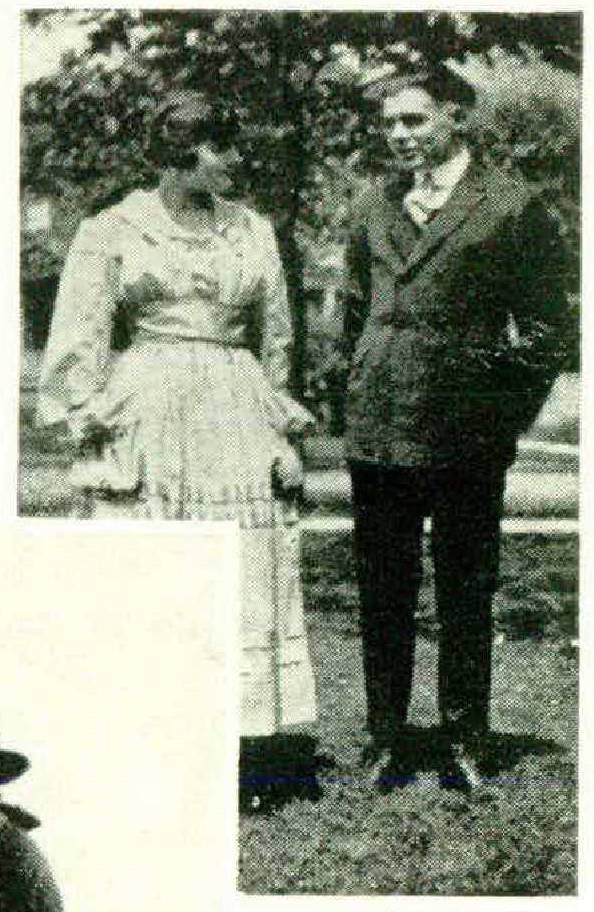
Sterling Sanford had brought his camera along, and he and my father took snapshots of the group. Later, these pictures became especially valuable to us, as they were some of the last ones taken of Ernest, with all of us, before he went to Kansas City a few weeks later to start his first job as a reporter on the Kansas City Star. The legend has it that Ernie ran away from home, but this simply is not so. Daddy bought him his ticket and saw him off, and during his first weeks in Kansas City, Ernest stayed with our Uncle Alfred Tyler Hemingway. The pictures meant a lot to me for another reason, since Sterling Sanford went into the Army soon after that, and exchanging pictures of that picnic with him led to a correspondence and eventually to a love that has lasted all our lives.
That fall I entered Oberlin Conservatory, and besides my musical studies I took dramatic reading and English composition and audited a class in sociology. I got no credit for it, of course, but I found that I liked sociology even more than piano and violin, and I enjoyed my brief experience writing for the college paper.
While I was away at college, Ursula was starting high school, where she made excellent marks and never had to be tutored in anything. Sunny was in the sixth grade of the Holmes School, and little sister Carol entered kindergarten that fall. Ernest was earning his own living for the first time in his life. So Mother and Daddy had only one baby left at home, little Lessie, who was then two and a half.
ERNEST liked Kansas City. His letters to me and the family that fall told of his excitement at being a real reporter on a real newspaper at last. He covered, as he told us, tires, fights, and funerals, and anything else not important enough for the other, more experienced reporters. Ernie was learning a lot; he told us about his new friends on the paper, many of them men who were years older than he. He met a movie star, and he wrote me three pages of raves about her.
Although at first Ernest stayed with Uncle Tyler and Aunt Arabell White Hemingway in their house on Walnut Street, he soon found a room of his own nearer to the Star office downtown. He was feeling very grown-up at being so independent. My letters to him seemed kiddish by comparison, as all I could write him about were my activities at Oberlin. Instead of feeling older than he, I now felt younger, because his new experiences made him seem so much a man of the world. Like father, he had a rare talent for friendships. He had the ability to be congenial with people of all ages and from all backgrounds.
Underlying all Ernest’s pleasures in his new experiences and his work on the paper was his great, compelling desire to get into the war. He had tried to enlist in all the services, he wrote me. He told me that the Army, the Navy, and the Marine Corps had all turned him down, not for being underage, since he was past eighteen, but he could not pass the physicals because of his inherited bad eye.
‟We all have that bad eye. like Mother’s.” I remember he wrote in one letter. ‟But I’ll make it to Europe some way in spite of this optic. I can’t let a show like this go on without getting in on it. There hasn’t been a real war to go to since Grandfather Hemingway’s shooting at the battle of Bull Run.” That Grandfather Hemingway served at Vicksburg and wasn’t in the battle of Bull Run did not affect Ernie’s point at all. I sympathized.
Ernie wrote that he liked newspaper work. Then, early in 1918 came a letter full of jubilation. He told us that he had been assigned to interview a group of Italian Red Cross officers who had come to the United States to recruit volunteers for the American Red Cross Ambulance Corps in Italy. When he interviewed them for the Star, he learned that the Red Cross was accepting men who were in general good health but who were unable to fulfill the physical requirements of our own country’s armed services.
Ernest was delighted. At last he had found a way to get to the war in Europe. He signed up at once and was ordered to report to Ambulance Unit 4 for Italy, and he called several of his friends
men who had also been turned down by our Army or Navy for one defect or another — to tell them about the opportunity.
Ernie’s own enthusiasm was contagious. Theodore Brumback, son of a judge in Kansas City, was one of several who joined the Italian Ambulance Corps with Ernest. Charles Hopkins, a city editor of the Star from Muskogee, Oklahoma, wanted to go with them too, but he was not exempt from the draft.
Ernest wrote us in the spring of 1918 that everything was set for him and his buddies to come to Oak Park for one final fishing trip to the North Woods. The American Red Cross, Ernest told us, would send a telegram to our house to notify the boys when to be in New York to sail for Italy. They were sure of at least three weeks’ notice before sailing, they had been told, and Ernest assured our parents that the telegram would come in time to provide a good seven days’ notice of the actual sailing day on the S. S. Conte Grande. Dad and Mother and all of us were tremendously pleased that the boys were coming to Oak Park.
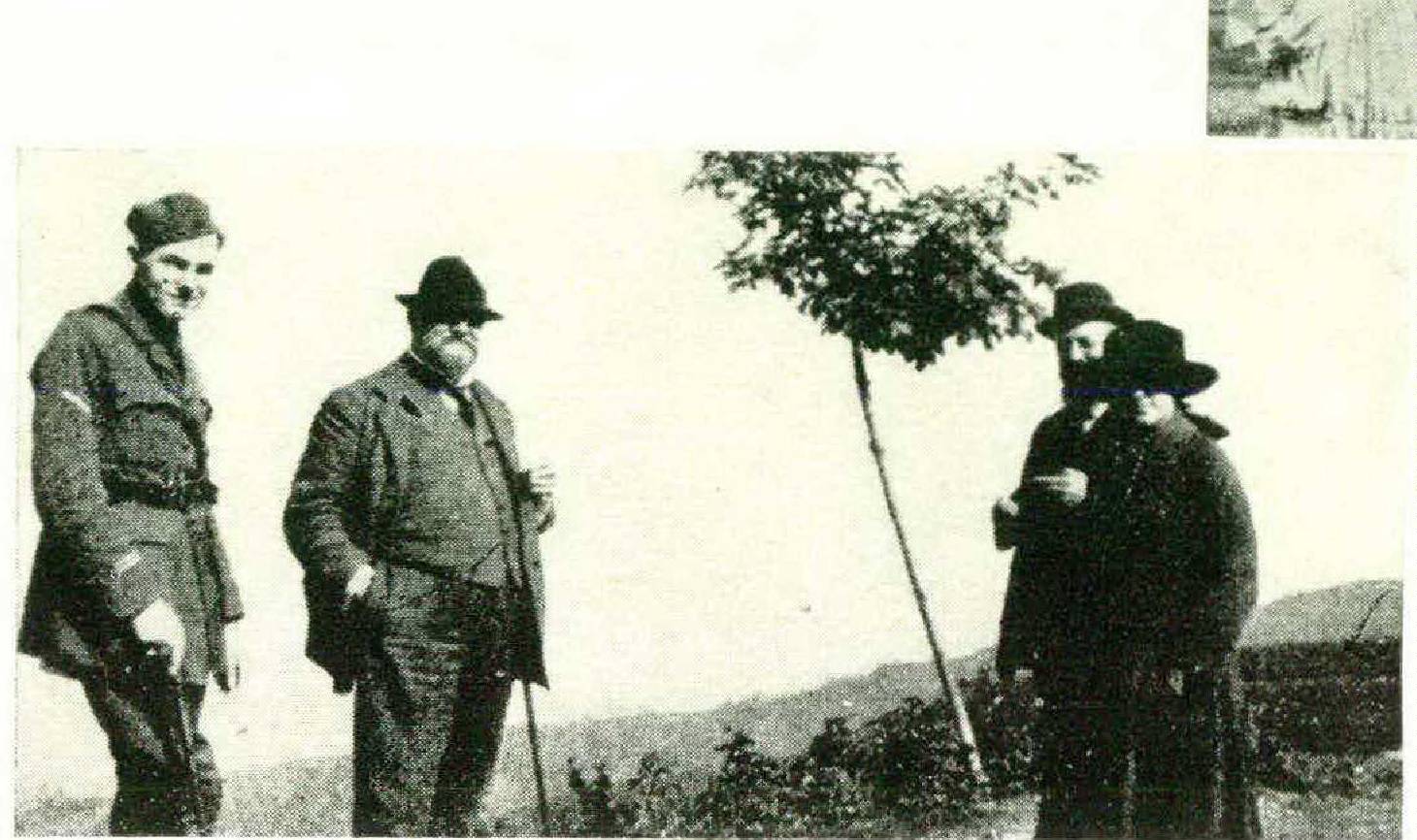
The group of five or six young men had a regular house party with our family late that May. Daddy took lots of pictures of Ernie and the gang, and he was thrilled that Ernie was finally getting to do what he had so longed for. My father would mention at this time how he himself had longed to serve in the Spanish-American War, but because he was married and the first baby had just arrived, he did not get a chance to be active in the Army Medical Corps, as he had hoped to be. I think, however, that Daddy was secretly relieved that Ernest was to be in a noncombatant branch. Dad himself was a medical examiner for the local draft board in Oak Park.
I had come home from Oberlin at Christmas, following an attack of appendicitis. But when the question of my returning for the second semester came up. Daddy and Mother announced that I was not going back; it had cost them a good deal more than they expected. So, at the time Ernest and his friends visited Oak Park and sailed for Italy. I was nearby at the Congregational Training School on Ashland Avenue in Chicago, and, of course, I was with the family in Oak Park every weekend.
WHEN Ernest left for the Red Cross service in Italy, he expected to be behind the lines. But after he landed and had driven an ambulance for a few days, he and his pal Bill Horne found the place where they were stationed too safe and rather dull. They heard there was a chance to volunteer for a special branch, the Red Cross Rolling Canteen Service, which operated right up to the front lines, It was early July, and Ernest was excited and happy when he wrote us that he and Bill had managed to work their way forward, where things were going on. He had volunteered to be one of the bicycle riders who distributed mail, chocolate, and tobacco to the soldiers in the trenches at the front. The attack on the Piave had started, and the Austrians were shelling the Italians only about fifty yards away, across the Piave River.
Dad and Mother lived for Ernest’s letters. He wrote only once, and briefly, as I remember, those first few days. Dad had always loved Ernest especially dearly, and he missed him and prayed for him daily. Mother prayed too, and felt sure Ernie would be protected from harm. Mother had a calm faith, but Daddy was very tense, worrying about Ernest’s safety. All the while, Dad continued his heavy schedule of medical calls, visits to the hospital patients, and long hours of work as an examiner for the draft board.
On July 8, 1918, while Ernest was on his bicycle, delivering mail and chocolate it was seven days after he had transferred to the Rolling Canteen Service, and less than ten days after he had gone to the active front in Italy — he was handing chocolate and a cigarette to an Italian soldier when a trench-mortar shell hit and almost buried him. It knocked him unconscious and filled his body below the waist with over two hundred pieces of shrapnel. When he came to and went to the rescue of a wounded Italian, he was hit again, with a machine-gun bullet, below the left knee. Ted Brumback wrote us about it from Milan, and my father later gave Ted’s letter to Oak Leaves, the local newspaper, which printed it on October 5, 1918. This is what Ted told us:
I have just come from seeing Ernest at the American Red Cross hospital here. He is fast on the road to recovery and will be out a whole man once again, so the doctor says, in a couple of weeks.
Although some two hundred pieces of shell were lodged in him, none of them are above the hip joint. Only a few of these pieces were large enough to cut deep, the most serious of these being two in the knee and two in the right foot. The doctor says there will be no trouble about these wounds healing and that Ernest will regain entire use of both legs.
Now that I have told you about his condition. I suppose you would like to know all the circumstances of the case. Let me say right here that you can be very proud of your son’s actions. He is going to receive a silver medal of valor, which is a very high medal indeed and corresponds to the medaille militaire or Legion of Honor of France. . . .
A bicycle was given him which he used to ride to the trenches every day laden down with chocolate, cigars, cigarettes and postcards. The Italians in the trenches got to know his smiling face and were always asking for their “giovane Americano.”
Well, things went along fine for six days. But about midnight on the seventh day an enormous trench mortar bomb lit within a few feet of Ernest while he was giving out chocolate. The concussion of the explosion knocked him unconscious and buried him in earth. There was an Italian between Ernest and the shell. He was instantly killed, while another, standing a few feet away, had both his legs blown off.
A third Italian was badly wounded and this one Ernest, after he had regained consciousness, picked up on his back and carried to the first aid dugout. He says he did not remember how he got there nor that he had carried a man, until the next day, when an Italian officer told him all about it and said that it had been voted to give him a valor medal for the act.
Naturally, being an American, Ernest received the best of medical attention. He had only to remain a day or so at a hospital at the front when he was sent to Milan to the Red Cross hospital. Here he is being showered with attention by American nurses, as he is one of the first patients in the hospital.
I have never seen a cleaner, neater and prettier place than the hospital. You can rest easy in yotu mind that he is receiving the best care in Europe. And you need have no fear for the future for Ernest tells me that he intends now to stick to regular ambulance work which, to use his own words, “is almost as sale as being at home. . . .”
By the time this letter will reach you he will be back in the section. He has not written himself because one or two of the splinters lodged in his fingers. We have made a collection of shell fragments and bullets that were taken out of Ernie’s leg. which will be made up into rings. . . .
In a postscript, Ernest added, whimsically:
DEAR FOLKS!
I am all O.K. and include much love to ye parents. I’m not near so much of a hell roarer as Brummy makes me out. Lots of love.
ERNIE
Sh — Don’t worry, Pop!
It wasn’t until late September of 1918 that Ernie wrote ns at length about his narrow escape. This letter was also printed in Oak Leaves, at my father’s suggestion. The article in the paper was headed ‟Wounded 227 Times,” and the editor said: ‟Dr. C. E. Hemingway, whose son. Ernest M. Hemingway, was the hero of a fine Red Cross exploit in Italy, as told in a recent issue of Oak Leaves, has received a letter Irom North Winship, American Consul at Milan, Italy, praising the courage of the doctor’s son and announcing his intention of keeping an eye on him.”
Daddy, who was so devoted to Ernest, seemed greatly relieved when he was safe in the hospital and having the best of care after his disastrous experience. Ernest wrote Dad in detail about the silver plate the Italian surgeons had put in his kneecap, and he went into medical detail in later letters telling how the doctor removed the shrapnel pieces from his feet and legs. He made light of his pain.
One night late that fall, Marion Vose and I decided to go to a movie near our school in Chicago. By accident, after the feature, we saw a newsreel about the work of the American Red Cross in Italy. The new Red Cross hospital in Milan was described and shown. Suddenly, in the silent film, Ernest appeared. He was in uniform, sitting in a wheelchair on the hospital porch, being pushed by a pretty nurse. Over his lap was spread a robe of knitted wool squares. He smiled at the camera and waved a crutch for a second. I was hysterical with excitement. At the end of the regular picture, I waited for the newsreel to come on again. They didn’t run it. Marion Vose and I went to the manager and asked if we could please see it again. We told him why. He was kind and said if we wanted to wait until the theater was empty, he would run it once more, just for us.
Later the manager came over and sat with us as we saw Ernie smile once more. Then the manager gave us the name of the next theater where this same newsreel would be shown. Even though it was midnight, I stopped in at a drugstore to telephone the family in Oak Park to tell Daddy and Mother where they could see Ernest in the movie the next day. My parents went to that theater the following night, and I joined them. We all wiped away tears of joy while we watched Ernest smiling as he sat in his wheelchair on the hospital terrace, wearing his military cap and overcoat. We had not seen him for almost six months.
Mother told me later that Daddy followed that newsreel all over Chicago. Mother saw it twice more herself, and I caught it again at another neighborhood theater. No film ever did a family more good. It was as though Ernest had died in battle, and we had mourned him, and now he had come to life again on celluloid. We wrote Ernest to ask if the nurse who wheeled him in the him was the same pretty one called Agnes he had told us about in his letters.
She was not. he wrote back.
‟Ag is prettier than anybody you guys ever saw,” he informed us. ‟Wait till you see her!”
IT WAS early January of 1919 when we finally received the long-awaited word that Ernest was about to sail home from Italy. Even before we knew the hour of his arrival in Chicago, Dad had heard about a newspaper interview with Ernest, at the dockside in New York, which was printed in the Chicago Evening American. January 21, 1919. The newspaper correspondent in New York told of the landing of the Giuseppe Verdi of the Transatlantic American Line; the ship had sailed from Genoa and Gibraltar bringing four hundred officers and men — the entire U.S. naval aviation unit which had been stationed at Porto Corsini, Italy, on the Adriatic shore. One of the sixtyeight cabin passengers on board was ‟the worst shot-up man that had come home from the war area, Ernest M. Hemingway, of 600 North Kenilworth Avenue. Oak Park, Illinois. Hemingway,” the newspaper article went on, ‟was the first American to be wounded on the Italian front and the King of Italy awarded him a silver medal for valor and the Italian Croce di Guerra.”
Dad received a telegram from Ernest in New York saying his train would be in Chicago that night. Daddy picked me up at my school downtown and took me with him to the La Salle Street station. It was a cold, snowy January night, and when we got to the station, Daddy asked me to stay up at the head of the stairs in the train shed and wait there, while he went down to the train platform. He wanted to meet Ernest alone. Mother, of course, was waiting at home in Oak Park with the other children. I could hardly bear the suspense as I stood there in the chilly air. I peered down the stairway toward the trains. I heard the puffing engines coming and going. Each time there was a new sound from below I felt sure it was Ernest’s train.
Suddenly Ernie was there. He had on an overseas cap and was wearing a British-type khakicolored uniform, partly covered by a long black broadcloth cape flung over his shoulders. The cape was fastened at the neck with a double silver buckle, He was wearing knee-high brown leather boots, and he was limping a little and leaning on a cane. He climbed up the stairway slowly toward me, one step at a time. Dad was trying to get Ernest to hold onto him. At last Ernie was at the top of the stairs.
‟Hello, Ivory! How’s the old keed?” he said as he kissed me.
I dissolved in tears. Ernie was home again, looking older and more tired but as pink-cheeked and as dimpled as ever. His thick brown hair gleamed under his overseas cap.
Dad was moving about nervously. He was excited. and eager to help Ernest to get out to the car.
‟Here, boy! Here, lean on me!” Dad urged, as we started out of the station down another long flight of steps toward the waiting Ford.
‟Now, Dad.” said Ernie, ‟I&8217;ve managed all right by myself all the way over from Milano.
I think I can make it OK now.” He gestured toward Dad. ‟You and Marce go ahead to the car. I’ll follow down the steps at my own pace. I’m pretty good with this old stick.” He was. But we both waited and walked slowly with him to the car.
Dad dropped me off at my school on the way out to Oak Park, and I didn’t see Ernest again until I got home that weekend. But he wasn’t the same old friend and playmate I had known. Though much less than a year had passed since he had gone to Europe, and only a year and a half ago we had graduated from high school together, a lifetime of new experiences — war. death, agony, new people, a new language, and love — had crowded into Ernest’s life.
Morning after morning he lay in his big greenpainted iron bed in his third-floor room. He rarely stayed in bed all day, buL it seemed to help his aching legs if he was not up and walking for more than half the day. I can vividly remember the sight of his brown hair dark against the white pillows. Usually he had his Red Cross knitted cover spread over him on top of his other bedclothes — the same one we had seen in the newsreel, with its gay green, red, black, yellow, and white squares. He didn’t like to be without this cover somewhere around. When we asked him why, he said it kept him from being so homesick for Italy.
Ernie was remarkably uncomplaining about his suffering from the festered places on his skin, Tiny shrapnel bits kept working their way out of his legs and feet. He had visited Oak Park hospital, where Daddy and his doctor colleagues had examined him carefully. He didn’t have to have any more operations, as I recall, but he needed constant medical care. Often he was in real pain, but usually by the time he came downstairs he was quite cheerful. He wrote lots of letters to Italy, and he read for hours at a time in bed. He read everything around the house. All the books, all the magazines, even the American Medical journal from Dad’s office downstairs.
Ernie also took out great numbers of books from the public library. Though he rested most of the mornings when he first came home, by lunchtime he was usually dressed in his good-looking Red Cross uniform and his high, well-polished brown cordovan boots. He was proud of these boots and shined them daily. After lunch with the family he would put on his overseas cap, and, taking his cane, he would start out for a walk. He tried looking up his old friends, but few of them were around town or free during the daytime, as he was. Most of his pals now had jobs or had gone back to college after their demobilization. So he began going to the high school in the afternoons: it was a place where he felt at home.
Ernest was soon in demand as a speaker. Various organizations around town wanted him to speak on his war experiences. I remember one talk he gave at the high school in March of 1919. The headline in the Trapeze of March 21 refers to ‟Lieutenant Hemingway.” ‟That was a quick way to get promoted.” he said to us afterward, and we all laughed. (He had been an honorary second lieutenant while in the Red Cross.)
Ernest also talked informally to the visitors who came to the house to greet him and to see his souvenirs. He had shipped home a trunk full of weapons and many types of uniforms. Some of the latter he had won in strip-poker games, he told us. Among his souvenirs of the war were a captured Austrian automatic revolver, a gas mask, and his punctured trousers. The bloodstains were still visible on them, and Ernie took this garment with him to show his audiences. Ernie enjoyed showing his trophies, but actually it was Dad who invited most of the friends and neighbors to see Ernie shoot off his star shells in our backyard — brilliant signal lights my brother had managed to bring home with his other baggage.
IN BETWEEN these extrovert activities. Ernie had quiet, almost depressed intervals when he retired to his room away from the well-wishers and curiosity seekers. It was during one of these quiet times that I was very upset about something not connected with Ernie in any way. I think this incident happened about a month after he got home from Europe. I remember I had climbed the stairs to his room that evening to bring him some mail or magazines. He noticed that something was wrong.
‟What’s the matter, Mazaween?” Ernie asked kindly. ‟Something got the old sistereen down?”
We talked for a few minutes, and I let off steam to Ernie just as I used to before he had gone to Kansas City.
Then Ernest said. “Here, take a nipper of this, Mazaween.” He held out a bottle marked kümmel. Hesitatingly, I tasted the warm, sweet, anise-flavored drink. I rolled it on my tongue, but I didn’t drink it.
‟Don’t be afraid.” Ernie said, “drink it up, Sis, it can’t hurt you. There’s great comfort in that little bottle,” he told me. “not just for itself. But it relaxes you when the pain gets bad. Mazaween,” he said, ‟don’t be afraid to taste all the other things in life that aren’t here in Oak Park. This life is all right, but there’s a whole big world out there full of people who really feel things. They live and love and die with all their feelings. Taste everything. Sis,” he went on. ‟Don’t be afraid to try new things just because they are new. Sometimes I think we only half live over here. The Italians live all the way. What some of those guys I got to know in the hospital had been through! I could tell you stories, Maz —” I
begged him to tell me. Ernie said he didn’t want to shock me, but some of the stories came out. bits at a time.
Ernie said that, as he picked up more colloquial Italian and understood all the words, he had heard some pretty raw tales. He told me a few of them, though I suppose they were well expurgated. In all the stories he told the family, Ernie was careful not to shock the sensitivities of our Victorian-trained parents. For Ernest it must have been something like being put in a box with the cover nailed down, to come home to conventional, suburban Oak Park after his vivid experiences. I wondered after that night if he would ever again be happy living at home.
Naturally, Ernie made some new Italian friends, who lived nearby in Chicago. The Italian vice consul, Nicki Nerone, was a great friend of his. It was through the vice consul and the ItalianAmerican organizations, whose members knew of Ernest’s medal and honor, that a group of Italians organized a wonderful party which they gave for Ernest at our home. A committee called on my parents to present their plan. At first, Mother and Dad didn’t understand. Why should all these people want to come out to our house and bring their own food? It didn’t seem reasonable. But Ernest explained.
‟Let 8217;em come, Dad. What they are saying is that they want to bring everything. They’ll bring all the food and an orchestra and opera singers, drinks and the whole works.”
‟But the expense! We couldn’t accept all that.” Daddy protested.
“They like to do it, Pop. You only hurt their feelings if you don’t let them come. They love fiestas, and they want to show that they love Americans too. Just relax. Dad, you’ll enjoy it.”
So it was arranged. We were to invite as many of our friends as we wished. The Italian hosts would bring their friends, and refreshments for at least fifty people. Our house could easily accommodate them all. That was the beginning of the fabulous Italian parties at our home.
True to their word, on the appointed Sunday it had to be Sunday, as most of the people in this group worked six days a week in their jobs — out to Oak Park came cars full of voluble, laughing, black-haired people, carrying huge hampers packed with rich foods. When the Italians unloaded their hampers and boxes, the spaghetti and meat dishes were arranged in the center of our big dining-room table. These were surrounded by platters of roast chicken, strange, delicious fish salads, plates of small, sweet pastries, and other dishes of tasty tarts, filled with highly seasoned ground meats and cheese. Near them stood frosted cakes, long loaves of crusty Italian bread, and gallon jugs of red and white wines.
Three members of the chorus of the Chicago Grand Opera Company were part of the group. Several others, on weekdays chefs in some of the best restaurants in Chicago, put on their aprons and went right to work in our kitchen. They took charge of everything.
The musical members proceeded to give us a concert of opera arias sung with all the volume and gestures they used on the stage. One of the Italians had brought a guitar, another had his violin, and still another played the trumpet. These musicians accompanied the singers with gusto. The concert took place in Mother’s music room.
Even Daddy, still rather dubious about the whole affair, especially since it was held on Sunday, finally entered into the spirit of the occasion. It was impossible to resist the friendliness of these generous people who had come to do honor to his son.
At last the Italian photographer, a professional, arranged the whole crowd, the chefs, the musicians, and our family in a group. We all stood just under the balcony in the music room. The photographer ducked behind his camera, put his black cloth over his head, and sang out. ‟Geeve a smile, please!”
We all grinned. The resulting picture showed us a very happy group.
We Hemingways loved every minute of the party, even when we understood only part of what was being said by our Italian host-guests. But we realized how sincerely they meant it when they told us how happy and proud they were to be able to celebrate Ernest’s return from Italy with this fiesta at his own home.
One thing, however, seemed to disappoint them. We had not invited enough guests of our own to eat up all the food. The Italian group would come out soon again, they told us. Such a beautiful house, they said with feeling, should be filled with many friends.
For days Ernie had been watching the mails. He was irritable and on edge with the waiting. Then the letter came. After he read it, he went to bed and was actually ill. We didn’t know what was the matter with him at first. He did not respond to medical treatment, and he ran a temperature. Dad was worried about him. I went up to Ernie’s room to see if I could be of any help to him. He thrust the letter toward me.
‟Read it,” he said from the depths of his grief. ‟No. I’ll tell you.” Then he turned to the wall.
Ag, he told me, was not coming to America. She was going to marry an Italian major instead.
In time Ernest felt better. He got out among his friends again. I have thought many times that the letter from Agnes may have been the most valuable one my brother ever received. Perhaps without that rankling memory, A Farewell to Arms might never have been written.