The Limits of Defense
The arms rare with nuclear weapons is the central and most terrifying reality we live with today. What are the true limits of our national defense, and what hope is there for a rational alternative to war? A graduate of Johns Hopkins. ARTHUR I. WASKOW served as legislative assistant la Congressman Robert W. Kastenmeier of Wisconsin from 1959 to 1961. The following study will form part of his new hook, to he published by Doubleday.
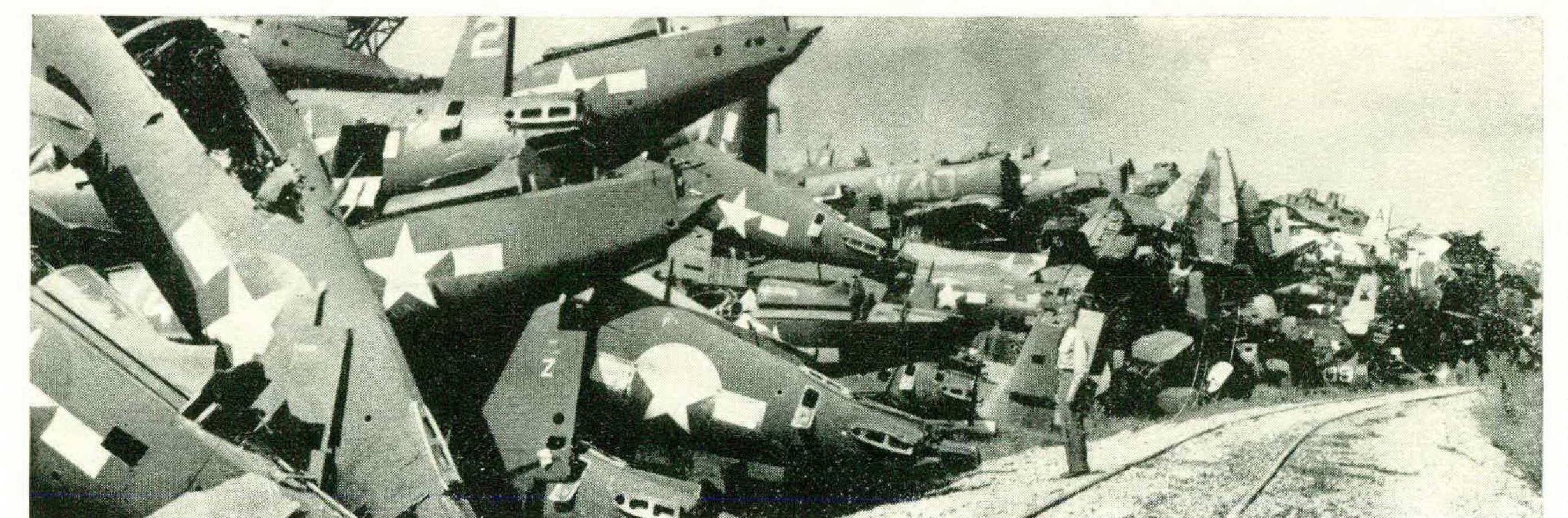
UNTIL recently in our national history. Americans believed that when wars were thrust upon us, the United States could win them, or, at the very least, could successfully defend its basic interests. But since 1945 we have discovered limits to our own defense. The impact of the atomic bomb and its successors has persuaded many makers of military policy that a modern war could not be won, and that in such a war defense of American interests might well be impossible.
If victory and defense were both outmoded, policy makers asked themselves, what goal could there be for American military power? They decided that our military power must be so disposed as to prevent wars from beginning. The new goal is deterrence.
Adopting deterrence as the key to policy has, however, opened the door to a vigorous debate over how deterrence should be carried out. Some thinkers argue that comparatively controlled wars are still acceptable possibilities. These might range from a thermonuclear attack on military targets instead of people down to a small-scale rebellion in some nation on the periphery of American interest and alliance. For such lesser wars, defense is, therefore, still important, according to this group of thinkers. Others disbelieve that any thermonuclear war can be a controlled or limited war, and insist that defense applies only to nonthermonuclear, or only to nonatomic, wars.
The debates over deterrence are also concerned with how best to preserve both life and liberty. Americans, as Patrick Henry once pointed out, should hold liberty more dear than life and be ready to die to protect liberty. But a nation of corpses is not free. Today life and liberty are opposite sides of a coin. Deterrence must protect them both. That means it must prevent war, prevent our conquest by foreign tyranny, and prevent our surrendering liberty to homegrown tyranny in a mistaken belief that such a surrender would protect liberty.
Both domestically and internationally, the technological and political heat and pressure of the twentieth century have welded together the means the American people use and the ends they hold. Only a defense made up of peaceful acts can protect the peace, since warlike acts, even done only in self-defense, are so highly threatening as to start a spiral of more warlike acts. Only a defense based on continuing democratic decisions can protect democracy, since the time span of thermonuclear weapons rules out appeal to the people or their representatives even on the most basic issues of life and death.
THE COUNTERFORCE THEORY OF DETERRENCE
One theory of deterrence argues that it is still possible to fight a counterforce thermonuclear war against the enemy’s military forces. Much of the population, and with it the fabric of society, of the warring powers would be allowed to remain intact.
Counterforce theorists argue that if such a war were fought, American society could face the prospect of survival and renewal, regarding it as unappetizing but acceptable, They admit, however. that damage to the United States would be unprecedentedly great, and therefore they sometimes refer to prevailing, rather than winning, in such a war. ‟Prevailing” essentially means the bare defense of vital American interests.
This theory is most strongly and widely held by officers in the Air Force, though some officers in the other services accept it.1 The Air Force has possessed atomic weapons much longer than the other services. Its theorists have become habituated to the concept of atomic warfare and skilled in its potentialities. They react to the Soviet thermonuclear capability not by deciding that thermonuclear war is too dangerous for the United States to consider, but by working out a refinement of thermonuclear war which they hope will not be too dangerous. The Air Force has constructed various models of what several possible wars might be like. The dominant characteristic of these models is that they require intense self-control from both sides in such wars, selfcontrol based on a coldly rationalistic analysis of self-interest.
The Air Force suggests that war is most likely to start through the Soviet bloc’s launching a major atomic strike at the United States, which would knock out as much as possible of the American atomic striking force. With what was left of its atomic forces, the United States would have to return the blow. The major decision would be whether to retaliate against Communist cities or forces. But an attack against cities would leave enemy atomic forces intact for a second blow, and this blow would come against American cities in revenge for the annihilation of Communist cities. Since American cities cannot be adequately protected against H-bomb attack, such a return blow would destroy American society. For that reason, the Air Force would aim the American retaliatory attack at Soviet atomic missile and bomber bases, hoping to smash as much as possible of the Soviet thermonuclear capability without destroying Soviet society.
Counterforce theorists argue that the initial Communist attack would be directed at American forces, not cities, for reasons that are a mirror image of American reasons for striking back at forces, not cities. Each side would thus find it to its own interest to restrict its attack extremely carefully.
This belief in self-control leads counterforce theorists to their second major point, that American society would not be absolutely destroyed by such a war. These theorists estimate that up to thirty million Americans might die, but they believe that after absorbing the first blow, the United States (and Communist governments also) would continue to act by carefully rational calculations, in an attempt to minimize destruction. They believe it likely that neither side would try to destroy the other’s capital and government, since each side would want to have the other’s authorities intact, able to negotiate or surrender.
What basic requirements would our weapons systems have to meet in order to be able to fight a second-strike counterforce war? American thermonuclear weapons would have to be made relatively invulnerable in order to survive the first enemy attack, and be powerful and numerous enough to destroy enemy atomic forces that would be similarly protected. The American population would have to be separated from American forces, so that it would sustain as little damage as possible. This separation could be accomplished partly by physical distance between cities and missile or airplane bases, but people in the cities would also have to be protected against radioactive fallout.
The Air Force can also imagine a second kind of war, one beginning with a major Communist attack upon some area less crucial to American defense than the United States itself — for example, an invasion of western Europe, or a take-over of West Berlin, or even a Communist revolution in a strategic Latin American country. In such cases, the Air Force argues, the United Stales should threaten to use its thermonuclear power in order to make the Communists back down, and then strike first to punish them if they refuse. The American threat or attack could be scaled according to the size of the Communist provocation — perhaps ten Soviet cities as punishment for invading western Europe; perhaps a single city for capturing Berlin. This American punitive strike would have to be directed against the enemy’s atomic forces also, in order to prevent his retaliating. Fallout shelters would be no protection against direct H-bomb attack, and therefore, the United States, before attacking, would have to evacuate Americans from the large cities to huge blastproof and fireproof shelters previously dug under rural areas.
In this counterforce-plus war, as well as in pure counterforce theory, the crucial belief is that H-bomb wars can still be made to follow the nineteenth-century rules: Wars can be won. Predominant fighting force is necessary to win the war. Fighting forces can be kept distinct from the nation. The nation can with self-control use the fighting forces to thrust and parry, as a duelist can use his sword.
OBJECTIONS TO COUNTERFORCE THEORY
That a thermonuclear war would actually be fought in the fashion counterforce theorists suggest seems impossible. The key factor, the separation of atomic forces and the population, is most doubtful.
A close look at the present deployment of Air Force missiles shows that in practice our forces, including anti-aircraft installations, have not been separated from our people and probably could not be. Nor does separation through civil defense seem workable. Evacuations to blast shelters would actually encourage the enemy to attack pre-emptively.
The proponents of fallout shelters assume a twoweek stay and never explain why an enemy confronted with a defense based on this assumption should restrict himself to a two-week war when he could easily nullify the shelters by reserving some weapons to fire at the end of two weeks. A difficult and expensive program of civil defense can be rendered useless as an element in counterforce strategy by relatively easy and inexpensive actions on the part of the enemy.
For other reasons as well, the enemy will be tempted to increase the power of his attack. As our missiles are made harder to find and destroy, the Soviets might decide to take no chances on distinguishing forces from population, but, instead, to attack at one stroke the whole of American society, both forces and population, using highburst pattern bombing across the whole American continent or extremely dirty radioactive H-bombs. The suggestion that trying to build a sophisticated counterforce system would merely bring about an increase in violence should not be surprising. Certainly the history of twentiethcentury wars is that, as either side diffuses its armed might more effectively, the other side’s reaction is to raise the ante. When this process shocked us in World War II, we learned to call it ”total war.” In the final step toward making war total, forces and population would be inextricably mixed as the victims of attack.
The second premise of the counterforce theorists is the belief that rational control over the fighting of a thermonuclear war will be possible after that war has begun. But rational control must rest on extremely effective communications, and communications would surely be one of the first casualties of a thermonuclear war. There will be extreme difficulty even in assessing the damage caused by the first exchange of strikes. Any American government that is still functioningafter the attack will have to give orders without knowing its own surviving defenses, the power left to its own striking force, or the targets still requiring destruction in the enemy’s territory.
In fact, a government may have great difficulty in delivering its orders at all. Electric-power, radio, and telephone lines will be down. Jammingdevices will be used by the enemy to prevent orders to fire from reaching their destinations. Small groups of atomically armed forces will have to make their own decisions about what kinds of attacks to mount against the enemy. Meanwhile, some American cities would have been destroyed, either because they were too close to missile bases or because of inaccuracy in aiming and firing. Some field commanders without orders and surrounded by chaos might succumb to insane fear and hatred and end up firing H-bombs at everything in sight. The same process would be taking place on the enemy side, and attacks might be deliberately made on American cities. In short, a counterforce war would probably result in the collapse of both nations involved.
The most serious doubts of all are cast on counterforce theory by the likelihood that, far from deterring war, it would actually tend to bring war on. Counterforce strategy would almost inevitably reward the nation that struck first. The nation to absorb the first strike would have great difficulty in finding enough weapons to outweigh the enemy’s strength. When a crisis begins, each side will try to discern that moment at which the enemy intends to fire, and each side will try to anticipate that moment. And each nation will realize that the other is trying to do this. With the pressure so enormous and the stakes so high, there can be little doubt that each side would be forced to try to fire first, pre-empting the other’s attack.
Finally, counterforce theory would endanger our liberty because it would require an endless arms race. We would try to discover and build new weapons that could destroy the enemy’s forces, and he would be accelerating his own arms program in the attempt to keep up with our improvements. We would be building more and deeper shelters in a desperate race to keep ahead of his new weapons. In constantly increasing taxes, in constantly proliferating controls over raw materials and labor, in constantly harsher attacks upon minority dissent, in constantly more severe restrictions on publication of government information, the costs of counterforce strategy would mount forever. Free enterprise and free speech would probably be early victims.
THE THEORY OF THE BALANCED DETERRENT
The second major theory of deterrence is built on the belief that any thermonuclear war may easily become a total thermonuclear war, and that all thermonuclear wars must therefore be prevented. Supporters of this view have concluded that to win or to lose any thermonuclear war is inconceivable, and any such war will end in the destruction of American society.
These theorists believe in deterring war by making it absolutely clear to all the world that war could not possibly have any result but disaster. They propose to do this by deliberately increasing the terror of war to the nth power, by deliberately aiming our H-bombs at the cities of Communist nations, Their hope is that the result of making thermonuclear wars irremediably disastrous will be the elimination of all but limited wars lought with tactical atomic weapons or with conventional weapons. They believe that such wars can be won if American and Western capabilities for lighting them are strengthened.
Because this program requires the creation of a thermonuclear deterrent on the one hand and of a limited-war capability on the other, it is often called the ‟balanced deterrent.” The theory of the balanced deterrent appeals especially to the officers of the older services, the Army and Navy. In those two services a strong attempt has been made to keep war within the limits of traditional military and naval tactics.
Theorists of the balanced deterrent first examine how to deter thermonuclear war as completely as possible. They conclude that if both the United States and its chief enemies have great masses of citizens open to atomic attack in a sense, being held as hostages and that if on both sides the atomic forces to mount an attack are themselves invulnerable and are powerful enough to destroy enemy cities but not the protected enemy forces, the attack will never be mounted. The theory is that any nation which struck first under such circumstances would be condemning its own people, its economy, its government, its very existence to death. For its attack would not be able to destroy its enemy’s invulnerable atomic force, and the enemy would then strike back at civilians.
The Navy believes that the invulnerable deterrent is to be found in its Polaris submarine, driven by atomic motors and armed with thermonuclear missiles capable of destroying cities but not hardened missile sites. The argument runs that the Polaris can cruise the oceans in secrecy, ready to strike but with every incentive not to do so unless the United States is struck first. Always at sea, the Polaris would avoid attracting an attack against the continental United States. For an attack would have no purpose if it left the Polaris still capable of striking.
To deter or answer provocations less than all-out war, balanced-deterrent theorists look to modernized tactical forces able to fight limited wars, ranging from the scale of World War II down to a Laotian-style infiltration. In limited wars, the Army and Navy would use foot soldiers on the spot and the fleet to support them. But four important factors compel modernization of these old-style warriors: the numerical advantage in population of the Sino-Soviet bloc over the United States and its military allies; the totalitarian organization of the Communist states, which permits them to conscript greater proportions of their men and resources for military uses; the far-flung frontier from which Communist tactical attack might come at any moment; and the development of a new Communist tactic of combined infiltration, subversion, and guerrilla warfare.
The Army and Navy feel that these four factors require increases in the mobility and numbers of Western tactical forces. They demand an airlift capability that could transport infantrymen to any part of the world in sizable force within hours. They urge that sizable fleets, floating off the shores of critical areas, be ready to deposit American Marines on land at a moment’s notice. They believe that every attempt should be made to increase the numbers of allied soldiers available to integrated Western commands. This last requirement has emphasized the need for building a strong German army and for increasing military aid to nations on the Communist periphery that cannot afford to support large armies.
Recent Communist successes in areas like northern Laos have persuaded some theorists of the balanced deterrent that a new component is needed for our limited-war arsenal: commando fighters and specialists in infiltration, to combat internal subversion and revolution.
The one matter on which the theorists of the balanced deterrent disagree is the question of increased firepower for tactical forces. Some believe that the West will find it extremely difficult, despite added mobility and increased military aid, to catch up with the Sino-Soviet bloc in the number of available soldiers. They therefore insist that the West’s presumed technological superiority must fill the gap, and that atomic or chemical or biological weapons must be placed in the hands of Western armies to be used against hordes of Sino-Soviet invaders.
Other balanced-deterrent theorists believe that atomic, chemical, and biological weapons would spread tactical war into general war. These men argue that the only observable limits are defined by the so-called conventional weapons, that once war goes beyond this limit, there is no way of stopping either side from employing still more powerful weapons, including the H-bomb.
Theorists of the balanced deterrent believe that their system would prevent thermonuclear war and make possible American or Western victory in old-fashioned wars.
OBJECTIONS TO BALANCED DETERRENCE
The doubt is whether any weapon can be made permanently invulnerable, as the balanced deterrent requires. In fact, even now the Polaris is probably vulnerable. The range of its missiles is so short and many Communist cities are so far from navigable oceans that to be capable of hitting them, the Polaris submarine must circle quite close to Communist coasts, within easy range of enemy planes. To launch its missiles, the submarine must release enormous and easily detected bursts of energy. The firing of just one of its missiles may immediately alert enemy aircraft to the position of the Polaris submarine and cause it to be destroyed before it releases more than a few of its sixteen missiles.
Refinements of the Polaris may, of course, add to its range and to its ability for self-concealment. But there will undoubtedly also be refinements in ways of detecting and attacking submarines. The same problem would apply to other supposedly invulnerable weapons. The invulnerable deterrent cannot stand still, it cannot halt the arms race, It can only give rise to a slightly different kind of arms race.
Understanding among some theorists of the unstable effect produced by the research race has led to suggestions for combining the balanced deterrent with international inspection of laboratories, factories, and weapons. This approach is what may be called ‟arms control only” — keeping the existing weapons, but inspecting them to prevent their improvement. The amount of inspection needed would be as great as that needed for total disarmament, and the atmosphere for inspection —because the weapons and their threat would still exist — would be far more inimical to effective control than the atmosphere obtaining under total disarmament. For this and other reasons, most military supporters of Polaris think it is more sensible constantly to improve the invulnerable deterrent than to seek inspection to freeze further research.
By its nature, the Polaris would add to, rather than reduce, the so-called nth-country problem. Silent underneath the ocean, the Polaris submarine is unidentifiable. As nuclear knowledge spreads across the world, no one will ever be sure what nation might order a thermonuclear blow — scarcely a stable situation.
The other element of the balanced deterrent, tactical readiness, is also open to severe criticism. High firepower in terms of atomic, chemical, or biological weapons is clearly capable of leading to a thermonuclear war. To defend Europe by firing tactical nuclear weapons the size of the Hiroshima bomb at invading armies would leave little of Europe to defend, and Europeans would be certain to demand that the war be ended by using thermonuclear weapons against the enemy.
Those who have proposed paramilitary, or guerrilla, warfare by the West have been extremely naïve in their understanding of guerrilla warfare. Those theorists who emphasize the role of paramilitary forces seem to think that American commandos can operate as guerrillas in other countries in the same way that North Vietnamese Communists act as guerrillas in South Vietnam. Successful guerrillas are not merely underground soldiers in an alien land. They need the support of the population and get it by demanding, or pretending to demand, social and economic reforms that would benefit the population around them. If the United States is prepared, with huge amounts of economic aid, to support social revolution even against Western business and political associates in the local governments, it is not necessary to send commando fighters. If we refuse to support basic social changes, sending commandos will not stop Communist guerrillas, because our commandos will not get popular support.
The military-aid aspect of balanced-deterrent strategy has tended to prevent the United States from supporting the needed social changes in many underdeveloped countries. Armies aided by the West, since they use up. for noneconomic purposes, whatever wealth might be available for economic development, ally themselves with the status quo of poverty and ignorance. Armies built on this basis can only try to hold down the violence born of desperation. When their holding action fails, the Communists benefit from the identification of the West with the repressive army.
Tactical readiness leads to a dilemma. Depending on increased firepower, and therefore on tactical nuclear weapons, makes too easy the expansion of the conflict in area and its increase in violence. But not depending on increased firepower would force the West in underdeveloped areas into either a useless attempt at quasi guerrilla warfare or a self-stultifying attempt at arming Asian, African, and Latin American ruling groups. The dilemma leads on the one hand to thermonuclear war, and on the other hand to the continued Communization of the uncommitted world.
An attempt by the West to meet this dilemma by matching the Sino-Soviet alliance in sheer numbers of men under arms would be disastrous. The effect would be that of permanent limited wars, like those in Korea and Algeria, limited in the amount of violence allowable, so that no victory could be won, but seemingly unlimited in the length of time they might last. During these wars, the United States and France each experienced great pressures at home against keeping the war limited, and also great pressure against democratic civil liberties. During the three short years of the Korean War, the United States had to deal with MacArthurism and McCarthyism. What would be the effect of twenty-five or fifty such years?
In the very short run, the balanced deterrent would undoubtedly be safer than a counterforce strategy, but it would only be useful as a way of getting the time to move to new solutions.
THE MIX: STRATEGIES CONFOUNDED
Another theory is that the existence of potentially unstable and unpredictable situations may guarantee actual stability. If a would-be aggressor does not know what might happen, he will stay his hand and nothing will happen. On this belief there has been constructed the theory of the ‟Mix,” calling for the simultaneous existence, side by side, of all the weapons and strategies involved in both the counterforce and balanceddeterrent theories, all of them available for use in order to confound prediction.
Support for the Mix is closely connected with particular interests inside the Defense Department. Officers connected with the Joint Chiefs of Staff and the central Department of Defense, in trying to understand and reconcile the conflicting claims of Air Force, Army, and Navy strategists, often come to the conclusion that all the services are right and that all their strategies and weapons deserve support.
In addition, some officers in each of the particular services actually believe in either one pure theory or the other, but think they must support the Mix in practice. They fear they would hurt themselves, their own careers, and their own ideas by demanding exclusive support for their own position. Many officers, therefore, publicly support the Mix while working to incorporate into it as much of their own program as they dare.
Like any mixture, this compromise strategy can be made up of varying proportions of the ingredients. Although the Mix has for many years been the actual makeup of our defense, its composition is probably changing. The Kennedy Administration is emphasizing the balanced-deterrent component of the Mix by stressing Polaris production and tactical readiness. The Kennedy Administration is also, however, stressing one element of counterforce theory — civil defense.
OBJECTIONS TO THE MIX
Insofar as the Mix actually preserves both counterforce and balanced-deterrent theories, the objections which apply to each of them separately apply to them in the mixture. The Mix, however, is not merely a mixture of the two pure deterrent theories but is actually a chemical compound in which the best aspects of both disappear. They disappear because an enemy would view the American military system as a whole. He would doubt that a balanced-deterrent policy or a counterforce policy had been clearly adopted if weapons systems alien to one of these were continued.
For example, the chief advantage claimed for the balanced deterrent is that it would slow down reactions during a crisis and make surprise attack unlikely. But if, alongside weapons intended for city-busting, second-strike use, the United States were to build counterforce weapons that might be used pre-emptively, the enemy would fear surprise attack and himself consider pre-empting. Conversely, if, next to counterforce weapons, we insist on building weapons that can only be used effectively against the civilian population rather than forces, we will make impossible the development of a war according to counterforce theories. Once the enemy fears we will go in for city busting, the most rational course is to attack our capital, leadership, people, economy, and industry, as well as our striking force.
Confusion between the two strategies would also arise if a major civil defense shelter program were to be built alongside the second-strike deterrent. The theory of the invulnerable deterrent works, if at all, only if populations are vulnerable. If the United States were to start building blast shelters, the Soviets might fear such shelters would free our hand for a punitive first strike against their cities. Building fallout shelters in cities would seem to an enemy to fit into counterforce strategy, and the fear of pre-emptive attack might disturb him. Either blast or fallout shelters would contribute greatly to the instability that the invulnerable deterrent is supposed to alleviate.
For all the reasons suggested, the counterforce or the balanced-deterrent theory must be pure to be in the least effective. A choice would have to be made between them for either to be believable. It is conceivable that the Mix might for a time freeze the world in its tracks, making every state fearful of the slightest move. But when one nation did finally act, the results might well be extremely dangerous. A rapid series of jumps from one war level to another would be extremely easy under Mix conditions, because all sizes and types of weapons would be available to whatever side was losing any particular conflict.
ESCALATOR TO OBLIVION
The Mix is a disguise behind which adherents of counterforce and balanced-deterrent strategy continue to battle. The Mix blurs any understanding of the two pure theories, and also hides the fact that they are actually not alternatives but merely alternate steps on a rising escalator of destructive capacity.
This escalator to oblivion is powered by the pursuit of research in new military technology. The first step on the escalator is a period of high instability, tied to a counterforce strategy. Then, as one side or the other catches up in the techniques of making its weapons invulnerable, there would be a second period of moderate stability, and the dominance of balanced-deterrent strategies. During this period, continuing research would tend to nullify weapons invulnerability, increase the power of the weapons, and make the population less vulnerable. When one side or the other had achieved a breakthrough in one of these techniques, a new period of extremely high instability would result, and again the counterforce theorists would dominate. But in the third period, the destructiveness of the weapons, the hostilities of the peoples, the speed of reaction would all have been heightened.
On every step of the escalator, an intense political crisis could dissolve ail rationality. Fearful of unprecedented catastrophe in the offing, men and nations may react so unpredictably that deterrence would disappear when most needed. That is what happened in the summer of 1914 when the Allies and Central Powers tried, by mobilizing their armies, to deter each other from going to war. But under the pressure of their own preparations, decision makers in every great power became unable to pay attention to the warnings, the threats, the deterrents of their potential enemies. When attention could no longer be fixed on the threat of retaliation, deterrence failed.
All the theories claim to provide a deterrent that is either stable or rational. But the stability claimed by balanced-deterrent theorists and the rationality claimed by counterforce theorists are true only on a superficial level. Short-run stability would lead to long-run increases in the chances of war. None of the three theories meets the requirement that deterrence work in a crisis, that it eliminate the need for trusting the enemy, that it preserve liberty in the United States and advance it in the world, and that it allow us to take the initiative. We need a new and more workable deterrent.
A WORKABLE DETERRENT
A workable deterrent must operate in three ways: It must make extremely likely the punishment of any preparations to use violence on the international scene. It must make available to every nation many avenues of obtaining the desired national goals through other than violent means. And it must make it practically impossible for those who do resort to actual violence to obtain any rewards, to achieve any of their goals by doing so.
The first requisite, that of making punishment sure, has been from ancient times the function of the police and the courts. But the basic assumption of the police force as deterrent does not exist in international relations. In international life there is no agreement as to who are the cops and who the robbers. That agreement could be based on totally excluding violence from the range of techniques available to the various nations in their conflicts with each other. The abolition of violence would be enforced by police. Where the clash of individual and group interests can find other outlets, there need be no resort to violence. Where such avenues are closed — where the economic system will not give people bread, or where the political system will not permit them a hearing, or where the prestige arrangements afford them no chance at dignity — men will appeal to the sword. We must make such adjustments in the international field that no nation need feel that its progress is impossible.
This means that ways of protecting and expanding the area of liberty must be developed that do not depend on the use of violence. In our arsenal must be dozens of techniques, some open and some secret, some gently appealing to the best in men and others toughly attacking evil men and ideas when they appear, speeches where possible and bribes where necessary. The only technique to be excluded is the possibility of using violence. Meanwhile, other nations will possess the same wide range of techniques and the same absolute prohibition on violence. Fighting for freedom in a disarmed world will require brains and stamina, but free men can fight without guns.
We know that even in societies with effective laws, a vigilant police, and many nonviolent avenues of action, criminals are not always deterred. Crime is sometimes attempted when would-be criminals expect great rewards if they succeed. Where the would-be criminal sees that even success will not bring him any rewards, he will not risk the criminal act. The safecracker who knows for sure that the safe is empty will not take the chance of capture in order to crack it. We must work out a way of making sure that in the international field no one who takes up arms can profit. Such an arrangement would act as an ultimate deterrent, the final plus in the whole system of Disarmament-Plus.
THE PATH TO DISARMAMENT
Effectively policed disarmament is now so distant from international realities that it may weary those who want to take practical action. But it is possible to work out practical steps along a path that would lead to Disarmament-Plus.
In working out practical steps, several cardinal principles must be kept in mind. The first is that of experiment and open-mindedness. The United States has done little research on and has little experience with international inspections and policing. Expectations of what is likely to happen may not work out, and therefore a constant check on the effects of each act must be part of the progress toward disarmament.
The second governing principle on the path to disarmament is that each step must provide some way for the United States to take a clear initiative. If, to the uncommitted world, it looks as though the United States, kicking and screaming, is being dragged into a disarmament agreement by the force of Soviet initiative, the political impact can only be disastrous for democracy. The same kinds of pressure to imitate the leader can be built up when the leader is taking peaceful initiatives as when he is taking warlike initiatives, as psychologist Charles Osgood has pointed out.
A series of initiatives could be planned, starting with minor acts that would mean only a tiny peripheral loss to basic American security. Each act would be immediately followed by worldwide publicity for a request that the Communists reciprocate. Reciprocation would not have to be in precisely the same form, but the reciprocal act would have to be of approximately the same magnitude as that of the American initiative. The program as a whole would be explained from the start, but particular American steps in the program would be made public only one step at a time, so that the second, and third, and every succeeding initiative by the United States might come in almost any area of world tension. Essentially, the United States would be waging a ‟peace of nerves,” keeping other nations off balance as to what they could expect for the next act aimed at reducing tensions.
Sooner or later, actual enforceable agreements with the Communists will have to be attempted in order to see whether such agreements will work. Though not necessarily on matters of central importance at first, each agreement would certainly fit into the notion of constant experiment, as more important agreements were reached. The necessity of some type of mutual agreement at some stage is the third cardinal principle.
Finally, the steps we take must not be restricted to the sphere of armaments. Although our goal is a disarmament agreement, some reduction in political and economic conflicts will probably be necessary in order to allow the conclusion of a disarmament agreement. Certain of these reductions may well be only temporary, and the conflicts may be renewed in a new form, with new techniques, and at a higher pitch after the accomplishment of disarmament. But the fear, hatred, and distrust in the world today are not simply a result of the possession of ultimate weapons by a number of different nations. Many intense clashes of interest are also involved, and some softening of these clashes will be necessary to reduce fear and hatred to the point at which disarmament will look attractive to all.
Some American initiatives could be taken in purely domestic spheres. Among these, the first should be a great expansion in the Arms Control and Disarmament Agency, now operating on a $2 million budget. Enormous advances in weapons technology, medicine, and agricultural productivity have resulted from massive organized research. Only on an infinitesimal scale is the United States applying research to the question of how to achieve disarmament.
Also, the new officials of the agency should be carefully chosen from men dedicated to universal disarmament, men who question not whether to try for disarmament but how. ACDA must speak wholeheartedly to the President in favor of disarmament in order to be useful to him in weighing the contrary opinions sure to come from other agencies.
In addition to its research and policy functions, ACDA should be responsible for training Americans designated to enforce a disarmament agreement or any agreements leading up to it. In this way, ACDA could make use of the manpower and the knowledge, and perhaps even some of the particular individuals, that would no longer be used in various areas of the defense effort as disarmament progressed.
As soon as possible, and without waiting for other governments, the United States should begin to plan for the fiscal and economic changes that would result from a disarmament agreement. The President should submit an alternate federal budget that would include programs for transferring funds from the Defense Department into tax reductions, urban renewal, foreign economic aid, loans to small business, aid to education, and other such areas of the economy. This budget could seek congressional approval for particular changes in federal spending, to go into effect upon the President’s proclamation of an international agreement to reduce armament spending.
Even assuming present levels of spending on defense, the United States could choose particular ways of spending for defense that would actually constitute steps toward disarmament. The President and Congress should bring into effect the balanced deterrent. The weapons systems necessary to do this should not be added to the present Mix, but should instead be substituted for the weapons of counterforce deterrence. Having moved from the Mix to the balanced deterrent, the President and Congress should then use the balanced deterrent as an avenue toward arms control for ourselves, regardless of Communist acceptance of arms control. Without our reducing expenditures or abandoning any security whatsoever, this kind of arms control could greatly enhance the stability of the world and the safety of the United States. By inviting external inspection of the size and nature of its arsenal, the United States could establish its intention never to strike first, without giving up its capacity to strike second until a disarmament agreement had been reached.
THE DEW LINE
Internationally, the United States could take an initiative that would not injure American security but would reduce the fear all over the world of accidental warfare. The United States could simply invite Russian military experts to sit in on the Distant Early Warning Line of radar stations across northern Canada, and we could thus turn the DEW Line both ways. The DEW Line could warn the Soviets of any flights north by American missiles and bombers, just as it now warns the United States of flights south by Soviet missiles or bombers. Since we do not intend to strike first at the Soviet Union with thermonuclear weapons, turning the DEW Line in both directions would not in the least impair American strategy. It would, however, convince the Russians that we were serious about our intentions not to strike first. Again, we would urge reciprocation through some similar action by the Russians.
Since the Russians evidently do not have a DEW Line like ours, they might reciprocate with some action of similar magnitude and quality but with different arrangements. They might be persuaded to invite Western observers into their Army camps in East Germany. Such observers could verify Soviet claims that they are not planning an invasion of western Europe. A demonstration of the Soviet unwillingness to invade western Europe would seem a reasonable reciprocation to America’s demonstration of its intention not to strike first against the Soviets. But it is important that the United States act, not on condition of reciprocity. but regardless of response. Only on such terms would the initiative actually have the effect of reducing tensions and inducing reciprocation.
RED CHINA
Of all the world powers, China is probably the least amenable to peaceful initiatives. Nevertheless, the United States might take several actions that would not damage our security and might persuade some Chinese leaders to reduce their pressure on surrounding areas. For example, the United States might withdraw the Seventh Fleet from its present position in the Formosa Strait to a position that would be close enough for a return if hostile actions by the Chinese began, but far enough away so as not to seem a constant threat. Reciprocation might be urged upon the Chinese in such a form as withdrawal of their troops from the disputed areas of the Sino-Indian border, the border to remain demilitarized pending a judicial solution by a referee agreed to by China and India. If the Chinese responded by demonstrating some willingness to take peaceful actions that would not cripple their own security, it might be reasonable to test out still more important actions, such as the demilitarization of Quemoy and Matsu, an invitation to the Chinese to send cultural and scientific visitors here at our expense, or a change in our embargo to permit trade in all but strategic items.
Through this whole process of initiatives and reciprocity, the United States should keep in mind that what it actually wants is an effectively enforced agreement eliminating the weapons of war. The experimental, step-by-step approach would still apply. Agreements in peripheral fields could be succeeded by agreements in more and more important ones, culminating in a detailed plan for achieving universal disarmament.
CIVIL DEFENSE
One agreement toward which the United States should make an immediate effort is the joint abandonment of civil defense by both ourselves and the Soviet Union. An expanded Soviet civil defense may well follow the Kennedy Administration’s acceleration of the American effort. Since the existence of large-scale civil defense on both sides would move the United States and the Soviet Union further into the dangerous atmosphere of counterforce strategy, it would be in the best interest of both powers if both abandoned, rather than accelerated, civil defense. Since even casual tourist inspection can detect evidence of evacuation training or shelter building, an agreement to abolish those kinds of civil defense could be easily enforced while more substantial agreements were being negotiated.
ATOMIC TESTING
Renewed effort for a ban on atomic testing might bear fruit if the United States proposed governing the panel of administrators by a method which would take into account the Soviets’ distrust of neutral men. But if even that proposal fails, the United States should explore the technical and political possibilities for an international agreement without the Communists to set up an inspection system capable of detecting all nuclear tests, even those in Communist states. Then the United States could commit itself to testing only as often as the Communists — and never in the atmosphere, whether the Communists used the atmosphere or not. Such an arrangement might result in a de facto halt in the tests, with effective inspection.
AN INTERNATIONAL CIVIL SERVICE
Problems with the test ban should not prevent the United States from making serious proposals on universal disarmament. Such proposals should take into account the two basic disagreements that have so far hampered all attempts at negotiation. The first is the question of neutral men, and all its ramifications. How can we build a corps of men who will be faithful solely to the goal of disarmament, regardless of the social system they believe in? In the context of disarmament, neutrality should be taken to mean not uncaring withdrawal from the struggle of social systems, but a positive commitment to the disarmament goal. ‟Neutral” will be used here in that sense only.
Premier Khrushchev has said there are neutral nations but no neutral men. This suggests that social institutions can exist that act neutral as a whole, despite the predilections of the individuals within them. Many Westerners believe that individual neutral men can be produced by social institutions that are carefully constructed to train them. In either case, our attention should be on the whole milieu of the corps of disarmament inspectors rather than on the individuals themselves. How the corps is chosen, how it is trained, how career chances look to its men, how particular units are put together, how it is commanded — all these will decide whether an institution can be built that may itself be neutral in action or may breed neutral men.
One of the first disarmament-treaty provisions to go into effect must establish an International School of Cavil Service. Its faculty members would be experts from every nation in the methods of inspection and control approved by the disarmament treaty. In addition, the deepest beliefs of every social system would be examined by the students, in an attempt to have all understand where they could not agree. The entire atmosphere of the school would be directed toward loyalty to the disarmament law and competence in carrying it out.
The school’s student body would be the group from which disarmament inspectors and policemen would be chosen. Even on the Khrushchev assumption that no men are neutral, some men are clearly more nearly neutral than others, and every effort must be made to get these more nearly neutral men into the school’s student body. A possible system for choosing students might be based on the choice-and-challenge procedure our courts use for picking juries. Each of the Big Six powers might be allowed to nominate a hundred men to the school, fifty of these its own citizens and ten from each of the other live great powers. Each of the other five would then have the power to strike live names from the American list of Americans and five names from the American list of its own citizens. Thus a roster of twenty-five Americans and twenty-five foreign nationals, all reasonably acceptable to the United States and to some degree acceptable to the other five, would enter the school. The same process would also have been going on in Britain, France, Russia, India, and China; and three hundred students from the great powers, selected by a mixture of cross pressures, would begin to learn the loyalties and the techniques necessary to disarmament.
A similar choice-and-challenge procedure among the smaller powers could produce another six hundred students, with the weight going to the smaller powers, because many of them are uncommitted in the Cold War. A student body built up by this process, or something like it, and then taught by men of all nations would make a small but highly capable neutral block of disarmament inspectors.
PACKAGE TREATIES VS. SEPARATE STAGES
The second basic disagreement that has hampered all disarmament negotiations is about whether to write a single-package treaty committing all states to the whole process or to divide the ten-year process into three or four separate functional stages, committing all states only to one stage at a time. Each stage would take up a new kind or degree of disarmament or a new step in inspection and control. At the end of each stage, the nations would look back over the accomplishments of that stage before working out the next step in detail. The Soviets have favored a package treatment, arguing that a piecemeal approach might turn into arms control only or inspection without disarmament. They fear the West could refuse to continue after the first or second stage. The West, more conscious of the values of social experiment and of playing by ear than the Communists, has preferred the piecemeal approach. The recent proposals by President Kennedy seem to involve separate stages.
Other ways of conducting disarmament experiments would actually tell us more about the process than a series of piecemeal functional treaties. The geographical approach, for example, would enable us to test out the efficacy of inspection in a border area before it had to be tried on the United States or Communist China. Using such areas as proving grounds for disarmament, and subsequently negotiating a package treaty for great-power disarmament, would create a workable compromise between the Western experimental and the Communist whole-step approach.
Central Europe would seem the place to start. Besides the explosive situation in Berlin, the area has spawned crisis after crisis since 1945. It is so vital to both great alliances that each new crisis has borne and will bear the seeds of world war. joint military withdrawals, beginning in the four-state border area of West Germany, East Germany, Hungary, and Czechoslovakia and expanding into a zone embracing all of these four states and the whole of central Europe, would make good sense. If two demilitarized Germanys resulted from such action, West Berlin would be much safer than it is at present, and agreement on unification into one demilitarized Germany might be far easier. The expansion of the process of disengagement into some of the states bordering on Germany would reduce the Communist pressure and fears of Communist pressure upon the newly demilitarized Germans; and NATO guarantees to the West Germans of protection against Communist invasion, combined with Soviet guarantees to the East Germans of protection against Western invasion, could prevent external action while the new Germany was establishing itself.
In a demilitarized zone of central Europe, including Germany, Hungary, and Czechoslovakia, all of the techniques of inspection for hidden weapons and police enforcement against the making of weapons could be tried out for use later in the rest of the world. Similar operations could be carried out in other tense border areas of the two alliances, such as in the whole Southeast Asian peninsula and the bordering area of China, or in North and South Korea.
Another way of experimenting geographically with disarmament would be to have nationals of the Big Six work together in disarming the smaller states, whole continents at a time, before the Big Six themselves disarmed. For example, Latin America and Africa could be freed of armaments by joint task forces of inspectors from the large powers. In border areas between the two great military alliances, the disarmament inspectors would be nationals of the smaller, weaker countries. After the tense border areas, and then the smaller states, had gone through the disarmament process, a great fund of experience in methods of inspection and control would have been developed for use in the territories of the major powers. At that point, it would be possible to write a comprehensive treaty including within itself a program of phases integrated from start to finish.
There would have to be a continuous shift in enforcement from inspecting to policing, a continuous shift in the nature of the agreement from treaty to law. As an agreed date for the elimination of particular weapons comes due and the inspectors report that they have in fact been eliminated. that particular section of the treaty becomes law enforceable both in a World Court panel on disarmament and in domestic courts. To protect nonviolators, the further progress of disarmament could be automatically suspended for the length of the trial of a violator; but the process could not be permitted to go into reverse and become a rearmament race.
A relapse might well occur sometime during a long process of disarmament if there were not a continuous shift from treaty inspection to law enforcement. If somewhere along the way, one nation violated the agreement and inspectors reported this fact to the world but could take no action, other nations would naturally fear the violator’s intentions and would try to remedy the imbalance of power by hurriedly rearming. The only way to prevent the whole arrangement from collapsing after a violation would be to make the sanctions against violators those of arrest and trial by international institutions, rather than those of national rearmament.
FAVORITE WEAPONS AS A SAFEGUARD
In actually constructing the phases of disarmament, several major principles will have to be observed. Two that might seem contradictory but could with care be applied jointly are that each great power should keep its own favorite weapon during much of the process of disarmament, as a safeguard, and that each power be permitted to designate which of its opponent’s weapons should be eliminated early, as the worst threat to itself.
To cite, first, a case in which ihe two principles would probably not contradict each other: The Soviet Union claims to be most fearful of our overseas bomber and missile bases, which to the Soviets look like counterforce weapons. But at present we are more and more regarding Polaris as our favorite weapon in the thermonuclear field. We might be able to negotiate on the basis of dismantling our overseas missile and bomber bases early in disarmament while keeping Polaris until last.
What about a case in which the worst threat and favorite weapon probably are identical? The deepest American fear is ol Soviet surprise attack, accomplished through the high degree of secrecy in the U.S.S.R. Yet this secrecy is probably the Russians’ favorite weapon. Should the secrecy be ended late or early? Here the dilemma might be met by having a neutral nation or an ad hoc neutral private corporation inspect Soviet bombers and missiles early in the disarmament process, guaranteeing secrecy concerning their whereabouts and nature but guaranteeing also that any evidence of preparations for a surprise attack would be widely published. Then secrecy would be totally abandoned late in the disarmament process.
The principle of worst-threat-first would also indicate that greater numbers of American atomic weapons would be dismantled early in disarmament, since we start with higher numbers in this field, and that greater numbers of Communist soldiers would be demobilized early in the process, since the Communists start with more soldiers.
The use of sampling techniques will also be of great importance in phased disarmament, The great land masses of the major powers might make an adequate inspection extremely difficult at any phase of the process. Louis Sohn has met this objection by proposing that each great power divide its area into regions — for example, six in the Soviet Union and six in the United States. At the point in disarmament at which all biological weapons were to have been destroyed, the United States would designate any Soviet region it chose to be searched for biological weapons. The impossibility of guessing which region was to be designated would prevent concentration of all BW weapons in any one region, but searching one region would be much easier than searching the whole Soviet Union. This sampling principle, with the particular sample to be inspected to be chosen by one’s opponent, could be indefinitely expanded for application to disarmament inspection generally.
Only the basic principles and the flavor of the disarmament process, not its details, can be described in advance. The procedures of choice-andchallenge, worst-threat-first and favorite-weaponlast, sampling, geographical experiment, contracts with third parties, and the continuous shift from ephemeral treaty to institutionalized law all suggest what a workable disarmament treaty must include. Keeping the goal of enforceable total disarmament in mind, competent and imaginative experts in various political, military, and economic specialties can bring Disarmament-Plus into being.
DISARMAMENT AND LAW
The primary goal of American policy should be the adoption by the joint consent of all nations of a world lawagainst the making, possession, or use by an individual of any weapon above the level of small arms.
Such a law would in no sense bring into being a world government. The operation of the law would be restricted solely to armaments, since at present the Only consensus on which all societies might conceivably unite is the fear of armaments. American policy should therefore concentrate on the achievable goal of total disarmament, enforced by the processes of a court and a police force designed solely for that purpose. The police should develop out of the corps of inspectors who would oversee the process of disarming. the police force would be drawn from all over the world, and its units would be mixed rather than national. Its training and command would aim at creating in it a loyalty directed solely at the lawful punishment of the making, possession, or use of arms.
The chain of command of the police force would be made up of civilians. At least during the early years, most or all of them should be from nations neutral in the Cold War. They should also be chosen from among the graduates of an International School of Civil Service, created during disarmament.
Actual choice of these officials should be made upon unanimous nomination by the four atomic powers — the United States, the Soviet Union, Britain, France and the two powers of enormous population — Communist China and India. The nominations would be confirmed by a two-thirds vote of the rest of the national states. Command would last a fixed term of years, perhaps five, and the terms might be staggered.
Once the chain of commanding officials had been chosen, authority over the force and its operations would be put in the hands of its commander in chief. He and he alone could remove his subordinates before their terms of office were completed. The way in which he was chosen would ensure the commander’s acceptability to all major interests in the world, but he would be free to act if the government of one or several powers were to come under the control of a group bent on rearmament. Neither a veto power nor majority control over any particular action of the police force would be possible.
To this point, the command plan sounds much like the present arrangements for choosing the Secretary General of the United Nations. Indeed, with a few modifications the Secretariat could well become the command organ for the disarmament police. But the Soviet Union has, both at the UN and at the Geneva talks on the atomic-test ban, firmly rejected the notion of a single administrator.
Here is one possible solution to this difficulty: Instead of one police commander in chief, twentyone reserve commanders might be named, of whom one would be chosen by lot to begin serving the five-year term as commander in chief. If, at any time during the term, any of the six great powers decided the commander was acting with partiality, it could, by challenge, remove him from office. His successor would immediately be chosen by lot from the panel of the remaining reserve commanders. Each of the six powers could be limited to two such removals during the five-year term.
The effects of such an arrangement might well ease Soviet fears while keeping the system wholly palatable to the West. In the first place, all twenty-one reserve commanders would have to be as nearly neutral and as dedicated to disarmament as is humanly possible simply for them to be nominated and confirmed. Second, if the actual commander began to act with favoritism, the victimized country would not have to wait out his term, all the while suffering from his favoritism, but could remove him immediately. Yet he would not be able to placate an unjustly indignant power by acting in its favor, for he might then be removed by one of the other nations. Nor could a removal be unjustly used in order to get a more favorable successor, since the successor would be chosen by lot from the panel of men already approved by all. Thus, the pressure upon any commander would be to act with all the fairness he could possibly devise. Third, the choosing of twenty-one men, rather than one man, as possible commander might ease the enormous task of choice, since no man would be irrevocably responsible for protecting the world from war.
Normal powers would be granted the police to investigate and publicize any instance in which the disarmament law was being broken and to arrest and bring to trial any individuals who violated it. The police force should be extremely mobile and should possess the world’s only meaningful weapons. The scale of these weapons should be measured solely by the task of bringing individuals to justice, if necessary, against the power of a local or national constabulary. The police force would not be intended to wage war against a whole nation but to nip in the bud any preparations that would enable a nation to make war. In no case would the police have at their disposal such weapons of mass annihilation as nuclear bombs or biological agents, since the use of these against any population would be total war in a new guise.
The police force should be capable of discovering in an early stage any violators of the disarmament law. To that end, it would need technological experts, trained in the detection of atomic tests, chemical-warfare production, and other violations. It would need production engineers who could analyze manufacturing data to spot unexplained processes or flows of raw material that might reveal weapons development. Budgetary experts would keep a close eye on peculiar items in national budgets.
When violators were brought to justice, they would be liable to trial on two levels. In the international sphere, a special panel of the present World Court should be instituted to deal especially with questions of armaments. It could well be set up in such a way that two of its members would be from Communist states, two from the West, and three from neutral countries. But its members should sit as individuals not accountable to their governments, and their decisions should be by majority vote.
In bringing about disarmament, national as well as international loyalties must be mobilized behind the law. National loyalties are too ingrained and too important to be ignored in enforcing disarmament. Violators of the disarmament laws should therefore be liable also to trial before their own national courts, under their own national law. The loyalties now commanded and sanctioned by laws against treason could be extended in this way to crimes against the peace.
Neither Western nor Communist states will find it easy to accept universal disarmament with absolutely effective inspection and control. The open societies of the West will much more readily accept intensive inspection in the first place, since our societies are already much more inspected than those of the Communists. But once accepted, the order to disarm may be much more easily carried out by the Communist states, with their greater power to control any pro-militarist minorities. In every state, internal political opposition could only be answered by a demonstration that other states were serious about disarmament.
FIGHTING FOR FREEDOM IN A DISARMED WORLD
In a disarmed world, all the energies and imagination of free men could be directed in new and unexpected campaigns for liberty. In an all-out economic competition with the Communists, the ability developed throughout the West in the fastand-loose mixed economy of private, semipublic, and public enterprise should be a great advantage. In our own past, our flexibility under new conditions gave birth to family-owned department stores, General Motors, the Tennessee Valley Authority. farm cooperatives, the regulated public utility, chain groceries, the Federal Reserve banks, labor-union pension funds, city-owned transit systems, and a multitude of other economic forms and techniques. That flexibility is precisely the quality needed for effective competition with the Communists’ centralized economic system under the new conditions in Africa, Asia, and Latin America.
Freed from the burden of arms expenditures, the Western economies — far more advanced than even the most highly productive Communist states — could be turned to demonstrating the economic progress possible under private and mixed enterprise. The United States now spends over $45 billion for its military establishment. Those billions, some of them returned to private hands by way of tax cuts and some channeled into desperately needed public improvements, could wipe out the pockets of ugliness and poverty that remain in our own society and stimulate inventive private enterprise to new adventures. Part of the money, along with funds from western Europe and Japan, could supply capital for the dams, roads, and schools necessary to help hungry nations achieve scientific agriculture and industrialization.
In a disarmed world, the West and the United States could make vigorous use of international exchange of persons, an able press and radio, and educational aid to make available to the underdeveloped countries the ideas and the skills by which free societies operate. Subtle and flexible use of political, economic, and public-information techniques upon the present Communist states might well encourage either their liberation from below or their liberalization from above. In all these ways, the West and the United States could promote the extension of liberty in areas where it either does not now exist or exists only precariously. The suppression by dictatorial regimes of people who wish to be free would become much more difficult, and at the same time the desire and need of governments to suppress freedom for external reasons would be much lessened.
Advancing freedom would not be simple. All the brains and toughness available in the Western world would be needed in order to, let us say, free Hungary from dictatorship by nonviolent means or reduce the influence of the Communist Party in Indonesia. Undoubtedly, in a disarmed world the Communist states would be trying to sell their own ideas and system of government, but we start ahead in this race, for we want only to help others to make their own free choice.
Competition in the spheres of ideas and economics could be paralleled in many other fields. For example, the exploration of space, under careful controls to prevent space technology from being turned to military ends, could provide a major challenge to all nations and societies. Economically and psychologically, the human voyage into space calls forth all the best qualities of the war spirit without war’s dangers to mankind. Space exploration requires the same kind of nonproductive expenditure that military systems demand, and for countries that can afford it, this may be a positive good. Yet the hardware produced is not destructive of human life. The astronaut, like the soldier, is required to face danger, to abandon comfort, to undergo discipline; yet the psychology of space will not demand the surrender of our liberty. No more perfect challenge could be imagined for the energies, talents, and courage that now go into the stultifying profession of improving war.
For Disarmament-Plus to be established as a workable deterrent, it is absolutely necessary that the West and the Communists come to a clear understanding that international violence alone should be prohibited, and that all other techniques would be freely used in all-out competition.
DEFENSE AGAINST VIOLATORS
What would happen if even elaborate safeguards were to fail to prevent or to reveal someone’s producing arms?
At first blush, it would seem impossible to prevent a violator from winning a war against an unarmed world, but the nature of winning must be carefully remembered. First, the aggressor’s level of armament would be far lower than any levels we now have to deal with, since his preparations would have been restrained by deep secrecy and fear of punishment. Second, his winning could not consist (as it sometimes has in the past) of knocking out the armed forces of his opponents, since these would not exist. In the post-disarmament world, winning a war would consist of exacting from the defeated nation the other two traditional rewards, economic tribute and political conformity.
The question, then, is how to deny such rewards even to a victorious power, how to make a victory so costly in blood and money and so unproductive of actual domination that to the victor would go no spoils. Any such denial would have to be based on a defense that would not begin an arms race.
If an aggressor government were to circumvent international controls and begin a war, it would be essential to strengthen the world police into an army that would meet the aggression.
Undoubtedly, this would take time, but the delay could be reduced if careful and detailed plans for expanding the police had been made previously and were constantly kept up to date. Immediately upon learning that the police had been successfully deceived and that the weapons of war were available to some nation, the world police would carry the emergency plans into effect. The world would be warned of the impending danger, propaganda and economic sanctions would be brought to bear on the population of the violating nation, and contributions of men and supplies to the world police force would begin.
Once built, a collective army could punish the aggressor nation even in the unlikely event that its people wholeheartedly supported its government in rearming. But in the interim between discovery of a major violation and creation of the collective army, how could the aggressor be prevented from invading, occupying, and subduing other nations and achieving a swift victory?
Giving the collective army time to gather would have to be the responsibility of individual nations that were attacked. Each would have to work out its own program for national protection, subject only to the requirement that its program must not involve the nation in making armaments before the world police proclaimed a state of emergency. What would be the requirements of a sensible plan for the United States, in particular, to prepare? The deterrent, in our democracy, must depend not on central dictation combined with mass apathy but on committed and intelligent involvement of every individual in the population.
One possible solution would be that the entire population of the United States learn how to resist an aggressor. No arms would be supplied beforehand. The population would learn how to broadcast from clandestine radio stations in the face of enemy prohibitions, how to sabotage industrial plants that were making goods for the enemy’s use, how to use ordinary civilian materials to make weapons with which to attack enemy occupation troops. In accord with the world disarmament law, there would be absolutely no secrecy in any of this training, no provisions for production of weapons, and no central institution that might become a separate armed force.
In the past, occupied countries have started popular resistance after their occupation. Such resistance movements encounter enormous problems because most people do not know how to operate them and have not been prepared psychologically to take upon themselves the task of defense after their central government has abandoned it. Creating the civilian resistance ahead of time would again make clear to all Americans their own individual commitment to the protection of their own liberty. It would replace with direct personal involvement in self-defense, as on the frontier, the impersonal bureaucracy and mechanization of modern war, in which the man who fires a missile never sees the millions of people he has killed.
THE IMPLICATIONS OF STRATEGY
The American people must decide clearly what form of deterrence will, at every step and at the end of the road, preserve the peace, and, at every step and at the end of the road, preserve democracy. The question is still open, and decision is still possible but not for long. The longer we wait before deciding on a policy of disarmament, the more nations there will be that possess nuclear weapons and that have to be persuaded to give them up. We are now at the turning point that will probably decide whether life and liberty survive.
In making that decision, we must keep in mind that deterrence as a military policy both affects and is affected by the broader foreign-policy goals of the United States. If we adopt the counterforce strategy, the temptation will be great to depend wholly on American strength to repel all threats believed to be detrimental to American security. We may then move in the direction of a Fortress America policy in all our foreign relations. If we adopt the strategy of the balanced deterrent, that strategy will press us toward a NATOcentered foreign policy, in which NATO is defined in heavily military terms, so as to provide limitedwar support. To most of the world, such a NATOcentered policy would look disastrously like an alliance marked ‟Whites Only.”
Acceptance of Disarmament-Plus as our strategy for deterrence would release the United States and the West from the enormous burden of armaments and would permit the West to lead and support a great renaissance in the underdeveloped world. This third alternative is in the Western, and especially the American, tradition — the tradition of dynamism, of meeting the series of great challenges that have faced us in every century. Adopting Disarmament-Plus as American policy is the only effective way of both preserving human life and advancing human liberty, and the only way of bringing to all people the opportunity for the pursuit of happiness.
- Wherever ‟Air Force,” ‟Army,” or ‟Navy” is used to identify a strategy, the theory so identified is not necessarily the official view of that service but is the leading opinion among its officers.↩