Father and Son
British novelist and satirist, EVELYN WAUGHin 1928 embarked on the writing of those mordant and hilarious novels, DECLINE AND FALL, VILE BODIES, and BLACK MISCHIEF, which established him as a brilliant critic of British society. His novel BRIDESHEAD REVISITED,written in 1945, when he returned from war service, added new power to his work. In the following piece we see Mr. Waugh in an unusual mood of family reminiscence.
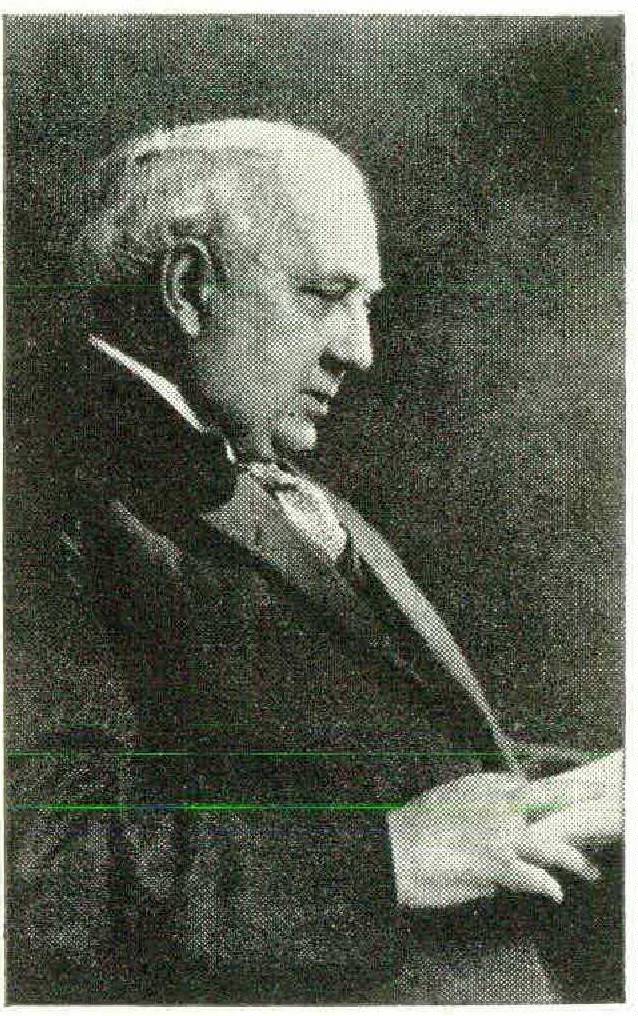
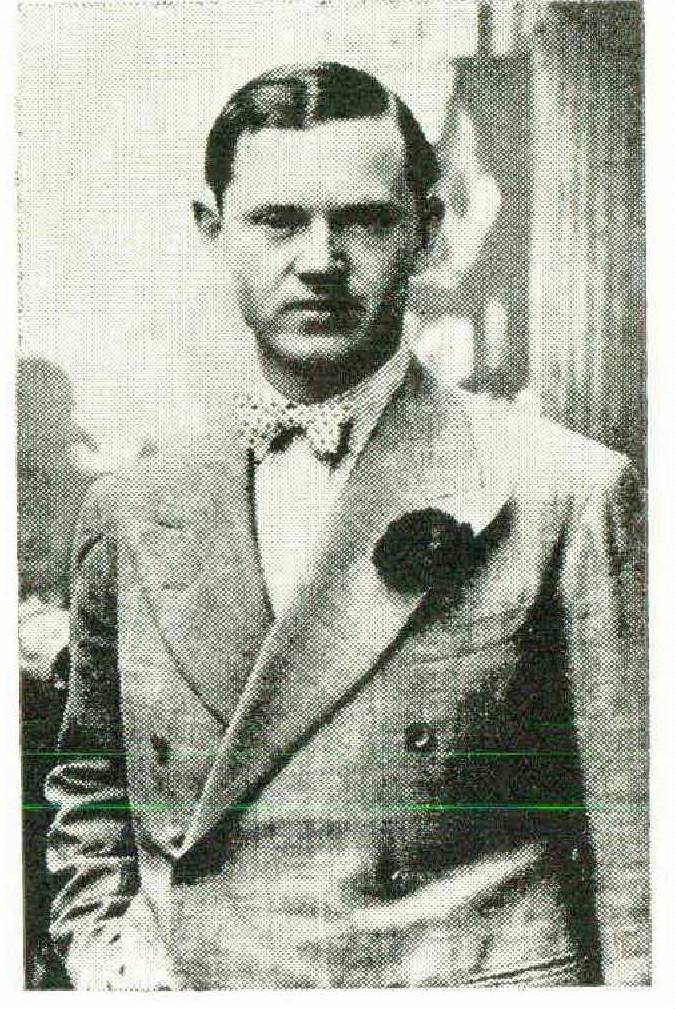
WHEN I was born my father was thirty-seven years old. He lived to be seventy-five, and my intercourse with him was never interrupted except by foreign travels which never lasted longer than six months. I was thus able to watch his transition, in stages so gentle that I am unable to fix a clear impression of him at any particular time, from the prime of manhood to an old age when he had grown uncomfortably deal and corpulent but retained his humor and quickness of mind.
Quickness, for good or ill, was a quality I paricularly associate with him. All his decisions were instantaneous. He wrote both in prose and verse with deleterious speed. He was restless rather than active. I never looked on him as other than an old man.
Some little boys make heroes of their fathers, seeing them master difficult horses, handle sailing craft, mend machinery. My father’s interests were all in the mind. Had he, like my uncles, served in the army or navy, I should, as a child, have honored him more. He was not an invalid, but asthma deprived him of most normal recreations. The attacks must have been intermittent, but I remember him as always laboring for breath. This infirmity gave him in my eyes a premature senility which his habits of speech rendered more impressive. His grandfather, a very long-lived, West Country clergyman, was renowned for the egotistical perorations of his sermons. My father would imitate him: “. . . When this feeble voice is forever silent and can no longer sound its note of warning,” he would declaim in a parody of the rotund diction of an earlier age, “when this shaking hand is still and cannot point out the way . . .”; but in fact he himself, with the different nuance of two generations, often spoke solemnly of his imminent end, and the plot he had bought for himself and my mother in Hampstead churchyard was a favorite resort in his walks. His visiting card was attached to a stake there, and he suffered a recurrent anxiety that it might have been usurped.
If there was little awe in my regard for my father, there was certainly no fear. He himself had been a nervous child, and my grandfather (whom I never knew) seems to have been a bully, a man well liked among his neighbors but in the privacy of his home tyrannical and violent to a degree rather more alarming than that of the average Victorian paterfamilias. My father, though irritable, was constantly kind. I took this for granted in childhood with many other benefits which I have since learned are not universal. Taking good things for granted is the essence of happy childhood, and my nursery days were spent in unclouded joy and love; love of my mother and nanny, not, at that age, of my father.
When he came down from Oxford, with a third in Mods, a third in Greats, and the Newdigate Prize for English Verse, he settled in London, enjoying the patronage of his cousin Edmund Gosse, who was then midway on his rise to eminence as a man of letters. There were then none of the state-trained professional critics who have lately come into prominence in the English literary world. To master one’s own language and write it lucidly and elegantly, to be widely read, above all to have a love and reverence for books — these were the qualities then required for a literary career.
In twelve years my father attained a modest but respectable position, contributing to most of the literary publications of the time, editing new issues of the classics, writing biographical studies of Victorian poets, and occasionally reading manuscripts for publishers. This was done in his own time in his own study, so that my elder brother grew up in close intimacy with him, accepting him as an essential part of his home. But in the year before my birth my father’s way of life changed. He was offered, and accepted, the managing directorship of Chapman & Hall’s, then an august but rather decrepit firm. He continued to write, but publishing became his chief concern, and it took him out of the house for the greater part of five days a week. My earliest memories of him, therefore, are of an interloper whose visits confined me to the nursery and deprived me of my mother’s company. The latchkey which admitted him imprisoned me. He always made a visit to the nursery and always sought to be amusing there, but I would sooner have done without him.
That is, until the age of seven. I was then sent to a day school which stood on his road to Hampstead Tube station, twenty minutes’ walk up North End Road to the Whitestone pond. Here my father led me every morning, and during these walks I began to know him and enjoy his company. Fantasy mingled with antiquarian lore in his discourse. The way was rural, as it is impossible to imagine it now, and every point in it had a history, either authentic or imagined. My father was highly theatrical in manner (his failure in schools can be attributed to his zeal for acting during the vacations and for playgoing and the composition of topical skits for performance at the Hollywell Music Rooms during the term). Had his health allowed it, he would have chosen the stage for his career. And every morning as we walked to school he set himself to divert his small, single audience. Genuine highwaymen, rebels, defaulting financiers, the poets and painters who had lived in the district all formed part of his repertoire with certain wholly fabulous creatures.
The happiest conjunction of my father’s literary and theatrical tastes was in his reading aloud. This for many years was a feature of our family circle. It was never educational in intent. It was a shared delight, but it was the basis of a generous education and of the recognition that literature was something to be enjoyed, not a subject for the schools. Some of what he read was pure entertainment—the dramas of his youth, which he would re-enact with vivacity. He also read us most of Shakespeare and Dickens, much of Thackeray and Trollope and of the staples of Victorian prose; but it was in reading poetry, with the fewest dramatic effects and the most reliance on rhythm and consonance, that he was most memorable to me. Indeed, I have never heard him excelled except by Sir John Gielgud.
It was the fashion among his contemporaries to utter verse in a kind of bardic chant. This he eschewed. It is the fashion of my contemporaries to make poetry sound as prosaic as possible. It was a valuable experience at an impressionable age to be permeated with poetry — not particularly recondite, all the lyrics and elegies and epics that are found on the shelves of any normal library — which was made completely comprehensible and completely enjoyable. He read us nothing more modern than Ernest Dowson and A. E. Housman. His taste was formed early, and he made no effort to follow fashion in this or in any other matter. It may be gross deficiency in me that the range of my own love for poetry is roughly coterminous with his; I was conditioned young — to the best — and I do not repine.
WHEN I went to my public school my relationship with my father became restricted. He was now one of the pleasures of the holidays, and the holidays were a distinct and small part of my life. My brother had gone to the same school as himself. My father soon knew every master and a great number of the boys. He was a constant visitor there. He followed all the cricket scores. My brother wrote to him almost every day and telegraphed whenever he had made a good innings. My brother was a zestful schoolboy, and my father shared all his enthusiasms. He would have liked to do the same with me, but my school was less conveniently placed for visiting and the hard times of the First War made hospitality difficult.
Moreover I was not a zestful schoolboy. After my first two years I was not unhappy, but I had few enthusiasms to impart. I was reticent, wrote dutifully once a week, but seldom sought sympathy or advice. It was a disappointment to him that he did not get from me the renewal of youth which my brother had injected. I did reasonably well, won some prizes, played in some teams, achieved positions of minor authority; my father was pleased, rewarded me suitably, but I think he lacked that sense of identity which he had felt with my brother in both his triumphs and scrapes.
I did not want to confuse my home with my school life and until my last year never asked friends to stay in the holidays. In my brother’s school days there had been a constant stream of masters and boys through the house. If I so much as caught sight of a schoolfellow at the theater, my evening was spoiled. Young friends were a necessary requirement of my father’s well-being, and I did not provide them.
At the university I disappointed him more gravely. There I was in a place he knew and loved. He hoped that I would win the Newdigate and succeed where he had failed in taking a good degree and, perhaps, getting elected president of the Union. The dissolution of Oxford had barely begun; city and university were very much as he had known them. In the long vac before I sat for my scholarship we spent a delightful day there visiting his old rooms and finding familiar college servants.
Unfortunately he had other friends than scouts and porters and it was not long before reports reached him that my way of life was idle, dissolute, and extravagant — as indeed it was. I began, but never finished, two Newdigate poems. I spoke at the Union but never rose to office; I attended few lectures and read few set books. I drank heavily and made a circle of friends whom my father’s informants in the senior common rooms regarded as reprehensible. I do not now regret these experiments in adolescence, but I can sympathize with my father’s vexation. He was paying; and money is the root of almost all family differences. Modern taxation and death duties have done something to ameliorate this bitterness, for parents now, rather than let their money fall into the hands of the politicians, are driven to ingenious arrangements for distributing it among their progeny.
My father was not a rich man with a fortune to allocate. Still less did he regard it as a bizarre and therefore expensive novelty to have a son at the university (I was the fifth generation of my family to be so educated). He wished me to have the same opportunities as he had himsell enjoyed. I did not go to his college, New College. Hertford was in the same group for the scholarship exam, and when I came to fill in the application form I noticed that a scholarship there was worth a good deal more than at New College. I accordingly gave it my preference and, to the surprise of all able to judge, was elected. I do not suppose I could have got a New College scholarship, where the standard was higher. But I was earning nearly a third of the normal expenses of an undergraduate. I regarded this sum as the reward for a brief period of intense effort at school, not, as did the college authorities, as the earnest of further effort, nor, as my father did, as a relief to his own legitimate expenses. I believed myself entitled to some self-indulgence. I realize now that I was exorbitant in this claim. It was the source of disagreement. Not only was my father not rich; he was, in the rising cost of living, rather worse off than he had been ten years earlier, and he was reaching the age when his work, never excessive, was becoming irksome. He saw himself, with some exaggeration, as toiling in order that I might enjoy luxuries which he denied himself. He would have submitted happily enough, I think, if I had interests with which he sympathized; had I, for example, been playing Hamlet in the O.U.D.S. or touring the countryside in a cricket team. But I was a pure waster, and I cannot now feel that his resentment was unjustified.
THIS impediment to a fond filial relationship began when I was a minor and in the status of a pupil. It continued for some years. Not until I was twenty-six did I become entirely independent financially, and there was full cause for despondence during the period. First, I wanted to be a painter. My drawings at Oxford had enjoyed a certain vogue because no one else there was trying to draw at all. My father was not competent to judge whether I had any real talent, and he sent me to an art school where I idled or played truant. Then for three weeks I worked on a daily newspaper. “Worked” is too strong a term. I sat in the reporters’ room and was occasionally sent out to cover unimportant stories. Nothing I wrote was ever printed. I was paid a token wage which I failed to earn. Then I became a schoolmaster at two private schools; that was work which was then always open even to men of the most disgraceful records.
All the time I was spending more than my meager wages, and my parents with increasing exasperation were footing the bills. I was buying my clothes in Savile Row and Jermyn Street, running accounts at half a dozen shops, and when in funds, frequenting expensive restaurants. Then I decided that what I wanted was the simple life of a craftsman in the country. My father paid a premium for me to learn printing, but instead I chose cabinetmaking and for a happy autumn went daily to carpentry classes in Southampton Row.
A sterner father would have packed me off to the colonies. My father was not stern, but he could not conceal the despair with which he regarded me as a permanent encumbrance to his declining years. All emotions of pleasure and pain found immediate and vivid expression in him. It was apparent that I came home only when destitute. That did not make my appearances there more welcome. I had the grace to feel a certain shame; it certainly never occurred to me, as it does to many unsatisfactory sons, to blame my shortcomings on him; but that did not make my company more agreeable. Our meetings became almost entirely melancholy.
Eventually I was spurred by the wish to marry. When the girl of my choice told her mother that she was engaged to a student carpenter, the project was dismissed as preposterous, but the mother had a respect for letters and had herself published some historical studies. So I realized that there was nothing for it but to write books, an occupation which I regarded as both tame and exacting but in which I felt fairly confident of my skill.
The resulting marriage was not a success, but the books were, and immediately the whole relationship with my father was changed. Here at last I was engaged in an activity he fully understood. Moreover, he was himself the publisher of my novels, so that he had a double satisfaction in my prosperity. He read my reviews with keener interest than I felt myself. The checks bearing his signature were now sent with a light heart. Once financial dependence was broken we could meet on terms of freedom, which, in me, rapidly developed affection and respect. He now knew that I came to see him not because I had nowhere else to go, but for the pleasure of his company. And very pleasant it was.
As he grew older, his life became more restricted, but he had the gift of making every small experience dramatic and amusing. He was never boring; he retained to the end an inexhaustible vivacity and interest in personalities. For a brief period I joined the board of Chapman & Hall. He found the monthly meetings a physical strain, but once at the table he was positively exuberant. He wrote his autobiography and in it never gave a hint of the anxiety I had caused him in first manhood.
We were never intimate in the sense of my coming to him with confidences or seeking advice. Our relationship was rather that of host and guest. He stayed with me in the country. I regularly dined with him in Highgate. The war took me away, but I was doing a spell of duty in London at the time of his death. He had left instructions about his epitaph. It reads: “And another book was opened which is the book of life,” which seemed very apt to those who were unaware of the Victorian doubts about personal immortality which he occasionally expressed.
I am now the father of three sons, two at school, the eldest already embarked on the family trade of writing. I have very little knowledge, or curiosity, about what they think of me. They are always polite. I have tried to fulfill the same duties to them and provide the same amusements as my father did to me. I lack his gift of reading poetry and his liveliness. I think I am less good company to them than he was to me, but I think I am kinder than my grandfather. Perhaps host and guest is really the happiest relation for father and son.