The Writer as Moralist
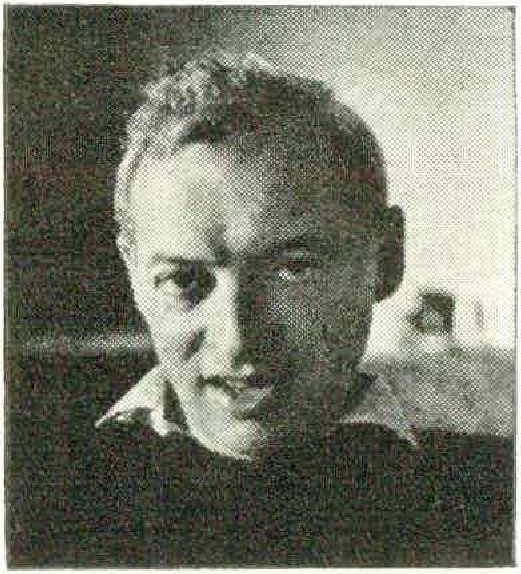
Novelist, teacher, and critic, SAUL BELLOWis the author of THE ADVENTURES OF AUGIE MARCH,which received the National Book Award as “the most distinguished work of fiction published in 1953.” Since that time Mr. Bellow has held teaching positions at several universities, has had two more books published, and is now finishing his new novel, HERZOG, which will appear later this year under theViking imprint.
IT IS hard to know what is meant by a moral novelist, or what people think they are talking about when they ask for commitment, affirmation, or messages. The view attributed to Ernest Hemingway is, “If you’re looking for messages, try Western Union.” Writers, oppressed by the popular demand for messages, can readily appreciate Hemingway’s feelings on this subject. But the fact is that the American writer himself has been brought up to take messages seriously. Americans are a sententious people and are taught at an early age to moralize. They learn it in Sunday school. They learn it from Poor Richard — at least they did so in my time. In Chicago during the twenties we were filled up with Poor Richard: “Little strokes fell great oaks.” “Plough deep while sluggards sleep.” These formulas seemed true and sound. Longfellow, whom we had to memorize by the yard, was also strongly affirmative: “Life is real! Life is earnest! And the grave is not its goal.” And finally there was “The Chambered Nautilus”: “Build thee more stately mansions, O my soul.”
But while this was happening, the Chicago papers reported gangland killings almost daily. Dion O’Banion was shot in his flower shop, Hymie Weiss died violently on the steps of a church, the Capone headquarters was shot up by machine guns, Jake Lingle was murdered, Jake the Barber was abducted. To survive such events, the moral teachings of literature had to be very strong. It might have occurred to schoolchildren as they passed from the pages of the Tribune to those of Elson’s Reader that perhaps literature didn’t have too much to do with life. “Give all to love,” they read in Emerson. But in City Hall there were other ideas on giving, and we had to learn (if we could) how to reconcile high principles with low facts.
Americans who care for this line of work need never be unemployed. Emerson devoted his life to it. Thoreau, after he has directed our attention to some fact of nature, cannot rest until he has extracted a moral significance from it. Whitman, of course, is a persistent moralist. At times the moral purpose of these great writers of the nineteenth century tires us, their sermons seem too long — naïve. The crudity, disorder, ugliness, and lawlessness of commercial and industrial expansion which scandalized them have been our only environment, our normalcy. And sometimes we are a little impatient with their romantic naïveté. When Emerson tells us that “Drudgery, calamity, exasperation, want, are instructors in eloquence and wisdom,” we can’t help wondering what he would have made of some of the sinister intricacies of a modern organization.
Walt Whitman in Democratic Vistas exhorted the poets of a democracy to create archetypes, images of the American citizen, and charged writers with the highest of moral duties. “The priest departs, the divine literatus arrives,” he wrote in a prophetic spirit. This particular brand of Romanticism held the poet (the writer) to be the new spiritual leader and teacher of a community freed from slavery and superstition. Very often, and this was certainly true in Whitman’s case, the poet offered himself as a model. In effect he said: If you want to know what an American of this democracy might be like — here I am. What I assume you shall assume, and whoever touches me touches a man.
Ideas, when they achieve a very high level, can easily be accepted by a busy, practical people. Why not? Sublimity never hurt anyone. I have heard a worldly character, discussing the place of history in a curriculum, saying, “Well, why shouldn’t the kids know about them kings? That’s OK.” Our national holdings in moral grandeur are OK too.
The teachings of Horatio Alger reached a wider audience than those of Whitman. Several generations of Americans read Sink or Swim, Phil the Fiddler, Mark the Match Boy, and From Canal Boy to President, records of achievement which rewarded personal goodness with happiness and goods. Alger had a potent message — the message that worldly asceticism leads to capitalistic success was violently repudiated by many of our best novelists. The realists and naturalists in their anger and moral zeal turned Horatio Alger inside out. Norris and Dreiser and James T. Farrell give us a very different account of American life. Fitzgerald tells us in Gatsby of the “foul dust” that has a way of trailing youthful dreams of fulfillment. Nathanael West in A Cool Million tears the gospel of success to shreds.
THE history of American literature can be described as a succession of encounters between rival claimants. The opposing parties have been variously described. Philip Rahv has said that American writers are either Palefaces or Redskins. We know that there was a genteel tradition, challenged by roughnecks. We know, too, that the regionalists were ranged against the cosmopolites, that certain agrarians insisted that roots and traditions were what we wanted, and that their claims were disputed by novelists of urban class struggle. Visionaries disagreed with practical, and writers of sensibility with social historians.
At the present time there is a sort of struggle going on between the squares and some other shape considered better, or, as I prefer to call it, between Cleans and Dirties. The Cleans want to celebrate the bourgeois virtues. At least they seem to respect them — steadiness, restraint, a sense of duty. The Dirties are latter-day Romantics and celebrate impulsiveness, lawless tendencies, the wisdom of the heart. The Cleans are occasionally conservative, and sometimes speak for the Anglo-Saxon majority. The John P. Marquands and James Gould Cozzenses are Cleans of this latter type. Mr. Cozzens is a conscious ideologist of the Cleans. Henry Miller, a man whose talent is beyond dispute, is the father of the Dirties. His crudities can be explained by the excesses of the opposition, for it is the unfortunate result of this progress by contrasts in American literature that it always produces exaggeration. The hypocrisy of the apologists begot a hunger for scandal in the muckrakers that was exactly proportionate. Certain upper-class idiocies are answered by growling from the swamps. The snooty Puritanism of Mr. Cozzens calls forth the sexual katzenjammers of William Burroughs. The sighing of Henry Adams in his club window as he laments the passing forever of precious qualities makes the immigrants more clamorous at Coney Island and Atlantic City.
But in many cases the differences are superficial, and Cleans and Dirties are remarkably similar. Not unpredictably, the Cleans express destructive feelings, while the Dirties, when they become intelligible, are often sentimental moralists; their Prometheanism at times amounts to little more than the demand that preschool sexual explorations be publically accepted as an adult standard. The Dirties are convinced that scandal is good for what ails us. And they try to make a sensation. But it is not easy to scandalize people. Everyone has seen and heard so much.
It’s not easy to be a writer in the United States. Many people are worn out before they have picked the right clothes for the job. Even Whitman paid particular attention to his negligent appearance, feeling that the American singer should look the part. He was, and was not, one of the Roughs. His very presence, however, must have conveyed a moral intention. No less than Whitman, our Dirties, the Beats, offer themselves to their countrymen as exemplary types. They want their brethren, especially of the middle class, to express themselves more freely, more truthfully, to widen their horizons, to resist the drudgery of vacant duties and rebel against the servitude of banal marriage and unpleasurable sex. But similar improvements are suggested in the advice columns of ladies’ magazines. They are not in themselves so frightfully revolutionary. Innocent of any wrongdoing, many of the middle-class brethren of the Beats have gone far beyond Kerouac, Mailer, and Burroughs. They behave as they think writers should. The public is happy with their antics; it likes to read of their doings in the gossip columns, is tickled by the dirty words, and consumes the writers like food, whiskey, tobacco, or publicity, indifferent to the earnestness which is the source of these excesses.
Essentially the Dirties want us to be what we truly are, to be self-accepting, to cease to be horrified by our sexual impulses, however they may manifest themselves. They teach the honor of what is natural. Thus, they make us ask, “Well, what is natural? Is it myself under the influence of junk, putting on a nightclub show at upwards of $3000 a week?” If this be nature, dear friends, it will not only redeem us morally but send us to a first-class loony bin. (We can afford it at three G’s a week.)
The public never hesitates to demand an inordinate amount of goodness from writers. It considers clergymen, schoolteachers, and novelists its moral servants. This is not an altogether unfair conception of things, but there are certain inconsistencies in the situation which often produce strange effects.
Imagine that the managing editor of a large American daily who is under the influence of liquor is riding in his goat cart about his estate, and that he falls and injures his hip and is taken to the hospital and put in traction. Imagine further that a friend (or flunky) has sent him a gift of three or four recent novels, and that the bedridden editor reads these novels and is outraged by their immorality. The case is made more interesting if the great daily has, among other things, distorted political news, reported its opponents with miserable unfairness and glaring prejudice, tried to goad the government into declaring war on Cuba, lowered the mental level of life in the community, debased the language, filled its pages with vast ads for pork butts, storm windows, undergarments, dollar sales, antiperspirants, failed to inform the public on matters of great importance, fought medical care for the aged, and so forth. Such a daily might, to a reasonable judge, seem immoral. But the great man, outraged by some novelist’s account of the life of the poor in his city, picks up the phone to chew out his book editor and to order him never again under any circumstances to mention the book, never to advertise it.
Great corporations seem at times to be intrinsically moral. No one asks a big company to affirm anything. It may, if it is public-spirited, hire an advertising firm to explain how much good it is doing, and it spends tax-exempt money on quotations from Emerson and Walt Whitman. But its balance sheets are not published and discussed in hundreds of journals by high-minded critics. Thus, the moral duties of business organizations are simpler and less burdensome than those of a poor lone novelist in the solitudes of Nebraska. Perhaps this is as it should be. The great corporation is guilty of a certain vaingloriousness, but it doesn’t make sweeping moral claims. It simply says: Capitalism is good for you. We are tough energetic realists, and that is as God and the Founding Fathers meant it to be.
The writer, however, is bound by tradition to live under a different standard. Even if he is an avowed immoralist, even if he calls himself an anti-artist, a rebel, a black hater of life, a desperate enemy of society, he is invariably motivated by a desire for truth. Clarification, deepening, illumination are moral aims even when the means seem to readers anarchic or even loathsome. The “wild” writings of dadaists and surrealists were intended to shock the reader into a new, more vivid wakefulness and not to fill him with disgust. They execrated conventional literature and the bourgeois profession of authorship and were largely justified in so doing, but when the noise of cries and curses had died away it became quite clear that they were moralists, and romantic moralists at that. Among our Dirties a similar purpose is discernible. They have to my mind often splashed in filth for its own sake, have adored brutality for its own sake and been carried away by sickness for sickness’ sake, but even William Burroughs, who has surpassed them all in bloodiness and perversity, seems to feel that it must all have a purpose and offers his Naked Lunch as a warning against narcotics. “ The junk habit is public health problem number one of the world today,” he says.
Of course, the more difficult things become, the more intensely the demand for affirmation is repeated. The dimmer, the grayer, the drearier they are, the louder the call for color and variety; and the more people cheat, the more they ask to hear about goodness. It must be in the course of nature. But it seems equally to be in the course of nature that the writers must try to honor such demands. Some with childlike eagerness, others more thoughtfully, try to suggest how what we all need so badly may be found — that sense of order, those indispensable standards which in other ages did not originate with novelists or playwrights.
WHERE are novelists and others to find these standards? What will they offer to the morally indigent public which asks for affirmation? If a novelist is going to affirm anything, he must be prepared to prove his case in close detail, reconcile it with hard facts, and he must even be prepared for the humiliation of discovering that he may have to affirm something different. The facts are stubborn and refractory, and the art of the novel itself has a tendency to oppose the conscious or ideological purposes of the writer, occasionally ruining the most constructive intentions. But then, constructive intentions also ruin novels.
A good example of this sort of mutual destruction may be seen in a recent book by Graham Greene, A Burnt-Out Case. The theme of this novel is the spiritual aridity which begins with the self-disgust and self-rejection of a successful architect who is tired of the world and who comes to Africa in an effort to lose himself. He settles in a leper colony, vaguely drawn to the sick and to the medical missionary order, the priests, and the doctor. At first he feels no genuine desire to help. He accepts death in himself and has no incentive to rid himself of the weight of purposeless existence, but presently he is drawn into the struggle with the disease and begins to make himself useful. We never get beyond this beginning in the novel, however, for it now breaks up. The young wife of one of the colonists, neurotic and silly, enters the story and with unconvincing histrionics causes the unlamented destruction of our burntout architect. What remains is a dubious affirmation of the necessity to desist from such devotion to our own suffering and to live and act for others. This, we must all grant, is a good thing to affirm, and if Mr. Greene had been able to illustrate it passionately in his novel, we would all have been boundlessly grateful. As it is, we are indebted to him for his impressive description of the arid condition. But the novel itself, or the conscience of the artist, would not permit an affirmation to be forced, and the book itself could therefore do nothing but disintegrate.
There was a carefree time in the history of the novel when the writer had nothing to do but to tell us what had happened. Experience in itself then pleased us; the description of experience was self-justifying. But nothing so simple now seems acceptable. It is the self, the person to whom things happen, who is perhaps not acceptable to the difficult and fastidious modern consciousness.
Writers of genius in the twentieth century (Paul Valéry, D. H. Lawrence, James Joyce, among others) have made us question the stability of the experiencing self, have dissolved it in intellect, or in instinct, in the common life of the species, in dream, and in myth, and all together have made us aware that the sovereign individual, that tight entity whose fortunes, passions, and moral problems filled the pages of novels (and of historical studies as well), was simply a fabrication, the product of a multitude of interests and influences, and of our ignorance of physics, psychology, and our social class divisions.
Whatever the objective results, the nihilistic passions produced by this revaluation have not worn off. If anything, the demand for radicalism in literature grows louder. We have recently been told by Leslie Fiedler that it is the responsibility of novelists to be in the opposition, to say no, always no, no in accents of thunder. Mr. Fiedler reminds us that the negative tradition in literature, the tradition of prophetic denunciation, claims our loyalty.
Well, prophecy is nice work if you can get it. By this I mean that the prophet must be genuine. If, in place of the word of God which he must utter, he should have a literary program in his back pocket, his prophecies can never be accepted. Two warnings are necessary. First, the idiocy of orthodox affirmation and transparent or pointless optimism ought not to provoke an equal and opposite reaction. Second, no one should found his nay upon the study of literature. Literature may show, as some have argued, that from Sophocles to Shakespeare and from Shakespeare to Tolstoy the greatest geniuses have cursed life. But the fact that a writer similarly curses it proves absolutely nothing. The deliberate choices of writers in such matters can never be interesting. We have had our bellyful of a species of wretchedness which is thoroughly pleased with itself. In France the wretched angry fulminating hero has come to be as common in bookshops as choucroute garnie in restaurants — despairing sauerkraut, a side dish to the knackwurst of middle-class Prometheanism. Really, it’s about time everyone recognized that romantic despair in this form, naggingly conscious of the absurd, is absurdly portentous, not metaphysically “absurd.” There is grandeur in cursing the heavens, but when we curse our socks we should not expect to be taken seriously.
The poets who continue the tradition of romantic pessimism which began so richly with Byron, Pushkin, and Gerard de Nerval are now simply trifling. The optimism of the bourgeois which inflamed poets in the nineteenth century is no longer so proud and confident. It began to totter several generations ago and by now has fallen on its face several times and has a dusty discredited look. If optimism were not so poor and shaky, it would not solicit affirmation continually.
MOST writers agree that their art is moral. Tolstoy held that a novelist should have a moral relation to his subject matter, and his definition of morality was passionate. The writer should either love or hate his subject. Tolstoy condemned neutrality or objectivity therefore as inartistic. He was contradicted by the “art for art’s sake” novelists who explicitly rejected moral purpose. Probably Flaubert is the most significant of these. He, and Joyce following him, felt that anything that might be described by us as a moral commitment would be a serious error. The artist, said Joyce, should have no apparent connection with his work. His place is in the wings, apart, paring his nails, indifferent to the passions of his creatures. Such aesthetic objectivity was an imperative with Joyce, and in A Portrait of the Artist he explicitly rejected anything in art which excited desire, or a need for action. The feeling a work of art should arouse is in his view static, beyond desire, too pure to be involved in judgments, contemplative.
This is a rather lofty attitude in a novelist. It would seem more appropriate to a poet or a musician, for the novel meets life at a commoner level, where confusion is inordinate. The art for art’s sake novelist believed in pure form, classical order. Order of this sort is seldom available, and in chaotic conditions such beliefs must inevitably lead to disappointment.
A novelist of this sort will not agree to love or hate as Tolstoy says he should. He reserves comment. He refrains from holding an opinion. He believes, as Erich Auerbach writes of Flaubert, “that every event, if one is able to express it purely and completely, interprets itself and the persons involved in it far better and more completely than any opinion or judgment appended to it could do. Upon this conviction — that is upon a profound faith in the truth of language responsibly, candidly and carefully employed — Flaubert’s artistic practise rests.” Professor Auerbach calls this “objective seriousness,” and makes the following observation. “Objective seriousness, which seeks to penetrate to the depths of the passions and entanglements of human life, but without itself becoming moved, or at least without betraying that it is moved — this is an attitude which one expects from a priest, a teacher or a psychologist rather than from an artist. The priest, teacher and psychologist wish to accomplish something practical, which is far from Flaubert’s mind.”
Thus, it apparently makes no difference what the artist should decide about his commitment, whether he considers himself a moralist or a purely objective artist. The writer in any case finds that he bears the burdens of priest or teacher. Sometimes he looks like the most grotesque of priests, the most eccentric of teachers, but I believe the moral function cannot be divorced from art. This means that the artist had better not strain so to be didactic.
To look for elaborate commitments is therefore vain. Commitments are far more rudimentary than any “position” or intellectual attitude might imply. I should like to suggest that commitment in a novel may be measured by its power to absorb us, by the energy it contains. A book which is lacking in power cannot be moral. Dullness is worse than obscenity. A dull book is wicked. It may intend to be as good as gold, as nice as pie, as sweet as can be, but if it is banal and boring, it is evil.
What we sense in modern literature continually is not the absence of a desire to be moral, but rather a pointless, overwhelming, vague, objectless moral fervor. The benevolent excitement of certain novelists and dramatists is not an isolated literary phenomenon. What is obscurer in them than in political leaders or social planners is what they are going to be benevolent about, and how they are going to be benevolent or constructive. In this sphere we see a multitude of moral purposes in wild disorder. For as long as novelists deal with ideas of good and evil, justice and injustice, social despair and hope, metaphysical pessimism and ideology, they are no better off than others who are involved cognitively with these dilemmas. They can only go the same ways: the liberal way, the way of nature, the Promethean way, the way of socialism — the list is almost endless. From it the writer may make his choice and proceed to affirm his truth. It is then scarcely possible for his art to avoid the fate of his ideas. They triumph together or fall together. Novelists as different as Camus, Thomas Mann, and Arthur Koestler are alike in this respect. Their art is as strong as their intellectual position — or as weak.
For this reason, an art which is to be strong cannot be based on opinions. Opinions can be accepted, questioned, dismissed. A work of art can’t be questioned or dismissed.
One last thing. Not too many people will disagree if the proposition is put as follows — either we want life to continue or we do not. If we don’t want to continue, why write books? The wish for death is powerful and silent. It respects actions; it has no need of words.
But if we answer yes, we do want it to continue, we are liable to be asked how. In what form shall life be justified? That is the essence of the moral question. We call a writer moral to the degree that his imagination indicates to us how we may answer naturally, without strained arguments, with a spontaneous, mysterious proof that has no need to argue with despair.