Reader's Choice
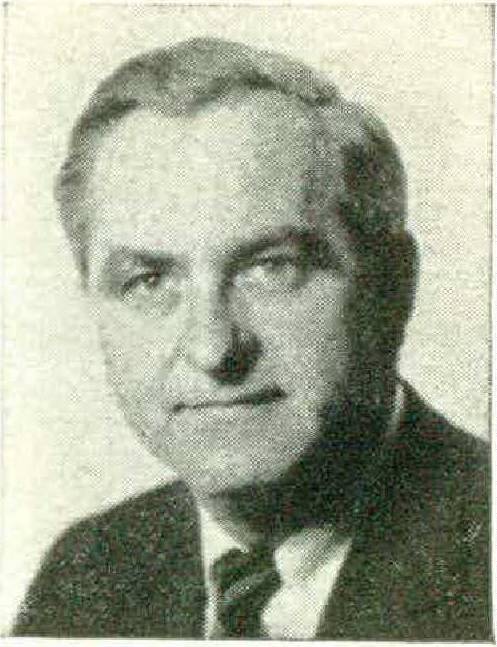
BY WILLIAM BARRETT
In her earlier fiction MARY MCCARTHY carried on a running battle with her characters. If they ever threatened to break free and lead a fictional life of their own, she stuck pins in them and coldly watched them squirm. She wrote with fabulous cleverness, to be sure; but it was not always clear whether she was writing as a novelist creating a genuine work of the imagination or as a superior purveyor of gossip. Her literary fame really rested on her brilliance as an essayist. She advanced bold and paradoxical ideas; and her intellectual range — she could write about art, history, the theater, or ideas with equal verve — dazzled her readers. Beyond all this, the image of Miss McCarthy as “the compleat woman” invested her literary personality with the glamour of a film star.
THE GROUP (Harcourt, Brace & World, $5.95) gives us a new Mary McCarthy. Age cannot wither her infinite variety, but at least it has mellowed her; and she writes here with an understanding and compassion that were absent from her earlier work. Moreover, she sticks much more faithfully to the novelist’s job; the experiences of eight Vassar girls of the class of 1933 are told through their own actions and dialogue, more or less as they themselves lived them. The author does not project herself in front of her characters, nor does she step away from them to dissect them in thinly disguised essays.
The novel opens with a wedding and closes with a funeral. The two scenes, particularly the first, are beautifully composed tableaux, magnificent photographs of an occasion with all the details meticulously assembled, including those that give the picture its haunting period quality. Between these two scenes, in which all of the group are assembled, the tangled skeins of eight different lives unwind and interweave. Yet the eight different stories have the unity of a novel, for they turn around the pivotal figure of the group, Kay Strong. She is the first to announce her engagement, just before graduation; it is her wedding that is being celebrated at the start, and her funeral at the close. Kay is the bellwether of the group in their struggle for emancipation. Though the girls are all solidly middle-class, and six of them from the Social Register, they insist on meeting life free from parental protection or guidance. Kay’s death at the end — whether by accident or suicide — is a symbol of a kind. It is now 1940, the time of the Battle of Britain, and she falls from the window of her room in the Vassar Club while doing some volunteer airplane spotting. “In a sense,”somebody remarks at her funeral, “Kay is the first war casualty.”This is Miss McCarthy’s neat way of ringing out the old years of the New Deal and ushering in the new period of the war.
In the seven years after graduation the girls have had their varied adventures with careers, love, marriage, and divorce. Now they are just beginning to show the lines of early middle age and to settle into their separate molds, some predictable and others quite unexpected. What will happen to them during the war and in the decade to come? It would seem Miss McCarthy has here the beginning of a series; she could take the group through the forties, the fifties, and on into the New Frontier. This suggestion, which may sound frivolous, is, in fact, praise of the author’s achievement in giving her characters a life that continues beyond the covers of the book. One never felt that way about Miss McCarthy’s characters in the past — they had been pinned down, dead.
EYES TOWARD THE WEST
YEVGENY YEVTUSHENKO, Russia’s best poet since the death of Pasternak, recently got himself into hot water in his own country with A PRECOCIOUS AUTOBIOGRAPHY (Dutton, $4.00). From its outspoken bluntness, well preserved in the English version by translator Andrew R. McAndrew, it is easy to see why the Communist authorities were disturbed. Besides being a candid self-portrait of a remarkably vital and rebellious personality, this little book is also one of the best revelations yet published of the inner turmoil and ferment that have been going on inside the Soviet Union, particularly among young people, since Stalin’s death in 1953.
It is nothing new for Yevtushenko to be in trouble. Earlier he was expelled from the Young Communists’ League and the Writers’ Union for unorthodox opinions and behavior. Official critics have labeled him “ideological leader of the juvenile delinquents” and “bard of the gutter,” because he sought to write poetry true to his own experience rather than to the Party line. Though his poems also express a fervent and idealistic faith in Communism, the “dogmatists” — functionaries who became entrenched in the hierarchy under Stalin and want to protect their bureaucratic positions — will not let him alone. Besides the political issue, there is involved here a conflict between generations. Yevtushenko is the spokesman for Russian youth who came to maturity after World War II and expected that the victory over Germany would produce much more liberalization than it has.
Yevtushenko’s boyhood was rather wild. Knowing he wanted to be a poet almost from the time he could first read and write, he was bored with formal academic studies and flunked out of school. He has educated himself by wide and voracious reading, which included a surprising number of Western authors not particularly beloved by the Party censors. Here too he seems typical of his generation, who have their eyes eagerly turned toward the West, despite the slogans of Western decadence preached at them by their elders. With some of the young people, this interest may consist merely in a liking for jazz, pipestem trousers, and duckbill haircuts; but there are those who have a genuine and serious curiosity about Western literature and art.
Yet unrest seems to have brought no disaffection with the Communist regime as a political system. The Russian people, Yevtushenko makes clear, are proud of their Revolution and still believe in its ideals. During the worst years of the purges Stalin remained a benevolent father image whom the people could not believe to be personally responsible for those injustices. Even now, Yevtushenko finds himself speaking of Stalin with mixed emotions, more often lamenting the dictator’s mistakes than attacking his crimes.
ODD MAN OUT
From his first novel, The Tin Drum, a tumultuous and fantastic panorama of life under the Nazis, GÜNTER GRASS has turned to a smaller and quieter genre in CAT AND MOUSE (Harcourt, Brace & World, $3.95), a novella told in a minor key, and little more than an evocative reminiscence of a single character. Mr. Grass, however, has not changed his preference for a hero with a marked physical peculiarity as a visible and outward sign of the lonely fate of the individual who differs in any way from the crowd. In the earlier novel the narrator-protagonist was only thirtyone inches high; the present hero, a fourteen-year-old boy named Joachim Mahlke, has a huge Adam’s apple, large as a mouse, with which society plays like a cruel cat.
Mahlke’s life becomes a desperate and heroic act of compensation for his deformity. He drives himself to excel at sports and swimming. An adventurous diver, he salvages old parts and junk from a sunken minesweeper in Danzig Harbor. In the last years of the war, he is called up for duty; on the Russian front he wins his country’s highest award for heroism, the Iron Cross, which he proceeds to wear high on his neck in order to hide his unsightly excrescence. Here, Mr. Grass is saying in effect, is one more bit of hardware just as useless as the old junk salvaged by Mahlke as a boy. On leave, Mahlke goes AWOL, takes his last dive in the harbor, and disappears without a trace. So, too, did the individualist disappear soundlessly under the collective flood of the Nazis.
In Cat and Mouse Mr. Grass is a more accomplished stylist and much more in control of his narrative than in The Tin Drum. Yet there is no loss of his power, like that of the old Gothic artists, to make the fantastic vivid and unforgettable. In the frequent pauses of his story he evokes very well those empty moments of boyhood when the gang hangs around a deserted pier or beach looking for some crazy thing to do to relieve its boredom. But despite these marks of a superior talent, this story is too slight, and its hero too unsubstantial to bear the burden of Mr. Grass’s message.
BEAT AND BEATIFIED
No two writers would seem to differ more in the qualities of their talent and temperament than Jack Kerouac and J. D. Salinger. However, both share the same preoccupation with Oriental religion, and both are obsessed by characters in pursuit of holiness and salvation. In VISIONS OF GERARD (Farrar, Straus, $3.95) Mr. Kerouac has produced his own version of the saintly elder brother to stand beside Mr. Salinger’s Seymour Glass. Perhaps literary historians in the future may single out an interest in salvation as one of the special themes to emerge in the younger American writers in the fifties. Has not Mr. Kerouac himself, speaking for the Beat Generation, suggested that the word was really derived from “beatitude”? It is consoling to know that all those young people in beards and sneakers are out not for kicks but for the peace that passeth understanding.
Mr. Kerouac has come back from his transcontinental odysseys to the scenes of his boyhood among the French Canadian immigrants of Lowell, Massachusetts; and the return home is all to the good. The scope of his canvas may have shrunk, but his writing has become more restrained and poignant than it was in his wandering epics. Occasionally, language does skitter out of control — “Christ in the temple bashing the moneychanger tables everywhichaway and scourging them with his seldom whip” — but those passages of torrential typing, which Mr. Kerouac once mistook for genuine writing, have become much rarer now.
More important still, by returning to his own soil and antecedents, and in a French Catholic context rather than in the borrowed framework of Oriental religion, Mr. Kerouac makes the figure of the saint more understandable. The story is a lyrical remembrance by the narrator, Jean Duluoz, a mask for the author himself, of his older brother Gerard, who died at the age of nine. Gerard loved all beings and encouraged others to do likewise; and even the tough old nuns who taught him at school had come in the end to believe that his visions of Heaven were real. All this could have been very mawkish, but in Mr. Kerouac’s hands it manages to be touching and sincere. Fortunately, Gerard’s frail figure is surrounded by some very down-to-earth French Canadians in the rest of the Duluoz family.
Mr. Kerouac was never a great hand at organization, and at times the memories of his boyhood are spattered about in vivid disarray; but out of the rambling structure there does emerge a picture of a very real family engaged in nothing more exciting than the daily chores of survival. In old Duluoz, father of the family, Mr. Kerouac has created his first solidly mature character, which may indicate a new maturity in the author himself.
FREEWHEELING MEMOIRS
SHELAGH DELANEY was only nineteen when she took the theatrical world by storm with her play A Taste of Honey. Now an aging twenty-four, she has written a breezy and refreshing book about herself,
SWEETLY SINGS THE DONKEY (Putnam, $4.00), which places her well ahead of Yevtushenko in the race of precocious autobiographers. But she is too irreverent a person to pretend to tell a solemn story of her life; and her book, not a formal autobiography, is really a miscellany of prose sketches and reminiscences, loosely bound together yet revealing a great deal about herself, about some odd characters in the English Midlands, where she grew up, and about the tone and temper of life today in certain quarters of Britain.
She seems to have been an early victim of an overactive imagination. At a convalescent home, where she spent some time as a child, the nuns could do little with her. The horizons of the home were cramped, but Miss Delaney’s restless mind could always open up vistas of experience far beyond the ordinary. Whenever a social worker arrived. Shelagh would conjure up some lurid past to shock the interviewer. But if nuns and teachers found her too irrepressible to deal with, she had no trouble establishing contact with common folk.
Miss Delaney has a fine ear and a great gift for setting people vividly before us in their talk. In a few pages she catches an eccentric uncle, a domineering schoolmaster, or the whole atmosphere of a bus en route to London for a weekend football match. And she seems to do it as casually as if she could turn it out by the yard.
In 1910, when BEN HECHT was sixteen, he went to work as a reporter on the Chicago Journal. Chicago was then a wide-open city, lusty and raucous, a combination of frontier town and sprawling industrial metropolis. The young cub reporter, assigned to cover crimes and hangings, got to see a pretty colorful slice of the city’s life. In GAILY, GAILY (Doubleday, $3.95) he turns an amused and affectionate eye back upon those early years, and the gusto and hearty vulgarity of his writing is a pretty fair match for his subject matter.
Most of his memories are anecdotes of the tall-tale variety. Mr. Hecht, however, assures us that he has checked his memory carefully, and though on some points it is indeed vague at this late date, on the whole things were more or less the way he is reporting them.
A good sample, and one of the tallest tales, is the plot concocted by Charles MacArthur, with whom Hecht was later to write the crusading play against newspaper editors, The Front Page. The wonder drug just discovered at that time was adrenalin; and MacArthur had heard that if it were injected immediately after death it would bring the dead man back to life. A prominent gangster, Frankie Piano, was about to be hanged; MacArthur and Hecht planned to smuggle the body away immediately after the execution, have a doctor administer the drug, and sell the exclusive story of this “return of Lazarus” to newspapers throughout the country. After much haggling, they had lined up the cooperation of doctor, assistant warden, and the gangster himself, and everything seemed to be going fine, The hanging went off well, but at the last moment, when the two reporters were about to rush off with the body, disaster struck: the head warden, who had been tipped off, walked in and took possession, and to make sure that Piano would not return to the land of the living, he had the body sent to the hospital for decapitation. Believable? Well, as Mr. Hecht makes clear, newspapermen were a bolder breed in those days.
Not all of these memories have to do with the criminal and lawless. Mr. Hecht’s story carries him over into the twenties, when Chicago for a while was the scene of a literary renaissance sparked by Sherwood Anderson, Carl Sandburg, and Maxwell Bodenheim. In the background hovered the older figure of Theodore Dreiser; and the younger Ring Lardner, still a sports reporter, sometimes turned up, taciturn then as he would always be. Mr. Hecht knew them all pretty intimately, and he recalls them now charitably but candidly.
WELL-BRED JUNGLE
Without the rule of law human society would surely relapse into savagery. Yet the operations of men at law, though as formalized as the movements of a ballet, can have at times the ferocity of nature’s fiercest jungles, POWERS OF ATTORNEY by LOUIS AUCHINCLOSS (Houghton Mifflin, $4.50) demonstrates that even in the most genteel and respectable of legal firms the sheathed knife is always ready for the other fellow’s jugular as the partners politely jostle each other on the move up or down the ladder of promotion.
Tower, Tilney & Webb is one of the largest and toniest “law factories” on Wall Street; and its senior partner and guiding spirit, Clitus Tilney, is a proven pillar of respectability. But old Clitus is not above going behind another partner’s back to ruin him, even if it means conniving against the firm. Not that he is a wicked man; in most matters Clitus Tilney is the kindly and paternal father who tries to keep the firm together as one large happy family. Mr. Auchincloss is too subtle a novelist to paint characters simply black or white; he knows that an essentially good man like Clitus Tilney can also be ruthless when caught in the inexorable pull of his own power.
The author, an attorney himself, is able to invest the complicated business of wills, trusts, and lawsuits with high drama. The stories are meticulously plotted; and as the same characters keep reappearing, the book might almost be read as a novel whose hero is the firm. The characters are mostly the well-born and the highly placed; but since the firm is something of a microcosm, some mavericks and roughnecks do break in to balance the picture. One of our most intelligent and adult novelists, Mr. Auchincloss succeeds by sheer substance rather than frills; and if at times he seems to be writing as stolidly and impassively as a lawyer making a brief, his material is good enough to carry the day.