The Unquiet Genius of Egypt
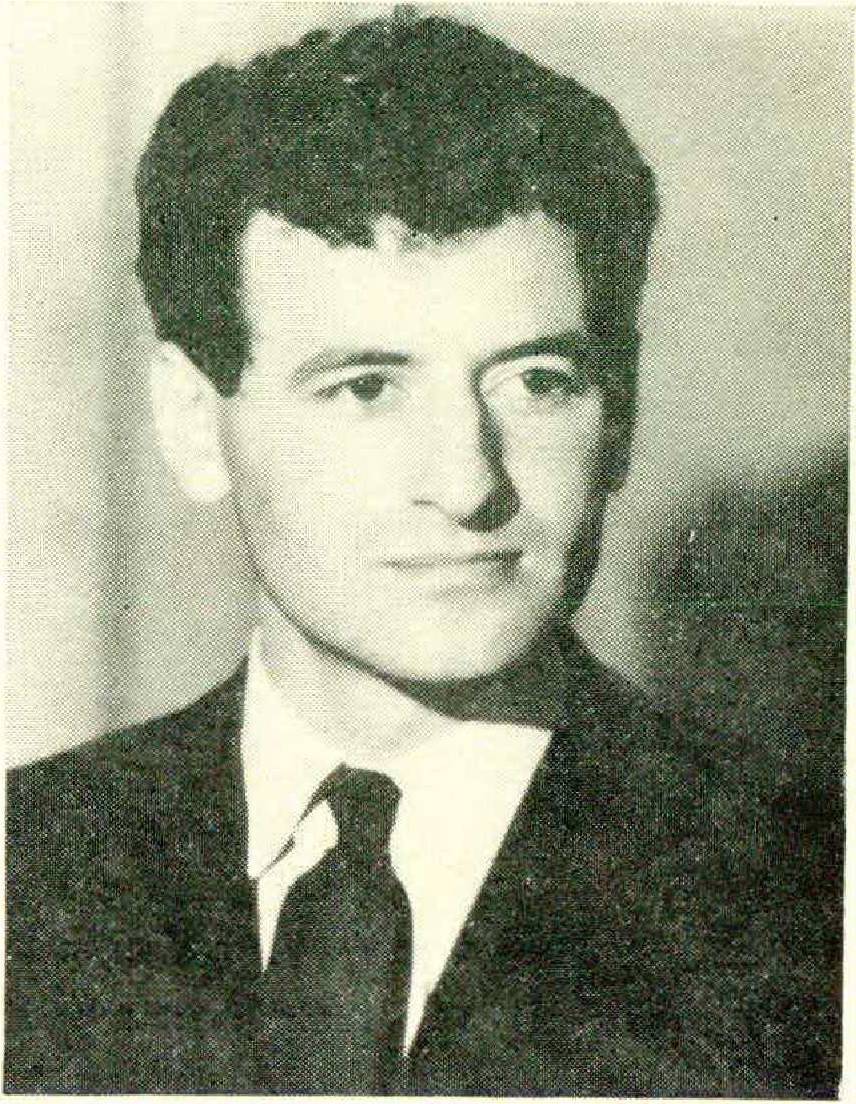
Author and traveler, with an extraordinary power of observation, James Morris covered the first ascent of Mount Everest for the TIMES of London in 1953, and received the Heinemann Award for Literature for his elegant book THE WORLD OF VENICE. On his return from far places, he settles down to write in a ramshackle Georgian mansion beside a salmon river in North Wales. His new book, OXFORD, will be published later this year by Harcourt, Brace & World.
YOU forget how demanding Egypt is. After forty years in the wilderness, I daresay, Moses himself scarcely remembered the awfulness of it all, and when I recently returned to Cairo after a decade in easier climes, that merciless metropolis greeted me with a regular thump on the emotions.
I had forgotten half of it. I had forgotten both the sentimental appeal of Egypt and her intractable miseries. I had forgotten how kind the ordinary Egyptians were, in their gruff and earthy way, ushering you with murmured felicitations and halfbows toward the coffee table, or even courteously suggesting (as somebody did to me in Alexandria) that you take their place in the line at the pissoir. I had forgotten quite how many Egyptians there were, bundled into so cramped a fertile strip, clamoring, pushing, hanging on to trains, having babies, fighting inconclusive lights on street corners, eating beans, laughing, and swaying, like a vast African cornfield, with each gust of the political wind.
There is no ignoring Egypt, no shrugging her off with monuments and souvenirs. The moment you arrive in Cairo she is hammering away at you, sometimes bringing the tears to your eyes with pathos or good intentions, sometimes so exasperating you that if it weren’t for the fact that you have a job to do, you’d go right out to that airport this minute and book yourself a scat to some place you feel you’re wanted. The unquiet genius of Egypt is something that almost everyone detects, on every level of sensibility: you can’t even get lost in the bulrushes without a pharaoh’s daughter finding you.
Today especially, as a new Egypt casts her equivocal shadow ever more widely across the map, the rest of the world views this state with strong feelings. Napoleon called it “the most important country,” and in one way or another the condition of Egypt has had its effect on nearly everybody, and left few of us altogether indifferent. If you are an American, you probably feel at once baffled and affronted by a republic whose foreign policies seem equally compounded of opportunism, ingratitude, and deceit. If you are a Russian, ironically enough you arc beginning to feel the same. To a Frenchman, Egypt is a wayward stepchild of la civilisation Française — the Parisian scholar Jacques Berque recently described the Middle East as “those illustrious lands . . . which form an arc centering round the desert and pointing toward France.” To many an Englishman, Egypt is either a hellhole of unspeakable wogs and pye-dogs, or a second home whose failure to evolve a proper civil service within the British Empire must always be a subject of affectionate regret. To the German, East or West, she is the slipperiest of lucrative customers, to the Israeli an enemy at once comic and sinister —• huffing and puffing preposterously in public, privately in cahoots with high-buttoned Russian marshals and evil Nazis. Egypt is a sharp and dangerous country, volatile, unpredictable: “a bruised reed, this Egypt,” thought Sennacherib in an aphorism popular among old Middle Eastern stagers, “on which if a man leans, it will go into his hand, and pierce it.”
For myself, I can only contemplate the restlessness of Egypt, its causes and its effects, with anxious awe. When I first sailed into Port Said twenty years ago, to smell for the first time, far out at sea in the velvet night, Egypt’s indescribably heady odor of oil, dirt, dust, and spice, so nauseating to the fastidious stranger, so intoxicating to the addict — when I first set foot in Egypt in 1945 the population of the country was nineteen million. Eleven years later, when I last lived there, it was about twenty-three million. Today it is twenty-nine million. During this century the Egyptians have tripled their numbers. Egypt’s fundamental task is one of stark physical survival, and it is staggering to consider; even the colossal enterprise of the High Dam at Aswan, the biggest thing ever made in Africa, will be no more than a palliative. The bravest projects of reclamation and irrigation, which fill the shiny official brochures of Cairo, cannot keep up with the inexorable multiplication of the Egyptians, hemmed in still by deserts and salt water — and this fearful truth should always be at the backs of our minds when we are tempted to write the country off as just another incurable neurotic.
A WHOLE series of complexes colors the attitudes of Egypt. One is the feeling that so supremely old and organic a country, linked for so many centuries with the calm cycle of flood and drought, should be entitled to some serenity at the end of it all, as a tortured fugue escapes at last in a major chord of satisfaction. Another, perhaps, is an inner resentment that the oldest of all states should be relegated to obscurity in a world of parvenus. A third is a touch of claustrophobia: a yearning to break out of that narrow green patch, bounded by sea and wasteland as inexorably as any island, and to prove that Egypt is part of a wider world, with brothers across the sand. A fourth concerns Israel, in Egyptian eyes a vicious squatter upon old family territory, sustained by hazy cabals of rabbis, imperialists, and stockbrokers. And a fifth, which is common to all the Arabs, is an old disgruntlement about the eclipse of Islam, that noble and oncetriumphant culture, so cruelly maimed by the Christians, so loftily superior to the knockabout mundanities of the West. “You do not understand the Muslim code,” an Egyptian told me snootily when I asked him why his government’s chief diplomatic objective seemed to be to antagonize, one by one, every other nation on the face of the earth.
In that particular instance I think I did, for it has been a successful maxim of Egyptian policy that gift horses increase in value if you knock their teeth out — but the weird logic of Egyptian thought, all the same, arising from such terrible preoccupations, is one of the fascinations of the place, just as its peculiar combination of the heartrending and the bloody-minded somehow beguiles you into a bruised sympathy. Egypt is like a perpetual sense of déjà vu, or the lingering after-sense of a jumbled and enthralling dream.
The other day I arrived in Cairo by train from Alexandria, and instantly stumbled into this blurred phenomenon. Through the pestering army of porters I pushed my way, my Peace Corps smile fading imperceptibly into some regrettably oldschool invective, and out into the heat of the forecourt, where a policeman in a white topee intermittently controlled the passing chaos. Nothing, it seemed to me, had changed. No aerodynamic Czech monorail waited purring there to whisk me to my hotel. Instead, a covey of elderly loiterers, frail and white-haired, jostled for the privilege of finding me a taxi —just the very same old men,
I swear, in the same protracted evening of their lives, who had struggled for possession of my bags when last I left this dreadful station ten years before. With a Proustian sigh I chose one, watched him painfully hoist my suitcase to his shoulders, and followed him into the maelstrom of the station square.
Sometimes I lost sight of him, as he desperately meandered through the traffic in search of a cab. Sometimes I glimpsed him unexpectedly beckoning to me from a distant arcade. Here I found him in fruitless argument with a cabdriver whose vehicle already contained five gloomy ladies, and there, far away across the square, I could just discern him standing manfully in the very middle of the tumult, with old black gharries bearing down upon him right and left and a lordly Mercedes blaring at him in three-toned horns.
In the end I found a taxi for myself, and had to rescue the dear old fellow from his own predicament and help him down with the bag; but with what gentle and apologetic care he eased me into the cab, and with what graceful charm he accepted my frayed and evil-smelling ten-piaster bill! All Egypt was in the experience: from the apparent certainty, at one moment of the morning, that my benefactor was about to be bisected by the Heliopolis tram, to the inevitable Egyptian denouement, when everything miraculously came right after all, and I was driven comfortably away to my hotel — waving good-bye to the old boy through my window, as he hobbled back to the station yard for his next unhappy client.
I HAD half expected to find it all tidied up and rationalized, but though in some ways Egypt is the stateliest of nations, with her supreme symbols of Nile and Pyramid, no country feels more permanently in a state of flux. It is thirteen years since the military coup shoved King Farouk into exile and made way for the presidency of Gamal Abdel Nasser, but calm or symmetry has not yet been imposed upon Egypt. All is bumps and contradictions still.
The street my taxi took me down was inevitably 26 July Street, and the great square we eventually reached was, of course, Liberation Square—and presently we saw before us the spectacular facade of the new Egypt, a stage-set Cairo that stands athwart the Nile like some mammoth festival exhibit. You would be curmudgeonly indeed to deny this great scene, mostly the creation of the past decade, its grandeur. On one bank of the river rises a parade of huge buildings, not in themselves beautiful, but unforgettably imposing in the mass: enormous hotels and government blocks, the headquarters of the Arab League, the studios of the television service. On the other bank, high above the palm trees of the Gezirah Sporting Club, there soars the immense latticework pinnacle of the Cairo Tower, with a revolving restaurant at the top and a neat little theater at the bottom. Upstream a proud new bridge strides toward the university; along the east bank a splendid corniche sweeps out of sight in each direction. The traffic is thick and relatively ordered; even the horns are fairly hushed. Pleasure boats potter between the bridges, a gay floating hotel is moored beside the promenade, flags fly, buses rumble, a felucca theatrically leans toward Boulac, and away across the western suburbs, you may see from your hotel balcony the squat and formidable shapes of the Pyramids, like a notably unconvincing back cloth. There is nothing lightweight or easy-going to this spectacle, nothing even sham. The new waterfront of Cairo represents a remarkable bracing of national energies, the deliberate creation of new symbolisms to impress the foreigner and exalt the lethargic indigene.
Its heaviness, its officious splendor, its hint of the didactic are almost socialist realism — almost, but not quite. The grandest of all those buildings happens to be the Nile Hilton Hotel, still managed by Mr. Hilton’s men; and whereas the lumpish palaces of Moscow are concrete expressions of Marxism, and the Manhattan skyscrapers are proclamations of capitalist success, tire new monuments of Egypt flaunt a kind of anti-ideology. Egypt’s brand of revolutionary socialism, remarked a writer in the World Marxist Review not long ago, is “a conglomeration of scientific and utopian socialism, petty bourgeois ideas, narrow nationalism, religious prejudices and subjective idealism”; and to the democrat, too, the society that Gamal Abdel Nasser has created seems a hodgepodge, neither this nor that, neither with us nor agin.
I looked around me in Groppi’s one morning, and this is what I saw. At the table to my right two elderly pashas were talking in wheezy but animated undertones, dressed in tight old-fashioned suits, and scrupulously pomaded. Opposite me sat a man who, though he was reading Al Ahram, looked like a 1915 caricature of a Junker, even to the scar on his cheek and the heavy watch chain which, I thought to myself, almost certainly supported a gold half hunter presented to his father, the baron, by the All-Highest himself to commemorate a happy weekend at the schloss. To my left two terribly left-bank progressives, dressed almost entirely in leather, seemed to be locked in a silent exchange of despondencies, like characters out of Beckett. A homely suburban lady in a blue cotton frock was urging her children to drink up their lemonade a little quicker or they would be late for Daddy. A man who looked like a Greek estate agent was reading the New Statesman in a corner. Waiters scurried about in tarbooshes, sashes, and anklelength white gowns, and when two strange stocky men walked in, leaving me altogether at a loss to place them, I caught the eye of the Junker, meticulously folding his newspaper across my table. “Russians,” he growled. “You can tell by the length of their cuffs.”
Where else in the world would you find such a gallimaufry? The old Egypt was a mixture of Pharaonic, Coptic, Turkish, Arab, French, and English influences, all muddled together with Sevres and arabesques. The new is all this still, plus powerful ingredients of American, Russian, German, and Eastern European styles. Almost nothing is rejected out of hand. The drab shop fronts of Cairo and Alexandria, the new taste for browns and olive-greens, much of the language of officialdom, the Stalinesque new government buildings — all these give you the impression that you are in some earnest satellite of post-war Communism. The personal nature of the Egyptian autocracy, on the other hand, the ever-present image of the President, and the cheerful detachment of the people at large often remind me of Franco’s Spain. They are very likely putting on an avantgarde French play at that little theater beneath the Tower, and every night Son et Lumière illuminates the Pyramids and Saladin’s Citadel, only mildly fuzzed by an overlay of propaganda. President Nasser’s daughter is an undergraduate at the American University, off Liberation Square; the most honored hydrological adviser to the Egyptian government is the great Nilologist H. E. Hurst, an eighty-five-year-old Englishman who lives beside the Thames at Oxford; newspapers flood into Cairo from all over, generally uncensored; Rolls-Royce dump trucks are being used to help build the High Dam, that monument of Soviet camaraderie.
IDEAS from all quarters are seized, flavored with the national sauce, and added to the brew. The kind of state that Nasser is creating falls into no category, though you might call it eclectic socialism. In his early years the President hoped to cooperate with the Egyptian capitalists, foreign and native, and land reform was his only dramatically revolutionary stroke; Communists were whisked away to horrid desert jails, and it was to exiled Nazis that the regime chiefly looked for technical and military advice. Since then the course of revolution has swung distinctly to the left. Capitalism has not merely been abandoned but virtually abolished — almost all industry and commerce has been nationalized or taken over by state cooperatives. The Communists, they say, have all been released, and one or two are back in public favor. “Just you wait,” an American assured me recently, “one of these bright mornings he’ll drop the mask as Castro did, and tell us he’s been a Red all along.”
Perhaps he will, but I doubt it. Communism still seems too cut, dried, and dogmatic for the Egyptians, and it is not merely a toleration of loose ends that Egypt displays: it is actually a preference for them. It is her nature and her strength to be crisscross and paradoxical — “unalterably, eternally abnormal,” as Lord Milner wrote seventy years ago.
The present thinking of the Egyptian regime is probably best expressed in a document simply called the Charter, which has become the manifesto of the Arab Socialist Union. The Union was established in 1962 to give “popular expression” to the revolution, and is not exactly a political party, nor simply an official movement, but something in between. The Charter is one-hundred-odd pages of rhetorical flourish and is full of surprises. Familiar epithets abound, indeed: “Imperialism and its stooges,” “chains of exploitation,” “revolutionary vanguards,” “feudalism in collusion with exploiting capitalism.” Every now and then, though, the jaded cynic is revived by unexpected touches of finesse or empathy, far removed from anything you are likely to find in the turgid gray documents normally churned out by Presidiums and Socialist Unions.
What are the “guarantees of the national struggle,” as the Charter defines them? A will for revolutionary change, naturally; a revolutionary vanguard to channel power to the right ends; a deep consciousness of history; but fourth and fifth in the list are two less ordinary essentials: “a mind open to all human experiences,” and “unshakable faith in God, His Prophets and His sacred messages.” And what would Karl Marx, or even perhaps the Founding Fathers, think of a national program which explicitly promises that the present generation of citizens need not sacrifice itself for the future?
The Charter expresses a body of thought as genuinely empirical as the doctrines of, say, the British Labor Party. For all its guff and bombast, it strikes me as a likable document, full of common sense. “Intellectual adolescence,” it observes severely, “forms a danger that we should meet and crush”: certainly its own temper is strikingly mellower than the preposterous prophecies of the Ministry of National Guidance in the earlier years of the regime.
“Of course, we’re lucky really,” says almost every Egyptian of the ancien régime sooner or later in your conversation, leaning back in his wicker chair and putting his fingertips together, “lucky to be alive, I mean.” It has been a kindhearted revolution, as revolutions go, and though its methods have often been alarmingly erratic, its penalties have seldom been extreme. Many a reactionary celebrity survives, stripped of wealth and floozies, but still intact. Once or twice a year you may sec Nahas Pasha, that indestructible stalwart of the Wafd, wheeled into his lawn in Garden City, Cairo, for a breath of fresh revolutionary air. The lovely Queen Farida — “a very good lady,” as the most enthusiastic levelers concede — still lives regally enough near the Pyramids. Queen Narriman’s villa is pointed out to every foreigner as he is driven to the airport, with a brief résumé of her marital adventures, and even General Neguib, the ousted figurehead of the revolution itself, occasionally emerges from his perpetual house arrest — where he is normally kept in merry impotence, so rumor says, by an overliberal supply of Johnny Walker. Many a pasha still lingers among his objets d’art in the flamboyant mansions of Cairo and Upper Egypt, palaces getting a little bare now as the treasures are sold off one by one, with a broken panel in the great gate, perhaps, and only a couple of faithful flunkies, too old to care, in creaking attendance among the shadows.
New names on the roster, that’s all, joining the pharaohs and the Ptolemies, the sultans and the Mamelukes, the kings and the khedives in the parade that is Egypt — often standing at ease, never quite dismissed.
IT HAS been a proper revolution, all the same. It did not feel like one ten years ago, only like another heave of the political bedclothes, another Arab orgasm; but now that it is falling into a skewwhiff perspective, you realize that society really has been transformed, and that almost the whole ruling class of Egypt has been spiked and dispossessed. It was not, to be sure, a very inspiring elite, and my own memories of pashadom in its ascendancy are disagreeably larded with paunchiness, lechery, and playboy ostentation. Nor was that vanished hierarchy of any respectable antiquity: its fortunes were mostly made in the nineteenth century, and many of its biggest wigs were, like the royal family, of foreign origin. The best of its survivors, Copt or Muslim, seem to shed few tears themselves, and recognize that their luck could scarcely hold much longer. They lived for generations in a degree of wealth that seems, in retrospect, almost obscene: one dispirited-looking man was pointed out to me whose allowance as a youth had allegedly been £500 a week— around $1500, though of course that had to cover, I was seriously told, “things like club subscriptions, you know.”
It has gone, but not with the savage finality, no quarter and no exceptions, that you feel still in the Communist countries of Europe. This was a revolution of the bourgeoisie, not the workers, and it treated the upper classes with genteel respect. Few of the pashas, even now, are living in real poverty. Some have been left almost unmolested, except for the confiscation of their agricultural estates. The revolutionary measure called, with a dark restraint, “sequestration” has been applied in unforeseeable fits and starts. Some apparently eligible families were left in peace: others lost everything except their house and its contents. The sanctity of property was theoretically respected, for in principle assets passed merely into the care of a state “guardian”; and in fact families under sequestration received perfectly respectable government allowances, enabling them at least to grumble at Groppi’s without having to worry about the cost of a second strawberry sundae.
Upper-class Egyptian families still have their nannies and their expensive beach chalets at Alexandria. There are even one or two brand-new millionaires, offered discreet capitalist loopholes by the government in return for parallel services to the state. (Everyone, as a matter of fact, was “desequestered” last year, when the system was officially dropped, but you would hardly know it — no property seems to have been restored, and the principal effect appears to be a reduction of allowances, so that the families of the old regime are rather worse off than they were before.)
To some rich Egyptians, whatever their political views, the loss of hereditary wealth has actually come as a relief, the kind of emancipation that leftwing sons of American plutocrats apparently pine for. They work with a furious diligence, sometimes only to keep a relentless wife in the six servants and canapés to which half a century of cotton profits have accustomed her. A few work directly for the government; many more are active on the intellectual fringes of the establishment, teaching at universities, writing reviews, broadcasting, translating. Some are doubtless bitter, but the ones I have met seem to share the cheerful resilience of the people as a whole, and though you can scarcely expect them to be aficionados of the regime, they recognize its merits readily enough, and shrug satiric shoulders at its faults.
This is a police state, but its pressures are spasmodic. The black apparatus is there, but is not often taken out of its cupboards. They say the Egyptians have learned some of the techniques of terror from their Russian friends, and Western residents talk darkly of hidden microphones and shadowy secret policemen. “The Hilton bugged?” cried one diplomat when I cautiously raised the possibility, “I should just say so !” (But I pity the monitors their monotonous task of disembedding the subversion from the complaints about the service.) Some all too obvious secret policemen are always to be seen hanging about the embassies, pretending to be taxidrivers, and the faceless bodyguard that protects Nasser himself is said to be efficient by the best SMERSH standards: the approach to his house at Abbassia, still a modest soldier’s quarters, is pregnant with successive spasms of security, felt rather than actually observed by the visitor susceptible to these nuances. For myself I have never taken the Egyptian security services lightly since I learned that they might truss you up in a wooden box and airfreight you to Cairo as diplomatic baggage.
The hush of despotism certainly surrounds the affairs of the regime. In its early days it was less shuttered: revolutionary heroes were easy enough to meet, and Nasser himself often gave interviews, invariably charming the invective out of his angriest critics. Today, the junta — the very same men, if a little plumper—feels far more remote. Shades of strange confidants pass and repass the gates of government, Russians or Nazis, spies or scientists, rebel conspirators from the Congo or scowling Yemeni sheikhs. The truth in Egypt is hard to come by. Economic statistics, once scrupulously recorded by the National Bank, are now suspect. Military secrets are so well guarded that Western attachés profess utter ignorance of rockets, tanks, or nuclear progress, either because they really don’t know, or because they do not wish to be airfreighted to oblivion. Since the affair of the French compensation mission, whose members, together with some Egyptian friends, were charged with espionage in 1961, many Egyptians have been chary of talking too openly to foreign diplomats; and though the intimations of tyranny have relaxed a little lately, and most of the concentration camps have allegedly been disbanded, still the witty political cartoonist of Al Ahram has so far ventured no higher in the scale of ridicule than the governor of Cairo — and it will be a long, long time before Gamal Abdel Nasser himself finds his leg pulled or his nose elongated in a Cairo lampoon.
And yet, and yet ... “If it weren’t for this bloody government,” observed an Egyptian friend of mine loudly, looking listlessly through the allEgyptian wine list in a restaurant, “we might have something decent to drink.” I cannot say that literate Egyptians seem in the least cowed or overawed by their military dictatorship. The docile masses, it is true, scarcely offer a word of dissent, or “deviation,” as the Charter conventionally describes any point of view but its own. Educated Egyptians, though, speak freely enough to the inquisitive visitor, and the humor of the Egyptians, which is almost all-pervading, mercifully spices the national subservience.
This is not one of your monolithic despotisms, for nothing in the Egyptian scene ever quite resolves itself. The great stores of Cairo have nearly all been requisitioned by the state, but they still masquerade as private enterprise, with the names of their old capitalist proprietors still boldly above their doors; and the Egyptian revolution, too, never quite admits to any dogma, nor quite commits itself to any unalterable course. “Wait and see,” that American said, “you’ll find he’s been a Commie all along” — but I would be no more surprised if Gamal Abdel Nasser one day proclaimed himself the constitutional monarch of Egypt and had himself crowned with Tutankhamen’s regalia.
UNUTTERABLY abnormal too is Egypt’s foreign policy — part side step, part stagger, part spit-inthe-eye. The usual assessment of Egyptian attitudes is one of plain blackmail, the mere playing off of East against West in order to extract maximum benefits from both. It is not, though, so simple. I am sure Nasser sees himself playing a game far more subtle, honorable, and even mystic. Blackmailers operate on straightforward exchanges —do this or else. Egypt’s policies are controlled by more tangled threads, ranging from the religious to the almost psychotic, through whose net you can nevertheless dimly discern, if you rub your eyes and peer hard, a veiled and crouching image of logic.
The rhythm of Egyptian passion is inconstant, but its very fluctuations become familiar. One morning your nation, whichever it may be, is a noble benefactor, the next an impertinent lackey of imperialism and dupe of Zionist gangs. One minute you feel that your diplomacy really is getting you somewhere at last, the next you pick up the evening paper and find that President Nasser, in a minor harangue at Port Said, has observed that he would like to cut your tongues out. The French, ten years ago the most despicable conspirators of Jewish intrigue, are now making a startling cultural comeback. The Americans, who stuck so loyally to Nasser through all the Suez crisis, and have for years regarded him, on and off, as a bulwark against Communism — the Americans can scarcely put a foot right. West Germany, hitherto Egypt’s most favored Western nation, has recently turned out to be a monster of Zionist subterfuge. The Russians, I am told, nowadays tend to sidle up to Westerners at diplomatic functions to exchange confidential complaints about the awfulness of the natives.
This is not a powerful country: its armies have long been discredited, its economy is rickety indeed. Yet Egypt never feels like a backwater; her influence extends far beyond her own frontiers, and for the life of her she could never stop meddling in other peoples’ affairs.
In President Nasser’s original statement of intent, The Philosophy of the Revolution, he explained how he saw Egypt engaged in the affairs of three overlapping circles: an Arab circle, an African circle, an Islamic circle. To this grandiloquent vision he has gamely stuck; the African commitment has broadened into Afro-Asia, and an even wider geometry of international affairs now seems to concern him. For better or for worse, Egypt can no longer be ignored by the nations, and this at least shows strength of purpose: for though this republic, which actually links the two continents, may stand with a proper symbolism for Afro-Asia, many old-fashioned purists would doubt its right to be called Arab at all, and many a pious sage, telling his beads beside the mosques of the Hejaz, must scoff at its pretensions to speak for all the Muslims.
By sheer effrontery, though, the Egyptians have made themselves a Power, using every method of intrigue and chicanery, and never, ever blushing. Admiral Mahan saw the storm-tossed ships of the Royal Navy, far beyond Napoleon’s horizons, as the ultimate source of British power; Egypt’s equivalent is her cloaked army of agents, propagandists, and agitators, hard at work in plot and skulduggery up a thousand distant back stairs.
CONSINDER Islam first. Nasser’s approach to the great faith has been wary, and his modernism has been shrewdly fortified by respect. Years ago he abolished the Sharia courts, which dispensed the Islamic canon law in matters of divorce and inheritance, but he still pays lip service to Islam as the basis of all his actions — “unshakable faith in God and his Prophets.” With a covey of motorcycles, a glister of black limousines, a flush of imams and bags of publicity, he still drives to the mosque on festival Fridays, and one of the perennials of Egyptian propaganda is a picture of the President, fattening slightly down the years, standing in ceremonial pose beside some visiting holy man, with simpering chamberlains behind.
Egypt is still recognizably an Islamic country. Nasser is no Atatürk. The Egyptian official year still swerves for the fast month of Ramadan and its concluding festival, Bairam, and the moment of Bairam is still decided by the first sight of the new moon somewhere in the Islamic world — computations from the nautical almanac will not do, for Allah may yet perform miracles outside the range of science, and the timing of the national holiday, with all its consequences of closed banks, cable delays, and diplomatic hiatus, is in doubt until the very day before.
When I was being shown around El Azhar, the great university-mosque which stands gloriously on the edge of the Cairo bazaars, floodlit after sunset, I noticed a heap of books, shoes, and assorted fabrics tumbled at the foot of a pillar. “What’s that?” I asked my guide. “That is a student,” he laboriously replied. “He has been learning the Koran by heart, and now he is resting.” It was all the traditionalist could ask, I thought, of the oldest and most celebrated of all Muslim universities; but though the front part of El Azhar is much as it always was — crumbled and shadowy, with warped doors that don’t quite shut and young men wandering through the courtyard reading aloud from sacred texts — though the front still looks medieval, behind there stands a flourishing modern annex, with schools of medicine and science, and even a separate seminary for young ladies. Blind singers still murmur the Koran outside Cairo front doors: 113 of the 845 pages in the Cairo telephone directory are filled with people with the first name of Mohammed.
Islam is still an issue in Egypt. One of the most furious controversies of recent years arose when a rash young academic made some public proposals for its reform, and Nasser himself would doubtless be sorry to lose one of the more potent weapons in his invisible armory — the energy of this dynamic religion. Islam’s ceaseless probe into Africa, where new converts are always being made, also extends Egypt’s influence southward; Islam is Egypt’s principal link with the Muslim millions of Pakistan and Indonesia; there are even some Black Muslim students at El Azhar (and Ebony, the American Negro magazine, is on sale at the Cairo bookstalls). To less perspicacious reformers, Islam may seem an intolerable drag upon progress. Nasser knows better. It remains, in fact, a faith of virile asceticism
— just the faith for a revolutionary movement — and he has wisely made the most of it.
What of the Arab circle? I had lost count, I confess, of Egypt’s quarrels and reconciliations with those she loves to call her brothers of the homeland — an elastic territory stretching, if pulled hard, from Morocco in the west to Iraq in the east. Was President Nasser presently friendly with the king of Jordan, I wondered, or had he just publicly called His Majesty a degenerate puppet of Wall Street treachery? Was King Feisal of Saudi Arabia likely to be invited as an honored guest to the Kubbah Palace, or were Nasser’s hatchet men even now considering ways of sticking limpet bombs to his Cadillac? What about Syria, with her rival brand of Arab socialism? Or Iraq, which intermittently shows signs of federating with Egypt? Or Kuwait, that covetable treasure box? The Middle East reminds me of a railway signal box, where little red lights flash perpetually on and off, here and there, as the different trains pass clickety-click into another sector; but it takes a more dedicated technician than I to keep an eye on all those little flickering signals, winking from Baghdad to Marrakesh down the long inconclusive years.
A kind friend gave me a swift rundown, and as he ticked the situations off, one by one, it dawned on me that though the lines of the indicator board seemed to be wildly crossed, the current emanating from Cairo had remained remarkably steady. What Nasser had stood for in Arab affairs when I was last in Egypt, he still represented now, and all the crazy convolutions of Middle Eastern relationships were caused less by the impulses, which nearly always came from Egypt, than by the response.
Nasser has always stood for the political unity of the Arabs; for the neutrality of the Arab world; for independence of foreign control, political, economic, or military; for social reform; and, in a vague, Gaullist kind of way, for the revived grandeur of the Arab race. He has pursued all these objects, you will find if you consider the record dispassionately, with constancy, seldom with moderation, let alone tact, but always with the same humped and muffled logic. All his adventures and coups de théâtre fall into the pattern, from nationalization of the Suez Canal (freedom from foreign control) to intervention in the Yemen (social reform) or trouble-raking in the Congo (the grandeur bit). You can accuse him of being a perfectly bloody nuisance, but you must admit he warns you.
Of course the idealism of it all is tarnished by an obvious hunger for plain power; otherwise Nasser’s enterprises in the Arab circle are straightforward enough, within their own tortuous context. At the moment Egypt is most actively concerned with the Yemen, where some 50,000 Egyptian troops are engaged in supporting the Republican half of that Grand Guignol state against the royalist other half. The newspapers are full of victories, tanks destroyed or foul ambushes thwarted, but the war is clearly a great burden to a country with troubles enough already, and another armed frontier to man in the north.
Yet I can see that by his own lights President Nasser has no choice. He is supporting a bourgeois reformist movement against an old feudal regime, a regime assisted on the one side by the gilded monarchy of Saudi Arabia, on the other by those bloodstained hyenas of imperialist exploitation, the British. It is almost a Monroe Doctrine that Nasser has evolved to blanket such interventions, a declaration that no alien system will be tolerated within the sphere of Arab socialism; and if I hear you cynically murmuring that only a few years ago the Imam of Yemen was among his faithful associates, why, you are confusing the principles: this is social reform; that was unity of the Arabs. You do not understand the Muslim code.
There is no Middle Eastern country in whose internal affairs President Nasser has not, at one time or another, interfered — sometimes only by radio propaganda, sometimes by physical sabotage. If it seems extraordinary that Egypt has any admirers left at all, bear in mind that among the Arabs she is easily the most glamorous of nations — as racy as America is to the West, as purposeful as Russia, as full of juice as a movie-goer’s France, as dignified as beefeaters. Cairo today, a vigorous and complete city, is without peer in the Middle East; in political enterprise, in sheer noise, in accomplishments as varied as novel-writing, playing football, astronomy, and pop music, she is far ahead of her old rivals, Baghdad or Damascus. The Egyptians say no more than the truth when they brag of their country as the exemplar of the Arabs.
President Nasser will probably never achieve his Arab unity, but the fact that in twenty years’ time, say, we may expect to see a Middle East all more or less socialist and neutral, can be attributed directly to his machinations now. It really is Egypt’s example that has broken the back of traditional society in almost every Middle Eastern country, and every day Nasser’s agents are whittling away at the last fences of resistance. Future generations may see Gamal Abdel Nasser as a Bolivar of the Middle East: a rather stylized figure of general emancipation, that is, whose traces and statues are scattered across several countries, though you are not always sure why.
THE heroic busts will be rarer in that third circle, Afro-Asia, for Nasser’s sympathy for underdogs as a breed is rather less convincing. Cairo is full of Afro-Asia’s emissaries: proud black students swathed in togas, cross little Chinese, ambassadors of obscure republics throwing independence-day fetes, irritating exiles who buttonhole you at parties and blame you for the Congo. This is a circle of interest which Nasser has not defined so satisfactorily, and the more miserably Africa is balkanized, the sharper the split between China and the rest, the more tragic the imbroglio of race, the harder it is going to be for Egypt to convince the world that it is any of her business. But fiddling gives her influence. She is a most successful pest.
Trade follows the flag, the British used to say. A comparable Egyptian slogan might be Strength Through Mischief. For strength, of an incalculable kind, it is. The world does not much love Egypt, but it has to take her seriously. A few simpletons still suppose that capitalism and Communism are rivals for the mastery of this country, that dollars are necessary to keep the rubles out, and vice versa. You might as well fertilize a quicksand for dahlias, and each year the philanthropists of East and West, once so fulsome in their optimism, retreat more baffled and embittered to their cocktails.
I once asked an eminent man in Washington what objection he had to Nasser’s regime. “Objection?" he replied rather testily, the folds of his neck twitching in moody analysis. “Objection? No objection at all. We in the United States would certainly have no quarrel with the nature of President Nasser’s government, provided he displayed a proper respect for the dignity and fair interests of the United States of America.”This morocco-bound mouthful amused me, for our champion of liberty was speaking, you will note, of a country in which no trace of democratic freedom is permitted, and the whole structure of the state is dominated by force. “No objection at all,” he rumbled again, and so he admitted that whatever else it is that Russia and America are disputing in Egypt, it certainly isn’t an ideology.
Much the most prudent thing to do, for Moscow and Washington alike, would be to drop the bruised reed before it pierces worse: but alas, humanity, pride, and habit alike decree that the rubles and dollars must keep pouring in. It seemed to me, in Cairo this time, that to the Egyptians themselves, both really come from one common source — the civilization of material technique; and seen through Egyptian eyes, the jostling for position between Yanks and Commies, for all its high talk of political principle, must look more or less like the Great Game that the Russians once played against the British, which had nothing at all to do with opportunities for the underprivileged nations, but was frankly and cunningly selfish.
What, I asked several people in Cairo, do the Russians feel they have gained from their intervention in Egypt? It began, you may remember, when Nasser, refused arms by the West, bought a lot of tanks and aircraft from the Czechs, and it has plodded on since, with ups and downs of comradeship, with successive arms deliveries, loans, technical advice, and the spectacular High Dam. I he several answers I got were curious. Westerners mostly thought the Russian investment was paying off handsomely— “Russians on every corner, and never a Soviet cause the Egyptians don’t support!" Egyptians invariably thought the Russians were rather disappointed, having paid the piper handsomely but failed to call any particular tune. As for the one Russian I was able to ask, in the elevator at Shepheard’s Hotel: he merely shrugged his padded shoulders, tilted a quizzical head, raised a line bushy eyebrow, and disappeared silently toward the bar.
My own instincts suggest that the Russians, like others before them, are beginning to wonder how on earth it is all going to end. The High Dam is, I suppose, a monument of Russian prestige, dams being, at Dnieper and Boulder alike, old status symbols of enlightenment. So proud are the Russians of the Russianness of this prodigious work that their technicians, I am told, have even ripped the telltale RR off those dump trucks; but one may wonder whether the existence of the dam, in the long run, will do any more to further Russian interests in Egypt than the old Aswan Dam, itself a marvel in its day, did for the British, It is true that Egypt has supported Russian policies in various parts of the world, notably the Congo; but not generally, I think, because they were Russian policies. It is true, too, that the Russ an presence in Egypt is inescapable: Russians everywhere, building a dry dock at Alexandria, servicing MIG fighters at desert airfields, clumping through Groppi’s with long cuffs, or swaying roisterously home to their favorite hotels — mostly pubs of ironically nostalgic cast, like the Victoria and the Windsor in Cairo, and the Hyde Park in Alexandria (where the desk clerk, whom you might expect to be a retired cockney footman, speaks better Russian than he does English).
But the outlay has been enormous — in hard cash, $700 million from the Eastern bloc as a whole — and the response has been ambiguous. For every dollar of Communist aid, Nasser has cheerfully accepted $2.50 from the West. In the world at large less attention has been paid to the building of that tremendous dam than to the consequent removal of the Abu Simbel temples, a work devised by Swedes and carried out by West Germans. Egypt’s brand of socialism is still a long way from Communism: as one Communist critic has said, “It is not scientific in the strict sense of the word”; agriculture is still mostly in private hands, and the first ambition of the new officer class, all dedication and little black mustaches, seems to be to buy a plot of land and build a cozy villa on it, with striped sunshades and Louis Quinze sofas. Some of those Russians have a puzzled air. Perhaps they are learning in Egypt, as Napoleon did long ago, that history is more complex than it looks — that far from being the computer program decreed by Marxist dogma, it is rather as Gibbon thought, “little more than the register of the crimes, follies, and misfortunes of mankind.”
THE Americans, for their part, have contributed well over a billion dollars in aid (through 1964, $1,199,655,000), and more than half of Egypt’s wheat supplies now come from American government sources; yet the political gulf between Egypt and the West seems to be unbridgeable. On nearly every issue they are on opposite sides of the fence, and often the Egyptians are in direct physical conflict with the United .States and its allies.
They have supported the Congolese rebels with guns flown from Cairo. They are still sworn and blistering enemies of that American ward in Chancery, Israel, whose very existence they use as a justification for all sorts of double-dealing. They are virtually at war with the British along the Yemen border, and their saboteurs repeatedly explode bombs in Aden, killing or wounding British soldiers and subjects. Egyptian weapons, I am assured, contributed to the Cyprus tragedies of 1964; the affair of the spy in the box blatantly disregarded the rights of Italian sovereignty and the usages of diplomacy; it was Egyptian incitement that caused the burning and storming of several West German embassies earlier this year; it is only recently that an unarmed American aircraft was shot down by Egyptian fighters, and the Cairo police pointedly failed to prevent a riotous mob from burning down the American library. The wildest patriot could scarcely claim that American policy in Egypt has been a success.
But time is on the Western side. What the Egyptians most distrust, in the form of monopolies and foreign exploitation, is what they most desire, in the shape of washing machines, transistor radios, and transomatic gears. There is a coffee shop in Alexandria where the flashier university students like to spend their late evenings. It is appositely called the Elite, and many of its patrons are the sons and daughters of the new ruling class. If you are looking for revolutionary earnestness, keep away from this establishment. At the Elite all is tight pants, beat groups, flying skirts, and espresso. It goes with a deafening swing, it is the contemporary West epitomized, and it precisely fits the Egyptian temperament. This is an easygoing people, not built to be earnest for long.
Time is on our side, I brazenly claim, but one feels impertinent even mentioning the commodity in Egypt, let alone recruiting it. Nowhere else in the world are you more conscious of centuries spent, and there is an obvious conflict in the Egyptian official mind between shame for the recent past and pride in remote antiquity: the past couple of centuries, it sometimes seems, do not really count. Few Egyptians, as a matter of fact, can legitimately claim a Pharaonic heritage of their own, for the original inhabitants have long since been overwhelmed by successive waves of immigrants; but I remember with pleasure once meeting a Copt at Assiut who casually assured me that his forebears had been hereditary priests of the god Leci, and here and there you will still see a face, high-boned, hawk-nosed, grave and emaciated, which looks as though it had stepped alive out of a hieroglyphic.
Of course the whole business of ancient Egypt, tombs, scarabs, sphinxes, and all, is a marvelous foundation for a national renaissance. Reviving the style and power of the Pharaohs is a purpose that anyone can grasp. Indeed, ask an imaginative advertising agent what symbol would instantly stick in a simple mind, and he would probably suggest either the number 7 or the Great Pyramid at Giza. It is no wonder that when the Shell service stations were nationalized in Egypt, their familiar signs were replaced by a stylized pattern of pyramids, and even more predictable has been the regime’s careful fostering of the Pharaonic image. From the start Nasser has maintained, at least by implication. Egypt’s unbroken descent from those fabulous kingdoms of old. The High Dam has always been represented in Pharaonic terms, and the Cairo propagandists have projected a vision of Egypt about equally compounded of the brand-new and the indescribably old, while generally neglecting those middle monuments, of medieval Islam, which far more properly represent her place in the world.
For years the superb mosques of inner Cairo, in a way Egypt’s best claim to paramountcy in Islam and the Arab countries, have been allowed to crumble, cared for chiefly by dedicated foreigners like the great savant K. A. C. Creswell. The Pharaonic monuments, though, have been assiduously maintained, even developed, if you can apply a real estate term to such peculiar properties. The same old dragoman, to be sure, met me at Giza, urging me with hissings and twirling gown to inspect the Sphinkis, sir; but those dear old Victorian relicts, habitués of so many beloved scrapbooks down the years, are reinforced now by more sophisticated aids to appreciation — a tented nightclub beyond the Pyramids, a casino on the Mokkatam Hills, best of all, Son et Lumière, unforgettably rubbing in the age and legendary splendor of this nation.
The perverse truth is that even now, after so many years of rumpus, to most people in the world at large, Egypt still means monuments: and one of Egypt’s prime sources of income, now as always, is tourism. It has flourished astonishingly since the revolution. It has its ups and downs, of course, mostly caused by political events: Germans have tended to stay away this year since Nasser’s fracas with Bonn, and Britons only began to go again five or six years after the Suez debacle. But tourism is an inescapable element in the ambience of modern Egypt. New hotels are rising everywhere. At least three are being built in the center of Cairo, and there are big new ones at Aswan, Luxor, and Alexandria. The Hilton organization plans three more, including one upon the mole of the Pharos at Alexandria — one of the most evocative situations a pub could possibly occupy, looking across from the site of the world’s seventh wonder to the city of Alexander, Euclid, and Cleopatra.
Egypt is not my own idea of a holiday destination — too volatile, restless, and relentless by a half; but a view of the world is incomplete without a glimpse, just once in a lifetime, of Giza, Karnak, and Luxor, of that immemorial river sweeping down between the temples, the white slant of the felucca sails and the robed rivermen beneath the palms. To the revolutionary government, the existence of that earlier Egypt has proved a double bonanza: as a seldom-failing click of the turnstile, and as a fillip to the morale of a depressed nation, whose more immediate history long ago went sour.
STEPPING off a bus one evening, momentarily unaccustomed to the dusk outside, I saw before me on the edge of Liberation Square a dim conclave of figures, white-robed and mute, sitting on benches illuminated by a flickering light from a kind of booth. I stood there uncertainly for a moment, wondering what sort of folk manifestation this was, when I felt a kindly clasp at my elbow, and a fruity voice murmured in my ear: “Fadl! Sit down! It is Sheffield Wednesday versus Tottenham Hotspurs!” I stumbled to a bench, while those indistinct spectators hitched their gowns courteously to clear a space for me, and found that, sure enough, there on the Cairo television screen an English soccer game was being played, winged from a distant drizzly afternoon beside the gasworks.
Watching football is not my favorite pastime, and I may indeed have got the teams wrong, but as I sat there among the Egyptians in the warm evening air, an irresistible feeling of euphoria overcame me, and I thought how wonderful it was that these simple men, whose fathers had been trapped in the disciplines of birth, death, and poverty, should be sharing at last the pleasures of the world outside. It was not a very excited audience — perhaps the rivalries of the first division still seemed a little remote — but sometimes I heard a rustle of appreciation around me, a hiss of subdued expectation or a deep throaty laugh, and it felt as though my companions were tentatively exploring that other civilization out there, gradually involving themselves in its emotions, and realizing that they had as much right as anyone else to root for the Spurs, the Dynamos, or the Los Angeles Dodgers.
It is this sensation of new horizons, fresh chances, that is President Nasser’s noblest claim to success. More than most countries, the old Egypt seemed irrevocably stuck in its rut: the rich were rich, the poor were poor, the Nile rose and fell, and all seemed unchangeably preordained. Illiteracy was almost absolute. Diseases like trachoma and bilharzia debilitated half the nation, and the mere problem of national survival seemed insoluble. Today all feels very different. Nothing seems inflexible, and the Egyptian future is set free. Even the Nile is no longer the despot of its valley, for the completion of the High Dam will regulate its flow once and for all, and end its old round of scarcity and plenty. Social cycles, too, have been healthily disrupted. “I was a corporal,” a taxi driver told me in Cairo, “but my boy is an officer” — and out of his pocket, like any proud Iowa paterfamilias, he whisked a rather grubby photograph, from which a grim young subaltern looked out at me with an air of ominous accusation, as though he had caught me fiddling with the orderly room accounts.
“Maybe he’ll be another Nasser,” I said as I returned it; but I was in Egypt, and the man returned a fairly salty kind of smile. “One,” he replied ambiguously, “is enough.”
Every afternoon I wandered through my favorite part of Cairo, that incomparable medieval city, one of the sights of the world, which lies between the opera house and the Citadel. The mosques were as alluringly cool as ever, the mesh of mud streets was just as labyrinthine, and all the smells and noises, the cardamom and the silver bells, the donkey’s hoof-fall and the ramshackle Buick’s horn, lell as deliciously as ever upon my ravished senses.
The gharry driver, muffled about in a khaki greatcoat, leaned sideways from his high seat to blow his nose between his fingers into the gutter far below. The inevitable old sage in the seat beside the tram driver sat there impassive still, staring fixedly to his front as a demonic horde of passengers swarmed, clung, and desperately struggled for footholds all around him. The funny men of the Muski still entertained their customers with hilarious shimmy dances, parodies of lewdness, on trestle tables among the pots and pans. The same little boys pathetically dropped their peanut trays, sniffling softly to themselves as they picked up their scattered nuts, one by one, from the debris of the pavement. From the steps of the mosque by the Bab Zuweila the watchman silently beckoned me, as always. Out of the little shops the merchants still peered, through a haze of drifting dust, like ruminative animals in their lairs. Medieval Cairo remains the most splendid of oriental cities, an endless maze of fascination, where Scheherazade still has many a long night to kill.
But there were changes to be seen. Here and there the chaos had been cleared, and gaunt boxes of apartments had been erected (shrill harridans’ cries from upper stories, washing hanging from a thousand windows). Far more women were wearing European clothes, I noticed; the veil had all but vanished; the passing girls had lost their fleshy look of the harem, which always used to remind me of veal fattened for the market, and were moving almost as naturally in blouses and skirts as they used to waddle by in the draperies of the purdah. I felt much safer than I ever used to feel; Egypt has a vicious streak, and a suspicion of bigotry, xenophobia, or plain thuggery used to hang disagreeably in these alleys before Nasser clamped his new order on the capital. One or two juvenile pimps, it is true, inquired if I wished for sexual gratification in any gender, and the immemorial cry of the touts still pursued me through the Khan Khalil: “You wanta buy, mister? You wanta buy Muski glass, camel saddles, silk for lady? Why not?” By and large, though, the annoyances were fewer than they used to be, and there was a new sense of security.
And one particular improvement I could not place at first. I merely felt, with a nagging sense of relief, that something nasty was missing, some specific old horror, with which these marvelous back streets, for all their allure, were irrevocably associated in my mind. It was not the slums— they festered there still. It was not the dirt — the flies still hovered over the refuse heaps. It was not the babel and congestion of it all. No, it was something more particular, and suddenly a friend gave me the key to it. The eye diseases had gone. No longer were those little peanut vendors whimpering through eyes hideously screwed up with trachoma. Of all the successes of the regime, this is the one that moved me most. The Egyptian health services, though still pitifully inadequate, are a proper credit to the revolution — and by my standards, at least, one poor urchin relieved of trachoma is worth a division of men at arms in the Yemen.
THERE are many other things that President Nasser can rightly be proud of. Education is one. You would not think so, to hear the university men talk, for at higher levels standards have painfully declined, and one hears disagreeable suggestions of bias and nepotism — scholars refused promotion because they are Copts instead of Muslims, students wrongly admitted or unfairly thrown out (though the President’s own daughter, I am told, is at the American University only because she couldn’t get into the University of Cairo). But in elementary education the improvement has been startling. There are, of course, hundreds of thousands of country children who don’t go to school at all: one landowner of my acquaintance, despairing of any official help in his minuscule delta village, has opened an elementary school at his own expense. But in the cities and especially in Cairo itself, school attendance is almost complete, and illiteracy among children is ending.
There has been an unmistakable rise in living standards, especially among the lower middle classes of the cities. The fellahin are mostly as poor as ever, but in the towns one notices many small signs of new affluence. Far more meat is being bought, and far more bread. A baker in the old quarter of Cairo swept me into his brand-new bakehouse with all the spacious pride of a magnate showing off his new steel mills, while his four small assistants gaped through the glare of the ovens, and a little crowd of passers-by squinted in from the blinding sunshine outside. There is an altogether new market for things like cosmetics, cookers, bicycles; the shapeless black gowns traditionally worn by the Egyptian working woman are now being cut, as the Arabic women’s magazines decree, to fashionable new styles.
Some of the great projects of the regime have gone with a satisfying swing. The Suez Canal has, by almost universal consent, been admirably run since its nationalization, even to the spit and polish left behind by the proud French management of the past. The building of the High Dam, which has mostly been done by a semiprivate Egyptian firm called Arab Contractors, has gone bravely ahead of schedule, and offers a spectacle that can only excite the dourest skeptic — with the 3000 laborers swarming day and night over its mass, and the imponderable results that hang upon its completion, from the new rhythm of the Nile itself to the great industries that can feed upon its hydroelectric power. No wonder its builders sometimes allow themselves a touch of bombast: they like to say that if you put together the storage capacity of all the 195 dams constructed by American engineers in the present century, it would still be less than the capacity of Sadd el Aali —“The Dam of dignity,” as Nasser once called it, “the Dam of integrity, the Dam of liberty.”
There is a successful new irrigation project between Cairo and Alexandria, which began unconvincingly and once petered out in a scandal of corruption, but whose benefits show in fruit trees now cheerfully lining the desert road. There is a brave plan to link up the separate oases of the western desert in one irrigated slab — the New Valley, which already figures in the timetables of United Arab Airways. Whether or not it makes economic sense, it is still impressive to see how many different kinds of things are now made in Egypt, from toothpaste to fertilizers, cars to stockings.
The government has handsomely encouraged the arts, too, confounding those critics, including me, who originally expected nothing but brainwash and Philistinism. The novel flourishes as never before, the theater is booming, and many young practitioners of the visual arts, sometimes encouraged by government bursaries, have repaid official generosity by turning fresh eyes upon Egypt herself, her forms, attitudes, and landscapes. I expected to find some gray monolithic cloud, Kremlinesque or Pharaonic, hanging over the artistic life of Egypt. Instead, it is a gay Nubian motif, cheerfully, even gaudily African, that apparently most attracts the young Egyptian artist.
For here too there is a new confidence, and Egyptian intellectuals, however uncomfortably they chafe against the political clamps of the regime, are at least emancipated from the fashions of Montmartre and the Sorbonne. This new independence of national thought is Nasser’s best claim to the regard of history — falsely bolstered, perhaps, and sometimes despicably achieved, but in itself all good. “No objection at all,” the Western diplomats say (perhaps the Eastern ones too); “if only they’d stick to their own affairs, and set their own house in order.” But the disquietude of Egypt is not merely social. It arises too from many centuries of national humiliation, of foreign rule or superiority. I accept the need for a nation to burst out of such a past, and I can see how difficult it must be to achieve without a certain amount of posturing and weight-throwing. It is largely by cutting a figure among the nations, scattering affronts right and left, defying the Russians this year, the Americans next, that Nasser has given the Egyptians their new sense of importance. It is not very nice to watch, and it may go too far, but anyone with a sense of history can easily understand it.
I was once driving down from Alexandria with three young Egyptian officers when we saw, embossed in green shade across the desert, the distant blur of Cairo, shimmering among the sand. A strange, dazed, rather alarming look crossed the faces of my companions. “Al Kahira!” they whispered, “Cairo!” as though they were invoking the name of some unapproachable deity, and so overcome were they by that distant vision of their faith that for a moment I was afraid they would drive us all goggle-eyed off the road. This was the fanatic nationalism we so often read about, but I was not taken aback. Those young men were no friends to my own country, I knew, and perhaps no real friends to me — they probably assumed I was a crypto-Zionist spy; but a rather similar expression of mesmeric exaltation, I daresay, crosses my own face when I walk out of my club on a wet November morning and look across the glistening Mall to see the flags and towers of Westminster resplendent there beneath the drizzle.
PLENTY has gone wrong, too. Inexperience, wrongheadedness, cockiness, arrogance have all taken their toll. If Egypt has her dupes and sycophants, it is hard to think of another country that is truly her friend — by any standards but her own, an abject failure of diplomacy. Nobody really loves her, still less trusts her. Even among her brother Arabs, her every policy is suspect, and one of Nasser’s saddest disappointments was the ignominious collapse of the United Arab Republic, his cherished attempt at a federation: Syria briefly joined this, and the old kingdom of the Yemen was mysteriously associated with it, but today only the name is left, and remains in forlorn defiance the official title of the Egyptian state (there is no such thing, in law or protocol, as Egypt). President Nasser has sometimes been conciliatory, and his squabbles with other states are punctuated by fulsome rapprochements, but nowhere do the endearments of statesmanship ring less convincing than in the annals of the Egyptian foreign service.
At home the regime’s chief mistake, so the economists say, has been to go too far and too fast with heavy industrial development. Foreign exchange has run critically short; the gold reserve has been depleted; the private banks of Europe are ever more reluctant to renew their revolving loans. Egypt, which could be modestly self-supporting, is pretentiously half broke. The automobile industry, so loudly trumpeted by the Cairo propagandists, is a sad example. A spanking factory outside Cairo produces Fiats under license, but when I was there it had almost stopped production through shortage of components. Used cars sell at a fantastic premium in Egypt (though the departing foreigner cannot benefit from the demand, for if he does sell his Chevrolet at twice the price he paid for it, he cannot take the cash out anyway). Half of Cairo’s cars, as a result, have a dingy, rusted look to them, and this is perhaps the only capital of the world where you may see, almost as a commonplace of the boulevards, scraped and dented Rolls-Royces.
The perennial economic crisis has had a dulling effect on Egyptian city life, rather as though the country were at war. It is as if the whole nation were waiting for better times and just jogging along in the meantime. The stores of Cairo and Alexandria, almost entirely stocked with Egyptian-made goods, have lost heart and glitter alike, and are reduced to drab austerity. The café tablecloths are likely to be stained, the restaurant menus thumbprinted. In any row of streetlights, two or three are sure to be out of order. In any wine list, the vast majority are Egyptian wines, made by Greeks at vineyards near Alexandria — though at the Hilton you are also offered champagne at about twenty-five dollars a bottle.
For all the precision of her Five-Year Plans (the second is just beginning), Egypt seems to be a ramshackle economic organism, propped up ad hoc by loans, confiscations, and restrictions. Sometimes there have been serious food shortages and breakdowns in communications — last year bazaar rumor elsewhere in the Middle East suggested that Egypt was actually in famine again. Meanwhile, the population is growing faster than ever. The government does its best for birth control, but to so little effect that the Egyptians are now increasing twice as fast as they were at the time of the revolution.
At its best, Egyptian industry, especially cotton, is impressively efficient, but there is to the country as a whole a depressingly threadbare air, not unlike Cuba when Castro first cut himself off from Kleenex and General Motors. The air-conditioned trains from Alexandria have Hungarian-built rolling stock, acquired in the first flush of Egypt’s flirtation with the Communists, but their seats no longer recline properly, their fabric is peeling, and their doors tend to jam, and much the best thing about them is the tea and biscuits delicately served on the way by old-school waiters.
With the economy so shaky, it is not surprising that the political grip of the regime remains inflexible. The Arab Socialist Union is supposed to provide an outlet for popular views, giving people a channel of communication to the top, but I was not surprised to read in Alexandria that its local Ideology and Thought Orientation Committee was holding a series of seminars to explain the principles outlined in one of the presidential speeches. There is a National Assembly nowadays, but its members are all safe men, and its decisions mean little. There is a Cabinet too, but the Prime Minister is only the familiar Aly Sabry, one of Nasser’s oldest friends. Martial law has been abolished, and I have heard it suggested that the secretariat of the Union might one day be transformed into a kind of Presidium, with the Cabinet as a real executive; but so far real power remains unshakably in the hands of Nasser and his four vice presidents, all of them his original henchmen.
If there is any opposition, it is lying very doggo. The Muslim Brotherhood, once the principal danger to the regime, seems to have been eliminated. The old political parties have been dead too long ever to be revived, and their leaders, like Nahas Pasha, are mostly too decrepit for anything but an occasional sunning in the garden. The capitalist right has had the strength drained out of it by successive measures of nationalization or sequestration, and either maunders on at home, pallid and impotent, or sustains itself abroad on old hoards of Swiss francs. The liberal intellectuals are neither politically organized nor sufficiently hostile to the regime to plot against it. The Communists are considered harmless enough to be released from their desert camps and are even being put to useful work — notably in the organization of the Arab Socialist Union, where their particular expertise apparently comes in handy. I do not doubt that within the ruling junta, or on its fringes, there are several potential rivals for the presidency — it would be odd if there weren’t. There may well be disaffected and ambitious officers, too, among the forces in the Yemen. It was among the disillusioned officers of the Egyptian Army in Palestine after the disastrous war against the Israelis that the revolution was first plotted; when Nasser’s divisions at last return from Arabia, disgruntled by an inglorious campaign in an appallingly inhospitable terrain, they may similarly bring with them seeds of revolt. But this is only speculation. Egyptians have a gift for conspiracy, as the emergence of Nasser himself out of obscurity startlingly demonstrated, and military Egypt is curtained in blackest secrecy. The most confident experts on Egyptian affairs would offer me no subversive names; I expect the cloakand-dagger bravos could suggest some, but then they arc almost invariably wrong anyway. President Nasser may well be assassinated, any day, in a country of such anxieties; but at the moment, as far as the alien eye can see, all is hushed and disciplined.
This is political stability, of a sort. President Nasser himself would probably chalk it up among his credits. Observers used to a more flexible system may distrust the brittle absolutism of the regime and wonder how easily it would ride a really gusty storm. The bread-and-circus principle is astutely honored by the Egyptian government. This generation need not be sacrificed, proclaims the Charter, and doubtless the industrial classes, with all their new small comforts, are staunch supporters of the regime. Two football teams, Zamalek and National, even play the parts of the Byzantine factions, and divert the passions of the people into ferociously noisy Saturday afternoons. There is no revolutionary situation in Egypt today. There is no sense of dissatisfaction slowly working to the boil, nor of course is there that frustrated middle class, of soldiers and intellectuals, which has proved the most combustible revolutionary element of the past few decades.
No, if it goes, it will go with a sudden crack, split by forces as unsuspected now as Nasser himself was fifteen years ago. Egypt has achieved pride but not serenity, and remains a tense and edgy country. “Even the Pyramids get on my nerves,” one man complained to me, and the faces of educated young Egyptians are seldom in repose, but always seem to be twitching, blinking, or frowning. Perhaps this people needs some still wider release, out of its self-obsession; perhaps some more certain ideology will presently take over, one which does not depend simply upon the power of patriotism, but honors more universal values.
But there, at least revolutionary Egypt has been, as Shakespeare would have wished, true to herself. Her policies have been navigated by a wayward but perfectly definable logic, and her apparently inconsequential career, fists flailing and insults ablaze, has been constant enough beneath the blarney. We cannot, in all conscience, resent her nationalism, a commodity we ourselves invented: if it is growing out of fashion in our half of the world, that is because we have already exhausted its advantages, and been stung too often by its excess.