Sardinia
pleasures and places
In February, 1922, D. H. Lawrence spent five days in Sardinia: he landed at Cagliari from Palermo and left from Olbia for Civitavecchia.
He then wrote a book, Sea and Sardinia, which put the island on the literary map, if rather sketchily. He traveled third-class in unheated trains and decrepit buses and stayed in village inns of medieval rusticity. He saw so little of Sardinia that he had to pad his book writing about the rest of his little sally from Taormina, where he was living at the time.
He saw the sea and the coast only from the deck of a ferryboat on a raw winter’s day, and except for the fierce masculine bearing of the mountain shepherds, he disapproved of almost everything he did see. His book was a potboiler in the true literary sense of that word. In fact, he actually reports his German wife (whom he refers to as the Queen Bee) ever boiling a pot of hot water on a spirit stove (referred to, equally archly, as the kitchenino) to make tea — on station platforms, in bedrooms, in the street, and finally on the deck of the ferryboat as they leave for the mainland.
There is, however, one passage (it is about the city of Cagliari) which stands out as acute observation rather than the condescending reportage of a member of a higher civilization paying a visit to a lower one — and it might be recalled, if only fleetingly, that Lawrence was the son of a coal miner. It runs: “The more well-to-do children are so fine and so elegantly dressed that for the first time in my life I recognised the true cold superbness of the old noblesse.”
His intuition was right, because the children he describes going to a carnival party were, in fact, the sons and daughters of the Spanish aristocracy which for centuries ruled the land. The ethereal beauty of these children is still a fascination. I recall going to lunch at Villa Orri, some eight miles out of Cagliari. It belongs to the Villahermosa family, but once Prince Carlo Felice, who was the Piedmontese viceroy, lived there. It appeared to belong to him still because his furniture had not been moved in a hundred and fifty years except in one room, where the antiques, which included some fine military cutlery and allied hardware, had been pushed back a little and some contemporary armchairs and a TV set, it seemed, smuggled in. We lunched off plates of old silver and drank champagne from tall glasses, and talked of America and Africa while the two very young sons elegantly and courteously entered into and exited from the conversation with the aplomb of diplomats. Young Sardinians all have an extraordinary vivacity, but with the years they become pensive — though not sadly so.
Sardinia is either an island heavily bound by tradition and with a history longer even than Italy’s or it is a bouncing one just reaching its twenty-first birthday. However, I do not wish to give the impression that it is a pastoral society breaking its feudal bonds. It has two universities, which produce a remarkably large number of doctors, engineers, architects, lawyers, and academics who in the past have often had to look to the mainland for recognition and utilization of their talents.
In the Etruscan Museum of Rome, there are three tiny Sardinian bronzes of the eighth century B.C., which were found in a pro-Etruscan tomb north of Rome. These statuettes demonstrate a greater skill and beauty than anything the Etruscans ever achieved. The museums of Cagliari and Sassari between them have some five hundred of these, excavated in the last two decades, and they are still little known to the world. There are also about three thousand little fortresses standing, some of which are in course of excavation, which date from prehistory to about the third century B.C. This ancient nuraghic civilization (as it is called) has only really been revealed since the last war, at the same time that the Rockefeller Foundation was setting about the task of destroying the island’s endemic malaria.
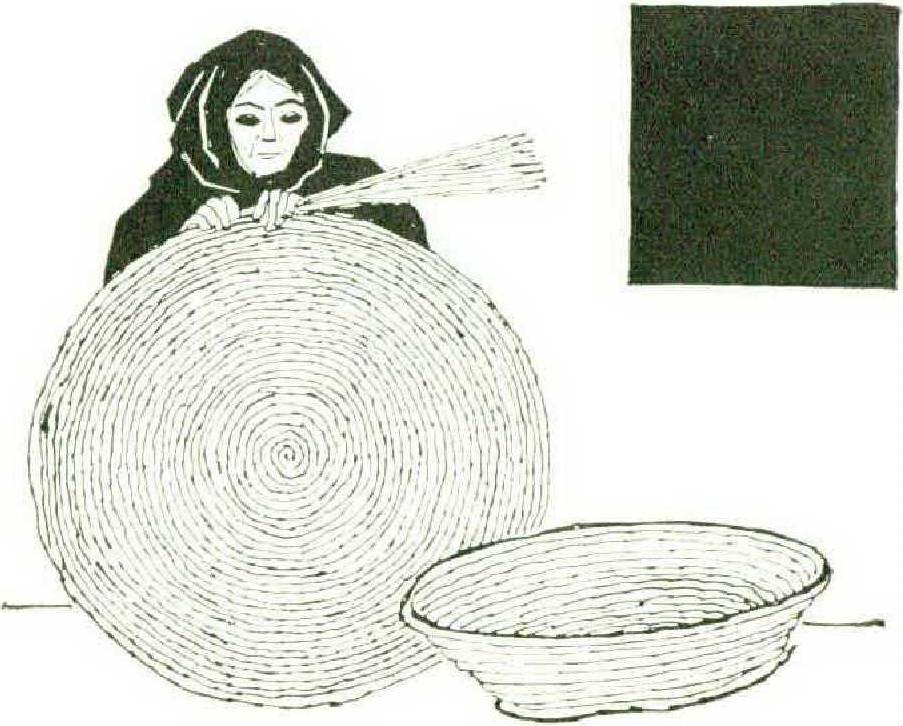
There are still the fierce shepherds that Lawrence saw living in that ancient world, and it is curious to note how their dialect resembles Latin. Their wives live independently of the contemporary world, weaving their own clothes and coverlets, making their own baskets and other household needs. Cattle rustling is a sport with long traditions; and I am assured by the carabinieri that there is nobody else like a Sardinian for making a flock of sheep disappear without a trace. All this, while over a billion dollars is being invested in the island in dams, public works, communications, subsidies to agriculture and industry, and a huge amount in hotels and other tourist facilities.
This modernization has meant yet another invasion of the island by foreigners. First it was the Phoenicians, followed by the Carthaginians, the Romans, the Arabs, the Pisans, and the Genoese, and then, for a long time, the Spaniards. By the Treaty of London, in 1720, the house of Savoy was forced to swap Sicily for Sardinia, which Austria had picked up after the War of the Spanish Succession. However, so little did the Savoyards value it that they tried to give it to Napoleon in exchange for Milan and Parma; but they were grateful in the end to own Sardinia when Napoleon rejected the offer and went on to capture the whole of Italy, totally ignoring the island, where the Savoyards took refuge.
By a trick of history, the Risorgimento also passed Sardinia by because it was already on the winning side (the king of Sardinia became the king of Italy), but the mainland Italians scarcely were aware of Sardinia’s existence till World War I, when the “fiercely masculine” shepherds sooted their faces and their rifles, and using their old cattlerustling techniques, crawled over no-man’s-land time and time again taking Austrian trenches before the Austrians even suspected that anything was afoot.
The foreigners who are now moving into Sardinia are Milanese, Parisians, Swiss, Germans, English, and Romans. They are setting up highly automated factories and luxurious hotels; but they are moving in by proxy and behind a smoke screen of lawyers, engineers, and architects, who fly in and out continually on brief visits, meeting their Sardinian opposite numbers who are overseeing the practicalities of the various enterprises. Simultaneously, hundreds of Sardinians are moving out, bringing their already small number to less than a million and a half on an island the size of West Virginia.
Sardinia is undergoing the inevitable throes of industrialization, but it is also having another fundamental change in its outlook. For centuries it has looked inward to the mountains, leaving the coasts uninhabited. Now it is looking out to sea, no longer fearing the Moorish pirates who as late as the nineteenth century marauded the coast.
Today there are many fine hotels: El Faro and Capo Caccia at Porto Conte; La Pitrizza, Piazza Cerbiato, Cala di Volpe, Romazzino, Abi D’Oru, Motel Touf-Touf on the Emerald Coast; Il Gallo and Il Moresco at Santa Teresa di Gallura; Rocca Ruja at Stintino; Is Morus at Santa Margherita di Pula; Capo Boi at Cape Boi; and the Timi-Ama at Capo Carbonara — prices run from about $20 to $30 a day including meals and service.
But these are not old-style hotels close to “civilization,” five minutes from the railroad station and fifteen from the airport. Rather they are in isolated spots of great beauty because the whole concept of vacationing in Sardinia is to get away from the urban proximity of other human beings.
Visitors usually base themselves at one of these first-class hotels and make expeditions out. But increasingly people are yacht-borne, especially in July and August when the sea is at its calmest and perfect for skin diving and underwater photography, which is a current fashion. Should you need a yacht broker, Prince Pepito Moncada, who can be found in the Rome telephone directory or through any Alitalia office, is probably the best-informed person on what is both available and reliable in the charter field.
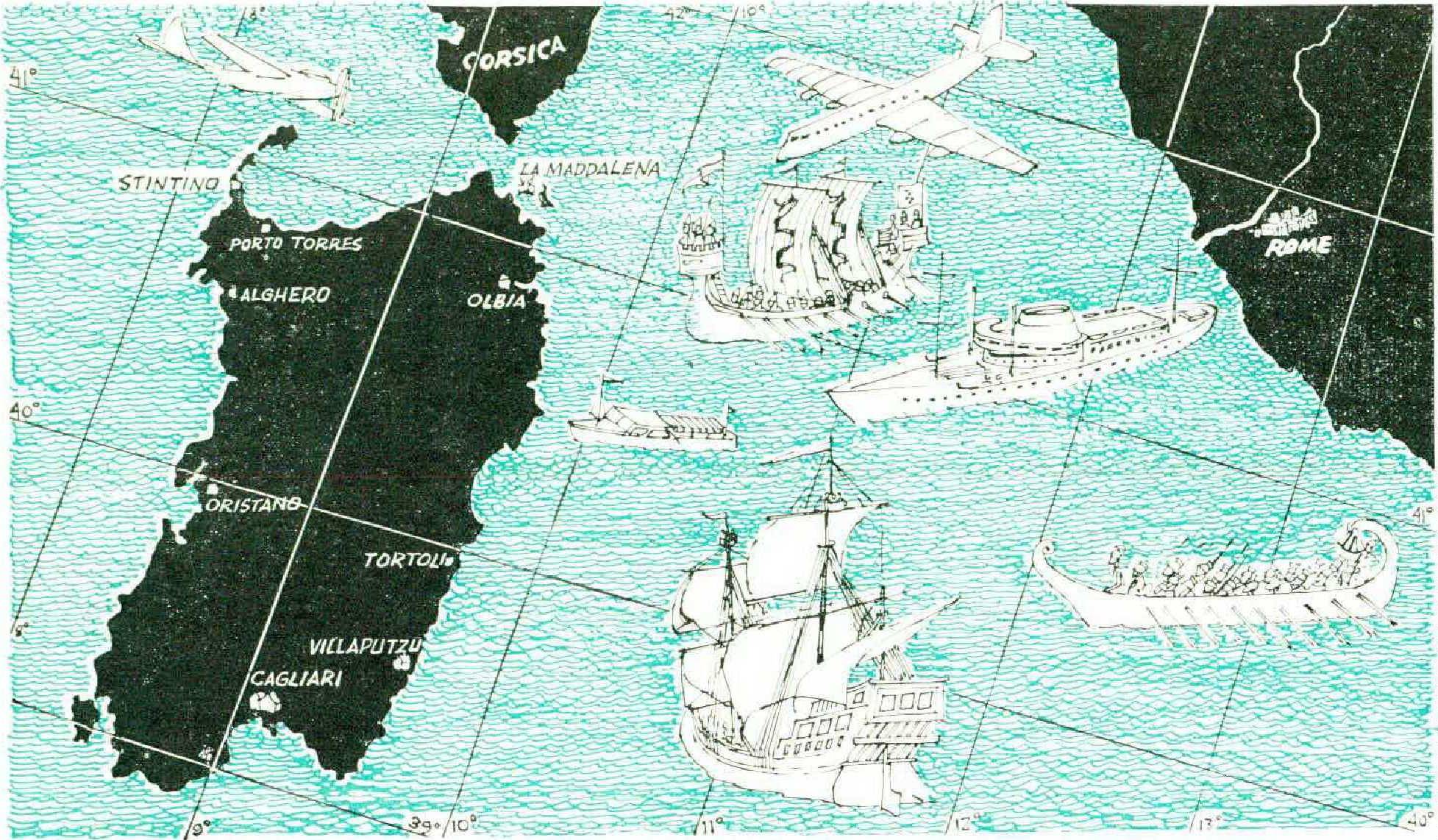
Most of the pleasure craft upanchor for the Aga Khan’s Porto Cervo lagoon from Porto Santo Stefano, just north of Rome — it is the shortest crossing. At Porto Santo Stefano there is a small Americanowned shipyard, Cantiere dell’Argentario, where provisioning can be done in the English language and British skippers who know the Mediterranean and its caprices can even be taken on contract. The Emerald Coast is a desirable port of call if only to see the remarkable originality of the buildings and the interior decoration — done by some of France’s and Italy’s finest architects and interior designers. Rome’s distinguished architect Michele BusiriVici has just finished a magnificent new hotel, the Romazzino, in his now well known “Sardinian style.” He is currently building a homespun luxury village from scratch, with its own little church, its piazzas and shopping streets, above Porto Cervo. Since the technical bugs of building in Sardinia have at last been solved, this will not take long to complete. However, the Romazzino is perhaps of more immediate interest as it is an English-speaking and English-owned hotel and is about a mile from Porto Cervo, which is nowadays an international merry-go-round, chosen by mariners and millionaires because, unlike most Sardinian anchorages, there is electric current and power in all forms, food and water, and excellent communication with the outside world.
Some of the fast new boats make the 114 international nautical miles there from Porto Santo Stefano, crashing through the waves, in less than six hours. The Emerald Coast can comfortably be reached from Nice, with a stopover at Ajaccio in Corsica, in two hops of 135 and 74 miles respectively; and Sardinia is also fairly convenient for sailing to from Majorca, only 345 miles from Cagliari, as the Phoenicians happily discovered over 2000 years ago, and the Proto-Sards much earlier if we are to believe the archaeologists who assure us that they had a culturalexchange program with the Majorcans.
Cagliari is the only first-class port in Sardinia, with all the conveniences of a big city, but Alghero, Porto Torres, La Maddalena, and Olbia can serve most necessary nautical functions. The Sardinian coastline is so indented with inlets, natural harbors, and tiny fishing ports that if a storm blows up, it rarely means one has far to run for shelter. There is still an abundance of fish in the sea, from tuna for line fishing to big dentex and a wide variety of bream and bass for the skin divers; lobsters are plentiful, too. The east coast is best for tuna, while the Emerald Coast, Tavolara Isle, Caprera Isle, and Capo Carbonara are widely fished by skin divers. But the experts prefer to search out small offshore islands and lonely inlets where the fish are still innocent, because elderly and experienced dentexes and bass manage to keep well out of harpoon range. The professional divers long ago gave up fishing as being insufficiently rewarding, and nowadays they put to sea with an echo sounder looking for “hills” on the sea floor. They then go down well below the safety levels of their equipment and bring up coral which they can sell for $100 a pound back on the beach.
Unless you are booked into one of the best hotels with your travel reservations well organized or will be staying aboard ship, July and August are not the best months for visiting Sardinia. The car ferries to the mainland, and the air services and hotels, are booked heavily, and it is probably easier to get to Sardinia or off it on the London-Alghero B.E.A. flight than via Rome, though a “kangaroo” line car ferry from Genoa and one from Civitavecchia which have recently gone into service will certainly ease the pressure. Also a new airline, Alisarda, has a four-times-a-week linkup of Rome, Genoa, and Corsica with Sardinia, using nine-seater planes. But good weather lasts from May to October, and for winter hunters and car tourists, January is almost always sunny and dry, though by no means beach weather.
An off-season visit not only makes driving less wearisome but brings many added gastronomic pleasures, such as all sorts of game, including wild boar, unusual local cheeses, roast suckling pig, roast lamb on the spit, certain species of fish and seafood not available in high summer; and most important is the pleasure of drinking the fine Sardinian wines, many of which are almost too strong to drink in the heat of a summer’s day.
Sardinia has a handicraft tradition which is very much alive. Handwoven carpets, tapestries, coverlets, unusual baskets, and carved wood chests are among the most practical buys, and as informal furnishing they are in admirable good taste. Perhaps the most interesting place to visit on this score is the ISOLA (Government Handcraft Organization) shop and warehouse at Sassari. (They have a store in Rome too.)
Each of Sardinia’s two principal cities — Cagliari in the south and Sassari in the north — has its sphere of influence and a youthful sense of rivalry. If Cagliari puts up a highrise building, Sassari must have one too, no matter how little it needs one. However, Cagliari is a historic, if not a prehistoric city, while Sassari is only eighteenth century, though not without a considerable provincial charm. At Cagliari there is an early Christian church, San Saturnino, which is redolent of the age of the desert hermits, and there is also an enormous Roman amphitheater to visit, which is sliced out of the hillside and which often holds crowds today of up to twelve thousand. Just out of town is the large Nora excavation of Phoenician and Roman buildings which twelve years ago was but a cornfield jutting out to sea, with a romantic Spanish watchtower on its headland.
Directly north of Cagliari is Barumini, Sardinia’s largest prehistoric fortress, excavated right after the war. Around the castle is a village, and inside it there is room for some two hundred warriors — in all, a remarkably well thought out defensive system and one which the human mind did not reach again until the towered castles of the Renaissance. Proceeding into the uplands, called the Barbagia (the wild lands), one reaches a little plateau, Giari di Gesturi, where wild horses roam; to the east is Italy’s missile-testing range at Perdasdefogu. The juxtaposition of the old and the new is as ever present as the difference between the Sardinians and the mainland Italians. The former consider the Italians to be altogether too frivolous and to be wearing their hearts on their sleeves; the Italians, for their part, hold a high opinion of the Sardinians, but chuckle a little at their seriousness, which often adds up only to shyness. However, one of the most notable differences between them is that Sardinians love horses, and every festa becomes a cavalcade, whereas horses are quite a rarity on the mainland. In Rome, when a cavalry squadron passes, I check the troopers over one by one as they ride past, slouched in their saddles in the continental style, and count the Sardinians with their small features, dark skin, and piercing eyes — they usually are well in the majority.
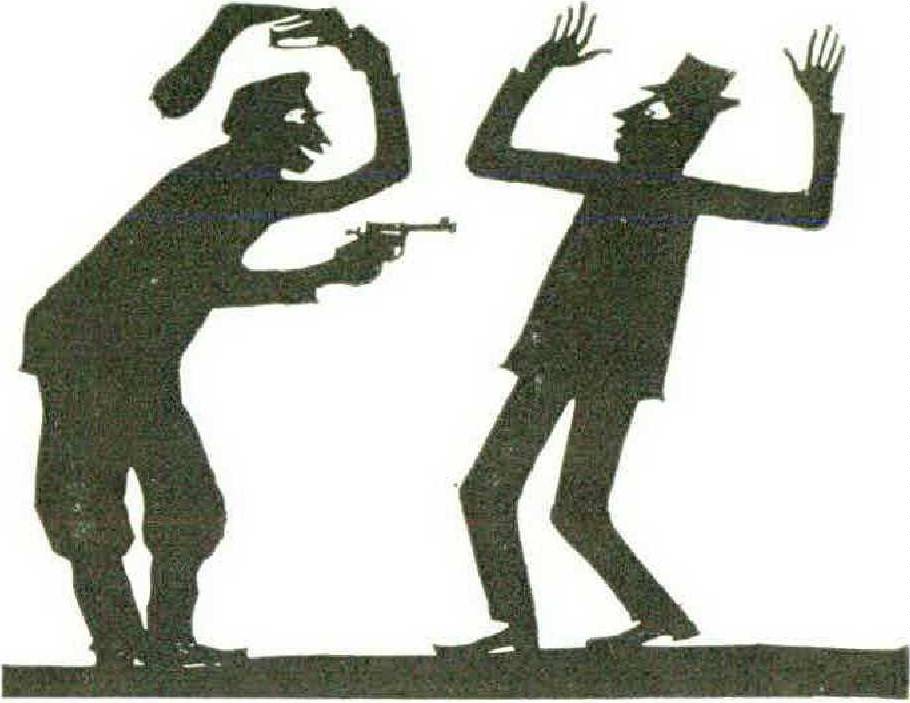
Farther into the uplands there are now two hotels that are more than adequate — the Villa Fiorita at Sorgono and the Esit at Ortobene. The latter has a magnificent view over the wild lands that the completely forgotten Nobel Prize winner for literature in 1926 wrote about. Her name was Grazia Deledda, and she lived at Nuoro, the provincial capital nearby. This is the land of blood feuds, of outlaws, of cattle rustling, but also of great friendliness. Here it is worth remembering that if one meets an outlaw on a lonely country road, he will not appreciate having his portrait taken, not even with the latest cinecamera and in color. There have been a few cases of highwaymanship recently, and the government is very embarrassed about it — so much so that when a nightclub was raided and everybody looted (but with utmost courtesy: the bandits ordered drinks
on the house for everyone during the raid and tipped the waiters handsomely), the foreigners, at least, were reimbursed by the government for the value of what they reported to the police as having been taken.
Lonely Orgosolo is a village with a bad reputation, though perhaps this has been exaggerated because of a movie that was made about it a few years back. However, there is a vigilante organization, called the Barracelli, which aims to resolve those matters which are beyond the competence of the carabinieri. The villages nearby, such as Sarule and Ollolai, are peaceful and are noted for their fine carpet-making; Oliena is known for its fine wine.
In the north in Sassari Province, there is a fine nuraghic fortress at Toralba and a thirteenth-century abbey at Saccargia which was built by the Pisans in their customary style of black and white horizontal stone stripes. I particularly remember another Romanesque church about two miles from Borutta which stands alone in the countryside and which symbolized so much of the austere beauty I had seen in this unusual land. I remember also going shooting one chill winter’s morning there, and when each gun brought down only sixty birds, my Sardinian companions were a trifle disappointed. Romans, however, are more than satisfied with such largess from nature, as there is too much competition for the few birds left near Rome, and they fly over in large numbers in the open season every weekend.
Alghero, in the northwest of the island, is the only town organized to receive holidaymakers on a fairly large scale and at group prices. It is an old Spanish port, and the dialect spoken there is an antiquated Catalan. It has considerable charm, but it does not rival the elegance of the resorts I have mentioned earlier. However, the IRI, Italy’s biggest, and government-backed, holding company, has set up the Golden Parabola Company, which is building on this solid Alghero infrastructure of travel agents and transportation (it also includes the airport that serves all north Sardinia) a big development at Porto Conte, twenty miles to the north. This is a large bay where they have put up two fine hotels already (El Faro and Capo Caccia), and secondary roads are now under construction; the land will eventually be sold in lots for villas and also will be offered, with all services functioning, to universities and wealthy foundations. Stintino, farther north still, has had a natural growth, encouraged by the younger generation which found it and which has been roughing it there on its long sandy beaches for years very happily. Now it, too, has its first luxury hotel, the Rocca Ruja, which specializes in yachting and other aquatic sports.
Development on a luxury level is still in progress on the northeast corner of the island and even on Maddalena Isle, once a lonely naval base. This island is linked by a causeway to Caprera Isle, which had the reputation of being even more lonely.
When Garibaldi retired from the world, disillusioned by the ingratitude of man, in order to express his feelings categorically he settled on Caprera Isle. Today it is surrounded by luxury, by yachts, by skin divers, and by the cheerful members of the Club Méditerranée, who live in a Hawaiian-style village nearby.
So it is that Sardinia offers to the intelligent traveler a swath of interest stretching from prehistory to rocketry, and a variety of strata of civilization which arc little known even to the most learned of Italophiles. The Italians still consider a visit to Sardinia something of an adventure — and I think they are right.