The Peripatetic Reviewer
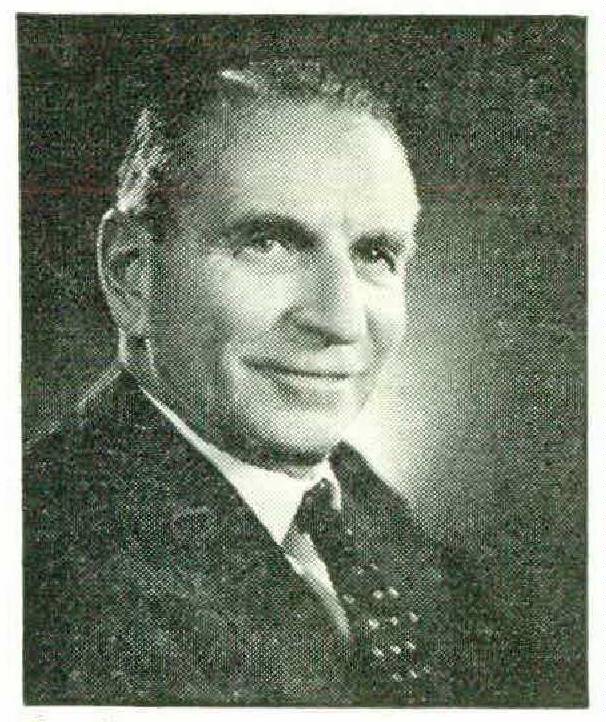
BY EDWARD WEEKS
WHEN one considers the vast reach of the British Empire in the nineteenth century and how small was the group of ruling families in Britain which supplied the proconsuls, and when one remembers the increasing hauteur and eccentricity of those within the Establishment who bore the white man’s burden, it is small wonder that for every proconsul as able as Kitchener and Rhodes there were two whose mismanagement ranged from mere inertia to an arrogance beyond belief. For readers who were regaled by Cecil Woodham-Smith’s sparky history of the Crimean War, The Reason Why, there comes a new book to disclose the bemused and tragic story of Britain’s misadventure in Afghanistan. The Afghans, as Kipling later testified, could be stalwart fighters whose muskets outranged those of the British; they conspired against each other with incredible cruelty; their mountainous country with its tortuous passes was a massacre-trap in the dead of winter; and when the tribes were aroused and temporarily united against the domination of the British, they could be a tricky and formidable adversary. This then is the setting for THE FIERCE PAWNS (Lippincott, $7.95), PATRICK A. MACRORY’S narrative of miscalculation, heroism, and defeat.
In the autumn of 1839 Britain’s Army of the Indus, under the command of Sir Willoughby Cotton, stormed into the heart of the Afghan country, captured the supposedly impregnable fortress of Ghazni, took the citadel of Khelat, and moved on to occupy Kabul. The aim of the expedition was to thwart Russia’s meddling in Afghanistan and to reseat on his throne the aging Shah Soojah, who had been dispossessed years earlier and had lived on as a British pensioner. It took sharp fighting to accomplish all this, but for a time the Afghans were overawed and overpowered, and Act I ends with the British officers in Kabul meeting of a morning “to discuss a rare Scotch breakfast of smoked fish, salmon grills, devils and jellies, and puff away at their cigars till ten.” There was horse racing, skating, cricket, and amateur theatricals, and the submission of the Afghans seemed so assured that the officers sent for their wives and families to join them.
Act II begins in 1841 with the cutting off of subsidies to the Afghan chiefs as a punitive measure and, what was more portentous, with the appointment of a new commander in chief, Major-General William Elphinstone, briefly characterized by one of his junior officers as “the most incompetent soldier that was to be found among the officers of the requisite rank.” The general was a veteran of Waterloo who had been on half-pay for many years and now at sixty was ill and indecisive. He was supported and antagonized by Brigadier John Shelton, who had lost his right arm in the Peninsular War and had grown to be obstinate and cantankerous. The bad blood which thus began at the top seeped down through all ranks of the Army of Occupation, and there was an angry outbreak between the Queen’s 44th and the native troops.
In their two-year occupation of Kabul, which was the high-water mark of British imperialism in India, the British had incensed the Afghans in every way possible, riding roughshod over Amir Dost Mahomed, the one chief who had stoutly befriended them: unaware of Afghan intrigue, which was beginning to blaze on the other side of the hill; and recklessly complacent in the little attention they paid to the defense of their cantonment. The junior officers saw trouble coming, but they were not listened to, and the wrangling which went on between the political envoy, Sir William Macnaghten, and General Elphinstone was an omen of worse things to follow if the Afghans attacked. Which they did.
The full force of the attack, the costly defense, and the disastrous retreat must be read to be believed. Of the big army with its many thousands of camp followers, one survivor, Dr. Brydon, cut his way through the passes to the safety of Jalalabad. What redeems the account from a hopeless foray of bloodletting and stupidity is the spirit, the fortitude, and even gaiety of the journals and letters by the most perceptive of the younger officers, men like Colin Mackenzie, Sir Alexander Burnes, and Lieutenant Vincent Eyre, and by Lady Sale, who with other wives was taken prisoner and eventually rescued by a detachment commanded by her husband. They paint the goings-on in true colors and with an exasperation which is understandable. There is nothing here that can quite compare with the lunatic arrogance and military rivalry of the Earl of Cardigan and the Earl of Lucan at Balaklava. The blame for the disaster in the end must be shared by General Elphinstone, who should never have been appointed by Sir William Macnaghten, so optimistically blind, and by the Governor-General of India, the Earl of Auckland, whose shallow judgment throughout the crisis made matters worse.
FATHERS AND DAUGHTERS
At the opening glance, A LITTLE LOVE, A LITTLE LEARNING by NINA BAWDEN (Harper & Row, S3.95) is an agreeable novel of English domesticity with the accent on girls. The man who supports the tent of the story is Dr. Arthur Boyd, a general practitioner in the London suburb of Monks Ford, and the women who revolve about him are Ellen, his hardworking, keen-witted wife, and his adopted children, her three daughters by her first marriage. There is a certain mystery about their father, a good-looking, harumscarum actor who deserted his brood when Poll, the youngest, was born and has not been heard from since. The apparent serenity of the household is disturbed when Aunt Hat, not a relative but an intimate of Ellen’s, comes to them for nursing and consolation after having been cruelly beaten up by her drunken husband. Aunt Hat is a romantic whose good intentions and bad advice continually lead to trouble; the girls pry out of her what they have long wanted to know about their missing father, with results that almost bring the tent down about their ears.
What makes the story so engaging is the delineation of the three lively daughters, each of whom has inherited some of the theatrical temperament of the father and the puritanism of Ellen. Joanna, the eldest, is almost eighteen, fumbling her way through her last year in school and striking emotional attitudes in her feuding with her mother. Kate, the middle sister, is the pretty one, a born storyteller, with plenty of curiosity about sex. Poll is an attractive hoyden and the best actress of the lot.
It is Kate who tells the story; she has a feeling for the right word, is swift to divine other people’s motives, and candid to admit when she has been lying. Through her eyes, as she makes the rounds with Dr. Boyd, we see what a comfort her stepfather is to the village and to his womenfolk. She realizes, just as acutely as does Ellen, Boyd’s vulnerability to the gossip of Miss Carter and the delicacy of his relationship with the wealthy Miss Fantom. Kate not only is a good eavesdropper, she remembers what is important, and it is her ability to put things in the right light that saves the day in the violent confrontation between the actor-father and the man who has assumed his bed and his responsibilities. In its development this is a sympathetic and skillful narrative.
SATIRE AND ANGUISH
Prize-novel contests have come down in the world, not because there are fewer contestants, but because the level of fiction by unestablished writers is distinctly lower than it was in the 1920s. Instead of prize contests, publishers have set up fellowships or awards with which they signalize the work of some promising young writers in their stable. Such is the case with GAVIN LAMBERT, who studied at Oxford and who supported himself as an editor, film critic, and novelist before becoming an American citizen in 1964. NORMAN’S LETTER (Coward-McCann, $5.50), his third novel, is published as the winner of the Thomas R. Coward Memorial Award.
Norman’s Letter is a satire, slightly preposterous, slightly amateur, which the English seem to relish rather more than we. It purports to be a long confiding letter written by Sir Norman Lightwood ("Five feet, nine inches of body with brown wavy hair and merrily pointed face, alarmed eyes, small hands and feet”) to his Arab friend, Ahmin, who once gave him such pleasurable pain in Marrakech. Norman, the Eleventh Baronet, born in June of 1910, describes himself as a wealthy bastard and a homo; he describes his brief, bitter-tasting marriage with the nightclub singer Lily Vail, who properly holds him up for a sizable alimony; he describes his silly, improbable mother, Lady D., and Violet, his sister, a strong-willed woman of mystery who might have been drawn by Charles Addams. The journal-letter covers the many stops Norman makes in his journey to escape from life, and winds up in Vera Cruz; it wanders along in a high falsetto, slick, sardonic, and always with a smirk. As one of the characters remarks to Sir Norman, “At least one can say this whole thing is brilliantly foolish.”
Of all the former parts of the British Empire, the Union of South Africa has had the keenest need for soul-searching, and its leading novelists, Alan Paton and NADINE GORDIMER, have devoted themselves not to writing frivolously, but to themes which have stirred compassion wherever fine English is appreciated. In her short novel THE LATE BOURGEOIS WORLD (Viking, $3.50), Miss Gordimer has centered our sympathies in a thirty-year-old Cape Town divorcée whose first husband, Max Van Den Sandt, has just committed suicide as the story begins. The recapitulation of her life with Max forms a counterpoint to the direct, unequivocal intercourse she is carrying on with Graham Mill, her present lover and the lawyer who defended Max when he was in trouble. The heroine tells her own story, and through her candor we follow her development from a young bride embarrassed by her shotgun wedding into the unillusioned, resourceful woman, a biologist surreptitiously involved in the struggle for African nationalism.
The necessity of telling their young son, Bobo, of his father’s death turns Liz back upon herself, and on her drive to the boarding school, she recalls her early and casual attachment to Max. She was attracted to his family wealth and to their gay drives out into the veld, until in a moment of forgetfulness she became pregnant. Liz goes lightly over this, and what passed for love between them did not improve when she was saddled with marriage. Her mother-in-law was condescending, and Max, who had quit college and was trying to support himself in a series of ineffectual jobs, blackened his father’s record in Parliament by the part he played in the Defiance Campaign. As a crusader Max was impulsive and irresponsible; he was never quite trusted in the Communist-dominated movement — selfconscious, overconfident, he lacked the full measure of moral courage, and cracked and turned state evidence when the going got rough. Liz, a reluctant camp follower at first, more and more had to wear the pants in the family.
The story is told with great economy and with skillful characterization: with masterful compression she has drawn people, white and black, who are as malleable as metal, as real as blood. Irony is always present, for if Max “wasn’t the sort of person he thought he was,” neither is Liz. The orderly, uncommitted, amoral life she has worked out for herself after the divorce is rocked by Max’s death, and at the close she is being irresistibly tempted to reinvest herself in the cause that had killed him.